Refine search
Actions for selected content:
19 results
Unjustified Poisson assumptions lead to overconfident estimates of the effective reproductive number
-
- Journal:
- Epidemiology & Infection / Volume 154 / 2026
- Published online by Cambridge University Press:
- 25 May 2026, e79
-
- Article
-
- You have access
- Open access
- HTML
- Export citation
Global dynamics of a renewal equation for size-structured population models
- Part of
-
- Journal:
- Proceedings of the Royal Society of Edinburgh. Section A: Mathematics , First View
- Published online by Cambridge University Press:
- 26 March 2026, pp. 1-20
-
- Article
-
- You have access
- HTML
- Export citation
-
We study a size-structured tree growth model from [4–6], described by the nonlinear renewal equation
 $\phi(t) = \mathfrak{F} \phi_t, \ \phi_t \in L^1_\rho(\mathbb{R}_{-}),$ with reproduction, death, and growth rates
 $\beta$,
 $\mu$, and
 $g$. We prove that, under mild conditions on these rates, the equation generates a semiflow in
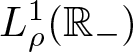 $L^1_\rho(\mathbb{R}_{-})$ that is permanent and possesses a compact global attractor
 $\mathcal{A}$. If
 $\beta$ is monotone,
 $\mathcal{A}$ reduces to a single asymptotically stable equilibrium attracting all compact sets with positive initial data. Adapting an approach from [21], originally developed for simpler renewal equations, we investigate stability and persistence in this more complex setting via the one-dimensional recurrence
 $b_{n+1} = \mathfrak{F} b_n,$ thereby complementing the functional-analytic framework of [13].


5 - Renewal Equation in the McKendrick–von Foerster Model
-
- Book:
- Functional Analysis Revisited
- Published online:
- 31 October 2024
- Print publication:
- 04 July 2024, pp 55-64
-
- Chapter
- Export citation
Subexponential potential asymptotics with applications
- Part of
-
- Journal:
- Advances in Applied Probability / Volume 54 / Issue 3 / September 2022
- Published online by Cambridge University Press:
- 13 June 2022, pp. 783-807
- Print publication:
- September 2022
-
- Article
-
- You have access
- HTML
- Export citation
-
Let
 $X_t^\sharp$ be a multivariate process of the form
 $X_t =Y_t - Z_t$,
 $X_0=x$, killed at some terminal time T, where
 $Y_t$ is a Markov process having only jumps of length smaller than
 $\delta$, and
 $Z_t$ is a compound Poisson process with jumps of length bigger than
 $\delta$, for some fixed
 $\delta>0$. Under the assumptions that the summands in
 $Z_t$ are subexponential, we investigate the asymptotic behaviour of the potential function
 $u(x)= \mathbb{E}^x \int_0^\infty \ell\big(X_s^\sharp\big)ds$. The case of heavy-tailed entries in
 $Z_t$ corresponds to the case of ‘big claims’ in insurance models and is of practical interest. The main approach is based on the fact that u(x) satisfies a certain renewal equation.


Coupled Systems of Renewal Equations for Forces of Infection through a Contact Network
- Part of
-
- Journal:
- Canadian Mathematical Bulletin / Volume 63 / Issue 3 / September 2020
- Published online by Cambridge University Press:
- 04 December 2019, pp. 624-632
- Print publication:
- September 2020
-
- Article
-
- You have access
- Export citation
The Covariance Between the Surplus Prior to and at Ruin in the Classical Risk Model
-
- Journal:
- ASTIN Bulletin: The Journal of the IAA / Volume 42 / Issue 2 / November 2012
- Published online by Cambridge University Press:
- 09 August 2013, pp. 631-653
- Print publication:
- November 2012
-
- Article
-
- You have access
- Export citation
Asymptotics for the moments of the overshoot and undershoot of a random walk
- Part of
-
- Journal:
- Advances in Applied Probability / Volume 41 / Issue 2 / June 2009
- Published online by Cambridge University Press:
- 01 July 2016, pp. 469-494
- Print publication:
- June 2009
-
- Article
-
- You have access
- Export citation
On the Weak Solutions of the McKendrick Equation: Existence of Demography Cycles
-
- Journal:
- Mathematical Modelling of Natural Phenomena / Volume 1 / Issue 1 / 2006
- Published online by Cambridge University Press:
- 15 May 2008, pp. 1-30
- Print publication:
- 2006
-
- Article
- Export citation
Cell Modelling of Hematopoiesis
-
- Journal:
- Mathematical Modelling of Natural Phenomena / Volume 1 / Issue 2 / 2006
- Published online by Cambridge University Press:
- 15 May 2008, pp. 81-103
- Print publication:
- 2006
-
- Article
- Export citation
Approximation of the marginal distributionsof a semi-Markov process using a finite volume scheme
-
- Journal:
- ESAIM: Mathematical Modelling and Numerical Analysis / Volume 38 / Issue 5 / September 2004
- Published online by Cambridge University Press:
- 15 October 2004, pp. 853-875
- Print publication:
- September 2004
-
- Article
- Export citation
Addendum to ‘Quasi-renewal estimates’ for modelling DNA replication
- Part of
-
- Journal:
- Journal of Applied Probability / Volume 37 / Issue 4 / December 2000
- Published online by Cambridge University Press:
- 14 July 2016, pp. 1171-1172
- Print publication:
- December 2000
-
- Article
- Export citation
Quasi-renewal estimates
- Part of
-
- Journal:
- Journal of Applied Probability / Volume 37 / Issue 1 / March 2000
- Published online by Cambridge University Press:
- 14 July 2016, pp. 269-275
- Print publication:
- March 2000
-
- Article
- Export citation
Laplace transforms and the renewal equation
- Part of
-
- Journal:
- Journal of Applied Probability / Volume 34 / Issue 2 / June 1997
- Published online by Cambridge University Press:
- 14 July 2016, pp. 395-403
- Print publication:
- June 1997
-
- Article
- Export citation
A multitype decomposable age-dependent branching process and its applications
- Part of
-
- Journal:
- Journal of Applied Probability / Volume 32 / Issue 3 / September 1995
- Published online by Cambridge University Press:
- 14 July 2016, pp. 591-608
- Print publication:
- September 1995
-
- Article
- Export citation
A stochastic model of fragment formation when DNA replicates
- Part of
-
- Journal:
- Journal of Applied Probability / Volume 31 / Issue 2 / June 1994
- Published online by Cambridge University Press:
- 14 July 2016, pp. 301-308
- Print publication:
- June 1994
-
- Article
- Export citation
Some further results on random splitting of an interval
-
- Journal:
- Journal of Applied Probability / Volume 26 / Issue 3 / September 1989
- Published online by Cambridge University Press:
- 14 July 2016, pp. 466-476
- Print publication:
- September 1989
-
- Article
- Export citation
A note on models using the branching process with immigration stopped at zero
-
- Journal:
- Journal of Applied Probability / Volume 20 / Issue 1 / March 1983
- Published online by Cambridge University Press:
- 14 July 2016, pp. 11-18
- Print publication:
- March 1983
-
- Article
- Export citation
On excess life in certain renewal processes
-
- Journal:
- Journal of Applied Probability / Volume 18 / Issue 2 / June 1981
- Published online by Cambridge University Press:
- 14 July 2016, pp. 378-389
- Print publication:
- June 1981
-
- Article
- Export citation
Filtered renewal processes with a two-sided impact function
-
- Journal:
- Journal of Applied Probability / Volume 16 / Issue 4 / December 1979
- Published online by Cambridge University Press:
- 14 July 2016, pp. 813-821
- Print publication:
- December 1979
-
- Article
- Export citation
