Refine search
Actions for selected content:
62 results
Rights of Nature and the Rights of Wild Animals: Guiding Principles for Resolving Human–Wildlife Conflicts
-
- Journal:
- Transnational Environmental Law , First View
- Published online by Cambridge University Press:
- 09 November 2026, pp. 1-29
-
- Article
-
- You have access
- Open access
- HTML
- Export citation
The Inter-American Court of Human Rights’ Advisory Opinion on the Climate Emergency: Implications for Canada
-
- Journal:
- Canadian Yearbook of International Law / Annuaire canadien de droit international , First View
- Published online by Cambridge University Press:
- 29 September 2026, pp. 1-34
-
- Article
-
- You have access
- Open access
- HTML
- Export citation
Toward an Animal Law from the South: Why More-Than-Human Rights Flourished in Latin America
- Part of
-
- Journal:
- Public Humanities / Volume 2 / 2026
- Published online by Cambridge University Press:
- 04 September 2026, e114
-
- Article
-
- You have access
- Open access
- HTML
- Export citation

Planetary Health Law and Governance
-
- Published online:
- 07 August 2026
- Print publication:
- 30 November 2026
-
- Element
-
- You have access
- Open access
- HTML
- Export citation
Thinking with Fungi, Unbinding the Subject of Law
- Part of
-
- Journal:
- Public Humanities / Volume 2 / 2026
- Published online by Cambridge University Press:
- 07 August 2026, e104
-
- Article
-
- You have access
- Open access
- HTML
- Export citation
5 - Rights of Nature
- from Part II - Beyond the ‘Human’ in Indigenous Environmental Law?
-
-
- Book:
- Indigenous Environmental Rights
- Published online:
- 18 June 2026
- Print publication:
- 09 July 2026, pp 177-204
-
- Chapter
- Export citation
4 - The Rights of Nature and the Right to Territory of Indigenous Peoples
- from Part II - Beyond the ‘Human’ in Indigenous Environmental Law?
-
-
- Book:
- Indigenous Environmental Rights
- Published online:
- 18 June 2026
- Print publication:
- 09 July 2026, pp 147-176
-
- Chapter
- Export citation
3 - Indigenous Law, Cosmovisions, and the Rights of Nature
- from Part II - Beyond the ‘Human’ in Indigenous Environmental Law?
-
-
- Book:
- Indigenous Environmental Rights
- Published online:
- 18 June 2026
- Print publication:
- 09 July 2026, pp 119-146
-
- Chapter
- Export citation

Indigenous Environmental Rights
- Towards a Holistic Regime
-
- Published online:
- 18 June 2026
- Print publication:
- 09 July 2026
5 - Rights of Nature
-
- Book:
- Climate Change and the Voiceless
- Published online:
- 18 May 2026
- Print publication:
- 11 June 2026, pp 172-237
-
- Chapter
- Export citation
Decolonize or perpetuate: Realizing rights of nature through a critical property theory
- Part of
-
- Journal:
- International Journal of Cultural Property / Volume 33 / 2026
- Published online by Cambridge University Press:
- 04 June 2026, e9
-
- Article
-
- You have access
- Open access
- HTML
- Export citation
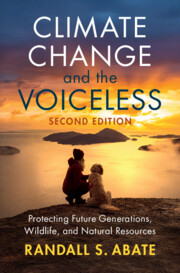
Climate Change and the Voiceless
- Protecting Future Generations, Wildlife, and Natural Resources
-
- Published online:
- 18 May 2026
- Print publication:
- 11 June 2026
Rights of Nature: An Adequate Response to the Environmental Crisis?
-
- Journal:
- German Law Journal / Volume 27 / Issue 1 / February 2026
- Published online by Cambridge University Press:
- 14 May 2026, pp. 39-58
-
- Article
-
- You have access
- Open access
- HTML
- Export citation
Chapter 6 - Envisioning a Pluriversal Environmental Governance
-
- Book:
- Governing International Commons
- Published online:
- 14 May 2026
- Print publication:
- 07 May 2026, pp 122-143
-
- Chapter
- Export citation
10 - Environmental Rights around the World
-
- Book:
- Law for the Land
- Published online:
- 27 February 2026
- Print publication:
- 12 March 2026, pp 361-421
-
- Chapter
- Export citation
Legal personhood for cultural heritage? Some preliminary reflections
-
- Journal:
- International Journal of Cultural Property / Volume 32 / Issue 4 / November 2025
- Published online by Cambridge University Press:
- 23 January 2026, pp. 347-354
-
- Article
-
- You have access
- Open access
- HTML
- Export citation
Legal Personhood and Rights of Nature: Bridging Relational Vedda Worldviews and Sri Lankan Law
-
- Journal:
- Transnational Environmental Law / Volume 14 / Issue 3 / November 2025
- Published online by Cambridge University Press:
- 11 December 2025, pp. 630-658
-
- Article
-
- You have access
- Open access
- HTML
- Export citation
16 - Technologies in Environmental Governance
- from Part V - Governance by Technology
-
-
- Book:
- The Cambridge Handbook of the Governance of Technology
- Published online:
- 30 October 2025
- Print publication:
- 13 November 2025, pp 289-306
-
- Chapter
- Export citation
10 - One Health among Many
- from Part II - One Health and Contemporary Legal Structures
-
-
- Book:
- The Cambridge Handbook of One Health and the Law
- Published online:
- 25 September 2025
- Print publication:
- 09 October 2025, pp 139-156
-
- Chapter
- Export citation
2 - International Environmental Governance
-
- Book:
- International Environmental Law
- Published online:
- 19 September 2025
- Print publication:
- 09 October 2025, pp 39-76
-
- Chapter
- Export citation
