To save content items to your account,
please confirm that you agree to abide by our usage policies.
If this is the first time you use this feature, you will be asked to authorise Cambridge Core to connect with your account.
Find out more about saving content to .
To save content items to your Kindle, first ensure no-reply@cambridge.org
is added to your Approved Personal Document E-mail List under your Personal Document Settings
on the Manage Your Content and Devices page of your Amazon account. Then enter the ‘name’ part
of your Kindle email address below.
Find out more about saving to your Kindle.
Note you can select to save to either the @free.kindle.com or @kindle.com variations.
‘@free.kindle.com’ emails are free but can only be saved to your device when it is connected to wi-fi.
‘@kindle.com’ emails can be delivered even when you are not connected to wi-fi, but note that service fees apply.
This chapter provides a snapshot of Rwanda’s evolving political settlement and economic development trajectory. The chapter begins by highlighting significant structural vulnerabilities that shaped Rwanda’s domestic politics historically, including ethnicity-based inequalities and political contestation, historical divisions associated with the royal family and aristocracy, refugee issues, inadequate employment opportunities and regional inequalities. It then highlights the rapid growth that took place in Rwanda over the last three decades, which has also been accompanied by significant export diversification. It then provides a brief political settlement analysis of present-day Rwanda, highlighting how development is being contested transnationally, pointing to the key vulnerabilities characterising its hub-based strategy. In particular, it describes how increased elite vulnerability has meant that the government has been reluctant to support domestic capital. As a result, the Rwandan government has failed to develop effective state–business relations aimed at achieving structural transformation.
The idea of “self-reliance” has endured in Chinese political discourse for nearly a century, transcending profound changes in China’s political, economic and strategic circumstances. Although it is frequently misinterpreted as economic isolation or autarky, the idea of self-reliance in China has always acknowledged the country’s engagement with the global economy. Drawing on the discursive institutionalist concept of ideational resilience, we show that self-reliance comprises three interlocking elements: autonomy, interdependence and order-shaping. While these sit in tension with one another, they have also accommodated one another since the earliest articulations of the idea. This tripartite structure has enabled Chinese leaders since the Republican era to reinterpret and usefully deploy the idea of self-reliance. Our findings underscore the resilience of Chinese foreign economic policy ideas, as well as the ideational logic behind Xi Jinping’s seemingly contradictory pursuit of technological self-reliance, open global markets and greater connectivity with the developing world.
Ethics, for Emerson, begins in perceiving the “wonderful congruity which subsists between man and the world” such that ethics, in thinking and in living, is a matter of being “allied to all.” In this view, the “infinitude of the private man” – often yoked to the concept of “self-reliance” – names a metaphysical and ontological fact at the heart of Emerson’s ethics: human existence within a web of interconnections. This chapter draws widely from Emerson’s oeuvre to show how he unites “severe science with a poetic vision,” seeing and seeking to express how “Our life is consentaneous and far-related.” His work teaches us to see kinships between ethics, aesthetics, religion, science, and politics, and to consider ethics a practice of observing the intimacies in which we exist and in which the ethical question “How shall I live?” begins living in us.
In the first half of the nineteenth century, America’s breathtaking economic and territorial expansion furnished the context for a Second Great Awakening, Romanticism, and electoral politicking. These accelerated the ascent of individualism and encouraged self-refashioning to pursue new ambitions. Individuals’ choices inspired stories that reveal how the evolving myth of self-made success both symbolized and widened the nation’s social and cultural chasms. High-profile self-fashionings of the period included Eliza Jumel’s rags-to-riches, Henry Clay’s feigned humble origins, and reformer Dorothea Dix’s discarding of traditional roles. Leading preachers, including Charles Grandison Finney, inspired thousands to take on individual spiritual choices and worldly service, while Romanticists beckoned men to accept heroic self-agency as their duty. Chief among the latter, Ralph Waldo Emerson insisted that American men exert their "self-reliance." Amid all this churning, antebellum storytellers shifted use of the phrase “self-made” from a rhetorical tool for moral judgments to one for increasingly secular accolades, preparing the way for a gradual turn to financial measures of success.
The South Asian region consisting of India, Pakistan, Bangladesh, Nepal, and Sri Lanka share a common history of British colonial rule for nearly 200 years. Most of these countries gained independence during the 1940s. Western European ideas of social medicine found considerable resonance. However, through the process of anti-colonial struggle, new ideas on the relationship between society, medicine, and health were brought to light by actors such as practitioners of indigenous systems of medicine, leadership of the nationalist movement, the communist movement, and radical elements within the medical community and society. This chapter explores the engagement of diverse sets of actors from differing ideological positions that engaged in the relationship between society and health in the Indian subcontinent. It further seeks to explore how the Non-Aligned Movement created by postcolonial societies provided a platform for South–South networks in the economy and social sectors to define inclusive development. In medicine and health, there were efforts to redress inequalities through various reform initiatives that had local importance and influenced global health policies.
This article explores the long roots of swadeshi (economic self-reliance) in nineteenth-century India, focusing on attempts at industrial revival through pedagogical institutions, exhibitions, and associations. These roots, which influenced the Swadeshi Movement and Gandhian swadeshi activity in the early twentieth century, demonstrate how it is impossible to understand swadeshi without taking an extensive global perspective. Indian thinkers engaged in contemporary global economic debates and with British imperial deliberations on free trade and protection; they fine-tuned comparative perspectives on the Indian economy through international travel and their readings of global history. In a similar spirit, Indians forged core swadeshi techniques through observing associational, institutional, and technological innovations across the British empire and the wider world. History was a powerful motivating force. Popular conceptions of deindustrialization under colonial rule fired Indians’ imaginations about a past when the country was a global powerhouse for manufactured exports—and directly stimulated specific swadeshi endeavours. Situated at the confluence of profit-making and patriotism, swadeshi enterprise in the nineteenth century created some unexpected alliances: between Britons and Indians, colonial officials and nationalists, and urban intellectuals and small-town entrepreneurs.
This study investigated the caregiving capacity of older Chinese carers and discussed whether the Chinese government needs to offer more support to them. In-depth interviews were conducted with forty older respondents aged sixty years or over caring for frail or sick family members. It was found that most respondents demonstrated firm traditional Chinese values by treating relatives bound by blood or marriage as family members and exhibiting a strong obligation towards them. However, the older carers bore a considerable burden and suffered from deteriorating physical and mental health. The Chinese government needs to introduce a nationwide policy for carers, defining its main support and providing clear guidelines for the local government to tackle the caregiving pressures of older carers. Moreover, the concept of ‘common prosperity’ can be adopted as an empowerment strategy by encouraging poor older carers to seek external support without feeling ashamed or dependent on others.
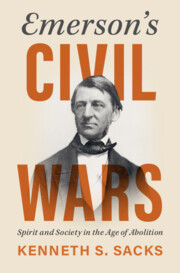
Kenneth S. Sacks explores how America's first public intellectual, determined to live self-reliantly, wrestled with his personal philosophy and eventually supported collective action to abolish slavery. Ralph Waldo Emerson was successful in creating a national audience for his philosophy and enjoyed the material and social rewards of that success. Contrary to most other Emerson scholars, however, Sacks argues that Emerson resisted active abolition and did not become a supporter until events forced his hand. Committing to the antislavery movement was risky and ran against his essential belief in social gradualism. Events in the mid-1850s, though, hastened Emerson's conversion and he eventually became a leader in the movement. A study of an intellectual under the pressure to engage in political action, Emerson's Civil Wars enriches our understanding of Emerson's antislavery activities, life, and career.
The history of government presents six lessons. Government has been crucial to building a nation truer to our nation, but it has taken both government and markets to do this. Government is big and complex in response to changes that were occurring in the economy which sent the country in directions inconsistent with its national values. Fourth, despite its size and complexity, government undertakes the same three essential functions it has undertaken over the history of the country. Government has been necessary to create, sustain, and expand markets, to protect people from economic loss and physical injury, and to maintain a social safety net for people mired in poverty due to age, health, or market conditions not of their doing. Finally, the pathway towards achieving America’s fundamental political values has been littered with mistakes and regrets. What makes us a nation has changed to encompass those who have been excluded and marginalized.
Ageing-in-place has become an internationally favoured policy and practice response to population ageing. However, limited literature has sought to understand this concept from Chinese older adults' perspectives, especially in rural China. The purpose of this study is to explore how older adults in rural China conceptualise ageing-in-place. This study took a qualitative approach by carrying out in-depth interviews with snowball-sampled older adults from a rural village in Shandong Province, China (N = 30). Participants conceptualised their ageing-in-place as consisting of two phases: first, when they felt self-reliant, these older adults preferred to live independently in the village; and second, when their capability declined, they would expect care-giving from their children. Autonomy was essential to participants' decision to age in place. The village offered both a physical and social environment in which participants could sustain their self-identity. This decision to age in place independently also related to participants' proactive adaptation to their children's evolving practices of filial piety. Still, had their capabilities declined, they reported they would expect their children's care-giving and move in with their children. Our findings suggest that older adults in rural China conceptualise ageing-in-place as a dynamic process that evolves as they age and experience changes in their needs and capabilities. This perception expands critical notions of ageing-in-place by highlighting rural older adults' flexible conceptualisation of the ‘place’ in which they plan to age. This study sheds light on socioculturally nuanced understandings of ageing-in-place while providing evidence to inform tailored policy and practice development in rural China.
This chapter focuses on the essays of Transcendentalists such as Henry David Thoreau, Ralph Waldo Emerson, and Margaret Fuller who used writing as a spiritual and philosophical tool. This special form of prose allowed them to write themselves, and thus Transcendentalism as a movement, into being, creating a flexible, open-ended, and experimental instrument for the radical self-fashioning of an emergent sensibility: the American individual as a freestanding soul, entire in (him)self, capable of encompassing all the potential of the cosmos. The resulting works forever stamped this most antinomian of genres with the Transcendentalist’s indelible signature. The chapter traces the movement back to Harvard College in the 1820s and ’30s, where students and faculty discussed spirituality, philosophy, and the art of writing. The chapter traces the influence of this convergence and of key figures like the Unitarian preacher William Ellery Channing on the burgeoning movement. The chapter’s final pages highlight how central Transcendentalism has been to the American essay tradition, with writers today of greatly varying backgrounds absorbing its lessons and style into their own writing.
The chapter investigates how youth respondents of higher- and lower-income levels negotiate and contest everyday citizenship. In examining citizenship-from-below, the economic precarity that lower-income respondents face leads them to stress citizen actions that foster reliance on others and collective activities. In contrast, higher-income youth stress productivity and self-reliance as citizenship components, and survey findings reveal their limited engagement in community groups (except in Uganda). Upon examining acts of citizenship-from-above such as paying taxes, higher-income youth are more concerned about the legal compliance of others, while lower-income youth are more concerned about being accused of legal violations. Surveys indicate more lower-income youth vote in Ghana and Uganda, but income differences on other acts of state-targeted participation are negligible. Our respondents do not explicitly link income or poverty to political engagement, but Tanzania and Zambia case studies demonstrate that paternalism, derision, and envy within and across income groups can shape citizenship identities.
Increasing the defense industry’s efficiency and equipping the armed forces with the most suitable weapons to meet their missions is often the main goal behind a country’s efforts to enhance civil–military integration. This is not necessarily the case for India, though. Equally, or even more important, is the pursuit of military self-sufficiency and the acquisition of a world-level military R&D and production capacity. Arguably, civil–military integration serves both ends. The growing interest of the Indian military in emerging technologies and the existence of a relatively strong civilian IT industry in India reinforce this logic and clear the way to military–civil fusion. However, the dual demands of equipping the forces with suitable armaments and strengthening India’s military self-sufficiency can be contradictory. This reality, coupled with low and occasionally inefficient national investments in defense R&D, has confronted India’s MCF with multiple difficulties. Aware of this situation, India has taken various measures to expand private industries’ participation in military procurement. Yet, the forces that work in favor and against India’s MCF are still at odds.
Chapter 6 outlines how the existence of the Love Jones Cohort offers a fresh lens with which to explore the lifestyle characteristics of the Black middle class. Earlier research on the Black middle class – who have often been equated with married-couple families – asserts that they face the ongoing problem of having to stabilize their class position. This can take on one or more forms, including developing and exemplifying behavior patterns and lifestyles appropriate to the middle class. Chapter 6 unpacks the lifestyle strategies and attributes of the Love Jones Cohort and examines how the decision to not marry and instead continue to live alone may impact such attempts to stabilize their class position. Chapter 6 emphasizes that own space and life, freedom, and self-reliance emerge as central aspects of the Cohort lifestyle, as well as situational loneliness. The Cohort places a great emphasis on the human interaction and companionship provided by family, friends, and social networks and discusses how the pressures emanating from family and friends help shape their lifestyles and navigate the ebbs and flows that arise.
When considering the question of China’s external economic relations during the Mao era, the dominant narrative in the literature underscores the following view: Mao’s China pursued a foreign economic policy that was autarkic, isolated from the global economy, and locked into a Soviet-inspired planned economy that provided limited incentives for economic interdependence with the outside world. For some, China’s isolation from the global economy was the result of its position in the Soviet bloc, which was “heavily biased against foreign trade,” and from its adoption of a centrally planned, socialist economic model that prohibited private interests from pursuing foreign investment or trade. For others, Mao-era policies of autarky were inspired by a form of xenophobia that stemmed from the country’s experience of Western predations during the nineteenth century, resulting in fear of economic dependence on foreign powers. Finally, others emphasize the role of Mao’s revolutionary ideology in explaining China’s isolation from the global economy; Mao’s tendency to view major international economic institutions and norms as counterrevolutionary and “hostile” to the Chinese state led him to disengage from international trade and other economic opportunities.
The Short-To-Medium-Term Assistance (SMTA) is a state programme in Singapore providing financial, employment and other assistance to individuals in financial need. SMTA frames the resources that it provides as a temporary form of support that applicants should use to regain their financial self-reliance through employment. Drawing on eleven months of ethnographic fieldwork, this article identifies two forms of self-reliance which differ from the objective of the programme. First, informants worked to receive assistance by convincing Social Service Office (SSO) officers of their financial need; they further approached their Members of Parliament (MPs) to enhance the approval of their assistance. Second, informants worked to find jobs on their own rather than accept job recommendations from SSO officers and career consultants. The different forms of self-reliance illustrate the agency of informants to get by, which contrasts with the agency resource embedded in the neoliberal governmentality of SMTA. These ethnographic insights indicate that SMTA was unsuccessful in directing informants to work and achieve financial self-reliance.
How do aid agencies deliver protection and assistance in Uganda’s Kyaka II, and specifically seek to prevent and overcome gender-based violence? In what ways do they affect the women and men living there? Focusing on these questions, the chapter explores the overall camp structures and scope of aid via the humanitarian apparatus, power practices, and decision-making—as well as their effects on the refugees living in Kyaka II. Divided into four parts, the first addresses developments and aid in the camp alongside hierarchies, and argues that refugees are made ‘protection objects.’ The second part centers on projects tackling gender-based violence, and their links with global refugee policies. It reveals how preventive and protective projects against gender-based violence as well as those to support empowerment essentially draw on ‘vulnerability’ categorizations, which portray women primarily as ‘vulnerable protection objects.’ The third part addresses correlations between aid, the camp architecture, and the prevalence of gender-based violence, revealing the three issues of aid workers at times perpetrating violence, the structural effects of aid, and the risks resulting from the camp landscape. Before concluding, the fourth part considers whether the broad critique of aid provision and of the camp is reasonable in light of the challenges that aid agencies themselves face.
Caring for infants after the first-stage palliative surgery for single-ventricle heart disease bring challenges beyond the usual parenting responsibilities. Current studies fail to capture the nuances of caregivers’ experiences during the most critical “interstage” period between the first and second surgery.
Objectives:
To explore the perceptions of caregivers about their experiences while transitioning to caregiver roles, including the successes and challenges associated with caregiving during the interstage period.
Methods:
Constructivist Grounded Theory methodology guided the collection and analysis of data from in person or telephonic interviews with caregivers after their infants underwent the first-stage palliative surgery for single-ventricle heart disease, and were sent to home for 2–4 months before returning for their second surgery. Symbolic interactionism informed data analyses and interpretation.
Results:
Our sample included 14 parents, who were interviewed 1–2 times between November, 2019 and July, 2020. Most patients were mothers (71%), Latinx (64%), with household incomes <$30K (42%). Data analysis led to the development of a Grounded Theory called Developing a Sense of Self-Reliance with three categories: (1) Owning caregiving responsibilities despite grave fears, (2) Figuring out how “to make it work” in the interstage period, and (3) Gaining a sense of self-reliance.
Conclusions:
Parents transitioned to caregiver roles by developing a sense of self-reliance and, in the process, gained self-confidence and decision-making skills. Our study responded to the key research priority from the AHA Scientific Statement to address the knowledge gap in home monitoring for interstage infants through qualitative research design.
In Nakivale, the institutional context can be characterised as ‘co-optation’. Many refugees accuse UNHCR and its implementing partners (IPs) of ‘stealing’ their better ideas. Some IPs have justified independently pursuing ideas generated with refugees on the grounds of the limited capacity or competence of RCOs. UNHCR’s limited faith in the capacity of RCOs means that there are few opportunities for RCOs to work with them or their partners beyond being arbitrarily included in events or activities organised by formal providers. This chapter explores how the reaction of refugees to this distrust has been a mutual ‘scepticism’: they lack confidence in the formal organisational structures and thus often disengage. Many community leaders are reluctant to register their CBOs or to work collaboratively with UNHCR and its implementing partners when opportunities do arise. Where possible, RCOs prefer to retain their independence rather than risk their ideas being ‘stolen’ by IPs and used as evidence for their commitment to community-led development in order to attract further international funding.
‘Welzijn op Recept’ is an intervention in which primary care providers refer patients with psychosocial problems to a community well-being organisation. Welzijn op Recept has been helping participants in the town of Nieuwegein, the Netherlands for more than three years. An impact study was carried out from September to December 2014. The qualitative study aimed to determine what happens in the chain of the social prescription and what changes the participant experiences in terms of social participation. The participants in this study were selected by the well-being coaches. A total of 10 semi-structured in-depth interviews were conducted. This study has shown that the participants had confidence in their referral to the community well-being organisation. The well-being coaches constitute a link between primary care providers, patients and the community well-being organisation. Participants have explicitly indicated that they experienced an increase in their own strength, self-confidence, self-reliance and the number of social contacts, and stated that they are experiencing better health. A point of special interest in the current programme is the planning of structured follow-up interviews after starting up an activity.