To save content items to your account,
please confirm that you agree to abide by our usage policies.
If this is the first time you use this feature, you will be asked to authorise Cambridge Core to connect with your account.
Find out more about saving content to .
To save content items to your Kindle, first ensure no-reply@cambridge.org
is added to your Approved Personal Document E-mail List under your Personal Document Settings
on the Manage Your Content and Devices page of your Amazon account. Then enter the ‘name’ part
of your Kindle email address below.
Find out more about saving to your Kindle.
Note you can select to save to either the @free.kindle.com or @kindle.com variations.
‘@free.kindle.com’ emails are free but can only be saved to your device when it is connected to wi-fi.
‘@kindle.com’ emails can be delivered even when you are not connected to wi-fi, but note that service fees apply.
This chapter explores the experiences of Romani women (Gitanas) in the Spanish Atlantic empire through the lens of inquisitorial records from the seventeenth century. Centering the 1668 trial of María de la Concepción in Veracruz, it investigates how Gitanas navigated the complex religious, social and political landscapes of colonial society. By comparing inquisitorial cases from both Spain and New Spain, the chapter argues that colonial governance was less rigid than its peninsular counterpart, creating spaces in which Gitanas could engage in love magic, healing practices and other ritualized forms of knowledge. Operating in liminal zones across ethnoracial and class boundaries, these women provided services to a wide range of clients. Their practices functioned as both survival strategies and subtle forms of resistance against imperial and ecclesial authorities. The chapter demonstrates that Gitanas leveraged their ambiguous social position to subvert normative boundaries of ethnicity, gender and class, particularly by facilitating relationships that unsettled colonial hierarchies and exposed the permeability of imperial control.
El texto atiende las relaciones entre Hispanoamérica y el Oriente en un temprano período colonial y de una notable intensidad que no parece superarse hasta el siglo XVIII. La relación fue impulsada desde las Indias Occidentales a partir de una navegación flexible y de particulares desafiando la norma peninsular sobre un trato de navíos oficiales, regulado para Nueva España y prohibitivo para el resto de las Indias Occidentales. Se analiza el conflicto a partir de relaciones, cartas y del derecho legislativo que circuló en esos años. Posteriormente, se explica cómo esa suerte de revolución naviera particular dio lugar a la movilización o proyección de una canasta de bienes y metales entre el sudeste de Asia, China, Filipinas y las Indias Occidentales. Finalmente, el ensayo da cuenta cómo la (re) orientación transpacífica hispanoamericana fue denunciada por las instituciones peninsulares y sus representantes alertando sobre un quiebre de la relación “de dependencia” transatlántica.
Castile and Aragón stayed amalgamated under the Spanish Habsburg dynasty, which reigned for two centuries. Early on, Spaniards conquered the Aztec and Inca empires in the Americas, and huge transatlantic merchant fleets connected Spain with its growing American Empire. After unprecedented silver deposits were discovered in both North and South America, Spanish silver and other treasure contributed to growth and inflation around the globe. The long-sought return route eastward from Asia to the Americas allowed transpacific trade to begin in 1565, while conquest of the Philippines made Spain’s composite monarchy, as it is often called, truly global. Spanish power declined in the late seventeenth century, the victim of overextension and continual warfare. When the Habsburgs died out in 1700, a Bourbon prince had the best dynastic claim to become king of Spain. As Felipe V, he fought most of Europe to remain on the throne and would father three successive kings, whose reigns saw Spain’s global empire reach its greatest extent. Thereafter, the French Revolution and a Napoleonic invasion would shatter Spain and end the early modern period.
El análisis tributario de la España colonial en el XVIII se fundamenta en la investigación de las Cajas Reales. La literatura científica se centra en la recopilación de información de los sumarios de los libros comunes y de caja. Siguiendo la línea de las últimas publicaciones, se identifican deficiencias en dicha información. Utilizando datos inéditos de los restantes libros contables, como los manuales, se completan los cargos para la Caja Real de Santiago (Chile) y se depuran las series publicadas eliminando cantidades recaudadas años anteriores y consideradas cargos del corriente. Los resultados sugieren que las recaudaciones no fueron tan elevadas como se ha asumido tradicionalmente. Se resalta así la importancia de la contabilidad en la reconstrucción de la historia económica colonial.
Andrés Bello (1781–1865) was born in Caracas, Venezuela. Early in his career he occupied various administrative positions in the government of the Captaincy General. In 1810, the newly inaugurated Junta of Caracas appointed him secretary of the commission sent to Great Britain to request support for the new government. He remained in London for nineteen years. He lived in Santiago for the remaining thirty-six years of his life, serving as government official, senator, and rector of University of Chile. He was in addition a poet, a literary critic, and a jurist. His most important works include Principios de derecho de jentes (1832), Gramática de la lengua castellana (1847), and the Civil Code of the Republic of Chile (1855). A towering intellectual figure in Spanish America, he has only recently been translated into English. The current selection concerns a specific development in Ecuador but involves a central principle of international relations where Bello took a strong position against foreign intervention, especially from emerging states that sought the political and military assistance of stronger ones. The polemical tone of the article is typical of the press debates in Chile in the 1840s.
Of humble origins and mixed race, Bernardo Monteagudo (1789–1825) was born in Tucumán, in the River Plate (Argentina today). He graduated in law from the University of Chuquisaca and soon became involved in the wars of independence against Spain, first in Upper Peru and then in Buenos Aires, where he stood out for his radical republicanism, which he originally displayed as a polemicist in newspapers. Embroiled in the internal conflicts of the revolutionary movement in the River Plate, he was forced into exile in 1815. In 1817, he joined the army of José de San Martín, which drove the Spaniards out of Lima in 1821, when Peruvian independence was declared. Monteagudo became San Martín’s right hand and was practically in charge of governing Lima while San Martín continued the fight against the royalist forces elsewhere. Monteagudo’s authoritarian rule provoked wide resentment and, following two days of riots, he was expelled from the city in 1822. Written a year later as a defence of his actions in government, his Memoir offered a systematic examination of the conditions that, in his view, made democracy unworkable in Peru.
Carlos Arturo Torres (1867–1911) was a journalist, teacher, and statesman. He was born in the Colombian town of Santa Rosa de Viterbo and studied in Tunja, Bogota, and the United Kingdom. After travels in Europe, he taught international law in Bogota, and founded such papers as La Crónica, El Nuevo Tiempo, and La Civilización. He was sent to diplomatic missions in France, England, and Caracas, where he died. He also served as minister of both treasury and finance. Undoubtedly, Idola Fori was his most influential work. He borrowed from Francis Bacon’s Novum Organum, who discerned four “idols” that obstruct the truth, including the idols of the forum and the market. Idola Fori was originally published with a prologue by José Enrique Rodó, with whom he has often been compared, and with whom he shared ideas about history and culture. Torres’ work, however, is more deeply grounded in politics, and shows his engagement with contemporary debates about the role of the state, major ideas about economic development, and the tension between individualism and collectivism.
This book offers a selection of key texts mostly written by leading figures in the history of Spanish American political thought during the first century of independence. Political thinkers in the region had to grapple with rather unique and extraordinary circumstances after three centuries of Spanish colonial rule. The emergence of a significant number of new independent polities that adopted representative institutions in an era when absolutism still prevailed in Western Europe, their general adoption of republicanism (except for Mexico during the brief rule of Agustín de Iturbide in 1822–1823, and Maximilian in 1864–1867), and their complex demographic composition, all posed serious challenges for the formation and consolidation of national states in Spanish America. In dialogue with the major currents of thought in Western Europe and North America, Spanish American thinkers often reflected upon these and other related problems while being politically engaged, either in government or in opposition.
Throughout the nineteenth century, Spanish American writers and thinkers grappled with their unique circumstances of independence after three centuries of Spanish colonial rule. The emergence of a significant number of new polities that adopted representative institutions in an era when absolutism prevailed in Western Europe, their general adoption of republicanism, and their complex demographic composition, all posed serious challenges for the formation of national states in Spanish America. This volume explores how politically engaged Spanish American thinkers reflected on these issues, either in government or in opposition. Through a wide selection of texts, some previously unpublished in the English language, the volume demonstrates the multiplicity of voices across countries, perspectives and social background. The texts included are organised around main themes reflecting central concerns including history; democracy, constitutionalism and liberty; church and state; society; Spanish America and the World; and 'Fin de siècle'. This volume thus vividly demonstrates the significance of Latin America to the field of Global Intellectual History.
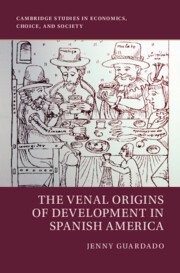
Venal Origins is a comparative and historical study of the roots of spatial inequalities in Spanish America. The book focuses on the Spanish colonial administration and the 18th-century practice of office-selling-where colonial positions were exchanged for money-to analyze its lasting impact on local governance, regional disparities, and economic development. Drawing on three centuries of rich archival and administrative data, it demonstrates how office-selling exacerbated venality and profit-seeking behaviors among colonial officials, fostering indigenous segregation, violent uprisings, and the institutionalization of exploitative fiscal and labor systems. The enduring legacies from their rule remain visible today, in the form of subnational authoritarian enclaves, localized cycles of violence, and marginalized indigenous communities, which have reinforced and deepened regional inequalities. By integrating perspectives from history, political science, and economics, Venal Origins provides a nuanced and empirically grounded analysis of how colonial officials shaped-and still influence-subnational development in Spanish America.
White cultural elites in the US capital of Philadelphia in the 1780s and 1790s depicted Native Americans (or “Indians”) as vanishing peoples, soon to be replaced by Anglo culture. The fledgling nation’s premier naturalist Bejamin Smith Barton and the consecrated poet of the American Revolution Philip Freneau turned to Spanish American antiquarianism to invent a glorious antiquity for North America. They learned from Antonio de Ulloa’s Noticas Americanas (1772) and Francisco Javier Clavijero’s Storia Antica del Messico (1781) how to practice antiquarian materialism, then chose early Republican literary and scientific periodicals to disseminate their conquest of the Native American past. Those two americanistas in particular showed how to collect Indigenous artifacts, assemble them, and invest them with European meanings, which inspired the first generation of US Americanists to relegate Native American life to the dustbin of prehistory and at once fabricate their own Whiteness.
Chapter 1 opens with a description of the different peoples of the Americas in 1492 and the earliest contacts with Europeans, and outlines the process of Spanish penetration and settlement. It then explores indigenous reactions to Europeans at first contact, and analyzes the roots of the apotheosis of Europeans in Spanish America, arguing that it is misleading to distinguish too sharply between religious and rational considerations, and indicating that native peoples did not bow before the strangers as gods. The chapter then shifts the focus to the intellectual framework employed by Europeans to situate native peoples within a European worldview (European Mythology of the Indies I). Europeans interpreted indigenous peoples according to their own mythological concepts, such as the myth of the Earthly Paradise, the myth of the Reconquest of Jerusalem, the myth of the Marvelous East, and the myths of the Classical Tradition. The chapter ends with a summary of Spanish expansion into the Pacific.
The theories of rights articulated in the Americas during the eighteenth and nineteenth centuries were innovative in their own time and have exerted widespread influence ever since, but they were marked by profound contradictions that spurred generations of critical engagements. This chapter offers an explanation for these dynamics by considering the social position occupied by rights theorists within the Americas. It begins with the British and Spanish American independence movements, considering the roles of universalist and particularist rights claims within the ideologies of the movements’ European-descended leadership. Next, it explores how, in the instances where Americans that occupied less privileged social positions took over the leadership of struggles for independence, the kinds of rights claimed, the grounds upon which these rights were claimed, and the range of persons on behalf of whom rights were claimed varied in such a manner as to reflect the difference of leadership. Finally, it traces the ways that Americans initially excluded from enjoyment of the rights claimed by the independence movements and enumerated in the Americas’ early constitutions sought both recognition as equal rights-bearers and revisions to the rights that they and other Americans bore over the course of the nineteenth century.
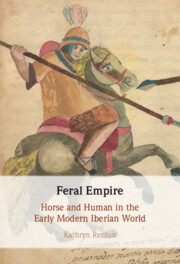
By tracing the dramatic spread of horses throughout the Americas, Feral Empire explores how horses shaped society and politics during the first century of Spanish conquest and colonization. It defines a culture of the horse in medieval and early modern Spain which, when introduced to the New World, left its imprint in colonial hierarchies and power structures. Horse populations, growing rapidly through intentional and uncontrolled breeding, served as engines of both social exclusion and mobility across the Iberian World. This growth undermined colonial ideals of domestication, purity, and breed in Spain's expanding empire. Drawing on extensive research across Latin America and Spain, Kathryn Renton offers an intimate look at animals and their role in the formation of empires. Iberian colonialism in the Americas cannot be explained without understanding human-equine relationships and the centrality of colonialism to human-equine relationships in the early modern world. This title is part of the Flip it Open Program and may also be available Open Access. Check our website Cambridge Core for details.
The revolutionary processes that led to the dissolution of the Spanish colonial empire in the Americas formed an entangled process. The states that emerged from these processes built their new national identities around the heroes and the deeds of the independence period from roughly 1760-1830. These hero myths are still important markers of identity today. The chapter explores the main interpretations of Spanish American independence, presents conflicting periodizations, and then discusses the events from the crisis of the empire, colonial reactions to the different phases of independence (1810-1814 and 1814-1830). Finally, it demonstrates that many revolutionary promises remained unfulfilled. Everywhere in the Spanish possessions the motivation for revolution was the problem of legitimacy arising from the French invasion of the Iberian Peninsula. The individual experiences of revolution, however, were very different and ranged from popular uprisings to elite-led exchanges of ruling oligarchies. The ethnic dimension, which overlapped with the social problem, was a unique feature of the Spanish American revolutions of independence. It contributed to boosting the ideas of freedom, equality and self-determination. Until 1830 and long after, this explosive force could not yet unfold. What remained was the promise of the revolution.
The reinstallation of liberal constitutionalism in Spain in 1820 was the first major challenge to the conservative political system of the Restoration, with far-reaching effects on the European and American continents. Spanish liberals endeavored to continue a political program based on the constitution of Cádiz (1812), although they encountered many obstacles in the form of inner discord and, especially, a local robust counterrevolutionary movement which enjoyed external support. The Trieno Constitucional was a moment of rapid and intense politicization, which surpassed the social elites to reach into a wider public that included popular sectors. A vigorous public opinion was developed and elections with mass participation were held at various administrative levels. The reverberations of the Spanish revolution were felt abroad. Naples-Sicily, Portugal and Piedmont-Sardinia soon adopted the Cádiz constitution. Moreover, during the Triennium the American possessions of the Spanish and Portuguese monarchies secured their independence, at a critical moment in which the Iberian metropoles were unable to delay the process anymore. Ultimately, the return of liberalism to Southern Europe was short-lived. The constitutional regimes fell after interventions accorded by the continental powers endorsed the local reactionary interests.
It is habitual among scholars to suggest that European nations were formed during, and to some degree because of, the colonial expansion.1 Many argue that this expansion, which placed colonizers in opposition to the natives they sought to control, to other Europeans with whom they competed, and to the large African population that they enslaved, led to the emergence of new identities. In the Spanish case, it enabled the move from multiple local distinctions to a unitary national designation, allowing individuals originating from the different Iberian kingdoms (Castile, Navarre, Aragón, and so forth) to assume a single identity as Spaniards. While some scholars pointed to the formation of nations (or proto-nations), others concluded that the colonial experience led Europeans to think of themselves as participants in a community, members of which belonged to a particular race. Imagining themselves to be distinct from both natives and Africans, these Europeans refashioned themselves as “white.”2
This article explores how late eighteenth- and early nineteenth-century ideas of the Spanish American consumer took shape. It argues that Atlantic debates on consumption, on the one hand, and on racial difference, on the other, provided a common ground on which foreign visitors, diplomats and commentators, as well as Colombian elite intellectuals, could jointly create a positive idea of the Spanish American consumer. The article demonstrates that, in the eyes of those who had either political or economic interest in the region, it was possible for Spanish American Indians, Blacks and ‘mixed races’ to gradually overcome their ‘backwardness’ by adopting new practices of consumption. The consumption of new necessities by the Spanish American popular sectors became, for many of these commentators, an irrefutably civilising force.
Traditional historical literature has stressed a generalised crisis throughout the world in the 17th century. First proposed for Europe with its numerous dynastic, religious and state conflicts, it has now been expanded to include Asia and the Middle East as well. It was also assumed that there was a significant crisis in the Americas, a theme which until recently has dominated the traditional literature. The claim that there was such a crisis was based on a series of classic studies by Earl J. Hamilton, Chaunu and Borah, among others. But new research has challenged this hypothesis and we will examine both these new studies as well as offering our own research findings on this subject.
The essay examines Spain’s colonial legacy in the long-run development of Spanish America. It surveys the fiscal and constitutional outcomes of independence and assesses the relative burden imposed by colonialism. Constitutional asymmetries between revenue collecting and spending agents constrained de facto governments’ power to tax. Inherent disparities embedded in the colonial fiscal system worsened with vaguely defined representation for subjects and territories and vexed their aggregation into a modern representative polity. Governments with limited fiscal capacity failed to deliver public goods and to distribute the costs and benefits of independence equitably. Growing indirect taxes, debt and money creation allowed them to transfer the fiscal burden to other constituents or future generations. Taxpayers became aware of the asymmetry between private contributions and public goods and hence favoured a low but regressive taxation. Comparisons with trajectories in the metropolis and the United States are offered to qualify this legacy.