To save content items to your account,
please confirm that you agree to abide by our usage policies.
If this is the first time you use this feature, you will be asked to authorise Cambridge Core to connect with your account.
Find out more about saving content to .
To save content items to your Kindle, first ensure no-reply@cambridge.org
is added to your Approved Personal Document E-mail List under your Personal Document Settings
on the Manage Your Content and Devices page of your Amazon account. Then enter the ‘name’ part
of your Kindle email address below.
Find out more about saving to your Kindle.
Note you can select to save to either the @free.kindle.com or @kindle.com variations.
‘@free.kindle.com’ emails are free but can only be saved to your device when it is connected to wi-fi.
‘@kindle.com’ emails can be delivered even when you are not connected to wi-fi, but note that service fees apply.
This chapter explores both the Scottish dimension of MacDonald’s biography and the ways Scotland is reflected in his writing. During his lifetime, Scotland itself underwent greater changes than the simple phrase ‘Victorian Scotland’ implies. In addition, MacDonald found himself in the position of feeling both intimately Scottish but also a distanced observer of the Scottish scene. His sense of his native land was compounded with his memories of his own early years there and with his reverence for Scotland’s previous literary achievements, particularly in the works of Burns, Scott, and Hogg. Scotland’s distinctiveness – indeed, its otherness – in the minds of his readers provided him with a means of articulating his own distinctive vision of reality, a vision which sought to relate the mundane world of Victorian Britain with the larger spiritual world of which (in his eyes) it was part. His fiction, therefore, encompassed both realism and fantasy; Scotland helped him bring the two into a fruitful relationship. By surveying the Scottish novels he wrote throughout his career, we can attain a more truthful understanding of his idiosyncratic contribution to nineteenth-century fiction.
While George MacDonald’s reputation as a fiction writer rests upon fantasy and Christianity more than realism, his realist novels reflect a remarkable generic range. MacDonald wrote twenty-nine realist novels between 1863 and 1897, most of them set in Scotland and England. Together, these novels share many overlapping themes and plot trajectories, and critics have objected to their formulaic characters (noble workmen, saintly women, dying children) and predictably happy endings. These shared features aside, the novels set in England also provide a micro-history of ‘the novel’ in the later Victorian age, incorporating elements of the social-problem novel and a concern for the urban poor; the sensation novel’s detective plot; and the gothic novel’s seeming supernaturalism, ultimately explained by nature. This chapter examines these subgenres as well as MacDonald’s sophisticated use of metafiction. While metafiction has been dominantly explored in modernism, MacDonald is one of many Victorian novelists whose self-conscious formal techniques draw attention to his experimental realism.
George MacDonald’s best-known and most influential works are his two fantasy novels for adults: Phantastes and Lilith. They are also, arguably, his least typical works. It can be difficult for modern-day readers to comprehend these idiosyncratic texts through the distorting glass of the twentieth century, particularly the development of psychoanalysis and genre fantasy. This chapter, then, offers a door into these complex, fascinating texts by reading MacDonald’s fantasy novels on their own terms. It positions each novel within its biographical context, indicating how it relates to other works MacDonald was writing at the time, and re-examines the question of why he turned to this genre at the beginning and ending of his career. It then offers a comparative analysis of the two novels. What emerges is a glimpse into MacDonald’s profound effort to maintain hope and faith in face of his own mortality and devastating personal tragedy.
Although George MacDonald considered poetry his primary literary vocation, his own verse works have received very little critical attention. His works are characterised by a restless experimentalism and a deep erudition. This chapter works to establish a basic understanding of the nature and organisation of MacDonald’s oeuvre. Under consideration are the poems included in his 1893 summative, self-edited anthology Poetical Works. These are approached as a textus receptus to evaluate the intentions and structure of MacDonald’s poetic project. The approach to this chapter, then, is in four parts: the first considers the closely held question of ‘Is MacDonald’s poetry any good?’, the second examines three impediments to the appreciation of MacDonald’s verse, the third offers a section-by-section overview of MacDonald’s Poetical Works (1893) – his self-edited anthology of his poems – and the fourth, a praxis segment, looks at an individual poem to see the various strands of his interests ‘in action’, as it were.
This chapter examines George MacDonald’s lifelong, multifaceted engagement with the fairy tale, arguing that he utilised the genre as a uniquely ‘liminal’ form capable of mediating spiritual truth. The chapter first establishes liminality – the ambiguous, transitional state in a rite of passage – as its primary analytical framework. It then explores the surprising, liminal places fairy tales occupied in MacDonald’s life: as medicine for the dying, as unorthodox lectures, and as a preparation for the message of Christ. Situating MacDonald’s work within the Victorian debate between didactic moralists like George Cruikshank and whimsical aesthetes like Lewis Carroll, the chapter argues MacDonald forged a third path, as articulated in his seminal essay ‘The Fantastic Imagination’. This theoretical foundation is then used to analyse MacDonald’s fairy tales (such as ‘The Golden Key’ and ‘The Light Princess’) as intentionally crafted liminal entities. His fairy tales are not vehicles for simple morals but literary rites of passage, designed to strip characters and readers of commonplace certainties and guide them across thresholds into deeper spiritual and psychological awareness.
George MacDonald (1824–1905) remains one of the most persistently read and beloved of the Victorians. His fairy tales and children's books have delighted generations of young readers, while his sermons, essays, and poems still offer startling insights into life and literature. He has increasingly been recognised as one of Scotland's most important nineteenth-century novelists. Here, seventeen new essays from an international, diverse group of scholars illuminate the crucial aspects of MacDonald's remarkable, varied works. The chapters are organised around MacDonald's life, major genres, and central themes, and provide clear points of entry for students, researchers, and curious readers. For readers approaching MacDonald's works for the first time and for those renewing a long acquaintance, The Cambridge Companion to George MacDonald is an indispensable guide. With a foreword by Malcom Guite and an afterword by Roderick McGillis.
Though considered a minor novel, A Laodicean is crucial in Thomas Hardy's career, literary art, and exploration of nineteenth-century religious issues. This is the first authoritative variorum edition of the novel, featuring a full account of its history, references, sources, and literary-religious importance. It explores Hardy's interpretation of English religious culture and his engagement with the debate between Anglicanism, Catholicism, and secularism, woven not only through its treatment of Anglican-Catholic histories of place, but also through the love lives of the main characters, connected as these are with their gradual accommodation of innate secularism alongside their growing religious interest. Alongside extensive explanatory notes, an introductory essay provides new and enlightening insights into the novel's fascinating contexts and into the process of its composition, its reception, its various editions, and the novel's rich dialects and geographies.
This chapter turns to the Persianate tazkirah tradition to show how the shared discourse of literary modernization, with its inherent nationalism and Victorian-influenced puritanism, led modernizers to work together to remake their shared Persianate heritage and create chaste, heteronormative, nationally bounded literary histories. These literary histories, produced as they most often were for modernizing educational institutions, likely not only reflected changing conventions but also played a pedagogical role in spreading them. The generations who began to receive a modern education grew up writing poetry differently under such influences. In this way, the modernizing conventions that were first developed or deployed by literary historians impacted other genres of Persianate literature.
This article reconstructs the student experience at St Mary’s College, Hammersmith (c.1854–1914), the first Catholic teacher training college in Britain. Using diaries, correspondence, magazines, and administrative records, it outlines the profile of the student body as predominantly young men of Irish descent from working-class communities in northern England and Scotland. It examines their educational formation, devotional practices, domestic routines, leisure pursuits, and the distinctive homosocial culture that bound them together as ‘Simmarians’. The article argues that St Mary’s was more than a site of professional preparation: it functioned as an ‘emotional community’ in which Catholic masculinity, vocation, and identity were consciously shaped. By situating the Simmarian experience within the wider development of Catholic schooling and the history of emotions, the study shifts attention from policy to lived formation, offering new insights into the making of Catholic teachers and the cultural significance of male community life in Victorian and Edwardian England.
Unearthing primary sources from a large transatlantic archive, this first book-length study of asylum periodicals in the nineteenth century traces the origins and early spread of periodical publishing in mental institutions in Britain, the United States, and the rest of the world. It connects the rise of asylum periodicals with developments in publishing, literary culture, and the treatment of madness, illuminating the social and print networks that supported their spread. Examining the complicated relationships involved in asylum publishing, Mila Daskalova highlights the role of print in self-expression, community building and identity formation. It shows that patients employed these publications to navigate their institutional reality and to interact with each other and the world. Rather than powerless recipients of care or abuse, periodical contributors participated actively in their treatment and cultural and social life within and beyond the institutions. This title is also available as open access on Cambridge Core.
The Epilogue reflects on the ways that nineteenth-century texts consistently acknowledge the post-lapsarian state of human existence. The literary works discussed in this book all, to some extent, either recreate the events of Milton’s epic in a world that is fallen or tell the story of what happens after the expulsion. Drawing on Christopher Ricks, the Epilogue identifies a single word – ‘error’ – as emblematic of Milton’s nineteenth-century legacy. ‘Error’ points to its post-lapsarian meanings even when used to describe Eden before the Fall. After opening with the 1790 disinterment of Milton’s corpse, the Epilogue turns to another disturbing anecdote to illustrate the complexity of Milton’s nineteenth-century reception: the history of a Victorian edition of Milton’s poetry, bound in tanned human skin. The skin in question belonged to George Cudmore, executed for murder in the 1830s. This instance of anthropodermic bibliopegy reveals that Milton’s works, while revered and respected by the Victorians – his body parts were treated as relics – were also open to disruption and reinterpretation.
Chapter 4 reads the fiction of Thomas Hardy alongside biblical illustration and iconographic tradition to reveal both Hardy’s Miltonic way of seeing and his literary idiosyncrasy. The chapter begins by analysing Hardy’s use of Miltonic shifts in perspective and scale – described by critics as proto-cinematic – to shape Wessex as a post-lapsarian, sublime landscape. In The Return of the Native and Tess of the d’Urbervilles, Hardy’s characters re-enact the Fall, situating themselves within a cyclical Miltonic genealogy. The chapter then turns to Hardy’s allusions to Milton through his focus on hands, in ‘handed moments’ that recall Milton’s haptic imagery to recreate an unstable Eden in Wessex. Finally, the chapter compares biblical and Miltonic illustrations that are brought together in nineteenth-century extra-illustrated Bibles such as the Kitto Bible: this comparison reveals how Milton’s text and its focus on hands reshaped biblical illustration, and supports a reading of Hardy as a writer attuned to the differences between Milton’s Eden and that of Genesis.
The Introduction outlines the intermedial method of this book, which brings together Milton with nineteenth-century writers and artists who engage with each other’s work at the same time as reading Milton directly. It provides an overview of Milton’s place in the visual and material culture of the long nineteenth century. This includes the literary galleries of the late eighteenth century, the development of proto-cinematic technologies and stage spectacles, illustration on canvas and the page, and interventions in books such as extra-illustration and marginalia. The Introduction also addresses the various metaphors drawn from Milton’s writing that scholars have used to explain his influence, comparing him to a ghost, a troll, a father, even God. It then proposes the epic simile as a useful model for the way Milton is understood in this book: just as Milton’s similes describing Satan suggest, a powerful figure can be like many disparate things at the same time.
Today's environmental decimation and climate crises have arisen from our drive for individual material prosperity. We even appreciate nature primarily for its fulfilment of our interests, whether economic productivity, aesthetic pleasure, or personal well-being. And yet, we still ask how we have reached this dire ecological condition and what it is that has kept us from acting effectively to maintain a thriving and diverse biosphere. This collection of essays by major scholars from around the world analyzes how the industrial, imperialist Victorian era gave rise to today's unwillingness to move beyond our acquisitive drive. But it also explores the Victorians' initiation of the modern environmentalist movement, formulation of the first legislation defending rights of nonhuman animals, and invention of literary forms for contesting environmental degradation. In this most unlikely of eras, the volume uncovers both valuable insights into the limitations of our own environmentalism and innovative suggestions for overcoming them.
The intermedial legacy of John Milton in nineteenth-century literature and visual culture features writers not only engaging with Milton's works but also responding to each other's rich and varied interpretations. Challenging linear models of literary tradition, Laura Fox Gill proposes a method of cross-disciplinary reading that stages triangular conversations across media. Through case studies pairing Milton with Mary Shelley and John Martin, Herman Melville and J. M. W. Turner, A. C. Swinburne and William Blake, and Thomas Hardy and Biblical illustrators, she uncovers a rich network of creative exchange. While Milton's legacy was often mediated through Romantic predecessors, his texts – especially Paradise Lost – remained vital touchstones for Victorian readers and viewers. Gill sheds new light on how Milton's works were reimagined in a multimedia culture, expanding our understanding of literary influence, reception, and the visual imagination of the nineteenth century.
Disability is central to the Gothic imagination. This Element draws together disability and Gothic literature in ways that show the interplay between them. The first chapter offers a brief history of Critical Disability Studies, and the manner in which Gothic has been integral to the evolution of disability theory. It shows the increasing centrality of the Gothic to the development of Critical Disability Studies, and describes the emergence of the subfield of Gothic Disability Studies. The second chapter and third chapters offer close readings of particular texts, showing how Gothic bodies and minds articulate and shift their relationship to the aesthetic and affective frameworks of the nineteenth century. While disability sometimes represents the 'other' in Gothic literature, this positioning far from exhausts the ways in which disability is presented in this genre.
Traces the readership and use of Matthew Paris’ manuscripts after his death and in subsequent centuries before and after the Reformation dissolution of the monasteries as far as the modern era.
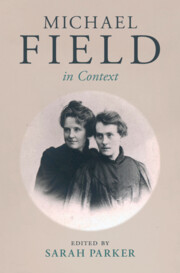
Few authors attract as much fascination as 'Michael Field', thecollaborative pseudonym of Katharine Bradley (1846–1914) and Edith Cooper (1862–1913), an aunt and niece living and working together in devoted fellowship. As Michael Field, Bradley and Cooper published over thirty volumes of poetry and verse drama across a career lasting from the 1880s to the 1910s. Here, chapters by thirty-six experts introduce the historical and cultural contexts crucial to understanding Field's work, including the late-Victorian aesthetic and decadent movements, fin-de-siècle poetry, and debates around gender and sexuality. Michael Field's connections with other authors, including Wilde, Pater, and New Women writers are also explored. Experimental in lyric poetry, ekphrasis, verse drama, and the prose poem, and fascinated by the ancient worlds of Greece, Rome and Egypt, the Renaissance, and the Romantic era, Michael Field's work remains profoundly relevant to current debates, including ecology, race, empire, and gender non-conformity.
The preface considers why historical context is such a rich and complicated lens through which to approach Michael Field and their work, given the complexity of Katharine Bradley and Edith Cooper’s lives and collaborative identity as Michael Field, and the startling range of past historical periods with which their work engaged, including Ancient Greece, Rome, Egypt, and Renaissance Italy, among other periods. The Preface approaches Michael Field as firmly situated within the cultures of the fin de siècle or 1890s, and discusses how their work develops in the twentieth century or modernist era. Finally, the Preface approaches the more difficult aspects of Michael Field’s identity, addressing issues of gender, sexuality, and the incestual dimension of Bradley and Cooper’s relationship.
This chapter considers Michael Field’s position as ‘Victorian decadents’ in the early twentieth century. It outlines Katharine Bradley and Edith Cooper’s ambivalent response to fin-de-siècle decadence, as seen in their reactions to the likes of Oscar Wilde and The Yellow Book. The chapter then proposes that Michael Field actually became more attached to decadence as the ‘yellow nineties’ waned, focusing on how Bradley and Cooper’s dedication to decadence is expressed most clearly in poems about Whym Chow, their beloved dog whose death in 1906 catalysed their conversion to Catholicism. The chapter finally discusses the decadent tropes found in Whym Chow: Flame of Love (1914) and Michael Field’s Catholic poems.