To save content items to your account,
please confirm that you agree to abide by our usage policies.
If this is the first time you use this feature, you will be asked to authorise Cambridge Core to connect with your account.
Find out more about saving content to .
To save content items to your Kindle, first ensure no-reply@cambridge.org
is added to your Approved Personal Document E-mail List under your Personal Document Settings
on the Manage Your Content and Devices page of your Amazon account. Then enter the ‘name’ part
of your Kindle email address below.
Find out more about saving to your Kindle.
Note you can select to save to either the @free.kindle.com or @kindle.com variations.
‘@free.kindle.com’ emails are free but can only be saved to your device when it is connected to wi-fi.
‘@kindle.com’ emails can be delivered even when you are not connected to wi-fi, but note that service fees apply.
Electric vehicle (EV) adoption is not determined by technology alone. It also depends on how governments, industries, infrastructure, and public support develop together, while overcoming resistance from established fossil-fuel and automotive interests. Comparing California, Texas, and Michigan, we show why some states have progressed much faster than others. As responsibility for transport decarbonization increasingly shifts to state governments in the United States, our findings highlight the need for policies tailored to local economic, political, and industrial conditions rather than a one-size-fits-all approach.
Technical Summary
Although socio-technical feedback studies have recently raised increasing interest in understanding the acceleration of sustainability transitions, limited studies can explain why these feedback loops differ across places. Thus, they provide limited explanations for why different places manifest different paces of low-carbon transitions. To address this gap, we develop a framework that links feedback loops with contextual moderators to reflect place-specific feedback dynamics. We identify five reinforcing loops: industrial transformation, technological change, infrastructure investment, behavior change, and environmental legitimacy, with two balancing loops rooted in fossil-fuel resistance and legacy automotive lock-ins. Additionally, we argue that state-level governance capacity and policy orientation perform as contextual moderators shaping the strength and interactions of these feedback loops. We apply our framework to a comparative case study of EV transitions in California, Texas, and Michigan to demonstrate how these feedback dynamics, together with their divergent contextual moderators, impact their different paces of EV transitions. Studying state-level EV transitions in the United States is particularly timely and policy-relevant, considering recent federal rollbacks.
Social Media Summary
Why do some U.S. states lead in EV transitions? Place-specific governance shapes the pace of change.
A key process suggested to foster fast, nonlinear change and accelerate the energy transition is social tipping. Social tipping dynamics in low-carbon transitions occur when a small change or intervention in the socioeconomic system has a large effect on emission reductions. When tipping in one system or sector spills over to another system or sector, this may lead to tipping cascades, accelerating the overall transition, further weakening the old system, and reinforcing the new, ultimately reaching the regime tipping point. Leveraging such tipping cascades requires a model of how social processes and interventions scale up (upward scaling cascades) through socioeconomic systems. In this paper, we therefore present a stylized agent-based model to explore the emergence of cascades from the existing evidence about interactions within and between sectors. The model provides insights into the interactions between positive and balancing feedback loops, the potential for lock-ins (or reverting to the old system), and potential leverage points. Specifically, we focus on interactions between energy, mobility, and housing.
Non-Technical Summary
The challenge of climate change mitigation is unprecedented. Staying within a maximum global warming of 1.5 requires accelerating the transition to a low-carbon society. We model how interactions between heat pumps (HPs), electric vehicles (EV), solar panels, and home batteries (HBs) can accelerate the transformation to decentralized and sustainable household energy provision.
Social Media Summary
Modeling how interactions between HPs, EV, solar panels, and HBs can accelerate the energy transition.
Scholars once divided British Romanticism into two generations (Wordsworth, Coleridge, Blake; Byron, Shelley, Keats), seeing the 1800s as a transitional period with little significant work. However, this view has changed with the rediscovery of women poets, working-class authors, and Black and Brown writers highlight Romanticism’s connection to global warfare, imperialism, slavery, and the expansion of communication technologies and print media. This chapter examines problems of communication in the works of William Wordsworth and Charlotte Smith, using their writing to reconsider Romantic temporality. It explores how both poets engage with time’s contradictions – its rapidity and slowness – driven by commercial and geological changes. By analyzing their differing approaches to temporal irregularity, the chapter argues that Romanticism reflects not only rapid changes (revolutions, industrialization, media) but also slower, more subtle transformations. This view of time, including geological slowness, offers Romantic poets a way to explore time and history, presenting Romanticism itself as a poetic expression of the tension between speed and slowness.
Achieving sustainability and climate goals requires accelerating the transition from fossil fuels to renewable energy. This study explores how and why Australia’s electricity transition has accelerated in recent years. By examining developments in solar and wind technologies, policies, and public attitudes, the research uncovers the feedback mechanisms and ‘tipping points’ that have driven progress and those that now risk slowing it. The findings provide new insights for policymakers and investors seeking to sustain momentum in clean energy transitions while managing emerging social, technical, and policy challenges.
Technical Summary
Understanding the mechanisms that accelerate sustainability transitions is critical for achieving climate targets. This study provides new empirical insights through a socio-technical analysis of Australia’s electricity transition, focusing on wind and solar photovoltaic. Integrating theories of multi-level transitions, acceleration dynamics, and positive tipping points, we develop a taxonomy of feedback mechanisms relating to niche acceleration, regime decline, and niche deceleration. Using longitudinal analysis, process tracing, and qualitative system dynamics, we identify, categorise, and map 25 reinforcing and balancing feedbacks influencing the pace and direction of change. The analysis shows that Australia’s transition has unfolded through alternating periods of acceleration and deceleration in technology diffusion, shaped by interacting techno-economic, policy, and social actor feedbacks. Early public support and targeted policies triggered acceleration in the 2000s, while major cost reductions and industry advocacy reinforced momentum after 2016. Reinforcing feedbacks driving fossil-fuel regime decline emerged only once renewables reached a critical market share, whereas new balancing feedbacks, such as grid constraints, supply chain pressures, and policy misalignment, now present deceleration risks. The study advances understanding of acceleration dynamics by explicitly mapping causal feedback structures and revealing their sequencing, comparative strength, and cumulative effects. These insights inform adaptive policy strategies to sustain transition momentum.
Social media summary
Unpacking the feedbacks that are accelerating and slowing Australia’s clean energy transition.
The special theory of relativity rests on just two axioms: the identity of the laws of physics in all inertial reference frames, and the invariance of the speed of light. After briefly reviewing the basics of special relativity, including the Lorentz transformations and time dilation, we look at the effects of relativity during an accelerated journey. Time dilation has implications even for a spacecraft moving at low velocities. We examine the relativistic rocket equation and then rockets that are propelled by photons or a combination of matter and photons. General relativistic effects are not considered. In a later chapter we look at the impact of relativistic motion on optical phenomena.
Accelerating sustainability transitions is crucial for addressing complex challenges and meeting the 2015 Paris Agreement’s climate targets. This chapter examines the role of time in sociotechnical change, emphasizing the urgency of action across energy, agriculture, and manufacturing to reach net-zero emissions by 2050. While acceleration drives innovation, social equity, and economic resilience, it also risks unequal resource distribution and marginalising vulnerable populations. The chapter explores how stakeholders advocate for different timescales and technologies, highlighting the political nature of transitions. It introduces timescapes to capture the dynamic interplay of temporal dimensions shaping transition processes. Historical energy transitions illustrate the complexities of speed, duration, and acceleration, underscoring the need for interdisciplinary approaches. By addressing political and social dynamics, the chapter promotes transparency, equity, and justice in climate action. Future research should integrate diverse methodologies and critically examine temporal frameworks to support more effective and inclusive sustainability policies
Pressing environmental and societal challenges, such as the climate crisis and social inequality, demand policy interventions to steer and accelerate sustainability transitions. This chapter highlights four key intervention areas: providing direction to transitions (directionality), fostering innovation (niche support), phasing out unsustainable practices (regime destabilisation), and coordinating transition processes (coordination). We outline their theoretical rationale in transition studies and offer interdisciplinary insights from policy research. Based on a comprehensive literature review, we present 15 concrete policy interventions to transform production and consumption systems. Evaluating these interventions with empirical findings from leading transition journals, we highlight research opportunities at the intersection of public policy and sustainability transitions. Given the resistance and contestation around transformational policies, we aim to foster interdisciplinary exchange on how to accelerate sustainability transitions.
The relationship between time and international law is intricate and multifaceted, long evading methodical analysis. However, recent years have seen a surge in scholarly efforts to address this relationship. Taking a broad view of this burgeoning literature, this article recounts the temporal assumptions, narratives, and dynamics at play in the international legal sphere, while highlighting their logics and limitations. In doing so, it develops a critical typology of international law’s temporalities, distinguishing between three overarching paradigms: modern, postmodern, and hypermodern. The modern temporal paradigm, commonly seen as dominating the discipline, views international law as progressing uniformly and linearly from a dark past toward a brighter present and future. In contrast, the postmodern paradigm challenges the modern narrative of universal progress over time, shifting the focus to the past and the ways in which international law allows past wrongs to reverberate into the present. While each of these paradigms serves important functions, the article argues that neither provides a sufficient framework for navigating international law in the current era of accelerated technological, social, and environmental change, where the future increasingly diverges from the known past and present. The article thus calls for greater incorporation into the discipline of a third, hypermodern temporal paradigm, which takes a sober look at the future and recalibrates international law’s temporal modalities in response to rapidly evolving and increasingly complex global challenges.
Drum and bass is one of the fastest electronic dance music (EDM) genres to achieve significant cultural attention, often running in excess of 170 BPM (beats-per-minute); around twice the speed of the soul and funk records from which its ‘breaks’ are sourced. Its emergence via dance clubs and raves in the deindustrialised spaces of inner-city London during the early 1990s points to an interrelationship between the stratified experience of speed in an accelerated culture and the effects of post-industrialisation on the genre’s mainly urban and working-class participants, many of whom have been socially and geographically immobilised by the fast and fluid transactions of deterritorialised techno-capital. This chapter considers the role of drum and bass as both a form of cultural resistance within underground EDM against the socially deleterious effects of an accelerated culture, while palpably embracing the jouissance produced by speed in its sonic and wider cultural contexts.
Mean corrected higher order sample moments are asymptotically normally distributed. It is shown that both in the literature and popular software the estimates of their asymptotic covariance matrices are incorrect. An introduction to the infinitesimal jackknife is given and it is shown how to use it to correctly estimate the asymptotic covariance matrices of higher order sample moments. Another advantage in using the infinitesimal jackknife is the ease with which it may be used when stacking or sub-setting estimators. The estimates given are used to test the goodness of fit of a non-linear factor analysis model. A computationally accelerated form for infinitesimal jackknife estimates is given.
Over the last ten years, research on groups of infants and toddlers acquiring more than one language from birth has grown rapidly, though it still trails the research on infants learning just one language. This chapter discusses behavioural and neurophysiological findings about how bilinguals perceive spoken language in the first three years of life. This research demonstrates that bilingual and monolingual infants use similar core mechanisms to learn from differing linguistic input. Crucially, comparing their acquisition trajectories allows us to make inferences about the early linguistic representations of bilingual infants.
Automatic Identification System (AIS) provides estimated position time along with reception time and a time stamp at the receiving station; however, the exact position estimation time remains unidentified. Therefore, this study examines the extent of positional error when using current AIS reception time. As a result, a maximum positional error of 116.9 m was observed between AIS and RTK-GPS (Real-Time Kinematic GPS). Subsequent time correction reduced this error to less than 10 m, with the product of ship speed and correction time nearly matching the error pre-correction. Consequently, it was concluded that transmitting position estimation time is essential for maintaining the reliability of Position Accuracy transmitted by AIS or VHF Data Exchange System (VDES). Furthermore, VDES may possess the communication capacity to transmit and receive vessel attitude data. Therefore, to assess the required transmission frequency, the data transmission period of roll and pitch attitude data was analysed through the mutual correlation of acceleration and angular velocity. The results indicated that the correlation coefficient for each axis exceeded 0.65 at frequencies of 0.5 Hz or higher.
The description of motion of a continuous medium in curved spacetime is introduced and related to the corresponding Newtonian description. Expansion, acceleration, shear and rotation of the medium are defined and interpreted. The Raychaudhuri equation and other evolution equations of hydrodynamical quantities are derived. A simple example of a singularity theorem is presented. Relativistic thermodynamics is introduced and it is shown that a thermodynamical scheme is guaranteed to exist only in such spacetimes that have an at least 2-dimensional symmetry group.
The aim of this study was to investigate the combined effect of driver and driving style on the behaviour, salivary cortisol concentration, and heart-rate variability of pigs during a short journey. In addition, the effect of differing accelerations (longitudinal, lateral, and vertical) of the trailer on these variables was studied. One hundred and thirty-five cross-bred pigs (Piétrain × Hypor) were transported in groups of five on a trailer towed by a jeep. Three different drivers transported the pigs using a normal, a quiet, and a wild driving style (the latter two in relation to their normal style). Driving style mainly had an effect on the longitudinal and lateral accelerations. Salivary cortisol increases were lowest for the wild driving style. The latter can be explained by the shorter duration of these journeys and not by the accelerations, thus it is our view that acceleration due to manoeuvring as opposed to acceleration due to overall speed should be avoided. Also, in practice, journeys should take as brief a time as possible. Increasing acceleration saw an increase in the proportion of pigs standing during the journey and a decrease in the proportion of pigs lying down. Measurements of variability in heart rate revealed that lateral acceleration was an important stressor for pigs. We concluded that, as driving style has an effect on different stress variables, increased driver awareness of the effects of their driving on the responses of pigs, would improve pig welfare.
As an appendix, we can look briefly at the central ideas of General Relativity (though we are limited, since much of the maths is beyond our scope). We prepare the ground with a number of thought experiments, and then discuss, in outline, the geometrical ideas we have to use. We can get a sense of what Einstein's equation is doing, and we look at some solutions of Einstein's equation (including the Schwarzschild metric), describing possible spacetimes.
We introduce the maths required to describe motion. We define 4-vectors, and specifically the velocity and acceleration 4-vectors. We can also define the frequency 4-vector, and using it straightforwardly deduce the relativistic Doppler shift.
Our time seems to be trapped in a paradox. On the one hand, the capacity to master information has tremendously increased, but on the other hand the capacity to use the knowledge humanity produces seems at stake. There is a gap between our capacity to know and our capacity to act. We attempt to better understand that situation by considering the evolution of knowledge processing along human history, in particular the relation between the development of information technologies and the complexity of societies, the balance between the known and the unknown, and the current emergence of autonomous machines allowing intelligent processes.
Technical summary
Information-processing capacities developed historically in conjunction with the complexity of human societies. Positive feedback loops contributed to the co-evolution of knowledge, social organization, environmental transformation, and information technologies. Very powerful loops now drive the rapid emergence of global digital platforms, disrupting legacy organizations and economic equilibria. The simultaneous emergence of the awareness of the sustainability conundrum and the digital revolution is striking. Both are extremely disruptive and contribute to a surge in complexity, but how do they relate to each other? Paradoxically, as the capacity to master information increases, the capacity to use the knowledge humanity produces seems to lag. The objective of this paper is to analyze the current divergence between knowledge and action, from the angle of the co-evolution of information processing and societal transformation. We show how the interplay between perception and action, between the known and the unknown, between information processing and ontological uncertainty, has evolved toward a sense of control, a hubris, which abolishes the unknown and hinders action. A possible outcome of this interplay might lead to a society controlled to stay in its safe operating space, involving a strong delegation of information processing to autonomous machines, as well as extensive forms of biopolitics.
Social media summary
The sustainability conundrum and the digital revolution are entangled phenomena leading to complexity and disruption.
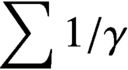
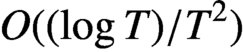
We consider the sum $\sum 1/\gamma $, where $\gamma $ ranges over the ordinates of nontrivial zeros of the Riemann zeta-function in an interval $(0,T]$, and examine its behaviour as $T \to \infty $. We show that, after subtracting a smooth approximation $({1}/{4\pi }) \log ^2(T/2\pi ),$ the sum tends to a limit $H \approx -0.0171594$, which can be expressed as an integral. We calculate H to high accuracy, using a method which has error $O((\log T)/T^2)$. Our results improve on earlier results by Hassani [‘Explicit approximation of the sums over the imaginary part of the non-trivial zeros of the Riemann zeta function’, Appl. Math. E-Notes16 (2016), 109–116] and other authors.



Different views about and conceptions of intellectual giftedness are discussed in this chapter, including the work of Sternberg, Gardner, Renzulli, Reis, and other new and emerging theorists. Four case studies of diverse students with intellectual gifts and talents are used to summarize the challenges in defining, identifying, and providing programs for these students, particularly those from culturally diverse backgrounds and with both gifts and disabilities, called twice exceptional (2E) students. Characteristics of various students with intellectual giftedness are summarized, as are interventions in the areas of acceleration and enrichment, both widely used in the field of gifted education. The chapter concludes with a call for educators to challenge and engage academically talented and high-potential learners, and the importance of the development of a continuum of services in schools, with services focusing both on students’ academic needs and social and emotional needs.
The purpose of this study was to examine whether vehicle type based on size (car vs. other = truck/van/SUV) had an impact on the speeding, acceleration, and braking patterns of older male and female drivers (70 years and older) from a Canadian longitudinal study. The primary hypothesis was that older adults driving larger vehicles (e.g., trucks, SUVs, or vans) would be more likely to speed than those driving cars. Participants (n = 493) had a device installed in their vehicles that recorded their everyday driving. The findings suggest that the type of vehicle driven had little or no impact on per cent of time speeding or on the braking and accelerating patterns of older drivers. Given that the propensity for exceeding the speed limit was high among these older drivers, regardless of vehicle type, future research should examine what effect this behaviour has on older-driver road safety.