To save content items to your account,
please confirm that you agree to abide by our usage policies.
If this is the first time you use this feature, you will be asked to authorise Cambridge Core to connect with your account.
Find out more about saving content to .
To save content items to your Kindle, first ensure no-reply@cambridge.org
is added to your Approved Personal Document E-mail List under your Personal Document Settings
on the Manage Your Content and Devices page of your Amazon account. Then enter the ‘name’ part
of your Kindle email address below.
Find out more about saving to your Kindle.
Note you can select to save to either the @free.kindle.com or @kindle.com variations.
‘@free.kindle.com’ emails are free but can only be saved to your device when it is connected to wi-fi.
‘@kindle.com’ emails can be delivered even when you are not connected to wi-fi, but note that service fees apply.
This concluding chapter argues that EU Cohesion Policy, despite its stated goal of reducing regional disparities, has failed and should be terminated. Consuming over a third of the EU budget, structural funds have not delivered convergence; instead, they have fostered dependency, misallocation, and a resource curse that undermines competitiveness and governance. The EU continues to promote unrealistic claims about cohesion’s benefits while neglecting its core mission: enforcing the Single Market. Evidence shows that subsidies distort incentives, delay reforms, and weaken accountability, harming both poorer regions and the EU as a whole. The utopian vision of equalizing Member States through transfers is unattainable and counterproductive. Ending Cohesion Policy would free resources for priorities such as science, innovation, demographic resilience, and defence – areas critical for Europe’s future. Reform faces strong political resistance from net beneficiaries and entrenched interests, but pressure from net contributors will eventually make continuation unsustainable. A serious intellectual debate is urgently needed. Cohesion Policy has failed for decades; prolonging it risks further economic stagnation and geopolitical vulnerability. The time to end Europe’s resource curse is now.
Shortage of healthcare professionals is a major challenge for healthcare systems in many countries. The problem is expected to further increase due to demographic changes, with a rising percentage of elderly patients with multiple chronic conditions. Digital health technologies (DHTs) are proposed as a strategy to tackle this challenge by saving clinician time. However, guidelines for health economic evaluation of DHTs remain generally unchanged in most countries, with the main focus on the clinical impact and estimation of the incremental cost-effectiveness ratio (ICER), with limited interest in the impact of digital technologies on clinical staff.
Objectives
The objective of this article is to present arguments and examples of practical tools for adjusting economic evaluations and Health Technology Assessment (HTA) to ensure that assessments of DHTs reflect current demographic challenges.
Methods
The arguments are based on a narrative review of studies of the effects of DHTs on health care professionals’ workload and use of time.
Results
Based on the review, three recurring themes were identified: (1) the different definitions of effects on clinician time, (2) the need for quantitative assessment of effects on clinician time, and (3) the different kinds of effects on clinician time.
Conclusion
On this basis, two suggestions for adjustment of economic evaluations and HTA are presented: by the collection of data and presentation of results on the effects of DHTs on Time Needed to Treat (TNT), and by the use of shadow prices to ensure that the costs of healthcare professionals are correctly reflected in the alternative costs.
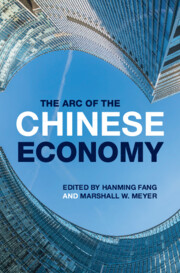
This authoritative volume offers a comprehensive exploration of China's rapidly evolving economy from a team of leading specialists. Readers will gain crucial insights into productivity dynamics, innovation, shifting demographics, and the country's ever-changing industrial landscape –encompassing firms, real estate, and trade flows. With a keen focus on the RMB, regulatory frameworks, and the pursuit of common prosperity, this book seamlessly blends cutting-edge research, real-world case studies, and forward-thinking analysis. It delivers a balanced examination of challenges and opportunities, fostering an informed discussion on China's critical role in the global marketplace. Ideal for academics, policymakers, business professionals, and curious readers alike, this timely and accessible resource unveils the many facets of the Chinese economy, guiding you through its complexities and highlighting strategic implications for the future.
Recommend this
Email your librarian or administrator to recommend adding this to your organisation's collection.