To save content items to your account,
please confirm that you agree to abide by our usage policies.
If this is the first time you use this feature, you will be asked to authorise Cambridge Core to connect with your account.
Find out more about saving content to .
To save content items to your Kindle, first ensure no-reply@cambridge.org
is added to your Approved Personal Document E-mail List under your Personal Document Settings
on the Manage Your Content and Devices page of your Amazon account. Then enter the ‘name’ part
of your Kindle email address below.
Find out more about saving to your Kindle.
Note you can select to save to either the @free.kindle.com or @kindle.com variations.
‘@free.kindle.com’ emails are free but can only be saved to your device when it is connected to wi-fi.
‘@kindle.com’ emails can be delivered even when you are not connected to wi-fi, but note that service fees apply.
This chapter extends the implications of free will skepticism into the broader realm of social justice. While critics argue that justice requires belief in free will and basic desert, the author contends that many compelling theories of justice – such as those of John Rawls, David Hume, and Amartya Sen – do not rest on desert-based foundations. The chapter introduces and defends the capabilities approach, developed by Sen and Martha Nussbaum, as a promising framework for promoting justice without reliance on retributive or meritocratic notions. This approach emphasizes enhancing individuals’ real freedoms and opportunities – what they are actually able to do and be – while acknowledging the profound effects of luck, social structures, and unequal starting points. Free will skepticism reinforces the moral urgency of this view by highlighting the arbitrariness of birth and circumstance in shaping life outcomes. Rather than attributing success or failure to personal choice alone, this perspective demands attention to systemic barriers and privileges. By rejecting the myth of the self-made individual, the chapter makes a strong case for redistributive justice, inclusion, and structural reform. Ultimately, it argues that free will skepticism not only coheres with the pursuit of social justice but provides a compelling moral rationale for greater compassion, equity, and solidarity.
This chapter explores the significance of the interaction between desert and city for the emergent church and its theology in early Byzantium. First, it examines how the desert resisted the city, focusing on the iconic figure of Antony the Great and the early desert dwellers. In withdrawing from the city, the anchorites also withdrew from the spatial and temporal dimensions of earthly life, entering the depths of their consciousness and being. Second, it probes how the desert sought to transcend the city, focusing on Barsanuphius and John in the mid-sixth century. The ascetic ways of these two Old Men, dying unto themselves and the world, as well as the wisdom of their 850 letters, portray a desire for spiritual constructs that overcame city conventions. Third, it looks at the hagiographic portrait of Mary of Egypt and how her liturgical afterlife shaped and transformed the city.
This chapter explores the setting of Numbers (the desert) and its plot (the forty-year wandering), and how attention to these literary features connect to theological issues, such as God’s care and revelation.
The Book of Numbers is an enigmatic Old Testament text, as it challenges traditional notions of theological interpretation. In this volume, Josef Forsling offers a fresh approach to the study of this Biblical book. Bringing a narrative perspective in dialogue with historical research to his study, he analyzes Numbers as a narrative anthology composed of laws, rules, poems, and prophecy. Considering its setting in the desert and the plot of the 40-year wandering, he highlights its themes and motifs regarding generational change, sin, disobedience, maturity, and blessing. Forsling also examines the characters of Numbers and explores its theology of purity and holiness via insights from recent research on emotions. Importantly, his volume also provides an overview of the reception history of Numbers. Written in a non-technical and accessible style, The Theology of Numbers serves as an ideal introduction to one of the most important challenging books of the Hebrew Bible.
This chapter examines actual but in particular imagined deserts of the Anthropocene as they have been portrayed in literature, while also making occasional forays into other cultural media like film, television, comics, and computer games. The chapter is divided into three sections titled Apocalyptic Desert, Toxic Desert, and Biospheric Desert, each section examining how Eurocentric ideologies, religious perspectives, financial models, as well as literary and cultural traditions have tended to paint the desert in the light of an existential struggle of “the human.” The chapter argues that when reading deserts from the perspective of the Anthropocene, it is important to undo any totalizing vision of the desert. The chapter points towards a wide range of desert texts like Walter M. Miller’s A Canticle for Leibowitz, J.G. Ballard’s The Drought, David Brin’s The Postman, and Edan Lepucki’s California, computer games like Spec Ops: The Line, and Homeworld: Deserts of Kharak, films like The Mad Max franchise, as well as comics like Judge Dredd and Tank Girl. The chapter concludes with an extended reading of Paolo Bacigalupi’s novel The Water Knife and Frank Herbert’s Dune.
In this Chapter I argue, contrary to Aquinas and modern day defenders, that capital punishment is unjustified killing. Capital punishment is not required by retributivism, and Aqunas’s arguments defending the practice are unconvincing.
Theatrical presentation encompasses diverging perspectives on water ecologies, ecological divisions and extremes of wet and dry in tropical and desert climates. While twentieth-century drama points to how water sources in Australia have been divided up to restrict access through land proprietorship, polarising attitudes and racial injustice, innovative twenty-first century performance emphasises the interconnectedness of water flows, seepage and below ground storage. An appreciation of water flow is particularly evident in First Nations performance, which includes the influential work of Bangarra Dance Theatre. Performance explores values and practices that resist the way water is polluted and detrimentally reconfigured in binary divisions to restrict access and divert flows and highlights the need for water availability for all species in a climate change era. Australian theatrical performance points to emotional feelings and values that protect and preserve water and its river flows even as human impact on the climate means its patterns are no longer predictable.
The Mono Lake case reached court in the early 1980s, but the crisis that led to the case began almost a century earlier, when the city of Los Angeles first began to run out of water. Moving water to Los Angeles, California’s most populous and economically dynamic city, has been a state priority since the turn of the 20th century. This chapter explores the water struggles that led to the construction of the Los Angeles Aqueduct and ultimately to the Mono Lake litigation. It reviews the history of water exports from the Owens Valley in the early 1900s and the devastating effects on the local community and ecology – prompting the decline of its once thriving agricultural economy (and an open rebellion by Owens Valley farmers). It then recounts the St. Francis Dam disaster of 1928, which terrified the population and tempered judgements about the safety risks of large-scale water projects near population centers, further prompting water speculation in more remote areas of the state. The sobering loss of life in that infamous disaster testifies to the high stakes involved in managing water scarcity dilemmas that continue to bedevil California and arid regions throughout the world.
In this chapter, a new Lockean argument for intellectual property rights is offered, emphasizing self-defense, self-preservation, and the moral significance of investment. It is argued that creators and inventors have defensible claims to the values and income streams derived from their intellectual efforts, akin to their rights to protect their physical capacities and powers. These claims are grounded in two arguments: (1) the right to defend created values against unjustified interference, supported by Lockean principles of self-preservation and respect for persons; and (2) the moral asymmetry between creators, who invest time, labor, and resources, and copiers, who do not. Addressing challenges such as the non-rivalrous nature of intellectual works and the balance of societal needs, it is argued that intellectual property rights are morally justified to protect the autonomy and livelihoods of creators.
Forgivingness is virtue, a specification of generosity, a disposition to give offenders, especially against oneself, more of good and less of evil than they deserve. It is an interconnected set of sensitivities to features of situations marked by wrongdoing. The forgiving person is responsive to these features in ways that tend to mitigate, eliminate, or forestall anger in the interest of wishing the wrongdoer well and/or of enjoying a positive and harmonious relationship with him or her. The chief considerations favoring forgiveness are (1) the offender’s repentance, (2) excuses for the offender, (3) the offender’s suffering, (4) moral commonality with the offender, and (5) relationship to the offender.
Modern market economies use competitions to distribute a range of social goods. Some theorists maintain that such competitions ought not to generate winner-takes-all outcomes. But the arguments that have been given against competitions with winner-takes-all outcomes fail to find fault with winner-takes-all outcomes per se (or so I argue). Is there, then, anything wrong with winner-takes-all outcomes? I argue that there is: winner-takes-all outcomes are wrong, in at least most distributive competitions, because they do not give people what they deserve.
In his widely anthologized article on the therapy-enhancement distinction, Resnik argues that, from a moral point of view, the claim that something is not health related cannot be a dispositive argument against the permissibility of enhancements. He further states how the permissibility of an intervention will depend on considerations like the intention for its use and the likely consequences that will ensue, and whether these violate any moral standards. Within this framework, in this paper I first argue that enhancements may be morally permissible on autonomy grounds (its political conception); and secondly, that this permissibility does not dissolve a moral distinction between therapies and enhancements, with the reason being that there is still a difference between something being generally permissible (i.e., therapies) and something being conditionally permissible (i.e., enhancements). But that is not all that is important for a moral therapy-enhancement distinction. I also argue that the distinction — apart from being about “permissibility” (at the level of regulation of individual use) — is also about regarding justice more broadly (at the level of what is owed to individuals). What captures the moral distinction more fully is that therapies are, generally speaking, not only morally permissible but also owed to persons (due to being enablers of social cooperation and competition), whereas, at this stage, enhancements can only be morally permissible. I demonstrate the appeal of this view by considering its stability and usefulness across specialized bioethical contexts and across various kinds of enhancements and show that its practical value for policy lies in its legitimizing / anticipatory and prioritizing functions.
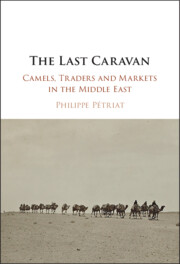
What can travelling camels tell us about the history of the interior of the Middle East? In this innovative book Philippe Pétriat demonstrates how caravans - groups of travellers, often on trade expeditions, journeying together for mutual protection in hostile regions - are essential to understanding the history of the inside territories of the Ottoman Empire with its neighbours. From the first use of camels in transport, through to the decline of the caravan from the 1930s onwards, Pétriat reconstructs the land routes of these travellers through vast steppes and deserts in captivating detail. Moving discussions of the political economy of the Ottoman and post-Ottoman Middle East beyond analysis of the coastal regions and maritime exchanges with Western countries, The Last Caravan instead reveals the pivotal importance of the Ottoman and Arab merchants in the suburbs of the cities and the rural markets and the travelling nomads and the animals that supported them.
A common idea, both in ordinary discourse and in the desert literature, is that wages can be deserved. The thought is not only highly intuitive, but it is also often appealed to in order to explain various injustices in employment income – pay gaps, for instance. In this paper, I challenge the idea that income from employment is the kind of thing that can be deserved. I argue that once one gets clear on the metaphysics of jobs and wages within the context of economic exchange more generally, there are natural principles concerning such exchanges which generate puzzles for that view. The puzzles, I argue, are especially acute for meritocrats who conceive of justice in wages in terms of desert. Additionally, I argue that appealing to dignity (rather than desert) offers better hope of explaining the kinds of injustices in wages that motivate the appeal to desert. In that case, no explanatory gap is left by abandoning the idea that wages can be deserved either, and so, I argue, we have good reason to doubt it.
A narrowly person-affecting (NPA) axiology is an account of the moral ranking of outcomes such that the comparison of any two outcomes depends on the magnitude and weight of individuals’ well-being gains and losses between the two. This article systematically explores NPA axiology. It argues that NPA axiology yields an outcome ranking that satisfies three fundamental axioms: Pareto, Anonymity and, plausibly, Pigou-Dalton. The axiology is neutral to non-well-being considerations (desert); and (assuming well-being measurability) leads to the Repugnant Conclusion (RC). In short, NPA axiology provides a grounding for Paretian, equity-regarding welfarism, albeit one that includes the RC.
According to Joel Feinberg and most modern scholars of desert, the basis of desert must be a fact about the deserving person, and not about someone else. This widely accepted notion seems self-evident. However according to some religious traditions, such as Buddhism and Roman Catholicism, merit can be transferred from one person to another. That is, someone can deserve something based on some fact about someone else, such as the fact that someone else has carried out an action. This article examines the Catholic concept of merit transfer, first distinguishing it from other contemporary qualifications to the claim that a desert basis must be something about the deserving person. Then the article draws on Thomas Aquinas's explanation of the central role of relationship and love in merit and how it justifies merit transfer to address several objections made by modern scholars to such transfers. After addressing these objections, the article argues that literal understandings of merit transfer are preferable to metaphorical ones, and lastly some implications of merit transfer for Christian theology and the theory of desert more broadly are briefly discussed.
Humans continually make judgments that some things have more value than others. Plausibly, it is largely through our value judgments that God intends to guide us in setting priorities and goals. This Element surveys leading accounts of what value judgments are exactly. It then explores the particular values we are apparently sensitive to when making two judgments endemic to human life: about what makes a life good, and about who deserves a good life. Connections are made between differing analyses of human value judgments and views about God's character and the goals God is prompting us to pursue.
Critics of Rawls’s principles of justice complain that they ignore considerations of merit or desert. As meritocracy is the chief justification for the extremely wide inequalities between workers at the top and bottom today, we need to examine this complaint. I argue that ideas of desert or merit are inherently unsuited to informing principles of justice for the basic structure of society. Moreover, attempts to raise the principle of desert to the systemic level have historically formed the ideological grounds for irresolvable class warfare. Rawls’s principles of justice supply a normative perspective that wisely aims to transcend class warfare. Rawls’s conception of property-owning democracy, culturally shaped by public affirmation of the difference principle, offers a plausible vision of how society may achieve such transcendence.
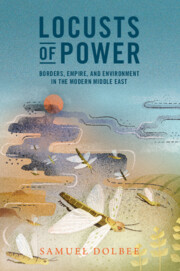
In this highly original environmental history, Samuel Dolbee sheds new light on borders and state formation by following locusts and revealing how they shaped both the environment and people's imaginations from the late Ottoman Empire to the Second World War. Drawing on a wide range of archival research in multiple languages, Dolbee details environmental, political, and spatial transformations in the region's history by tracing the movements of locusts and their intimate relationship to people in motion, including Arab and Kurdish nomads, Armenian deportees, and Assyrian refugees, as well as states of the region. With locusts and moving people at center stage, surprising continuities and ruptures appear in the Jazira, the borderlands of today's Iraq, Syria, and Turkey. Transcending approaches focused on the collapse of the Ottoman Empire or the creation of nation states, Dolbee provides a new perspective on the modern Middle East grounded in environmental change, state violence, and popular resistance.
Chapter 1 focuses on locusts and the Arabic-speaking Shammar nomadic group between 1858 and 1890. It explains how locusts foiled Ottoman attempts to transform the Jazira into a cotton-growing heartland in the midst of the American Civil War. As locusts challenged the designs of certain humans, they also ensured that the Jazira landscape remained productive depending on how one moved within it. It was in part the landscape created by locusts that undermined Ottoman attempts to forcibly settle the Shammar during the 1860s, and made far more difficult the settlement of Chechen refugees at Ras al-Ayn this same period. And it was this same landscape of locusts that incubated a revolt in 1871, as the Shammar protested the formation of the special administrative district of Zor, created in an effort to match the desert with administrative borders with the help of the empire’s foremost reformers, Cevdet Pasha and Midhat Pasha. The revolt was crushed and ended with different branches of the Shammar attached to separate districts of the Jazira. But it did not end the power of locusts and mobility, and so people continued to imagine how to close the gap between Ottoman provinces and the environment it divided up.