To save content items to your account,
please confirm that you agree to abide by our usage policies.
If this is the first time you use this feature, you will be asked to authorise Cambridge Core to connect with your account.
Find out more about saving content to .
To save content items to your Kindle, first ensure no-reply@cambridge.org
is added to your Approved Personal Document E-mail List under your Personal Document Settings
on the Manage Your Content and Devices page of your Amazon account. Then enter the ‘name’ part
of your Kindle email address below.
Find out more about saving to your Kindle.
Note you can select to save to either the @free.kindle.com or @kindle.com variations.
‘@free.kindle.com’ emails are free but can only be saved to your device when it is connected to wi-fi.
‘@kindle.com’ emails can be delivered even when you are not connected to wi-fi, but note that service fees apply.
Evangelical Christianity gave Phillis the means, motive, and opportunity to become a poet. She was writing poetry by 1765, a mere four years after she arrived in America. The poems she wrote in the next few years display an almost incredibly rapid improvement in her skills in versification. As a recently converted “Ethiop” she assumes the role of a lay preacher. Phillis experimented with various literary forms, such as allegory, as well as with rhyme patterns besides the rhymed couplets she uses in almost all her later poems. In response to the growing tensions between Britain and its North American colonies during the 1760s, Phillis began writing overtly political poems, creating what I call a proto-national American voice. Phillis’s persona alternates between identifying as African and as American in Phillis’s elegy on the death of George Whitefield in 1770. She uses the occasion to address contemporaneous religious and political issues. Republication of her elegy brought Phillis transatlantic recognition.
Before Susanna Wheatley’s death in March 1774, Phillis had used personas to address the subject of slavery covertly. Once free, Phillis became the unofficial prophet and poet laureate of the new United States, turning toward more secular and political subjects, using an increasingly patriotic and self-confident tone in her writings. In 1778 Phillis married the formerly enslaved John Peters, an ambitious entrepreneur. Phillis Wheatley Peters’ life and career seemed secure. Despite the optimism and joy Phillis expresses in Liberty and Peace, her 1784 poem celebrating the conclusion of the American Revolution, by then she and John had fallen on hard times in the post-Revolution depression. He was probably in jail for debt when Phillis Wheatley Peters died in relative obscurity on December 5, 1784, three months after her last attempt to find subscribers for a second book. The manuscript of Phillis’s proposed second book, which was to include correspondence, remains unfound.
Taking up the framework established by recent scholarship that Beethoven was not only a solitary hero but also an empathetic and communicative composer, this paper argues that Beethoven’s composing was, among other things, significantly embedded in the multifaceted culture of friendship of the late Enlightenment.
In his Elegischer Gesang, Op. 118 of 1814, dedicated to his friend Johann Freyherr von Pasqualati, Beethoven used an elevated text rich in associations and tailored the piece specifically to the dedicatee in setting a public memorial to his deceased wife. This piece, like the piano sonata op. 90 of the same year for his friend Moritz Lichnowsky, expresses not only private friendship (as we understand it today) but rather a broader idea of friendship encompassing both “friendship of virtue” and “friendship of utility” as described by Aristotle, which was prevalent in the eighteenth century.
When the Elegischer Gesang was finally published in August 1827, it took on a new meaning: It was taken (because of to its high opus number and its posthumous publication) as Beethoven’s swan song in the expectation of his own death.
The Old English exile elegies attempt to recuperate loss by reiterating an inverted set of social and physical landmarks, mapping the past onto the present. The familiar imagery of the hall, the lord, and the voices of other human beings – the relationships that constitute community – are not absent in exile: instead, in the absence of the “real thing,” each exile must reconstruct and reiterate a set of replacement landmarks to understand their current situation. Similarly, The Ruin navigates the loss of living memory by imagining the past context necessary to fit its subject back into the fabric of a living world. The frequent depiction of the exile elegies as nostalgic, repetitive, or static is not an incidental formal element, but a core response to the loss of relational landmarks. In exile, alienation from the past—the spoliation of memory as well as the loss of community—suspends the relational self in time. Yet the Old English exiles continue to navigate inverted relational landmarks of identity. The solution is not to abandon relational reiteration; it is instead to seek a new point of departure when familiar points of reference are lost.
This chapter examines one of the most distinctive features of Bishop’s work: her frequent use of correctio. When using this rhetorical scheme, writers will correct, question, rephrase or offer alternatives to their words and phrases in the body of the text itself (rather than, say, in the process of redrafting). The first part of this chapter gives an account of: correctio’s history; its characterisation in early-modern and twentieth-century rhetorical manuals; its risks and rewards; and its indiscriminate approval by Bishop’s critics. The chapter then analyses its frequent use by three major influences on Bishop: George Herbert, William Wordsworth and Marianne Moore. The main part of this chapter then examines Bishop’s use of correctio in relation to visual art, nature writing, memory, the representation of consciousness, scepticism, and elegy.
Eibhlín Dubh Ní Chonaill’s (c.1743-1800) lament for her husband, Caoineadh Art Uí Laoghaire, who died in 1773, is one of the signal poems in the Irish poetic tradition. While most scholars consider Ní Chonaill to be the author of the poem, it is also clear that the text exists within an oral tradition and so features the kind of formulaic language and conventional turns that characterized such poems. Caoineadh Art Uí Laoghaire also must be considered within the keening tradition more broadly, in which professional keeners – most of whom were women – were central to the social practices around death and mourning in Gaelic culture. This chapter provides a thorough account of this text and its contexts.
The Introduction offers the reader a way into the 1810s through Anna Letitia Barbauld’s bleak, prophetic satire, Eighteen Hundred and Eleven: A Poem (1812). A poem written amidst the tensions of war, famine, unemployment, food shortages, and economic decline, it also serves as a record of the peculiarity of this decade as one caught amidst a flurry of new ideas, beliefs, and concepts, but without a clear sense of how such newness might be understood, interpreted, or even accepted. The chapter reads Barbauld’s poem as a framing device to introduce the twelve chapters that comprise the volume and their shared concerns with sexuality and identity, religion and politics, race and gender, disability and the environment, aesthetics and philanthropy, communication and confusion, and social and interspecies relations.
Itineraries of poetry across language boundaries do not necessarily entail actual travel on the poet’s part. However, writers ancient and modern did go on excursions to the lands associated with the poetic traditions with which they interacted – as did readers too. Chapter 5 resumes discussion of two poets who appeared in Chapter 4, Joachim Du Bellay in sixteenth-century France (via the French Antiquitez de Rome, the Latin Elegiae, and other works) and John Milton in seventeenth-century England (via the bilingual double book of 1645, its Latin half framed by dedicatory testimonia from learned Italians and by the career-punctuating Epitaph for Damon). For both, language choice would have been an issue even without their ventures abroad; but both use their time in Italy to explore, sharpen, thematize, and problematize transcultural issues of language and identity. Is the passage to Italy a celebration of linguistic cosmopolitanism or a test of linguistic loyalty, a journey home or a journey into exile and alienation? What kinds of language question do poetic travellers to Italy negotiate, and what Rome, or whose Rome, do they find?
This article discusses Ovid’s allusive engagement in Tr. 1.2.75–80 with his own earlier works, as well as with the works of his elegiac predecessors—Propertius and Tibullus—and of Catullus. It is argued that this suggestive intertextuality may point toward Ovid’s re-articulation of his conceptualization of elegy as it is now to be written from exile.
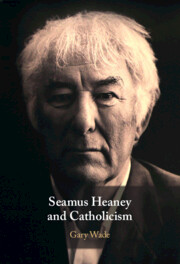
Chapter Three explores the elegiac quality of three further collections, and Heaney’s shifting engagement with Catholicism as these develop. I explore how the tactile piety of relics lie behind the poems of North, even if drafts of these poems show how much Heaney redacted Catholic iconography in the published versions. I argue that in 1975, when North was published, the worsening sectarian climate may have encouraged Heaney to avoid language which might suggest a theology of intercession. Field Work contains a number of elegies for those killed in the Troubles and for several poets and friends of Heaney. However, I argue that the collection might also be read as an elegy for Heaney’s Catholic childhood. The note of elegy in these collections is most personal in The Haw Lantern, the first collection of poems published since the death of Heaney’s mother in 1984. ‘Clearances’, the sequence of sonnets written in memory of his mother, inform the whole collection, and in paying close attention to their drafts, I argue that Heaney’s complex engagement with Catholicism is somehow bound up with his relationship with his mother.
Seamus Heaney and Catholicism makes extensive use of unpublished material to offer fresh insights into Heaney's complex engagement with Catholicism. Gary Wade explores how Catholicism operates in ways other than social and political, which have largely been the focus of critics up until now. Using extensive unpublished material, including early drafts of some familiar poems, it offers close readings which explore how Catholicism operates at the level of feeling, and how it continued to have an emotional purchase on Heaney long after he had left behind orthodox practice. It also engages with Heaney's increasing concern, in his later work, with the loss of a metaphysical sensibility, and his turning to the Roman poet Virgil to deal with questions of death and post-mortem existence. The book concludes by arguing that Heaney's Catholicism is displaced rather than rejected, and that his vision expands to accommodate both the Christian and the Classical worlds.
This chapter traces the development of Russian poetry from the earliest known texts to the late nineteenth century. The emphasis is on versification (syllabic, syllabo-tonic, and tonic [also called accentual] systems, all of which appear at times in Russia), genre, and style. Examples come primarily from the work of canonic poets. A distinction is drawn between folkloric and literary verse, which intersected only infrequently. Some attention is devoted to the ways that Russian poetry was indebted to Polish, German, and French models. The focus is on two periods: the eighteenth century, when secular Russian literature first began to flourish, and the ‘Golden Age’ of Aleksandr Pushkin.
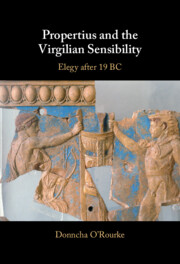
The introductory chapter to this study of Propertius 4 as a collection composed in the wake of Virgil’s death begins by highlighting some of the more obvious ways in which the elegist advertises his allusive engagement with the Eclogues, Georgics and, in particular, the Aeneid, and how the troping of this engagement as hospitality suggests a relationship that might be cooperative or antagonistic. From there it looks back to the only two Propertian elegies in which the name Vergilius features – 1.8 (ostensibly referring to the Pleiades constellation but, it is argued, punningly invoking the poet) and 2.34 (in a review of Virgil’s career to date), each constructing a relationship between elegiac and epic poetics that, as later chapters show, will be revisited in Book 4. After these preliminary case-studies the Introduction presents a history of approaches to poetic memory by way of a survey of the scholarly responses mobilized by Propertius 4 as a Virgilianizing collection. These approaches are then tested in the laboratory of elegy 4.9, a Virgilio-Propertian diptych on Hercules which, it is argued, is programmatic for allusion and intertextuality as enacted in this collection.
This note argues that the second line of the oracle in Apuleius’ Cupid and Psyche (Met. 4.33.1) alludes to Ovid’s Am. 1.1.2. Like its Ovidian model, Apuleius’ line marks a shift in genre, and offers a further hint of the role Cupid will play in the rest of the story.
Propertius and the Virgilian Sensibility is an in-depth study of Propertius' final collection of elegies as the earliest concerted response to the poetic career of Virgil in its totality. Seven chapters show how Propertius' fourth book, published three or more years after Virgil's death, enacts the canonical status of Rome's foremost poet through an intimate conversation across a number of themes, from socio-political and historical questions centring on, for example, Rome's evolution from rustic past to 'golden age' superpower, gender and patriarchy, and warfare both international and internecine, to literary questions concerning the generic identity of elegy and epic, the appropriation of Callimachus, and the architecture of poetry books. Propertius' totalizing reading reveals an elegiac Virgil as much as it does an epicizing Propertius, with a sometimes obsessive attention to detail that enlarges familiar paradigms of allusion and intertextuality and has implications for how literary and textual criticism are practised.