To save content items to your account,
please confirm that you agree to abide by our usage policies.
If this is the first time you use this feature, you will be asked to authorise Cambridge Core to connect with your account.
Find out more about saving content to .
To save content items to your Kindle, first ensure no-reply@cambridge.org
is added to your Approved Personal Document E-mail List under your Personal Document Settings
on the Manage Your Content and Devices page of your Amazon account. Then enter the ‘name’ part
of your Kindle email address below.
Find out more about saving to your Kindle.
Note you can select to save to either the @free.kindle.com or @kindle.com variations.
‘@free.kindle.com’ emails are free but can only be saved to your device when it is connected to wi-fi.
‘@kindle.com’ emails can be delivered even when you are not connected to wi-fi, but note that service fees apply.
Intermittent fasting (IF) is a popular diet strategy involving extended periods of fasting or marked energy restriction, interrupted by periods of unrestricted intake. Several protocols exist under the IF umbrella, differing in timing, duration, and whether they require complete fasting or permit limited energy intake during restriction periods. These factors affect physiological and behavioural responses to IF. This review considers evidence that common IF approaches produce distinct physiological effects, and how different temporal structures alter behaviours affecting energy balance. The clearest evidence for distinct physiological effects is from early time-restricted eating. By shifting food intake early in the day, well-controlled studies have noted improved glucose control independent of weight change. In contrast, the physiological response to modified fasting, permitting ∼400–600 kcal/day during restriction periods, does not appear to differ meaningfully from continuous energy restriction, while some complete fasting protocols report greater fat-free mass loss. The clinical effectiveness of IF may depend more on how effectively the energy deficit is retained across repeated restriction and feeding cycles. Several IF studies report reduced physical activity and increased energy intake outside of restricted periods, attenuating the intended energy deficit. Appetite control, food reward, eating traits, and routines, may influence compensation, adherence, and individual variability in response. In summary, some IF approaches can achieve distinct physiological effects, but behavioural changes often mitigate these under free-living conditions. Future research should characterise achieved fasting and energy restriction, identify predictors of behavioural compensation, and explore how adherence can be maximised whilst achieving a fasting-like metabolic response.
This chapter covers the interactions of urbanization with weather and climate. It begins with definitions of weather, climate, and climate change, and examples of urban interactions with weather and climate. Then urban impacts on temperatures and precipitation are reviewed. Thereafter, the reasons underlying these effects, including city structure, size, waste heat, and pollution, are described. This chapter concludes with explanations of the radiation budget and energy balance, which are central for understanding the city-climate interactions. This concluding sections are tailored to advanced readers with an interest in an in-depth understanding of physical processes underlying city effects on weather and climate.
Supraglacial debris strongly modifies melt rates on debris-covered glaciers, yet simulating this effect remains challenging because modelling the full surface energy balance (SEB) and the vertical conduction of heat through the debris layer requires many (unknown) parameters, which are often poorly constrained and highly site-specific. Here, we develop a physically based parameterization and calibration procedure for sub-debris melt rates, which links a simplified formulation of the SEB to heat conduction through the debris. The model is tuned using mass-balance measurements and debris surface temperatures from the debris-covered region of the Djankuat Glacier (Caucasus) and uses a minimal number of input data to reproduce the observed debris-related melt-modification effects. An optional relative melt enhancement for thin debris extends the procedure into a regime where the model physics are not valid, and sub-debris melt is governed by other processes than heat conduction alone. This allows the model to be applied in (large-scale and long-term) debris-covered glacier evolution frameworks where the full range of debris thicknesses could occur. As hard-to-constrain inputs have been replaced with simplified and tunable parameters, the approach balances the trade-off between model complexity and physical realism and can be transferred to other debris-covered glaciers, provided that sufficient observations for model calibration are available.
Antarctica plays a crucial role in Earth’s radiative energy balance, with the surface albedo of its snow cover being a key parameter. Snow albedo depends strongly on the optical properties of snow grains in the near-surface layers. Other factors including illumination geometry, cloud conditions and impurities influence albedo, though Antarctic snow is generally pristine. Surface roughness (SR), operating at multiple scales, also modulates albedo and directional reflectance but remains challenging to quantify. Advances in laser scanning have enabled high-resolution measurements over larger areas, opening new possibilities for modeling. While roughness–albedo relationships have been explored in alpine and boreal snow, Antarctic snow has not received equivalent attention. We conducted a field campaign in western Queen Maud Land during the austral summer of 2022–23, using unmanned aerial vehicle (UAV)-mounted laser scanning alongside in situ observations to investigate the impact of centimeter-scale SR on snow albedo. We observed SR with mean root-mean-square slopes in the range of 0.2–0.4 rad from the UAV, confirmed with near-surface laser scanning once scale variability was accounted for. The resulting albedo impact was in the range of 0.01–0.06 (mean of ∼0.03), in accordance with prior studies and exhibiting logical relationships with, e.g., local snowfall or high wind events.
Rapid warming of the Arctic has accelerated the mass loss of snow and ice. The glacier equilibrium line altitude (ELA) is a suitable location for monitoring the surface energy balance (SEB) and surface mass balance (SMB). This study presents SEB and SMB variations during 2012–2022 around the ELA on the Qaanaaq Ice Cap in northwest Greenland. The SMB was analyzed using SEB analysis and the surface height change method (SHM) with in situ meteorological data. Results revealed that the most significant surface melt occurred in the summers of 2019 (1058 and 1191 mm w.e. a−1) and 2015 (974 and 731 mm w.e. a−1) for the SEB and SHM, respectively. Additionally, the primary energy contributing to the surface melt in 2014/15 was net shortwave radiation caused by snow/ice albedo feedback, whereas in 2018/19, it was not only shortwave radiation but also increased downward longwave radiation from warm cloud cover. Furthermore, the cumulative SMB over the decade (2012–2022) is slightly positive, with a value of +0.26 and +0.28 m w.e., for the SEB and SHM, respectively. The results on the amplification of the SEB and SMB around the ELA provide valuable insights into monitoring environmental changes in the Arctic.
Glacier energy-balance models offer mechanistic insights into glacier mass balance under a changing climate, yet their considerable data requirements hinder large-scale applications. Here we present the open-source Python Energy Balance model for Snow and Ice (PEBSI), which includes physically based albedo evolution using the Snow, Ice and Aerosol Radiative (SNICAR) model. PEBSI is calibrated and validated using robust in situ data from Gulkana Glacier, Alaska from 2000 to 2024. Simulations forced with original and bias-corrected climate reanalysis data show that statistically downscaling reanalysis data with in situ observations is necessary to reproduce summer mass balance (mean absolute error [MAE] = 0.75 m w.e. vs 0.22 m w.e., respectively). A grid search across two parameters, a precipitation factor and a densification parameter, reveals tradeoffs in performance compared to seasonal mass balance and end-of-winter snow density and depth. No single combination of parameters minimizes all errors, underscoring the inherent overparameterization of energy-balance models and challenges with translating coarse climate data to the glacier scale. The calibrated model successfully simulates the 2024 melt season, agreeing with surface-height change (MAE = 0.48 m) and albedo (MAE = 0.066) observations. Moving forward, PEBSI provides unique opportunities to quantify albedo feedbacks and their impact on present and future glacier mass loss.
Growing evidence supports early eating to control appetite and energy balance but there are few controlled studies to assess the amount and/or type of breakfast meal. This randomised, within-participant, diet intervention examined the effects of higher-fibre (HF) and higher-protein (HP) breakfasts in adults with overweight/obesity. Nineteen healthy adults consumed two randomised 28-d weight loss (WL) diets, as higher-fibre (HFWL) or higher protein (HPWL), with all food provided. Both WL diets were designed as 45 %, 35 % and 20 % of calories to be consumed in the morning, afternoon and evening, respectively. The primary outcome was energy balance, analysed by body weight changes. The secondary outcomes were gut health (assessed by changes in faecal microbiota composition and microbial metabolite concentrations) and subjective appetite assessed with visual analogue scales. There was a diet effect on WL, with mean loss of −4·87 kg and −3·87 kg for the HFWL and HPWL diets, respectively (P = 0·002). The HPWL diet was superior to the HFWL diet for suppressing subjective appetite (P = 0·003). The faecal microbiota analysis showed beneficial groups of bacteria, including bifidobacteria, and the butyrate producers Faecalibacterium and Roseburia, were significantly increased in proportional abundance on the HFWL diet. Breakfast composition has an important role in influencing subjective appetite with the HP diet promoting greater feelings of satiety. The proportional abundance of putatively beneficial groups of gut microbiota was markedly higher on the fibre-enriched diet, which may be preferable for gut health.
The chapter describes the basic terminology used in the book, the composition of the Earth system and the principles of climate dynamics. It details the main components of the Earth system (atmosphere, ocean, hydrosphere, cryosphere, biosphere and solid Earth) and processes relevant to understanding climate dynamics. The concepts of climate, climate variability and climate change are discussed in the context of Quaternary climate dynamics. The global cycles of energy, water and carbon and their importance for climate evolution and variability are presented. The chapter introduces the mechanisms behind different types of radiative forcing, climate feedbacks and climate sensitivity. The difference between equilibrium and transient climate responses to different climate forcings is specified. The frameworks of stability and instability are introduced and discussed in application to climate. The relationship between the stochasticity of the Earth system and the predictability of climate change is presented.
Near-surface ice layers in the lower accumulation zone of Arctic glaciers and ice sheets may significantly affect deep meltwater percolation and runoff availability. This study presents a framework to assess three methods for characterizing near-surface ice layer permeability and its influence on runoff and mass balance on the Devon Ice Cap using field data. In the most effective method, ice layer permeability depends on temperature and thickness: they remain permeable above a threshold temperature (Tth = −0.15°C) and become impermeable once exceed a critical thickness (Himp = 1 m). Our modelling replicates ice layers that are typically thinner in the upper accumulation zone and thicker in the lower accumulation zone. Additionally, we simulate an observed increase in the number of ice layers in the upper accumulation zone after 2007. The evolution of thicker (>1 m) ice layers (or ice slab) in the lower accumulation zone reduces meltwater retention through refreezing, making surface mass balance (SMB) and runoff sensitive to climate changes. Simulated mean SMB ranged from −0.09 to 0.26 m w.e. a−1 from 1999 to 2022. Our model can be applied to simulate the long-term evolution of ice slab and project its impact on ice sheet runoff.
This chapter covers the response of tropical to subantarctic glaciers to variability in tropospheric and sea-surface temperature, lapse rates, and precipitation. Glacial behaviour is reflected in regional weather patterns: air mass transport, temperature, precipitation and humidity, insolation/cloud cover, wind speed, and large-scale circulation. Glacier types, climate zones, and physical processes are used to define the latitudinal continuum of climate–glacier coupling. The glacial archive is examined using indicators of glacial structure and geomorphology, their mapping, and geochronological methods. Glacier mass balance characteristics are defined by climate and glacier morphometrics, including equilibrium line altitude, vertical balance profiles, glacier tongue length, balance ratios, and accumulation–area, area–altitude, and geomorphic–altitude relationships. Glacier mass balance and reaction times are examined via energy balance, glacier dynamics, and flow-line modelling. Approaches to reconstructing glacial behaviour include numerical weather forecast modelling and synoptic typing based on ice core geochemistry and relationships to weather regimes and climate variability.
An overview of the global energy balance, atmosphere–ocean circulation, the Hadley and Ferrell Cells, and heat and moisture budgets forms the introduction to an examination of Southern Hemisphere circulation. The chapter is a primer for paleoclimatologists working on the natural archive from the tropics to the poles. The major circulation characteristics of the Southern Hemisphere are defined in descriptive terms. Low-latitude circulation is viewed through the tropical zonal pressure gradient and Walker Circulation; tropical easterlies, near-equatorial trough, and westerlies; the Intertropical Convergence Zone over the ocean basins, the Maritime Continent, Africa, and South America; and tropical/subtropical monsoons. The mid-high latitudes are explored through the mid-latitude westerlies, circumpolar trough, Antarctic coastal easterlies and coastal-slope winds, and the annual and semi-annual oscillations in pressure and temperature. The major climate modes, El Niño–Southern Oscillation (ENSO), Indian Ocean Dipole, ENSO diversity, tropical–extratropical interactions, the Pacific–South American modes, and the Southern Annular Mode are described in terms of air–sea interactions.
The systematic investigation of individual glacier surges across a large statistical sample is key to a better understanding of surge mechanisms. This study introduces a consistent framework for identifying glacier surges from diverse remotely sensed datasets: NASA ITS_LIVE velocity fields, glacier thickness changes digital elevation models and surface roughness from SAR backscatter. We combined these diverse datasets using Gaussian process modelling and signal processing approaches to generate the first worldwide inventory of glaciers with active surges between 2000 and 2024, identifying 261 surge events on 246 glaciers. We performed validation against reference data and conducted a quantitative analysis of key surge metrics - surge duration and peak surface velocity. Our results confirm 12 surge-type glaciers in the Randolph Glacier Inventory (v7). We further evaluated climatological influences on the distribution of surge-type glaciers and assessed the predictive capabilities of existing theories for surges, including hydrological and thermal controls as well as the enthalpy balance theory. In addition, we present the first global analysis of velocity time series from individual surge events and discuss terminus-type dependent dynamics. Our findings strongly support the unified enthalpy balance theory in explaining the breadth of observed surge behaviours. Finally, we report new surge onsets in glaciers quiescent since the 19th century.
The Antarctic Peninsula (AP) and James Ross Island (JRI) region have experienced exceptionally warm spells in recent decades, leading to substantial glacier mass loss. This study investigates a sequence of three massive heat waves between November 2022 and January 2023, leading to extreme surface ablation. Their impact was examined through a wide range of in-situ atmospheric and glaciological observations on two JRI glaciers: the cirque-based Triangular Glacier and the dome-shaped Davies Dome. Furthermore, the Weather Research and Forecasting model was used with a very-high horizontal resolution of 300 m to provide insights into surface–atmosphere interactions and the synoptic- and meso-scale drivers of the exceptionally high near-surface air temperatures. The three investigated events generated total surface ablation of 1237 mm w.e. on Triangular Glacier and 271 mm w.e. on Davies Dome contributing to annual ablation ≥4 times higher than a recent mean on Triangular Glacier. A striking local variability in atmosphere–glacier energy exchange was found in the complicated topography of the northeastern AP region. A complex foehn mechanism analysis revealed that isentropic drawdown with a small contribution of latent heat release played a crucial role in enhancing leeward warming and surface melt.
Ice cliffs on debris-covered glaciers act as melt hotspots that considerably enhance glacier ablation. However, studies are typically limited in time and space; glacier-scale studies of this process of ice cliff melt are rare, and their varying seasonal energy balance remains largely unknown. In this study, we combined a process-based ice cliff backwasting model with high-resolution (1.0 m) photogrammetry-based terrain data to simulate the year-round melt of 479 ice cliffs on Trakarding Glacier, Nepal Himalaya. Ice cliff melt accounted for 26% of the mass loss of the glacier from October 2018 to October 2019, despite covering only 1.7% of the glacier surface. The annual melt rate of ice cliffs was 2.7 cm w.e. d−1, which is 8–9 times higher than the sub-debris melt rate. Ice cliff melt rates were significantly controlled by their aspects, with south-facing ice cliffs showing a melt rate 1.8 times higher than that of north facing ones. The results revealed that the aspect dependence of ice cliff melt rate was amplified in winter and decreased/disappeared toward the monsoon season. The seasonal changes in melt characteristics are considered to be related to variations in direct shortwave radiation onto the cliff surface, which are dependent on changes in solar altitude and monsoonal cloud cover.
This study investigates black carbon (BC) concentrations in the seasonal snowpack on the Godwin-Austen Glacier and in surface snow at K2 Camps 1 and 2 (Karakoram Range), assessing their impact on snowmelt during the 2019 ablation season. Potential BC and moisture sources were identified through back-trajectory analysis and atmospheric reanalyses. Variations in water stable isotopes (δ1⁸O and δ2H) in the snowpack were analysed to confirm its representativeness as a climatic record for the 2018–19 accumulation season. The average BC concentration in the snow pits (12 ng g−1) generated 66 mm w.e. (or 53 mm w.e. excluding the basal zone) of meltwater. Surface snow at K2 Camp 1 showed BC concentrations of 7 ng g−1, consistent with those on the snowpack surface, suggesting it may reflect local BC levels in late February 2019. In contrast, higher concentrations at K2 Camp 2 (26 ng g−1) were potentially linked to expedition activities.
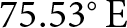
Highly dynamic, ephemeral ice cliffs are melting hotspots on debris-covered glaciers. While the seasonal evolution of Himalayan ice cliffs is well documented, short-term changes on hourly to daily scales and their driving factors are rarely investigated. This study reports hourly backwasting rates of a supraglacial ice cliff at Machoi Glacier ($34.29^{\circ}\,\mathrm{N}$, $75.53^{\circ}\,\mathrm{E}$) in the western Himalaya, measured over 3 days in June 2022 using a terrestrial laser scanner (TLS). An energy-balance model, incorporating the ice cliff’s topography, solar positions and radiation components, analyses the drivers of variability in backwasting rates. Within a single day (29 June), we observed very large variability in hourly mean backwasting rates, rising from $0.38 \pm 0.05\ \mathrm{cm\,hr}^{-1}$ (1430–1530 hours) to 1.06 ± $0.13\ \mathrm{cm\ h}^{-1}$ (1530–1630 hours), driven by direct solar radiation (solar elevation angle ∼50∘). Subsequently, rates declined to $0.68 \pm 0.03\ \mathrm{cm\ h}^{-1}$ (1730–1830 hours) influenced by diffuse shortwave and net longwave radiation. The mean daily backwasting rate ($7.7 \pm 0.13\ \mathrm{cm\ d}^{-1}$) resulted in the complete melting of the ice cliff within 2 months. This study highlights the potential of TLS to estimate short-term variations in ice cliff dynamics and controlling processes.




As snowlines retreat, the bare ice of Central Asian glaciers is increasingly exposed to short-wave radiation and high temperatures. The importance of bare-ice albedo for glacier melt rates is thus rising. Little is known about the variability of bare-ice albedo, its drivers or its implications for glacier melt. We address this gap by presenting the sub-seasonal and interannual variability of bare-ice albedo of Abramov Glacier in Kyrgyzstan between 1999 and 2022. We derived albedo products from Landsat surface reflectance data, investigated the relationship between air temperature and bare-ice albedo variability and explored the implications of this variability for glacier melt. Our results indicate that bare-ice albedo undergoes a sub-seasonal cycle controlled by air temperature and elevation-dependent refreezing events. Bare-ice albedo decreased over the tongue in July and August between 1999 and 2017, while, in 2018, a lateral displacement of the ice resulted in a shift in the patterns of bare-ice albedo. We found significant correlations between bare-ice albedo variability and both temperature and glacier melt at various timescales. Rising temperatures are thus expected to lead to darker bare ice and amplified feedback melt cycles. Integrating albedo variability into glaciological models is thus crucial for accurate predictions of accelerated glacier response to intensifying climate change.
We present a new model for understanding ice cliff dynamics within a debris-covered glacier ablation zone. This simple energy-balance model incorporates a moving frame of reference, made necessary by the melt of the surrounding debris-covered ice. In so doing, this also formalises how different types of field measurements can be utilised and compared. Our predictions include showing: ice cliffs can endogenously select their own slope angles; that there should be an indifference between illuminated north- and south-facing ice cliff slopes; that ice cliffs grow steeper with thicker debris layers; that ice cliffs cannot stably exist below a certain critical debris thickness and that some modelling of ice cliffs (when not incorporating the moving frame) may incorrectly estimate ice mass losses. All of our results are produced using parametrisations from Baltoro Glacier, Karakoram.
The sensitivity of glacier mass balance to temperature and precipitation variations is crucial for informing models that simulate glaciers’ response to climate change. In this study, we simulate the glacier-wide mass balance of Mera Glacier with a surface energy-balance model, driven by in situ meteorological data, from 2016 to 2020. The analysis of the share of the energy fluxes of the glacier shows the radiative fluxes account for almost all the energy available during the melt season (May–October). However, turbulent fluxes are significant outside the monsoon (June–September). On an annual scale, melt is the dominant mass flux at all elevations, but 44% of the melt refreezes across the glacier. By reshuffling the available observations, we create 180 synthetic series of hourly meteorological forcings to force the model over a wide range of plausible climate conditions. A +1 (−1)°C change in temperature results in a −0.75 ± 0.17 (+0.93 ± 0.18) m w.e. change in glacier-wide mass balance and a +20 (−20)% change in precipitation results in a +0.52 ± 0.10 (−0.60 ± 0.11) m w.e. change. Our study highlights the need for physical-based approaches to produce consistent forcing datasets, and calls for more meteorological and glaciological measurements in High Mountain Asia.
We conducted a series of experiments that revealed the formation of mm-scale penitente structures in ice illuminated by broadband light under moderate vacuum conditions between 50 and 2000 Pa. The experimental apparatus consists of a 0.3 m diameter cylindrical vacuum chamber with a cooling jacket surrounding the outer radius and bottom surface. Light shines in through an optical window at the top to illuminate most of the ice surface. We observe penitente-like structures at temperatures between −15$^\circ$C and $-2^\circ$C and pressures close to the equilibrium vapor pressure at the ice surface temperature. The formation of these structures is very sensitive to slight changes in background pressure, and the structures tend to vanish with significant deviations away from the equilibrium curve, resulting in a smooth sublimated crater formation instead of penitentes. Application of the physical model by Claudin and others (2015, doi: 10.1103/PhysRevE.92.033015) at experimental conditions generally agrees with observations for penitente spacing.