Refine search
Actions for selected content:
44 results
Eventual conjugacy of free inert G-SFTs
- Part of
-
- Journal:
- Ergodic Theory and Dynamical Systems / Volume 46 / Issue 10 / October 2026
- Published online by Cambridge University Press:
- 25 May 2026, pp. 2485-2504
- Print publication:
- October 2026
-
- Article
-
- You have access
- Open access
- HTML
- Export citation
ON MAXIMAL CYCLIC SUBGROUPS OF FINITE GROUPS
- Part of
-
- Journal:
- Bulletin of the Australian Mathematical Society / Volume 114 / Issue 2 / October 2026
- Published online by Cambridge University Press:
- 12 February 2026, pp. 314-322
- Print publication:
- October 2026
-
- Article
-
- You have access
- HTML
- Export citation
-
Let $\lambda (G)$
 be the maximum number of subgroups in an irredundant cover of the finite group G. We establish bounds on the order, exponent and derived length of the group in terms of this invariant.

WEIGHT CONJECTURES FOR FUSION SYSTEMS ON AN EXTRASPECIAL GROUP
- Part of
-
- Journal:
- Journal of the Australian Mathematical Society / Volume 120 / Issue 3 / June 2026
- Published online by Cambridge University Press:
- 02 February 2026, pp. 373-393
-
- Article
-
- You have access
- Open access
- HTML
- Export citation
-
In a previous paper, we stated and motivated counting conjectures for fusion systems that are purely local analogues of several local-to-global conjectures in the modular representation theory of finite groups. Here, we verify some of these conjectures for fusion systems on an extraspecial group of order
 $p^3$, which contain among them the Ruiz–Viruel exotic fusion systems at the prime
 $7$. As a byproduct, we verify Robinson’s ordinary weight conjecture for principal p-blocks of almost simple groups G realizing such (nonconstrained) fusion systems.


DERANGEMENTS IN PERMUTATION GROUPS WITH TWO ORBITS
- Part of
-
- Journal:
- Bulletin of the Australian Mathematical Society / Volume 113 / Issue 3 / June 2026
- Published online by Cambridge University Press:
- 05 December 2025, pp. 467-474
- Print publication:
- June 2026
-
- Article
-
- You have access
- Open access
- HTML
- Export citation
-
A classical theorem of Jordan asserts that if a group G acts transitively on a finite set of size at least
 $2$, then G contains a derangement (a fixed-point free element). Generalisations of Jordan’s theorem have been studied extensively, due in part to their applications in graph theory, number theory and topology. We address a generalisation conjectured recently by Ellis and Harper [‘Orbits of permutation groups with no derangements’, Preprint, 2024, arXiv:2408.16064], which says that if G has exactly two orbits and those orbits have equal length
 $n \geq 2$, then G contains a derangement. We prove this conjecture in the case where n is a product of two primes, and in the case where
 $n=bp$ with p a prime and
 $2b\leq p$. We also verify the conjecture computationally for
 $n \leq 30$.


Objective Mackey and Tambara functors via parametrized categories
-
- Journal:
- Mathematical Structures in Computer Science / Volume 35 / 2025
- Published online by Cambridge University Press:
- 27 November 2025, e31
-
- Article
-
- You have access
- Open access
- HTML
- Export citation
-
The first word in the title is intended in a sense suggested by Lawvere and Schanuel whereby finite sets are objective natural numbers. At the objective level, the axioms defining abstract Mackey and Tambara functors are categorically familiar. The first step was taken by Harald Lindner in 1976 when he recognized that Mackey functors, defined as pairs of functors, were equivalently single functors with domain a category of spans. In 1993, Tambara recognized that TNR-functors (that is, functors designed to have abstract trace, norm and restriction operations, and now called Tambara functors) were equivalently certain functors out of a category of polynomials. We define objective Mackey and objective Tambara functors as parametrized categories that have local finite products and satisfy some parametrized completeness and cocompleteness restriction. However, we can replace the original parametrizing base for objective Mackey functors by a bicategory of spans while the replacement for objective Tambara functors is a bicategory obtained by iterating the span construction; these iterated spans are polynomials. There is an objective Mackey functor of ordinary Mackey functors. We show that there is a distributive law relating objective Mackey functors to objective Tambara functors analogous to the distributive law relating abelian groups to commutative rings. We remark on hom enrichment matters involving the 2-category
 $\textrm{Cat}_{+}$ of categories admitting finite coproducts and functors preserving them, both as a closed base and as a skew-closed base.

Lattices over finite group schemes and stratification
- Part of
-
- Journal:
- Compositio Mathematica / Volume 161 / Issue 11 / November 2025
- Published online by Cambridge University Press:
- 16 December 2025, pp. 2911-2946
- Print publication:
- November 2025
-
- Article
-
- You have access
- Open access
- HTML
- Export citation
SMALL VALUES AND FORBIDDEN VALUES FOR THE FOURIER ANTI-DIAGONAL CONSTANT OF A FINITE GROUP
- Part of
-
- Journal:
- Journal of the Australian Mathematical Society / Volume 118 / Issue 3 / June 2025
- Published online by Cambridge University Press:
- 07 April 2025, pp. 297-316
-
- Article
-
- You have access
- Open access
- HTML
- Export citation
-
For a finite group G, let
 $\operatorname { {AD}}(G)$ denote the Fourier norm of the antidiagonal in
 $G\times G$. The author showed recently in [‘An explicit minorant for the amenability constant of the Fourier algebra’, Int. Math. Res. Not. IMRN 2023 (2023), 19390–19430] that
 $\operatorname { {AD}}(G)$ coincides with the amenability constant of the Fourier algebra of G and is equal to the normalized sum of the cubes of the character degrees of G. Motivated by a gap result for amenability constants from Johnson [‘Non-amenability of the Fourier algebra of a compact group’, J. Lond. Math. Soc. (2) 50 (1994), 361–374], we determine exactly which numbers in the interval
 $[1,2]$ arise as values of
 $\operatorname { {AD}}(G)$. As a by-product, we show that the set of values of
 $\operatorname { {AD}}(G)$ does not contain all its limit points. Some other calculations or bounds for
 $\operatorname { {AD}}(G)$ are given for familiar classes of finite groups. We also indicate a connection between
 $\operatorname { {AD}}(G)$ and the commuting probability of G, and use this to show that every finite group G satisfying
 $\operatorname { {AD}}(G)< {61}/{15}$ must be solvable; here, the value
 ${61}/{15}$ is the best possible.


8 - Finite groups and the class-size prime graph revisited
-
-
- Book:
- Groups St Andrews 2022 in Newcastle
- Published online:
- 21 November 2024
- Print publication:
- 12 December 2024, pp 341-359
-
- Chapter
- Export citation
1 - Topics in representation theory of finite groups
-
-
- Book:
- Groups and Graphs, Designs and Dynamics
- Published online:
- 11 May 2024
- Print publication:
- 30 May 2024, pp 1-86
-
- Chapter
- Export citation
A CHARACTERISATION OF SOLUBLE
 ${PST}$-GROUPS
- Part of
-
- Journal:
- Bulletin of the Australian Mathematical Society / Volume 110 / Issue 3 / December 2024
- Published online by Cambridge University Press:
- 15 March 2024, pp. 520-527
- Print publication:
- December 2024
-
- Article
-
- You have access
- HTML
- Export citation
-
Let G be a finite group. A subgroup A of G is said to be S-permutable in G if A permutes with every Sylow subgroup P of G, that is,
 $AP=PA$. Let
 $A_{sG}$ be the subgroup of A generated by all S-permutable subgroups of G contained in A and
 $A^{sG}$ be the intersection of all S-permutable subgroups of G containing A. We prove that if G is a soluble group, then S-permutability is a transitive relation in G if and only if the nilpotent residual
 $G^{\mathfrak {N}}$ of G avoids the pair
 $(A^{s G}, A_{sG})$, that is,
 $G^{\mathfrak {N}}\cap A^{sG}= G^{\mathfrak {N}}\cap A_{sG}$ for every subnormal subgroup A of G.


TRIPLE-PRODUCT-FREE SETS
- Part of
-
- Journal:
- Bulletin of the Australian Mathematical Society / Volume 110 / Issue 1 / August 2024
- Published online by Cambridge University Press:
- 06 October 2023, pp. 129-135
- Print publication:
- August 2024
-
- Article
-
- You have access
- HTML
- Export citation
-
In this paper, we study triple-product-free sets, which are analogous to the widely studied concept of product-free sets. A nonempty subset S of a group G is triple-product-free if
 $abc \notin S$ for all
 $a, b, c \in S$. If S is triple-product-free and is not a proper subset of any other triple-product-free set, we say that S is locally maximal. We classify all groups containing a locally maximal triple-product-free set of size 1. We then derive necessary and sufficient conditions for a subset of a group to be locally maximal triple-product-free, and conclude with some observations and comparisons with the situation for standard product-free sets.


FINITE GROUPS WITH HEREDITARILY G-PERMUTABLE SCHMIDT SUBGROUPS
- Part of
-
- Journal:
- Bulletin of the Australian Mathematical Society / Volume 109 / Issue 3 / June 2024
- Published online by Cambridge University Press:
- 28 July 2023, pp. 522-528
- Print publication:
- June 2024
-
- Article
-
- You have access
- Open access
- HTML
- Export citation
-
A subgroup A of a group G is said to be hereditarily G-permutable with a subgroup B of G, if
 $AB^x = B^xA$ for some element
 $x \in \langle A, B \rangle $. A subgroup A of a group G is said to be hereditarily G-permutable in G if A is hereditarily G-permutable with every subgroup of G. In this paper, we investigate the structure of a finite group G with all its Schmidt subgroups hereditarily G-permutable.


A NOTE ON REGULAR SETS IN CAYLEY GRAPHS
- Part of
-
- Journal:
- Bulletin of the Australian Mathematical Society / Volume 109 / Issue 1 / February 2024
- Published online by Cambridge University Press:
- 09 February 2023, pp. 1-5
- Print publication:
- February 2024
-
- Article
-
- You have access
- HTML
- Export citation
-
A subset R of the vertex set of a graph
 $\Gamma $ is said to be
 $(\kappa ,\tau )$-regular if R induces a
 $\kappa $-regular subgraph and every vertex outside R is adjacent to exactly
 $\tau $ vertices in R. In particular, if R is a
 $(\kappa ,\tau )$-regular set of some Cayley graph on a finite group G, then R is called a
 $(\kappa ,\tau )$-regular set of G. Let H be a nontrivial normal subgroup of G, and
 $\kappa $ and
 $\tau $ a pair of integers satisfying
 $0\leq \kappa \leq |H|-1$,
 $1\leq \tau \leq |H|$ and
 $\gcd (2,|H|-1)\mid \kappa $. It is proved that (i) if
 $\tau $ is even, then H is a
 $(\kappa ,\tau )$-regular set of G; (ii) if
 $\tau $ is odd, then H is a
 $(\kappa ,\tau )$-regular set of G if and only if it is a
 $(0,1)$-regular set of G.


SOME CRITERIA FOR SOLVABILITY AND NILPOTENCY OF FINITE GROUPS BY STRONGLY MONOLITHIC CHARACTERS
- Part of
-
- Journal:
- Bulletin of the Australian Mathematical Society / Volume 108 / Issue 1 / August 2023
- Published online by Cambridge University Press:
- 22 September 2022, pp. 120-124
- Print publication:
- August 2023
-
- Article
-
- You have access
- HTML
- Export citation
-
Gagola and Lewis [‘A character theoretic condition characterizing nilpotent groups’, Comm. Algebra 27 (1999), 1053–1056] proved that a finite group G is nilpotent if and only if
 $\chi (1)^{2}$ divides
 $\lvert G:\textrm {ker}\,\chi \rvert $ for every irreducible character
 $\chi $ of G. The theorem was later generalised by using monolithic characters. We generalise the theorem further considering only strongly monolithic characters. We also give some criteria for solvability and nilpotency of finite groups by their strongly monolithic characters.


FINITE GROUPS WITH ABNORMAL MINIMAL NONNILPOTENT SUBGROUPS
- Part of
-
- Journal:
- Bulletin of the Australian Mathematical Society / Volume 107 / Issue 2 / April 2023
- Published online by Cambridge University Press:
- 25 August 2022, pp. 261-270
- Print publication:
- April 2023
-
- Article
-
- You have access
- HTML
- Export citation
-
We describe finite soluble nonnilpotent groups in which every minimal nonnilpotent subgroup is abnormal. We also show that if G is a nonsoluble finite group in which every minimal nonnilpotent subgroup is abnormal, then G is quasisimple and
 $Z(G)$ is cyclic of order
 $|Z(G)|\in \{1, 2, 3, 4\}$.

ON THE REGULAR GRAPH RELATED TO THE G-CONJUGACY CLASSES
- Part of
-
- Journal:
- Bulletin of the Australian Mathematical Society / Volume 105 / Issue 1 / February 2022
- Published online by Cambridge University Press:
- 12 May 2021, pp. 101-105
- Print publication:
- February 2022
-
- Article
-
- You have access
- Export citation
-
Given a finite group G with a normal subgroup N, the simple graph
 $\Gamma _{\textit {G}}( \textit {N} )$ is a graph whose vertices are of the form
 $|x^G|$, where
 $x\in {N\setminus {Z(G)}}$ and
 $x^G$ is the G-conjugacy class of N containing the element x. Two vertices
 $|x^G|$ and
 $|y^G|$ are adjacent if they are not coprime. We prove that, if
 $\Gamma _G(N)$ is a connected incomplete regular graph, then
 $N= P \times {A}$ where P is a p-group, for some prime p,
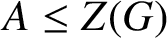 $A\leq {Z(G)}$ and
 $\textbf {Z}(N)\not = N\cap \textbf {Z}(G)$.


ON ANALOGUES OF HUPPERT’S CONJECTURE
- Part of
-
- Journal:
- Bulletin of the Australian Mathematical Society / Volume 104 / Issue 2 / October 2021
- Published online by Cambridge University Press:
- 18 January 2021, pp. 272-277
- Print publication:
- October 2021
-
- Article
-
- You have access
- Export citation
-
Let G be a finite group and
 $\chi $ be a character of G. The codegree of
 $\chi $ is
 ${{\operatorname{codeg}}} (\chi ) ={|G: \ker \chi |}/{\chi (1)}$. We write
 $\pi (G)$ for the set of prime divisors of
 $|G|$,
 $\pi ({{\operatorname{codeg}}} (\chi ))$ for the set of prime divisors of
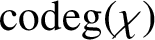 ${{\operatorname{codeg}}} (\chi )$ and
 $\sigma ({{\operatorname{codeg}}} (G))= \max \{|\pi ({{\operatorname{codeg}}} (\chi ))| : \chi \in {\textrm {Irr}}(G)\}$. We show that
 $|\pi (G)| \leq ({23}/{3}) \sigma ({{\operatorname{codeg}}} (G))$. This improves the main result of Yang and Qian [‘The analog of Huppert’s conjecture on character codegrees’, J. Algebra 478 (2017), 215–219].


FINITE GROUPS WITH COMPLEMENTED 2-MINIMAL
 $p$-SUBGROUPS
- Part of
-
- Journal:
- Bulletin of the Australian Mathematical Society / Volume 102 / Issue 3 / December 2020
- Published online by Cambridge University Press:
- 11 March 2020, pp. 430-438
- Print publication:
- December 2020
-
- Article
-
- You have access
- Export citation
-
For a given prime
 $p$, we investigate the finite groups all of whose 2-minimal
 $p$-subgroups are complemented.


SUBGROUPS WITH NO ABELIAN COMPOSITION FACTORS ARE NOT DISTINGUISHED
- Part of
-
- Journal:
- Bulletin of the Australian Mathematical Society / Volume 101 / Issue 3 / June 2020
- Published online by Cambridge University Press:
- 13 September 2019, pp. 446-452
- Print publication:
- June 2020
-
- Article
-
- You have access
- Export citation
-
Given a finite group
 $G$, define the minimal degree
 $\unicode[STIX]{x1D707}(G)$ of
 $G$ to be the least
 $n$ such that
 $G$ embeds into
 $S_{n}$. We call
 $G$ exceptional if there is some
 $N\unlhd G$ with
 $\unicode[STIX]{x1D707}(G/N)>\unicode[STIX]{x1D707}(G)$, in which case we call
 $N$ distinguished. We prove here that a subgroup with no abelian composition factors is not distinguished.


RIGHT ENGEL-TYPE SUBGROUPS AND LENGTH PARAMETERS OF FINITE GROUPS
- Part of
-
- Journal:
- Journal of the Australian Mathematical Society / Volume 109 / Issue 3 / December 2020
- Published online by Cambridge University Press:
- 18 July 2019, pp. 340-350
-
- Article
-
- You have access
- Export citation
-
Let
 $g$ be an element of a finite group
 $G$ and let
 $R_{n}(g)$ be the subgroup generated by all the right Engel values
 $[g,_{n}x]$ over
 $x\in G$. In the case when
 $G$ is soluble we prove that if, for some
 $n$, the Fitting height of
 $R_{n}(g)$ is equal to
 $k$, then
 $g$ belongs to the
 $(k+1)$th Fitting subgroup
 $F_{k+1}(G)$. For nonsoluble
 $G$, it is proved that if, for some
 $n$, the generalized Fitting height of
 $R_{n}(g)$ is equal to
 $k$, then
 $g$ belongs to the generalized Fitting subgroup
 $F_{f(k,m)}^{\ast }(G)$ with
 $f(k,m)$ depending only on
 $k$ and
 $m$, where
 $|g|$ is the product of
 $m$ primes counting multiplicities. It is also proved that if, for some
 $n$, the nonsoluble length of
 $R_{n}(g)$ is equal to
 $k$, then
 $g$ belongs to a normal subgroup whose nonsoluble length is bounded in terms of
 $k$ and
 $m$. Earlier, similar generalizations of Baer’s theorem (which states that an Engel element of a finite group belongs to the Fitting subgroup) were obtained by the first two authors in terms of left Engel-type subgroups.


