Contents
Research Article
THE METRIC DIMENSION OF ZERO-DIVISOR GRAPHS OF BOOLEAN RINGS
- Part of:
-
- Published online by Cambridge University Press:
- 10 March 2026, pp. 212-220
-
- Article
-
- You have access
- HTML
- Export citation
-
This paper resolves the previously open problem of determining the metric dimension of the zero-divisor graph $\Gamma (R)$
 for the Boolean ring $R = (\mathbb {Z}_2)^n$
 . The unique structure of this graph, characterised by its diameter of $3$
 and lack of common neighbours, has hindered all standard approaches. We introduce a novel combinatorial method that constructs an explicit resolving set. Consequently, we provide a precise formula for $\dim _m(\Gamma ((\mathbb {Z}_2)^n))$
 , closing a notable gap in the literature on metric dimensions of zero-divisor graphs. As an application, we compute the metric dimension of a zero-divisor graph of a ring with a Boolean factor.


UPPER BOUNDS FOR INFINITARY HARMONIC NUMBERS AND INFINITARY HARMONIOUS TUPLES
- Part of:
-
- Published online by Cambridge University Press:
- 17 June 2026, pp. 221-227
-
- Article
-
- You have access
- Open access
- HTML
- Export citation
INTERSECTIONS OF SUMSETS IN ADDITIVE NUMBER THEORY
- Part of:
-
- Published online by Cambridge University Press:
- 14 May 2026, pp. 228-236
-
- Article
-
- You have access
- HTML
- Export citation
-
Let A be a subset of an additive abelian semigroup S and let $hA$
 be the h-fold sumset of A. The following question is considered. Let $(A_q)_{q=1}^{\infty }$
 be a strictly decreasing sequence of sets in S and let $A = \bigcap _{q=1}^{\infty } A_q$
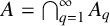 . When does one have $$ \begin{align*} hA = \bigcap_{q=1}^{\infty} hA_q \end{align*} $$

for some or all $h \geq 2$
 ?


THE FERMAT–MERSENNE PROBLEM ON PYTHAGOREAN TRIPLES
- Part of:
-
- Published online by Cambridge University Press:
- 02 March 2026, pp. 237-247
-
- Article
-
- You have access
- HTML
- Export citation
LINKS BETWEEN THE SOLVABILITY OF MATRIX AND SCALAR DIOPHANTINE EQUATIONS
- Part of:
-
- Published online by Cambridge University Press:
- 20 May 2026, pp. 248-255
-
- Article
-
- You have access
- HTML
- Export citation
-
We investigate solutions to the matrix Diophantine equation $ X^n + Y^n = n!Z^n $
 within specific classes of $2 \times 2$
 integer matrices. Firstly, we introduce a class of $2\times 2$
 matrices $G_2(d)$
 and show that $X^n + Y^n = n!Z^n$
 admits a solution in $G_2(d)$
 if and only if the classical Diophantine equation $x^n + y^n = n!z^n$
 has a solution in $\mathbb {Q}(\sqrt {d})$
 . We further present a constructive theorem for generating matrix solutions over a general number field K. Finally, we introduce a determinant-fixed class of matrices $G_2(d, l)$
 , and prove that the Fermat-type equation $X^n+Y^n=2Z^n$
 has only the trivial solution in $G_2(d, l)$
 whenever $n>2$
 .


NONCONGRUENT NUMBERS OF THE FORM $2pq$
 WITH $pq\equiv 5\ (\textbf {mod } 8)$

- Part of:
-
- Published online by Cambridge University Press:
- 23 February 2026, pp. 256-265
-
- Article
-
- You have access
- HTML
- Export citation
-
Let p and q be two primes with $(p,q)\equiv (1,5)$
 or $(7,3) \pmod 8$
 . Lagrange [‘Nombres congruents et courbes elliptiques’, Séminaire Delange-Pisot-Poitou. Théorie des Nombres 16(1) (1974–1975), Article no. 16] and Qin [‘Congruent numbers, quadratic forms and $K_2$
 ’, Math. Ann. 383(3–4) (2022), 1647–1686] showed that if $(\frac {q}{p})=-1$
 , then $2pq$
 is not a congruent number. By using Qin’s method, we prove that if $(p,q)\equiv (1,5) \pmod 8$
 and $(\frac {q}{p})=1$
 with $h(-pq)\not \equiv p-1 \pmod {16}$
 , then $2pq$
 is not a congruent number; if $(p,q)\equiv (7,3) \pmod 8$
 and $(\frac {q}{p})=1$
 with $h(-2pq)\not \equiv p+1 \pmod {16}$
 , then $2pq$
 is not a congruent number. Here, $h(-d)$
 denotes the class number of the imaginary quadratic field $\mathbb {Q}(\sqrt {-d})$
 .


SEVERAL QUESTIONS OF LONGSTAFF ON GENERATION IN MATRIX ALGEBRAS
- Part of:
-
- Published online by Cambridge University Press:
- 19 May 2026, pp. 266-270
-
- Article
-
- You have access
- HTML
- Export citation
-
We solve three problems raised in recent articles by Longstaff [Bull. Aust. Math. Soc. 102 (2020), 226–236; 103 (2021), 260–270; 104 (2021), 78–93]. We show that: (1) the length of an irreducible family of $n\times n$
 rank-one matrices can take any value $1,2,\ldots ,n$
 ; (2) the slot length of an irreducible pair of $n\times n$
 matrices can exceed $2n-4$
 ; and (3) we give bounds on the $1$
 -minimum spanning lengths of irreducible pairs.


SIMPLICIAL COENDOMORPHISM OPERADS AND COALGEBRAS
- Part of:
-
- Published online by Cambridge University Press:
- 20 May 2026, pp. 271-286
-
- Article
-
- You have access
- Open access
- HTML
- Export citation
-
In a recent work of Moreno-Fernandez, Wierstra and the present author [‘A recognition principle for iterated suspensions as coalgebras over the little cubes operad’, Preprint, 2022, arXiv:2210.00839], a coendomorphism operad in the category of pointed topological spaces endowed with the wedge sum was introduced. In this paper, we construct an analogue completely internal to the category of simplicial sets with the goal of defining simplicial coalgebras. As an application, we show that simplicial n-fold suspensions are coalgebras up to coherent homotopy over the Barratt–Eccles $E_n$
 -operad provided they have finitely many nondegenerate simplices.

ON THE RELATIONSHIP BETWEEN THE MINIMUM IRREDUCIBLE CHARACTER CODEGREE AND FINITE SIMPLE GROUPS
- Part of:
-
- Published online by Cambridge University Press:
- 30 March 2026, pp. 287-299
-
- Article
-
- You have access
- HTML
- Export citation
-
It is established that the sporadic simple groups, the alternating groups and the projective special linear groups $L_2(p)$
 for primes $p \geq 5$
 are uniquely determined by their group orders and the minimum nontrivial codegrees of their irreducible characters.


KERNELS OF BRAUER CHARACTERS AND ISAACS’ PARTIAL CHARACTERS
- Part of:
-
- Published online by Cambridge University Press:
- 30 March 2026, pp. 300-305
-
- Article
-
- You have access
- Open access
- HTML
- Export citation
A SUBGROUP LATTICE OF A FINITE SOLUBLE GROUP
- Part of:
-
- Published online by Cambridge University Press:
- 30 March 2026, pp. 306-313
-
- Article
-
- You have access
- Open access
- HTML
- Export citation
ON MAXIMAL CYCLIC SUBGROUPS OF FINITE GROUPS
- Part of:
-
- Published online by Cambridge University Press:
- 12 February 2026, pp. 314-322
-
- Article
-
- You have access
- HTML
- Export citation
-
Let $\lambda (G)$
 be the maximum number of subgroups in an irredundant cover of the finite group G. We establish bounds on the order, exponent and derived length of the group in terms of this invariant.

SLENDER SEMIGROUPS
- Part of:
-
- Published online by Cambridge University Press:
- 21 April 2026, pp. 323-332
-
- Article
-
- You have access
- HTML
- Export citation
NUMERICAL SEMIGROUPS FROM RATIONAL MATRICES IV: COMPUTATION OF THE MATRICIAL DIMENSIONS OF NUMERICAL SEMIGROUPS WITH SMALL FROBENIUS NUMBER OR GENUS
- Part of:
-
- Published online by Cambridge University Press:
- 31 March 2026, pp. 333-348
-
- Article
-
- You have access
- Open access
- HTML
- Export citation
-
We introduce a module-theoretic approach and a linear-programming method to compute the matricial dimensions of numerical semigroups. We compute the matricial dimension of every numerical semigroup with Frobenius number at most $10$
 or genus at most $6$
 . Many of these evaluations are beyond the scope of previous techniques.


LINEAR INDEPENDENCE OF QUANTUM TRANSLATES
- Part of:
-
- Published online by Cambridge University Press:
- 26 January 2026, pp. 349-355
-
- Article
-
- You have access
- HTML
- Export citation
-
If A is in the p-Schatten class on ${\mathbb {R}}^n$
 , $1\leq p \leq {4n}/{(2n-1)}$
 , then the quantum translates of A are linearly independent. Moreover, there exists a nonzero operator in the p-Schatten class on ${\mathbb {R}}^n$
 , $p>{4n}/{(2n-1)}$
 , whose quantum translates are linearly dependent.


A RIGIDITY RESULT FOR SLICES IN WARPED PRODUCTS
- Part of:
-
- Published online by Cambridge University Press:
- 22 July 2026, pp. 356-362
-
- Article
-
- You have access
- HTML
- Export citation
A NOTE ON THE PLANAR SKOROKHOD EMBEDDING PROBLEM
- Part of:
-
- Published online by Cambridge University Press:
- 12 February 2026, pp. 363-369
-
- Article
-
- You have access
- HTML
- Export citation
-
The planar Skorokhod embedding problem was first proposed and solved by Gross [‘A conformal Skorokhod embedding’, Electron. Commun. Probab. 24 (2019), 11 pages; doi:10.1214/19-ECP272]. Gross worked with probability distributions having finite second moment. Boudabra and Markowsky [‘Remarks on Gross’ technique for obtaining a conformal Skorokhod embedding of planar Brownian motion’, Electron. Commun. Probab. 25 (2020), 13 pages; doi:10.1214/20-ECP300] extended the solution to all distributions with a finite pth moment for $p>1$
 . The case $p=1$
 has remained uncovered since then. In this note, we show that the planar Skorokhod embedding problem is solvable for $p=1$
 when the Hilbert transform of its quantile function is integrable, effectively closing this line of investigation.


BURKHOLDER’S EXIT-TIME CONDITION VIA PROPER MAPS: SMIRNOV REGULARITY, HARDY–ORLICZ CRITERIA AND TORSION-TYPE PROBLEMS
- Part of:
-
- Published online by Cambridge University Press:
- 20 May 2026, pp. 370-379
-
- Article
-
- You have access
- Open access
- HTML
- Export citation
-
Let $(Z_{t})_{t \geq 0}$
 be a planar Brownian motion running in some domain W and denote by $\tau _{W}$
 the exit time of $Z_{t}$
 from W. To establish the finiteness of $\mathbf {E}(\sup _{0\leq t\leq \tau _{W}}|Z_{t}|^{p})$
 from the finiteness of $\mathbf {E}(|Z_{\tau _{W}}|^{p})$
 for some $p>0$
 , Burkholder [‘Exit times of Brownian motion, harmonic majorization, and Hardy spaces’, Adv. Math. 26(2) (1977), 182–205] imposed an additional condition on the exit time $\tau _{W}$
 , namely the finiteness of $\mathbf {E}(\log (\tau _{W}))$
 . Such a condition is typically difficult to verify, since the law of the exit time is often delicate. In this paper, we revisit Burkholder’s condition and propose an alternative viewpoint. Our approach is purely analytic, weaker and formulated in terms of proper analytic maps rather than exit times themselves. This provides a more flexible framework for further applications.


PhD Abstract
AN ALGEBRO-GEOMETRIC APPROACH TO VOLUMES OF MODULI SPACES OF CONICAL HYPERBOLIC SURFACES
- Part of:
-
- Published online by Cambridge University Press:
- 24 June 2026, pp. 380-381
-
- Article
-
- You have access
- HTML
- Export citation
FUZZY LOGISTIC REGRESSION WITH TRIANGULAR AND GAUSSIAN FUZZY NUMBERS
- Part of:
-
- Published online by Cambridge University Press:
- 29 July 2026, pp. 382-383
-
- Article
-
- You have access
- HTML
- Export citation