To save content items to your account,
please confirm that you agree to abide by our usage policies.
If this is the first time you use this feature, you will be asked to authorise Cambridge Core to connect with your account.
Find out more about saving content to .
To save content items to your Kindle, first ensure no-reply@cambridge.org
is added to your Approved Personal Document E-mail List under your Personal Document Settings
on the Manage Your Content and Devices page of your Amazon account. Then enter the ‘name’ part
of your Kindle email address below.
Find out more about saving to your Kindle.
Note you can select to save to either the @free.kindle.com or @kindle.com variations.
‘@free.kindle.com’ emails are free but can only be saved to your device when it is connected to wi-fi.
‘@kindle.com’ emails can be delivered even when you are not connected to wi-fi, but note that service fees apply.
Chapter 5 investigates the networks of relationship that sustain individuals and communities in the poems. It addresses family, marriage, sexual desire and agency, male bonds and loyalty, and the expectations placed on women and men. It also considers childhood and old age, hospitality, and wider social connections, arguing that epic memory preserves not only heroic deeds but everyday forms of attachment and obligation.
This article examines the shifting nature of gender relations in eighteenth-century New England by looking at the Edwards family’s shared views on marriage and divorce. Rooted in Puritan and Reformed notions, the Edwards family shared an ideology that challenged patriarchal double standards surrounding gender and sexuality. The article looks at writings and private correspondences from the Edwardses to bring to light their vision of marriage as a covenant of companionship that coercion or abuse might dissolve. It particularly examines Hannah Edwards’s writings on gender, female–male relations, and what she termed the male tendency to “domination,” in order to reveal how an elite colonial woman challenged gender norms. The Edwards family fought to broaden the grounds for divorce and emphasized women’s agency rooted in the “law of self-preservation.” With the 1744 “Bad Book” affair and the 1746 Eleanor Gray divorce, the Edwardses resisted legal and social biases favoring men, while also contesting the patriarchal nature of eighteenth-century New England. By drawing on Reformed predecessors, the Edwardses preserved Puritan ideals of equal souls and unequal bodies while opposing the era’s increasingly patriarchal sexual politics.
Studies of ‘anti-gender’ mobilisations focus on contested gender policies such as abortion, same-sex marriage and sex education. Who engages in these protests and why is less known. We argue that conservative women organise to defend religious beliefs and agendas against a perceived threat that targets not only religious institutions but also their own identities as wives and mothers by offering alternatives to conventional family structures. This argument applies to the secularisation threat of the early twentieth century as well as the policy demands of liberal social movements in the early twenty-first century. Focusing on Chile and Mexico, we highlight continuity and change in conservative–religious women’s activism.
This chapter tests the “enclave theory,” that is, the physical segregation of female officers improves outcomes for women (complainants and staff). Following all-women police stations, complainants of violence against women face challenges in terms of having their cases deflected from standard police stations.
This article brings a critical feminist phenomenological lens to a central pillar of the international humanitarian law regime – the proportionality rule – and reflects on how the narrow, masculine orientation of the norm fails to accommodate women’s experiences of incidental mental harm. While women disproportionately experience double the rates of post-traumatic stress disorder in response to trauma events than do men, the proportionality rule does not expressly include mental harm within its ambit, exposing the rule to conservative interpretation and exclusionary applications for gendered mental harm. Some interpretations of the temporal constraints of the rule (concerned with the legality of single strikes, absent their latent, reverberating effects) reflect a dominant event-based legal model at odds with women’s experiences of mental harm that are protracted, cumulative and repercussive. Studies reveal women’s fear as a product of constructions of masculinity and femininity, structural inequity, and fear conditioning. This article offers a reparative response through a gendered and temporal alignment of the principle of proportionality with women’s experiences of mental harm in armed attacks.
The increasing participation of women in the labour market has highlighted significant advancements but also inequalities that negatively impact women’s happiness and job satisfaction. This study aims to analyse the existing literature on women’s workplace happiness through a bibliometric review, identifying trends, leading authors, research areas, and critical gaps. Employing a systematic bibliometric review methodology, 307 scientific articles published between 2010 and 2024 in the Web of Science Core Collection database were examined. Findings underscore a growing focus on factors external to the work environment, such as gender roles, double shifts, stress, and mental health. Furthermore, the results reveal considerable fragmentation in scientific production and a lack of established academic benchmarks. Conclusions stress the urgent need for organizational approaches that comprehensively address these inequalities, promoting policies of reconciliation, intersectional inclusion, and emotional well-being programmes. The study offers directions for future research and practical applications for fostering more equitable organizational management.
This chapter discusses how the suburb was initially a source of anxiety and ambivalence, with the city compared unfavourably to the bush in The Bulletin in the 1890s. This was followed by representations of the suburbs as constraining creativity and promoting social and political narrowness in early twentieth-century poetry. Their reconceptualisation would occur at the end of World War II through painting and Ern Malley’s poems, with the latter evoking a sense of the suburban quotidian. The chapter then considers how a Melbourne group of poets began depicting the suburbs with both affection and parodic impulse, often demonstrating how elements of liberation and constraint are experienced simultaneously in such spaces. The chapter also discusses how Aboriginal poets explored suburbia and the uncanny in the late twentieth century. It includes a reconceptualisation of surburban domesticity in poetry by Gwen Harwood before exploring how forms such as the verse novel and the prose poem enabled detailed and linguistically rich engagements with the suburbs. Lastly, the chapter discusses the range of responses to the suburbs by migrant writers.
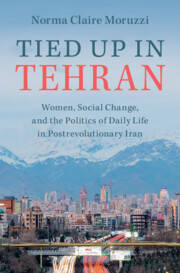
Tied Up in Tehran offers a richly interdisciplinary study of ordinary life in Iran since the 1979 revolution and a critical intervention in political theory debates on knowledge and method. Drawing from over ten years of field work in Iran since the 1990s, and originating in the author's surreal experience of being served tangerines during a home invasion in Tehran, Norma Claire Moruzzi examines the experiences of women, young people, artists, and activists: at home, at work, and in the street. These stories - of food and family, film and politics, shopping and crime-reckon with the past, demonstrate resilient democratization in the present, and provide glimpses of a plausible future while offering a refreshing model to ethically engaged modes of study. Moruzzi's lucid and engaging writing explores Iranian daily life as unexpected, contradictory, and full of political promise.
How can everyday entertainment shape gender politics in authoritarian regimes? Despite autocrats’ heavy control over media, political scientists studying authoritarianism largely neglect television programming. Particularly surprising given their target demographics, cooking shows are absent in political science gender analyses. Drawing from over 600 hours of Turkish cooking show content, I introduce conservative gender edutainment to capture the mechanisms by which TV shows facilitate authoritarian regimes’ gender construction projects. Using quantitative analysis of cooking show content, I first identify two complementary pedagogies — modeling and othering — that respectively teach adherence to, and vilify deviation from, regime-specified behavioral norms. I then use intertextual analysis to extract content that engagingly instructs viewers in the ideal woman in “New Turkey,” the neoconservative vision articulated by Turkey’s ruling (Justice and Development Party) AKP. Findings provide novel insight into vernacular channels of gender construction, while underscoring the added value TV-as-data holds for studies of identity politics in authoritarian contexts.
Empirical studies cast doubt on the efficiency assumption made in standard economic models of household behavior. In couples, the allocation of time between activities remains highly differentiated by gender. In this paper we examine whether couples deviate from efficiency in household production, using an experimental design. We compare the allocation of gendered vs. gender-neutral domestic tasks. Our results show that women in the household overspecialize in “feminine tasks” and men in “masculine tasks” compared to what their comparative advantage would require, hence revealing the influence of gender roles and stereotypes on the couples’ behavior.
This article details how Plautus’ Casina has been used in a general education comparative gender history class over multiple semesters. Since Casina was based on an Athenian New Comedy play (The Lot-Castors by Diphilus), it incorporates elements of late fourth/early third century BCE Athenian ideas on gender, gender roles, and sexuality as well as Republican Roman views on these same areas from approximately a century later. For an introductory comparative gender history course which is designed for a wide time span, this play therefore offers the opportunity to look at two related cultures in just one work. The article highlights areas of the play emphasising those cultures’ ideals and values, and also deals with which areas students have most commented on and which ones are often ignored, in terms of characters, gender roles, and sexualities. The role and representation of slaves in those societies and within the play are also remarked upon.
This chapter emphasises the multifaceted influences that impact individuals as they initiate, sustain, and terminate relationships. These relationships extend beyond the immediate couple, involving broader kinship and societal frameworks. People make nuanced distinctions between various relationship forms and the roles and responsibilities assigned to partners. The chapter highlights the significance of local terminologies in conveying the manifestation of pleasure, different relationship forms, and emotional dynamics. While the fluidity of contemporary relationships in Freetown may appear less burdened by inequality than rural marriages, they encounter their own set of challenges. Such relationships lack reliable foundations, potentially collapsing and leaving individuals without the support of family or community. Additionally, violence can emerge from power imbalances, manipulation, and the complex interplay of emotions and entitlement. This chapter sheds light on how love and relationships are intricately interwoven with societal expectations, personal aspirations, and economic constraints, ultimately shaping the emotional landscape of Freetown.
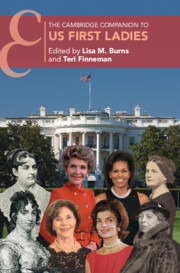
First ladies have always received a great deal of attention and are among the most recognizable figures of any presidential administration. They're often treated as celebrities, making them some of the most prominent women of their eras. Yet many of their stories and contributions have been overlooked. Through a collection of thematic essays, The Cambridge Companion to US First Ladies provides a thorough and compelling examination of the development of the first lady institution, and the political, social, and cultural influence of the women who've served in this role. Topics covered include the evolution of various first lady roles, such as hostess, campaigner, surrogate, diplomat, social advocate, and trendsetter; how first ladies have been political assets and liabilities; the impact of first ladies' speeches and media usage; first ladies during wartime and presidential deaths; the contributions of first lady stand-ins; how presidential spouses have been represented in films; and how these women are memorialized and remembered-or forgotten.
Civil wars are not only destructive: they can also generate new, long-lasting social, political, and economic structures and processes. To account for this productive potential and analyse post-conflict outcomes, I argue that we should analyse civil wars as critical junctures. Civil wars can relax structural constraints, opening opportunities for wartime processes to generate changes or to reinforce, rather than transform, the status quo. Changes or stasis may then be locked in by conflict outcomes, creating path dependencies. Studying civil wars as critical junctures allows for a clearer understanding of what variables mattered and interacted at different points in the conflict process, and the varying roles of structure and agency in producing institutional change or reinforcing pre-existing conditions. I explore the potential benefits of a critical juncture approach in the civil wars literature on different aspects of post-conflict politics and illustrate them in analysing the literature on women’s empowerment during and after civil wars. Applying the critical junctures framework to civil wars’ effects on institutions and socio-behavioural patterns can provide analytical clarity about complex processes and contexts, can facilitate comparison across cases and studies, and draws critical attention both to what civil wars change and to potential pathways not taken.
Does gender influence how candidates in the United States present their prior political experience to voters? Messaging one’s experience might demonstrate a history of power-seeking behavior, a gender role violation for women under traditional norms. As a result, men should be more likely to make experience-based appeals than women candidates. For evidence, we analyze the contents of 1,030 televised advertisements from 2018 state legislative candidates from the Wesleyan Media Project. We find that ads sponsored by experienced men are significantly more likely to highlight experience than ads sponsored by experienced women. However, we find that women’s and men’s ads are roughly equally likely to discuss work experience, suggesting that men’s greater emphasis on experience is limited to prior officeholding. The results contribute to our understanding of gender dynamics in political campaigns, the information available to voters, and how advertising shapes the criteria voters use to assess candidates.
In October 2020 the South African Astronomical Observatory celebrated 200 years of existence as an astronomical observatory by organizing a virtual symposium “Beyond 200 Years of Astronomy”. The theme of that symposium covered a wide range of topics, among which African ethnoastronomy and indigenous knowledge, history of astronomy in Africa, astronomy in recent decades, and astronomy and society. Focus Meeting 6 at the XXXIInd General Assembly centered on people, instruments, and projects during the past two centuries – that is, the period since the establishment of the South African Astronomical Observatory in 1820.
Bitch lurked in the English language for centuries, but then it emerged as an everyday word. Why? Bitch changed along with the changing social roles of women during the nineteenth and twentieth centuries. By the mid 1900s, the use of bitch had exploded; its meteoric rise was a backlash against feminism. In response it was reclaimed by feminists – to some extent, that is. In modern times, bitch is still an insult for a woman who is considered to be unpleasant, disagreeable, or malicious. But in the word’s evolution it has also come to mean a woman who is revered (or reviled) as tough, strong, and assertive. For better or for worse, bitch is interwoven with the history of feminism. It is a word that represents both feminism and anti-feminism at the same time.
The ‘sexual body’ is at once the sexed body identified as male, female, or non-binary, and the body that engages in sexual acts, experiences desire, and is perceived as an erotic object. This chapter explores a wide range of ideas about and experiences of the sexual body in pre-modern European, Native American, Chinese, Islamic, Jewish, Pacific, Māori, and West African cultures. It argues that to take a global historical perspective on sexual bodies it is necessary to consider a wide range of discourses and representations. It begins with sexual bodies in mythology: narratives of human origin from ancient Greek, Native American, Judeo-Christian and Islamic, Chinese, Māori, and West African cultures. Creation stories purvey ideas about sexual difference, desire, beauty, and gender relations that reflect a culture’s deepest belief-systems. Second, it examines sexual bodies in the medical discourses of Western and Chinese history, summarising ancient Western concepts of sex difference as a matter of moisture, heat, and anatomy, and ancient Chinese theories of qi, yinyang, and beauty. Third, it examines sexual embodiment in lived experiences of gender roles and puberty rites, showing that many Indigenous cultures historically accepted people of nonbinary gender.
Focused on metropolitan consumer centres in which new sexual identities were bought and sold, this chapter explores how mass-market businesses stimulated, satisfied, and contained female desires, often at the same time. Consumer behaviours are a nexus of bodily and psychic desires understood through a language of seduction. Since the mid-nineteenth century, businesses have channelled, commodified, and promoted female sexuality to sell new products, shopping spaces, and leisure activities. Cities offered both licit and illicit, sexual and consumer pleasures. Their urban geographies are the living proof of our argument that in modern capitalist societies, sexuality is a commodity, commodities often are erotic, and the spaces and communities in which they are exchanged contribute to the making of consumer and sexual subjectivities. The marketing of eros therefore did not simply emerge with the twentieth-century sexual revolution, but rather was central to the history of modern capitalism. By examining the overlapping histories of the marketing of female consumer and sexual pleasures in diverse places, this chapter explores the role of sex and sexiness in the modern marketplace and challenges liberal assumptions about agency, liberation, and progress embedded in the history of the sexual revolutions of the late twentieth century.