To save content items to your account,
please confirm that you agree to abide by our usage policies.
If this is the first time you use this feature, you will be asked to authorise Cambridge Core to connect with your account.
Find out more about saving content to .
To save content items to your Kindle, first ensure no-reply@cambridge.org
is added to your Approved Personal Document E-mail List under your Personal Document Settings
on the Manage Your Content and Devices page of your Amazon account. Then enter the ‘name’ part
of your Kindle email address below.
Find out more about saving to your Kindle.
Note you can select to save to either the @free.kindle.com or @kindle.com variations.
‘@free.kindle.com’ emails are free but can only be saved to your device when it is connected to wi-fi.
‘@kindle.com’ emails can be delivered even when you are not connected to wi-fi, but note that service fees apply.
The postscript shifts to the end of sugar and the rise of oil in today’s Guyana. In 2018, Guyana became – according to paternalistic international news coverage – the “unlikely setting for the world’s next big oil boom.” This drastic change took place against the backdrop of two significant national developments: (1) the demise of the sugar industry, from which thousands of jobs were lost; and (2) a significant increase in ethnic polarization between the leading political parties and in the country more broadly, some of which led to fatal violence. As Guyana moves from the margins of global circuits of capital, racial tensions in the country have limited the possibility of a robust movement to either ensure that “oil money” benefits the entire country, or take the path less traveled, a more sustainable route that will benefit everyone – globally. The stakes indeed are high. Building on Caribbean feminist epistemologies, this section theorizes a solidarity that gains power from recognizing and understanding difference. I argue that just as racial capitalism remakes itself, solidarity must always be remade, and that history can help us imagine different futures.
What does it mean to move to a country, by force or willingly, and then have to navigate a new system, a hundred new systems that make up your new life? Or what might it mean to be born in Aotearoa New Zealand or for your family to have been here for multiple generations and yet to be made to feel forever that you do not belong? Do systems have a place in promoting wellbeing and belonging? What might it mean to work in health care or social services with people and communities that are culturally different from your own? This chapter invites you to go beyond thinking about skills and competencies for working with difference or about models of diversity and to instead zoom out and think about how bigger social and political contexts impact on care. How does the media, your family, politicians and others shape how you treat others? The concept of cultural safety invites practitioners to engage in critical and reflective processes to understand these contexts and histories. It is more likely that if we do so, we might transform the unequal societal power relations that impact on the life chances and health outcomes of others.
The Introduction discusses why and how the Imperial Arsenal was central to the Ottoman reform efforts, highlighting its distinctive characteristics for analyzing the relationality of reform policies with modern capitalism. I offer a conceptual discussion of Ottoman Reform, understanding it as integral to the making of modernity in the global context of state formation and industrialization, and discussions on capitalism and modernity in dialogue with Ottoman and global historiographies of the long nineteenth century. It shows how class, migration, and coercion can be used as conceptual tools to bring new questions and insights into Ottoman modernization processes. It evaluates studies on modernity and Ottoman modernization, social and labor history, migration, (im)mobilities, and the history of the Ottoman navy and shipbuilding. The Introduction concludes with a methodological discussion on adopting the perspective of production relations and on the possibilities and challenges of studying the microhistory of a state worksite and elucidates how the book approached official documents and policies while investigating the working-class agency in the history of Ottoman Reform.
Theorists have linked the creation of social capital to the development of the kind of robust civil society that underwrites the well formed and stable democracy. This understanding raises the problem of what is social capital in specific national contexts. A critical issue is whether and to what extent a model of social capital moulded to the EuroAmerican experience is applicable to the new democracies. Three arguments are made in the context of a review of the works of Putnam and Touraine. First, the question of social capital foundationally concerns not only the production of institutions and values but the conditions of production. Analysis thus needs to grasp not only the specifically social process of its creation, distribution, and institutionalization, but the political culture and economy that serve as its foundation. Second, theories of social capital created in the context of nation-state based production-centered political economy do not capture what is going on in an increasingly globalized and circulatory political economy. And third, theories of social capital centered on the United States and Europe are only partially applicable to the emerging democracies of Africa and the postcolony generally.
In this article, I place the blockchain within competing interpretations of the present as either an emerging technofeudal mode of production, or as a relatively unchanged capitalism. Drawing on a wide literature on zones – spaces in nation-states where the usual rules do not apply – I highlight three reconfigurations of territory, authority, and rights (TAR) associated with the blockchain today. These are: (1) the transnational expansion of crypto-related practices; (2) the national regulation and legitimation of cryptoassets; and (3) the reemergence of a liberal discourse linking human rights to the global exchange of private property. Through these examples, I demonstrate how the blockchain is part of a broader reshaping of accumulation and legal legitimation, mirroring the emergence of capitalism and the nation-state, but on a global scale. I conclude by arguing against the position that the reemergence of fascism is a red herring distracting us from the coming technofeudalism; instead, I claim that technofeudalism obscures the links between today’s techno-authoritarian shift and the enforcement of global corporate private property relations.
Following the recent resurgence of capitalism as a key subject in historical analysis, historians have highlighted the globally interconnected making and remaking of capitalism. Commodity-centered histories in global history have shown how to write locally grounded histories of global capitalism, emphasizing the complex and contingent relationship between the local and the global. In these accounts, however, businesses and global firms rarely appear as the analytical centerpiece. We argue that the globally active firm provides an ideal prism for writing locally grounded histories of global capitalism. Furthermore, drawing on recent usages of assemblage theory in economic history, we propose viewing “the global firm” as a “capitalist assemblage” in order to capture the spatiotemporally contingent processes through which capitalism and distinct ways of organizing business, labor, and life under capitalism emerged and evolved at specific sites and times. This approach will contribute to global studies and address limitations in business history’s treatment of the global firm.
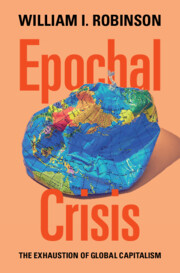
In a groundbreaking new study, acclaimed scholar of global capitalism William I. Robinson presents a bold, original, and timely 'big picture' analysis of the unprecedented global crisis. Robinson synthesizes the different economic, social, political, military, and ecological dimensions of the crisis, applying his theory of global capitalism to elucidate these multidimensional and interconnected aspects. Addressing urgent issues such as economic stagnation, runaway financial speculation, unprecedented social inequalities, political conflict, expanding wars, and the threat to the biosphere, he illustrates how these different dimensions relate to one another and stem from the underlying contradictions of a global system spiralling out of control. This is a significant theoretical contribution to the study of globalization and capitalist crisis, in which Robinson concludes that the conditions for global capitalist renewal are becoming exhausted.
This article explores how multilateral negotiations for technology trade accelerated the fall of the Cold War economic divide in East Asia. Drawing on archival sources in Japan, the United States, China, Britain, and France, it focuses on computer trade between China and capitalist countries from 1968 to 1980. The computer, a dual-use technology essential to China’s industrial and military modernisation, was at the centre of debate among capitalist countries. While competing to export advanced technologies to the China market, they needed to relax export controls through the Coordinating Committee for Multilateral Export Controls, an international regime to oversee export restrictions on communist countries during the Cold War. This combination of competition and cooperation weakened the restrictive trade regime dating back to before the Korean War, enabling capitalist countries with diverse economic and security interests to find common ground to sell to Chinese customers. By examining this process, this article reveals that dual-use technologies, often viewed in global history as a source of division among states, could in fact promote economic and political interactions across the East-West divide.
The premise of this volume is that borders are shifting, and that as borders shift, rights and democratic legitimacy ought to shift with them. For good reasons, the focus of this discussion is on sovereign states and their borders. However, sovereign borders do not exhaust the types of boundaries that shape and circumscribe human freedom. In this chapter, the focus is on the private geographies that shape our lives. These private geographies – and here special economic zones are discussed – are both embedded in the sovereign states system and also help to consolidate its structure. Private geographies, which are characterized by private sources of capital and property-ownership, rely on public actors and institutions to thrive. Private economic enclaves also help funnel capital and trade rights around restrictive sovereign borders. These private geographies are of special interest because they reveal how states and capital cooperate in monopolizing land and carving up the earth, acting in ways that consolidate each other’s power. Therefore, private borders and public properties call into question the public–private divide and reveal how power over land is determined in the global age, often in ways that evade democratic control.
This chapter offers concluding reflections, taking readers through three intersecting vectors that run through the book. The first establishes how the segmented labour markets of the region are embedded within global structures and processes, which in turn shape domestic and regional structures and the frames through which social relations and regulations unfold. The second vector suggests three historical junctures as especially important in shaping labour trajectories in the region: (1) the partial incorporation of Omani labour and transnational Asian labouring classes into global capitalism through colonial development; (2) the wider integration of Gulf economies and labour markets into global capitalism through the expansion of the oil industry; and (3) the increasing embeddedness of the region in neoliberal capitalism. Finally, the third vector explains the liberalising and nationalising dialectic in labour governance The heterodox approach of the book offers a direction for future scholarship on the GPE of labour, demonstrating both how empirically-grounded national and regional case studies can highlight and explain global patterns, as well as how the present and future of work in local spaces are entangled within the trajectories of global capitalist development.
The introduction sets the stage for a comprehensive exploration of how plebeian consumption shaped global and local interactions in nineteenth-century Colombia, challenging conventional historical narratives and offering new insights into the dynamics of global capitalism and popular citizenship. It does so by providing insight into the existing historiography and its limitations and by highlighting the need to challenge dominant narratives that perpetuate the perception of Latin America and its consumers as passive participants in global transformations. The introduction also explores the methodological challenges of writing histories of consumption “from below” and the need to adopt an interdisciplinary approach drawing from cultural history and anthropology to analyze popular consumption practices. After a historical exploration of Colombia’s place within the global nineteenth century, the introduction concludes with a brief outline of the book’s chapters.
This article encourages critical discussion about the economic and social consequences of the war in Ukraine. This war has global effects in various dimensions of social life: energy policy, the environmental dimension, the economic sphere, and also the political atmosphere. In each of these dimensions, it poses a threat to sustainable development and the interests of the labour class in Europe. It attempts to change the balance of power in global geopolitics and also proves to be a useful cover for attempts to change the model of relations between employees and the state and business in many European countries. Due to the conflict in Ukraine and the ensuing calls for increased efforts to ‘ensure security’, Europe has turned towards a war economy in which the interests of the arms industry are more important than the interests of the working classes. The war in Ukraine has proved to be an excellent justification for governments to lower social standards and get rid of the remnants of the welfare state. From this perspective, the atmosphere of the New Cold War becomes a challenge for the labour movement, the global left and all progressive social circles.
China's contemporary political economy features an emboldened role for the state as owner and regulator, and with markets expected to act in the service of party-state goals. How has the relationship between the state and different types of firms evolved? This Element situates China's reform-era political economy in comparative analytic perspective with attention to adaptations of its model over time. Just as other types of economies have generated internal dynamics and external reactions that undermine initial arrangements, so too has China's political economy. While China's state has always played a core role in development, over time prioritization of growth has shifted to a variant of state capitalism best described as, “party-state capitalism,” which emphasizes risk management and leadership by the Chinese Communist Party (CCP). Rather than reflecting long-held intentions of the CCP, the transition to party-state capitalism emerged from reactions to perceived threats and problems, some domestic and some external. These adaptations are refracted in the contemporary crises of global capitalism.This title is also available as open access on Cambridge Core.
This essay analyses the relationship of two ‘Great Transformations’: the first from socialism to capitalism, more specifically in Eastern Europe in the 1990s, and the second from regulated to unregulated capitalism in the global economy since the 1980s, with respect to their common origins, elements and social results. Applying Karl Polanyi’s double-movement concept, it is concluded that these two, in essence neoliberal, transformations have led to societies being deeply divided economically, socially and culturally. Moreover, the self-protection of transformation losers is generating adverse political outcomes on a global scale. For both reasons, the outcomes of neoliberal transformations are jeopardising also the viability of the European Union, which was initially built on the basis of a regulated capitalism. The future of the global economy and also of the European Union depends on how the conflicts between the deepening of unregulated globalisation, national sovereignty and democratic politics can be solved.
Already during the period between the two Opium Wars, China and its vast potential market had become a key site for legal and administrative innovations by Western diplomats, missionaries, and traders. The Qing conception of guoti 國體 or “state form/stateliness,” in particular, was creatively redeployed in an effort to articulate a diplomatic compromise during key meetings at Tianjin, Shanghai, and Beijing between 1858 and 1860, when a new multilateral international law regime for China was crafted by the invading Western powers.
In the winter of 1968, tensions between Cuba and the Soviet Union boiled over as the Cuban leadership's mouthpiece, Granma, accused the Soviet Union of imposing oil sanctions on the island in order to subjugate it. Those accusations went on to become inscribed into the historiography of Soviet–Cuban relations. This intervention into that historiography is two-fold: on the one hand it uses recently declassified documents from the Soviet archives to show that there were no oil sanctions on Cuba, but rather a continuum of logistical and infrastructural challenges that created delays and tensions in the relations between these two socialist allies. On the other hand, the article contextualises the relationship within the capitalist institutions of exchange that in effect mediated it, finding in these not only part of the reason for the setbacks and tensions, but also a wider framework for better understanding the Soviet–Cuban economic relationship.
The German emigrant nation proved strikingly resilient despite the Allies’ global efforts to undermine it. The leadership in many of those states confused the presence of Germans all over the world with a German presence somehow beholden to and shaped by the German nation-state.That was their great miscalculation.The demise of Imperial Germany did not dramatically undermine these communities or undercut their soft forms of power because neither had been Imperial Germany’s creations.As a result, Germans quickly returned to being the United States’ greatest rivals in Latin America and their businesses and communities again were flourishing by the middle of the 1920s.At the same time, however, the creation of German minorities across central and eastern Europe mattered a great deal; contributing to the rise of virulent ethno-nationalism, particularly among a younger generation.Within those new contexts, the global flows of people were now channeled and shaped by ever-more stringent immigration laws in the United States and elsewhere as well as ever-more political refugees from the USSR and the nationalizing Central and Eastern European states.
Chapter 8 of Earthopolis: A Biography of Our Urban Planet explores cities’ role as creators and creations of early-modern global mercantile capitalism. It shows how imperial states and merchants employed various “spatial fixes” based in cities and their growing plantation hinterlands to overcome obstacles to the growing project of seizing the world’s wealth through land conquests, the enslavement of American and African laborers, and the militarization of trade in the Indian Ocean. Global finance, built upon rich silver mining cities in Spanish America, Chinese imperial tax policies, urban ports, banks, stock markets, joint stock companies, insurance, and the increasing value of urban real estate allowed states and merchants to pool the capital needed for trade across World Oceanic distances. A truly planetary Urban Planet came into being as these new city-enabled circuits of commerce enveloped the Pacific Ocean for the first time after the inauguration of the Acapulco–Manila galleon trade in 1571.
The front matter to “Cities of the World Ocean,” the second of three parts of Earthopolis: A Biography of Our Urban Plane, recounts the founding of Villa Navidad (“Christmas City”), the first European settlement in the Americas by Christopher Columbus and the Taino people, using wooden planks salvaged from the shipwrecked Santa Maria. The story serves to introduce the importance of humanity’s use of solar energy delivered by the winds and currents of the World Ocean to dramatically expand and merge all of Earth’s urban worlds into Earthopolis, a truly planetary Urban Planet for the first time. This development, a hinge between pre-modern and modern eras, rested on state violence delivered worldwide against city walls by gunpowder cannon; on the theft of massive amounts of land, labor, and wealth involved in the birth of global capitalism; and on the globalization of religious and secular knowledges and consumer culture that had impacts on the natural environment worldwide, including the World Ocean itself.
In the epoch of global capitalism, writers must be hypervigilant to the usage of their medium of choice –the written, printed word – readily aware of the proliferation of the grapheme and the saturation of visual signage in the media environment. Product advertisements that once depended on the enlarged-type appeal of slogans invariably stating the brand name have given way to an iconic Esperanto, equally legible to anyone around the globe. As a literary author, Don DeLillo recognizes that the image in our visual culture has become the dominant medium of our time. Despite this displacement of the writer from a central position in mass culture, DeLillo’s novels, such as White Noise, Mao II, and Underworld offer considerations as to how the post-war author might evade absorption by visual media and global capitalism, and whether it is possible to maintain a resistant, if marginalized, position in society.