To save content items to your account,
please confirm that you agree to abide by our usage policies.
If this is the first time you use this feature, you will be asked to authorise Cambridge Core to connect with your account.
Find out more about saving content to .
To save content items to your Kindle, first ensure no-reply@cambridge.org
is added to your Approved Personal Document E-mail List under your Personal Document Settings
on the Manage Your Content and Devices page of your Amazon account. Then enter the ‘name’ part
of your Kindle email address below.
Find out more about saving to your Kindle.
Note you can select to save to either the @free.kindle.com or @kindle.com variations.
‘@free.kindle.com’ emails are free but can only be saved to your device when it is connected to wi-fi.
‘@kindle.com’ emails can be delivered even when you are not connected to wi-fi, but note that service fees apply.
Luther named the “Scriptures alone” as the ultimate authority in doctrinal matters and in steering religious practices in communities of faith where the proper meaning of the gospel was to be taught with attention to God’s two sermons – law and gospel. Underscoring of Christ as the unique lens to God’s goodness, and to salvation, Luther fails to see the value of other religions, which calls for critical attention, with Luther and with medieval catholic teaching in general.
With his “born again” experience with Paul’s letter to the Romans about justification by faith alone, and criticizing the Christian church for ignoring people’s suffering, Luther called for reforms in teaching and practice, reimagining the parameters and depth of mystical God–human relationship, with an increased confidence of God’s mystical presence in human life and its transforming impact. Freedom from despair and freedom to compassionate living, with an assurance of salvation by faith became the pillars of Luther’s explicitly Christ-centric religion.
A disillusioned Martin Luther was losing his faith until he experienced freedom of conscience with the gospel of grace that he found from his un-authorized re-reading of the Scriptures. This experience stimulated Luther's desire to free the Christian religion from teachings that could burden the human soul. In doing so, he offered a grammar for a Christian theology that is both mystical and liberating. Kirsi Stjerna here offers a contemporary reading of Luther's vision of a religion that is guided by concerns for freedom. Her study first considers Luther's understanding of the profound tension in human experience as simultaneously broken and holy; and second, how he aimed to orient Christians to live with freedom from despair via the security found in being grounded in God. Offering a critical reading of Luther's central insights and teachings, Stjerna invites readers to engage with Luther's story and contemplate the relevance of his theology in contemporary discourse on religion.
This chapter explores the development of debates on the moral among theologians from the mid twelfth century to the first half of the thirteenth century. It identifies a crucial turning point in the early decades of the thirteenth century, when interest in understanding the very nature of the human being and its faculties paved the way for a general reassessment of the issue of the different kinds of law.
The aim of the translation is to provide an English text that is both scholarly and accessible. The referencing system resembles the familiar biblical chapters and verses; sections are provided with titles that identify their key theme and bring to light the structure of a work often regarded as diffuse and repetitive.
As soon as one comes to terms with Origen’s historiographically and literarily sensitive criteria for how to read and understand the Gospel narratives, one may realize that the Gospels have simultaneously formed his vision of what history itself is by presenting this life to us “under the form of history” and “in figures” they reveal that history is itself a “sign of something.” Thus, for Origen, when one finally reaches into the “depths of the evangelical mind” and discerns “the naked truth of the figures therein,” one discovers a “spiritual Gospel,” yes, but one breaks through the “shell” of these historical narratives only to find history anew, even one’s very own, transfigured and “taken up into the Gospel” – the eternal Gospel – whose sacrament is the glorified Son of Man.
The story of Mary and Martha is a “text of terror” for women and the mentally disabled, elevating Martha as emblematic of the spiritual failure of the anxious woman. While scholarship has focused upon the precise nature of Martha’s work, this article argues that whether Martha was in the kitchen or doing ministry, she was doing servile labor and incurring the “slavish” worry associated with such work. Attention to the socio-economic context of Martha’s worry recenters the labor dispute that is at the heart of this short passage. Rather than naturalizing ancient norms about worry or continuing to use the disabled body as something to “think with,” this article contextualizes Martha’s “worry and distraction,” demonstrating the ties between the female body, worry, anxiety, and enslaved labor in antiquity. Martha’s worry is a disability that is manufactured by unjust labor structures that purposefully assign worry to some bodies and not others.
We saw at the outset of the book that Thomas Aquinas considers reason a preamble to faith. But to faith in what? Human life is triply haunted, by the specter of absurdity, by the burden of brokenness and guilt, and by the dread of mortality and incompleteness. Can there be meaning, can there be healing and forgiveness, can we be everlastingly fulfilled? According to St. Thomas, the answers to these three questions are provided in the Gospel of Jesus Christ, who bore our sins and opened the path to the Father. This scandalizes us because if the Gospel is true, then the facile and comforting proposal of “many roads to heaven” is false. It scandalizes us even more because it asks something of us. And so the Treatise on the One God is not the end of our investigation, but the beginning.
Liturgical prayer plays a significant role in Anglo-Saxon healing remedies. It is not, contrary to recent studies on prayer, “relatively rare in medical remedies” (Thomas 2020: 224). Chapter 1, “Invoking Baptism,” argues that charms borrow crucial verbal and physical components of the baptismal liturgy in order to invoke the sacrament and its celebration. The most vital of the texts gathered as incantations is the Creed, which lies at the foundation of Baptism. Alongside the Creed appears the Pater Noster, anti-demonic utterances and exorcistic gestures, water and its use for washing, and the Sign of the Cross or Triune blessing. The allusive force of these liturgical artifacts is clear and strong enough, especially when they act as a collective, to evoke the liturgy. The act of recalling the liturgy within the performance arena results in the summoning of the liturgy’s power as a force for healing. Through the manipulation of baptismal forms, charms translate Baptism’s ability to heal the soul into the ability to heal the body. While charms do not exorcize the devil or baptize people in the name of Father, Son, and Holy Spirit, as is done at Baptism, the sacrament is so essential to the people’s spiritual welfare that healers harness its associations and apply them medicinally in traditional remedies.
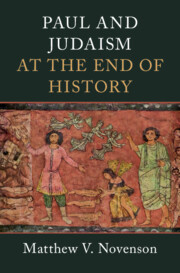
The apostle Paul was a Jew. He was born, lived, undertook his apostolic work, and died within the milieu of ancient Judaism. And yet, many readers have found, and continue to find, Paul's thought so radical, so Christian, even so anti-Jewish – despite the fact that it, too, is Jewish through and through. This paradox, and the question how we are to explain it, are the foci of Matthew Novenson's groundbreaking book. The solution, says the author, lies in Paul's particular understanding of time. This too is altogether Jewish, with the twist that Paul sees the end of history as present, not future. In the wake of Christ's resurrection, Jews are perfected in righteousness and – like the angels – enabled to live forever, in fulfilment of God's ancient promises to the patriarchs. What is more, gentiles are included in the same pneumatic existence promised to the Jews. This peculiar combination of ethnicity and eschatology yields something that looks not quite like Judaism or Christianity as we are used to thinking of them.
The chapter traces the long, unheralded history of Black women electric guitarists in the United States from the 1940s to the present century. It identifies the unique challenges they face striving to work in an American music landscape that adores Black women as singers but largely overlooks them when they strap an electric guitar onto their bodies. It uses historical research and oral history interviews with intergenerational artists in blues, gospel, and rock to explore how race, gender, and genre conventions manifest and intersect to create barriers and opportunities.
Normatively speaking, Christianity involves a rejection of “us versus them” ways of thinking and speaking. Christian political advocacy must thereby testify to the reconciliation of all people. It would be ironic, even self-defeating, to advocate for Christian commitments in ways that reify divisions between people or deny opponents’ human dignity. But Christians can still make prophetic and incisive criticisms, take controversial stands, and employ rigorous argumentation. Drawing upon the work of Desmond Tutu and J. Deotis Roberts, I argue that Christian witness always proceeds as “good news.” Good news is not only the content but the form of Christian proclamation. Christian speech disrupts systems of injustice and dehumanizing myths, while simultaneously expressing the truth that every person – even those who are currently oppressors – is a beloved child of God. This conclusion can help Christians engage in political, ethical, and cultural conflicts in ways that are simultaneously more persuasive and more faithful to their convictions.
In John 7:8–9, Jesus tells his brothers he will not “go up” to Jerusalem, but in the very next scene, he makes the ascent in secret. This essay interprets Jesus’s unusual, and seemingly deceptive, behavior in the episode as a symbolic action akin to others structuring the first half of the Gospel. The episode immediately precedes a dialogue in which Jesus predicts his imminent departure from the world. Jesus insists that he will soon “go” to God so that unbelievers “will seek” him “but … not find” him (7:33–34; cf. 20:17). Foreshadowing this future, Jesus “goes up” to Judea but in such a way that leaves unbelievers unaware of his whereabouts, leaving them to ask, “Where is he?” (7:10–11). The article highlights half-truth as an important speech device in the episode and dialogue that follows. It also concludes that the episode is key to interpreting other scenes sharing a motif of misdirection, delay, and secret reversal.
This paper examines various ways in which apocalyptic studies can benefit from the introduction of the term and concept of gilayon, a reconstructed Hebrew counterpart of the Judeo-Greek apocalypse. The term gilayon, which combines the meanings of “revealed book” and “book of revelation,” refers to a central image of early Jewish revealed literature and could serve to define an important corpus, the boundaries of which might well overlap with (but still differ from) what is understood by the “genre apocalypse” in modern research. Moreover, this reconstructed concept uncovers additional meanings and associations, which shed light on texts known as “apocalyptic,” and has explanatory power for many phenomena associated with them. The introduction of gilayon may modify the entire paradigm of our understanding of early Jewish mysticism and help to divert the discussion of textual genres associated with it from a phenomenological to a historical route.
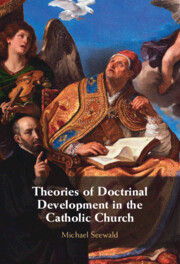
The contemporary Catholic Church finds itself in deep crisis as it questions which elements are essential to the Catholic faith, and which can be changed. Bringing a longue durée perspective to this issue, Michael Seewald historicizes the problem and investigates how theologians of the past addressed it in light of the challenges that they faced in their time. He explores the intense intellectual efforts made by theologians to explain how new components were added to Christian doctrine over time, and that dogma has always been subject to change. Acknowledging the historic cleavage between 'conservatives' who refer to tradition, and reformers, who formulate their arguments to address contemporary needs, Seewald shows that Catholic thought is intellectually expansive, enabling the Church to be transformed in order to meet the challenges of the present day. His book demonstrates how theology has dealt with the realization that there is a simultaneity of continuity and discontinuity in doctrinal matters.
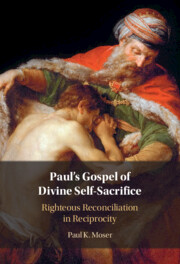
This chapter summarizes Paul’s gospel of divine self-sacrifice, giving special attention to the character of the righteous God responsible for his gospel. It identifies how divine righteousness figures in a solution to the human predicament of the corrosive powers of sin and death by offering a remedy in reparative self-sacrifice. The needed reparative sacrifice begins with divine self-sacrifice that includes the sacrifice of the Son of God, Jesus Christ, but it does not end there. It calls for human reciprocity in self-sacrifice to God, as voluntary sharing in the life-giving obedience of Jesus Christ to God. The chapter identifies how God agitates in human history to attract the cooperation of humans in such reparative self-sacrifice. This divine effort is at the center of God’s righteous love for humans, regardless of their national, ethnic, or religious background. Paul focused his calling from God on the good news that God has intervened in human history, climactically in Jesus Christ, to attract humans to cooperation with this good news.
In this book, Paul Moser explains how self-sacrificial righteousness of a reparative kind is at the heart of Paul's gospel of God. He also shows how divine self-sacrifice authenticates that gospel via human reciprocity toward God in reconciliation. A basis for this reciprocity lies in a teaching of ancient Judaism that humans are to reciprocate toward God for the sake of an interpersonal relationship that is righteous and reconciled through voluntary self-sacrifice to God. Moser demonstrates that Paul's gospel calls for faith, including trust, in God as reciprocity in human self-sacrifice toward God. Although widely neglected by interpreters, this theme brings moral and evidential depth to Paul's good news of reparative redemption from God. Moser's study thus enables a new understanding of some of the controversial matters regarding Paul's message in a way that highlights the coherence and profundity of his message.
For the writers of the books of the New Testament, as well as for Christians thereafter, “gospel reading” included reading the books of the Jewish Scriptures, which were understood to bear witness to the coming of Christ (cf. e.g. Matt. 1:22–23 and Isa. 7:14) and thereby to the gospel (e.g. Gal. 3:8–13 and Gen. 15:6). Subsequently, “Christological readings” of what became the Christian Old Testament took a variety of forms, many of which moved beyond identifying prophetic predictions of the coming Messiah to attempts to identify the preincarnate Word as a distinct agent in the Old Testament books. Although such strategies have long been called into question on historical-critical grounds, this essay will argue that there are also specifically Trinitarian reasons for eschewing such approaches to the text, arguing instead that a more faithfully Christological reading of Israel’s Scriptures will focus not on the whereabouts of the preincarnate Word, but on the topic of YHWH’s presence in and to Israel, as that which assumes new and unpredictable but nevertheless consistent form in the incarnation. This chapter explores a form of theological “gospel reading” in which early Christian writers, steeped in the Jewish scriptural traditions, discerned in Jesus the activity and presence of Israel’s God.
Mark opens his account of Jesus with “the beginning of the gospel of Jesus the Christ” (Ἀρχὴ τοῦ εὐαγγελίου Ἰησοῦ Χριστοῦ). Although modern readers often associate the term “gospel” here with the now long-established genre by the same name, Mark clearly elaborates what he means (at least in part) in what follows
Whereas Luke and Matthew are literary products of gospel reading, only the Johannine corpus demonstrates within the canon how a gospel was read by a specific network of early Christian communities. The Johannine Epistles (likely penned in a context later than that of the Fourth Gospel) affirm, clarify, expand, modify, and in some cases even omit key themes emphasized by the evangelist. This unique intra-canonical reception of John affords the earliest model of an early Christian community’s gospel reading. After analyzing the broad reading dynamics imposed by the Johannine literature’s placement in the sequence of the canon, this chapter explores the interpretive practices of the Elder in order to discern a Johannine theology of textuality, writing, and gospel reading.