To save content items to your account,
please confirm that you agree to abide by our usage policies.
If this is the first time you use this feature, you will be asked to authorise Cambridge Core to connect with your account.
Find out more about saving content to .
To save content items to your Kindle, first ensure no-reply@cambridge.org
is added to your Approved Personal Document E-mail List under your Personal Document Settings
on the Manage Your Content and Devices page of your Amazon account. Then enter the ‘name’ part
of your Kindle email address below.
Find out more about saving to your Kindle.
Note you can select to save to either the @free.kindle.com or @kindle.com variations.
‘@free.kindle.com’ emails are free but can only be saved to your device when it is connected to wi-fi.
‘@kindle.com’ emails can be delivered even when you are not connected to wi-fi, but note that service fees apply.
This chapter outlines the cross-species comparative method used to investigate the evolutionary origins of war and peace. It explains how comparing humans with other species – particularly chimpanzees and bonobos – can help identify whether intergroup lethal conflict and peaceful cooperation are ancestral traits inherited from a last common ancestor or evolutionary innovations in the hominin lineage. It also introduces archaeological and ethnographic methods to infer intergroup behaviours in prehistory. By combining approaches from evolutionary biology, archaeology, and ethnography, this chapter establishes an interdisciplinary toolkit for assessing when war and peace first emerged.
Homology and in particular persistent homology is a tool used in Topological Data Analysis to get features of data, such as connected components and high-dimensional holes and cavities. Simplicial complexes are used as a basis to construct the so-called Persistent Diagrams (PD). We then use kernels on PD and we present their extension as Variably Scaled Persistent Kernels. Examples of their use in classification of popular data sets in data analysis are discussed.
For an étale groupoid, we define a pairing between the Crainic–Moerdijk groupoid homology and the simplex of invariant Borel probability measures on the base space. The main novelty here is that the groupoid need not have totally disconnected base space, and thus the pairing can give more refined information than the measures of clopen subsets of the base space. Our principal motivation is $C^*$-algebra theory. The Elliott invariant of a $C^*$-algebra is defined in terms of $K$-theory and traces; it is fundamental in the long-running programme to classify simple $C^*$-algebras (satisfying additional necessary conditions). We use our pairing to define a groupoid Elliott invariant, and show that for many interesting groupoids it agrees with the $C^*$-algebraic Elliott invariant of the groupoid $C^*$-algebra: this includes irrational rotation algebras and the $C^*$-algebras arising from orbit breaking constructions studied by the first listed author, Putnam, and Strung. These results can be thought of as establishing a refinement of Matui’s HK conjecture for the relevant groupoids.
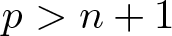
We give a simple way to study the isotypical components of the homology of simplicial complexes with actions of finite groups and use it for Milnor fibres of isolated complete intersection singularity (icis). We study the homology of images of mappings ft that arise as deformations of complex map germs $f:(\mathbb{C}^n,S)\to(\mathbb{C}^p,0)$, with n < p, and the behaviour of singularities (instabilities) in this context. We study two generalizations of the notion of image Milnor number µI given by Mond and give a workable way of compute them, in corank one, with Milnor numbers of icis. We also study two unexpected traits when $p \gt n+1$: stable perturbations with contractible image and homology of $\text{im} f_t$ in unexpected dimensions. We show that Houston’s conjecture, µI constant in a family implies excellency in Gaffney’s sense, is false, but we give a correct modification of the statement of the conjecture which we also prove.

There is a potentially correct analogy between international tax regulation and platform content regulation because there is an homology between capital and information. On this basis, this chapter foregrounds three resemblances between tax regulation and content moderation. First, non-State actors access, manage and regulate through platforms flows of capital and similarly flows of information exploiting regulatory differentials, so that there is the need for regulatory alignment in both cases. Second, since both capital and information escape the regulatory reach of States, a common standard must be achieved in both cases. Third, such common standard can be achieved only if home States of Global Actors owning platforms assume together the obligation to moderate profit diversion as well as immoderate use of platform content through procedural accountability. The chapter explains the scope of the global tax problem, and then details the process by which policies have been developed and describes the tax implications of platforms. The chapter concludes suggesting lessons that can be learned from tax regulation for platform responsibility rules: the homology between capital and information points to regulatory structures that reduce excessive opportunism and immoderation in the use of computational capital by platforms.
In this note, we examine the proportion of periodic orbits of Anosov flows that lie in an infinite zero density subset of the first homology group. We show that on a logarithmic scale we get convergence to a discrete fractal dimension.
The intersection of development and evolution has always harbored conceptual issues, but many of these are on display in contemporary evolutionary developmental biology (evo-devo). These issues include: (1) the precise constitution of evo-devo, with its focus on both the evolution of development and the developmental basis of evolution, and how it fits within evolutionary theory; (2) the nature of evo-devo model systems that comprise the material of comparative and experimental research; (3) the puzzle of how to understand the widely used notion of 'conserved mechanisms'; (4) the definition of evolutionary novelties and expectations for how to explain them; and (5) the demand of interdisciplinary collaboration that derives from investigating complex phenomena at key moments in the history of life, such as the fin-limb transition. This Element treats these conceptual issues with close attention to both empirical detail and scientific practice to offer new perspectives on evolution and development. This title is also available as Open Access on Cambridge Core.
What happens at the point of interchange between scholarly communities? We examine this question by investigating the case of growing ties between historical sociology and ethnography, two social scientific methods that once seemed to have little in common. Drawing on methodological writings by ethnographers and original interviews with practicing historical sociologists, we argue that these ties have been shaped by structural and methodological homologies between the two disciplines. Structurally, ethnography and historical sociology are similarly positioned in sociology more broadly, as enterprises with sometimes-tense relationships with dominant assumptions of the social sciences. Methodologically, both ethnographers and historical sociologists face the challenges of bounding the research process, navigating access to data, analyzing and retaining data while “in the field,” and overcoming cultural distance between themselves and the worlds they are studying. Taken together, these findings extend work in the sociology of science and knowledge and suggest some key conditions for intellectual efflorescence.
We construct two new classes of topological dynamical systems; one is a factor of a one-sided shift of finite type while the second is a factor of the two-sided shift. The data are a finite graph which presents the shift of finite type, a second finite directed graph and a pair of embeddings of it into the first, satisfying certain conditions. The factor is then obtained from a simple idea based on binary expansion of real numbers. In both cases, we construct natural metrics on the factors and, in the second case, this makes the system a Smale space, in the sense of Ruelle. We compute various algebraic invariants for these systems, including the homology for Smale space developed by the author and the K-theory of various $C^{*}$-algebras associated to them, in terms of the pair of original graphs.
The origin of carbon fixation is a fundamental question in astrobiology. While the Calvin cycle is the most active on the modern Earth, the reductive tricarboxylic acid (TCA) cycle (rTCA) pathway for carbon fixation has been proposed to have played an important role in early evolution. In this study, we examined the evolution of key enzymes in the rTCA, which are rare in extant organisms, occurring in a few groups of Bacteria and Archaea. We investigated one of the least common reactions of this pathway, cleavage of citrate into oxaloacetate and acetyl-CoA, which can be performed by either a two-enzyme system (CCS/CCL) or a single enzyme (ACL) that is assumed to be the result of fusion of the two active sites into a single polypeptide. For broader context, we also studied functionally diverged homologues of these enzymes, succinyl-CoA synthetase (SCS) and citrate synthase. Our phylogenetic analysis of these enzymes in Bacteria and Archaea shows that SCS, a homologue of CCS from distant bacterial taxa capable of citrate cleavage, are monophyletic, suggesting linked horizontal gene transfers of SCS and citrate cleavage enzymes. We also found evidence of the horizontal transfer of SCS from a clade of anaerobic Archaea (Archaeoglobi, Methanomicrobia or Crenarchaeota) to an ancestor of Cyanobacteria/Melainabacteria clade – both of which share a succinate semialdehyde shunt in their oxidative TCA cycles. We identified new bacterial and archaeal taxa for which complete rTCA cycles are theoretically possible, including Syntrophobacter, Desulfofundulus, Beggiatoa, Caldithrix, Ca. Acidulodesulfobacterales and Ca. Micrarchaeota. Finally, we propose a mechanism for syntrophically-regulated fluxes through oxidative and rTCA reactions in microbial communities particularly Haloarchaea-Nanohaloarchaea symbiosis and its implications for carbon fixation during retinal-based phototrophy and the Purple Earth hypothesis. We discuss how the inclusion of an ecological perspective in the studies of evolution of ancient metabolic pathways may be beneficial to understanding the origin of life.
The extraxial-axial theory (EAT) and universal elemental homology (UEH) are often portrayed as mutually exclusive hypotheses of homology within pentaradiate Echinodermata. EAT describes homology upon the echinoderm bauplan, interpreted through early post-metamorphic growth and growth zones, dividing it into axial regions generally associated with elements of the ambulacral system and extraxial regions that are not. UEH describes the detailed construction of the axial skeleton, dividing it into homologous plates and plate series based on symmetry, early growth, and function. These hypotheses are not in conflict; the latter is rooted in refinement of the former. Some interpretive differences arise because many of the morphologies described from eleutherozoan development are difficult to reconcile with Paleozoic forms. Conversely, many elements described for Paleozoic taxa by UEH, such as the peristomial border plates, are absent in eleutherozoans. This Element recommends these two hypotheses be used together to generate a better understanding of homology across Echinodermata.
Let $G$ be a compact connected simple Lie group of type $(n_{1},\,\ldots,\,n_{l})$, where $n_{1}<\cdots < n_{l}$. Let $\mathcal {G}_k$ be the gauge group of the principal $G$-bundle over $S^{4}$ corresponding to $k\in \pi _3(G)\cong \mathbb {Z}$. We calculate the mod-$p$ homology of the classifying space $B\mathcal {G}_k$ provided that $n_{l}< p-1$.
This Introduction provides an overview of the key ways in which literature and economics intersect. It firstly considers how literary texts encode economic knowledge in metaphorical – and more broadly tropic – uses of economic vocabulary, and via styles and forms that stand in a “homological” relation to monetary and financial systems. It then explains how critics have understood the ongoing overlaps between literature and economics as “genres” of writing, which have continued to borrow conventions from one another, even as the discipline of economics has become increasingly technical and mathematical. The Introduction next addresses the ways in which literary texts register the economic pressures to which they are most directly exposed: namely, the pressures of literary consumption and the literary marketplace. It closes by showing how social scientists are increasingly turning to literature and literary studies for economic insights, and by highlighting the emergence of the Economic Humanities as an interdisciplinary research field to which the approaches covered in this Cambridge Companion have made defining contributions.
In recent years, money, finance, and the economy have emerged as central topics in literary studies. The Cambridge Companion to Literature and Economics explains the innovative critical methods that scholars have developed to explore the economic concerns of texts ranging from the medieval period to the present. Across seventeen chapters by field-leading experts, the book highlights how, throughout literary history, economic matters have intersected with crucial topics including race, gender, sexuality, nation, empire, and the environment. It also explores how researchers in other disciplines are turning to literature and literary theory for insights into economic questions. Combining thorough historical coverage with attention to emerging issues and approaches, this Companion will appeal to literary scholars and to historians and social scientists interested in the literary and cultural dimensions of economics.
In this chapter I outline the transformation of systematics into phylogenetics by tracing the emergence of lineage thinking. One of the routes to a realist interpretation of the natural system of systematic relationships was to temporalize it. Lineage thinking emerged when the previously atemporal and symmetrical affinity relationships between contemporaneous taxa were replaced by asymmetrical ancestor-descendant relationships that tracked the arrow of time. This transition was accompanied by a rapid decrease in the diversity of shapes of affinity diagrams published in the systematic literature, and it marked a shift from predominantly reticulating or web-like systems to tree-like figures soon after the publication of Darwin’s On the origin of species in 1859. I argue that this graphic revolution largely records the influence of evolutionary expectations, as biologists redrew their diagrams to fit the theoretical dictates of Darwinian descent with modification. The current swell of enthusiasm for evolutionary networks has driven several recent authors to the peculiar argument that even Darwin disliked the tree of life as an evolutionary metaphor, an argument I will refute. Reconceiving the systematic relationships between taxa as phylogenetic pathways along which body plans evolve had an epistemic corollary. Speculation became a necessary tool for the evolutionary storyteller.
Scarparo has constructed counterexamples to Matui’s HK-conjecture. These counterexamples and other known counterexamples are essentially principal but not principal. In the present paper, a counterexample to the HK-conjecture that is principal is given. Like Scarparo’s original counterexample, our counterexample is the transformation groupoid associated to a particular odometer. However, the relevant group is the fundamental group of a flat manifold (and hence is torsion-free) and the associated odometer action is free. The examples discussed here do satisfy the rational version of the HK-conjecture.
Rapid evolution can be observed happening in nature when selection is unusually strong. We are all familiar, these days, with the evolution of antibiotic resistance in bacteria and the evolution of pesticide resistance in insects. Less familiar, but also very rapid, is the evolution of resistance to heavy metals in populations of plants that have adapted to growing on the spoil-heaps surrounding zinc and lead mines. These cases of unusually strong selection and consequently rapid evolution are all associated with human modification of the environment. The classic case study of evolution happening – industrial melanism in moths – also fits into this category.
Evo-devo has come a long way since its origins a mere four decades ago. Many exciting things have been discovered, and there will be many more discoveries to come in the years ahead. I have tried, in this book, to give you a flavour of this new branch of science. Here, I summarize what I think are its most important conclusions so far and the most important challenges that lie ahead.