To save content items to your account,
please confirm that you agree to abide by our usage policies.
If this is the first time you use this feature, you will be asked to authorise Cambridge Core to connect with your account.
Find out more about saving content to .
To save content items to your Kindle, first ensure no-reply@cambridge.org
is added to your Approved Personal Document E-mail List under your Personal Document Settings
on the Manage Your Content and Devices page of your Amazon account. Then enter the ‘name’ part
of your Kindle email address below.
Find out more about saving to your Kindle.
Note you can select to save to either the @free.kindle.com or @kindle.com variations.
‘@free.kindle.com’ emails are free but can only be saved to your device when it is connected to wi-fi.
‘@kindle.com’ emails can be delivered even when you are not connected to wi-fi, but note that service fees apply.
The place of hippocamps in the Graeco-Roman cultural imagination was highly uneven, as they appeared prominently in visual media, but were exceedingly rare in ancient literary sources. Hippocamps can be demonstrated to be a mythological creature wholly derived from art, but which never prominently made a transition into narrative storytelling. These half-horse, half-marine animals were, then, accompanied, from the Hellenistic period onwards, by a series of other marine Mischwesen (‘mixed beings’), a grouping that I demonstrate to be related to the sea monster of the ancient world, the κῆτος (pl. κήτη). This article further examines this grouping of imaginary animals as a case study to consider the imaginative construction of such figures as a result of cultural assumptions about nature, rather than mere misapprehensions of real animals alone. In this case, it is the notion that the undersea world was essentially reflective of the terrestrial world, containing such ‘sea versions’ of land mammals.
The comprehension of pointing gestures extends beyond humans, with various species showing an ability to interpret such cues. Domestication and/or experience with humans have likely influenced this ability, although the evidence focuses primarily on canids rather than other domestic species. This chapter highlights current research on the use of human pointing and other social cues in domestic animals, particularly horses, goats and pigs. However, studies in other taxa and species, such as cattle or poultry, are scarce. The chapter also addresses future challenges in the field, including the need for improved comparability of data through a comparative approach and the development of more sophisticated task designs to elucidate the cognitive mechanisms involved in solving such tasks.
Chapter 5 relates a fundamental shift in the economy of the plateau, one that sees a change from millet cultivation to barley. Yak and cattle become new mainstays of the diet.
Escaping from the sack of Amida in 359, the historian Ammianus Marcellinus encountered a runaway horse pulling behind it the dead body of a groom who had tied himself to the horse and fallen off (19.8.6–7). The article argues that errors in text and punctuation and a lack of equestrian knowledge have led to an illogical interpretation of the passage. Where most translators describe the groom being tied to the reins, we should understand habena as a halter used to guide the animal from on foot. Prose rhythm implies that ne labi possit ex more should be taken as a single clause, meaning ‘in the usual manner to stop [the horse] escaping’. Moreover, attention to prose rhythm and Ammianus’ usage also shows that we should further emend sedens to insidens.
The Qing Empire’s military drew from the traditions of bodyguards and booty warfare in North-East Asia (primarily what is now southern Jilin province) in the late sixteenth century. The foundations of imperial expansion were built during the long war with Ming China, from 1618 to 1644, which allowed the Qing to absorb the central features of Ming military technology. Patterns of human management and technology application established in this period persisted over the next forty years as the Qing completed their conquest of China and Taiwan. After 1685, Qing expansion spread out to Mongolia, Qinghai, Tibet, and what is now the province of Xinjiang. These wars, against less densely populated, sometimes nomadic zones, changed Qing campaigns significantly. By the nineteenth century, the century and a half of focus on the continental frontiers left the Qing poorly prepared for seaborne challenges, and from some technologies that the Qing had previously regarded as less relevant to their military needs.
‘Bella gerant alii.’ In 1516, by means of traditional dynastic finagling, the house of Habsburg acquired the thrones of Castile and Aragon, or Spain for short: the most bellicose and spectacularly expanding state in Latin Christendom. Henceforth, it seemed, the Habsburgs would no longer be able to leave war to others.
Since concluding Castile’s civil conflicts in the 1470s, the Spanish monarchs had, by force of arms, reconquered parts of French Catalonia, and added other acquisitions to their realms: southern Navarre, the western Canary Islands, Melilla, much of the Caribbean, and the kingdoms of Granada and Naples. For what came to be known as the Spanish monarchy it was the start of the most sustained period of success – measured by the crude, but decisive, standards of victory in the field and expansion on the frontiers – any Western European state had achieved since the Roman Empire.
This article discusses the horse imagery related to the winds in the storm episode at the beginning of Virgil’s Aeneid. A close analysis of Aen. 1.50–86 brings to light the pervasiveness of this imagery, only partly noticed by scholars, who have regarded it as metaphorical (§1). It is here suggested that the winds released by Aeolus could instead be considered as real horses. A reassessment of the ancient literary—and, briefly, iconographic—evidence of the depiction of the winds as horses, horsemen or charioteers is proposed; Virgil fits into a long-standing tradition of Homeric ancestry, which represents the winds as horses (§2). This allows a better understanding of the narrative dynamic which in Aeneid Book 1 opposes Aeolus to Neptune, the god of the sea as well as of the horses; moreover, the equestrian (and circus) imagery evoked by Virgil contributes to the political and cosmic significance of the tempest episode (§3).
European arrival brought many hardships for tribes; however, tribes seized the new opportunities that arose. Tribes incorporated guns, horses, and other items into their cultures. Moreover, tribes organically modified their economic practices to effectively trade with Europeans. Tribal cultures influenced Europeans too. Europeans adopted Indigenous foods, medicines, housing, and political ideals.
Nancy Henry examines the mid-century coexistence of trains and horses and argues that horses became industrialised, machine-like commodities as they entered a new place in the cultural imagination. Railway construction in the 1840s meant that by the 1850s novelists recognised the coexistence of train and horse travel and raised questions about their economic and physical dependence on both mechanical and animal forms of power. The number of horses actually increased dramatically during the railway age as horses were needed to access stations and to carry freight to be loaded onto trains, and this led to an increasing number of accidents which figured as the focus of anxieties about risk, danger, and the unexpected. Henry observes a tipping point in the relationship between the Victorians and progress that manifests in this case in fictional narratives of travel accidents that generated plots of financial loss, disfigurement, and death.
Previous research has suggested that horse breeding, with the army as the intended buyer, was an important part of the local agrarian economy in the Roman Dutch eastern river area. Since it is very difficult to trace the origins of horses by traditional archaeozoological methods, strontium isotope analysis was used to investigate the origins of horses in both military and rural sites. These new data are integrated with data on horse frequencies and size to assess the economic importance of horses in rural communities in the eastern river area and further investigate possible supply networks. Both horse frequencies and horse size increase from the Early Roman period onwards, reflecting the significant economic importance of horses in this region. The laser ablation 87Sr/86Sr ratios show evidence for mobility in military horses but not in rural horses.
Working equids support the livelihoods of millions of low-income households worldwide and face several welfare challenges. Although equipment-related wounds are common, little is known about specific risk factors. This cross-sectional study surveyed equids used for cart-work in three Ethiopian towns. Number, size, severity and location of wounds were recorded for each animal, as well as work equipment characteristics and indicators of equipment fit and assembly. Questionnaires were conducted with each cart-driver focusing on equipment practices and attitudes. Logistic regression models were generated to investigate associations between equipment-related wounds (outcome) and equipment, work, driver and animal-related factors (predictors). In total, 369 equids and cart-drivers were surveyed. The prevalence of equipment-related wounds was 72.6% (268/369) with girth wounds being the predominant wound type in horses (50%; 122/244) while donkeys had predominantly shaft-related wounds (59%; 72/122). Donkeys were two times more likely to have equipment-related wounds than horses. The presence of equipment-related wounds was associated with factors such as previously having wounds, inadequate collar positioning and using purchased equipment compared to partly home-made equipment. Characteristics of specific equipment components were also associated with certain wound types, such as narrow saddle pressure points and saddle wounds. Equipment-related wounds are highly prevalent in working equids, representing a serious welfare concern. Factors relating to equipment design, fit and assembly were associated with the presence of wounds. Importantly, species differences require tailoring of preventive approaches amongst working equids. A better understanding of work equipment should therefore be promoted as part of wound prevention and animal welfare strategies.
Chapter Ten analyzes Will Rogers the private individual. Looking at the real person behind the celebrity entertainer and writer, it focuses on several personal qualities that defined his adult life. He manifested a great loyalty to his wife, four children, and the idea of family. He maintained his rural roots, sustaining a lifelong attraction to riding and roping, horses and cattle that culminated in his beloved ranch domicile outside Los Angeles. He developed a cadre of close friends from the worlds of entertainment, journalism, and politics. Possessed of abundant nervous energy, he became addicted to travel, both nationally and globally. A man of common tastes in food, clothing, and entertainent, he nonetheless harbored an intense desire to succeed. At the deepest level, Rogers displayed a certain bifurcated quality: essentially reserved, earnest, moody, and sometimes ill-at-ease in private, but tranforming into a witty, charming entertainer and pundit when dealing with a group. Thus the private man balanced an authentic, common man persona with the popular, down-home, humorous image of "Will Rogers" that he crafted throughout his adult life.
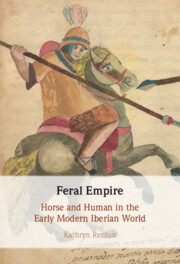
By tracing the dramatic spread of horses throughout the Americas, Feral Empire explores how horses shaped society and politics during the first century of Spanish conquest and colonization. It defines a culture of the horse in medieval and early modern Spain which, when introduced to the New World, left its imprint in colonial hierarchies and power structures. Horse populations, growing rapidly through intentional and uncontrolled breeding, served as engines of both social exclusion and mobility across the Iberian World. This growth undermined colonial ideals of domestication, purity, and breed in Spain's expanding empire. Drawing on extensive research across Latin America and Spain, Kathryn Renton offers an intimate look at animals and their role in the formation of empires. Iberian colonialism in the Americas cannot be explained without understanding human-equine relationships and the centrality of colonialism to human-equine relationships in the early modern world. This title is part of the Flip it Open Program and may also be available Open Access. Check our website Cambridge Core for details.
This chapter revolves around the famous story of how the Greeks managed to get into the city of Troy concealed in a gigantic wooden horse – and thus won a long and drawn-out war. The chapter follows this story and dismantles the odd human/animal hybrid at its core in the ultimate aim to explore how notions of animality define the human at war. Moving away from the ‘othering’ at work in the previous chapter, this one illustrates an area of existence in which analogies between human and animal prevail. Fighting emerges as an area of life in which our animal side comes to the fore.
Several lines of argument are presented to support the notion that hooved animal rescue is justified, however expensive and controversial. The work of Singer and McNamee is discussed. The article concludes that various breeds have distinct arguments in their favour when it comes to rescue.
Volume 1 of The Cambridge History of Global Migrations documents the lives and experiences of everyday people through the lens of human movement and mobility from 1400 to 1800. Focusing on the most important typologies of preindustrial global migrations, this volume reveals how these movements transformed global paths of mobility, the impacts of which we still see in societies today. Case studies include those that arose from the demand for free, forced, and unfree labor, long- and short-distance trade, rural/urban displacement, religious mobility, and the rise of the number of refugees worldwide. With thirty chapters from leading experts in the field, this authoritative volume is an essential and detailed study of how migration shaped the nature of global human interactions before the age of modern globalization.
Various arguments in favour of and against bullfighting are reviewed. The author advocates a thorough and knowledgeable adaptation, suppressing bloodshed and other sufferings. Through history, the evolution of bullfighting consists of a gradual trend towards the ‘art for the art’. Such a solution would not only keep and even stimulate the aesthetic aspects, but has also more chances to save the animals. Strategically speaking, a fight for total suppression is unlikely to succeed anyway or will last too long.
Assessment of mass-produced animal-housing equipment can serve as a basis for improving animal welfare. A number of European countries have adopted various legal approaches to such assessment. In Germany, welfare assessment of housing equipment is voluntary, but minimum standards can be set by regulation for the assessment procedure and for the qualifications of the persons involved. From a scientific perspective, the time and resource constraints pose some problems, particularly as they apply to a voluntary procedure. For reasons of practicability, certain compromises will be required. Nevertheless, it is important to ensure that each assessment procedure is based upon scientific principles and considers animal welfare aspects to a sufficient extent. A proposal for the minimum standards of an assessment procedure has been elaborated by the Animal Welfare Committee of the German Agricultural Society (Deutsche Landwirtschafts-Gesellschaft, DLG), a shortened version of which is presented here. The animal welfare impact of such a regulated but voluntary procedure will be less than that of an obligatory assessment; however, the relatively flexible approach may still significantly contribute to the improvement of welfare aspects of livestock housing.
It is believed that environmental enrichment techniques can play an important part in creating suitable captive environments for horses. There has, however, been little scientific investigation into the effectiveness of ‘stable-toys’ which claim to reduce the performance of equine stereotypies. This study investigated the effect of a foraging device known as ‘The Equiball™’ on equine stereotypies. Six horses were given their evening feed in an Equiball, and the occurence of stereotypic behaviour recorded using scan sampling of video observations. Pre-enrichment, horses spent a mean (± SD) of 5.27 ± 8.17 per cent of their time in the stable performing stereotypies; and significant individual variation in mean time performing stereotypic behaviour was found (P < 0.05). Several peaks in stereotypy over the day were found, the two main ones corresponding to the times before feeding. A reduction in stereotypic behaviour in five horses, and a small increase in stereotypic behaviour in one horse was observed during enrichment. During enrichment, there was an overall trend for stereotypic behaviour to decrease (P < 0.1). When used in conjunction with other measures such as behaviour therapy, companionship, increased exercise, and so on, the Equiball may help to create an environment less likely to lead to the development of stereotypic behaviours.
There is interest in the transportation of horses (Equus caballus) to slaughter and a need to assess the welfare implications of this practice. Forty-six loads of 7-35 horses transported for 0.33 to 3.10 h to a slaughter plant in Iceland were studied. Adults and foals were transported together and then placed in separate pens overnight in the lairage. This acted as a weaning procedure for the foals. Between one and eleven horses per load (59 adults and 129 foals) were observed during loading and at the slaughter plant, blood was sampled at slaughter and carcases were observed. No wounds were observed before transport, but 1.6% of horses had small, superficial bleeding wounds after transport. The respiration rate was greater after, compared to before, transport. Blood lactate concentration measured after lairage and slaughter was greater than normal in both adults and foals, 13% of adults and 20% of foals had a blood glucose concentration lower than normal, and 58% of adults and 25% of foals had a plasma total protein concentration greater than normal. Forty-four percent of adults and 17% of foals were bruised. There were no pre-existing conditions affecting the fitness of the horses for transportation. The effects of transport on the physiological responses and the severity of bruising were relatively minor. However, the results suggested that the handling, transport and lairage of the horses resulted in injury and signs of exertion or stress that were not compatible with optimal management practices. The mild dehydration in adults might have been associated with restricted access to drinking water during lairage of lactating mares. Controlled studies are required to identify the specific practices used in Iceland that result in injury and dehydration.