To save content items to your account,
please confirm that you agree to abide by our usage policies.
If this is the first time you use this feature, you will be asked to authorise Cambridge Core to connect with your account.
Find out more about saving content to .
To save content items to your Kindle, first ensure no-reply@cambridge.org
is added to your Approved Personal Document E-mail List under your Personal Document Settings
on the Manage Your Content and Devices page of your Amazon account. Then enter the ‘name’ part
of your Kindle email address below.
Find out more about saving to your Kindle.
Note you can select to save to either the @free.kindle.com or @kindle.com variations.
‘@free.kindle.com’ emails are free but can only be saved to your device when it is connected to wi-fi.
‘@kindle.com’ emails can be delivered even when you are not connected to wi-fi, but note that service fees apply.
Chapter 1 (Introduction): In this chapter, I argue that scholars have tended to focus on how ancient Jews judged and criticized pagan worship (i.e. on the normative elements of ancient Jewish views). I suggest that, by turning our attention instead to how Jews constructed and imagined the religious devotion of their pagan neighbors (i.e. the descriptive elements of ancient Jewish views), we can open up an entirely new arena of investigation into ancient Jewish thought.
How did Jews in the ancient world depict the practices of their pagan contemporaries? In this study, Jesse Mirotznik investigates the portrayal of pagan worship in the Hebrew Bible and ancient Jewish literature. Scholars have assumed that the portrayals in these corpora are consistent over time. Mirotznik, however, shows that there is a fundamental discontinuity between earlier and later depictions of pagan worship. In the Hebrew Bible, these forms of worship are, for the most part, simply assumed to be sincere. By contrast, in ancient Jewish texts from approximately the end of the third century BCE and onward, such worship is increasingly presented as insincere, performed only instrumentally in the service of an ulterior motive. While the worshipers of other gods seem genuine in their devotion, these texts contend, they too must recognize the folly of such worship.
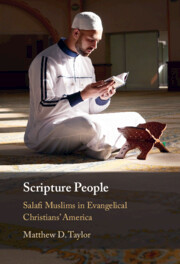
On 9/11, many Americans were introduced to an Islamic movement called Salafism, the theological strand that includes Al Qaeda. Since then, Salafism, an important and popular movement in global Islam, has frequently been disparaged as 'Radical Islam' or 'Islamic fundamentalism.' Scripture People is the first book-length study of the embattled American Salafi movement and the challenges it has faced post-9/11. Matthew D. Taylor recounts how these so-called “Radical Muslims” have adopted deeply rooted American forms of religious belonging and values. Through comparison with American Evangelical Christianity, informed by his own Evangelical background and studies, Taylor explores the parallel impulses, convergent identities, and even surprising friendships that have emerged between Salafis and Evangelicals in America. Offering an entry point for understanding the dynamics and disagreements among American Muslims, Taylor's volume upends narratives about 'Radical Islam' by demonstrating how Salafi Muslims have flexibly adapted to American religious patterns in the twenty-first century.
Recommend this
Email your librarian or administrator to recommend adding this to your organisation's collection.