Refine search
Actions for selected content:
3 results
Explainable machine learning highlights the role of diffuse radiation in ecosystem carbon uptake of boreal forest
-
- Journal:
- Environmental Data Science / Volume 5 / 2026
- Published online by Cambridge University Press:
- 06 July 2026, e15
-
- Article
-
- You have access
- Open access
- HTML
- Export citation
-
Boreal forests play a critical role in the global carbon cycle as they are one of the largest terrestrial carbon sinks globally. In this study, we employ explainable machine learning (ML) techniques to investigate the influence of environmental and vegetation variables on net ecosystem exchange (NEE), focusing specifically on the effects of diffuse radiation. We utilize a sub-hourly resolution data set including satellite and in-situ observations from three boreal or hemiboreal forest research stations across the latitudes 58–68° N to capture latitudinal variability in forest carbon uptake. Using SHAP (Shapley Additive Explanations) values, we identify key drivers influencing NEE and quantify their importance across various ML model architectures. Photosynthetically active radiation (PAR), diffuse radiation, normalized difference vegetation index, and soil temperature were identified as the variables having the largest explanatory power for NEE across the ML models. ML models using only these variables result in $ {R}^2\approx 0.8 $
 and RMSE$ \approx 2.3 $
 $ \mu \mathrm{mol}\;{\mathrm{m}}^{-2}\hskip0.1em {\mathrm{s}}^{-1} $
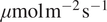 . Further analysis of SHAP values indicates that higher diffuse radiation (DiffPAR) is associated with more negative NEE (stronger carbon sink). SHAP analysis highlights this effect much more clearly than raw DiffPAR measurements, because it accounts for interactions with other environmental factors. This suggests that the diffuse radiation effect emerges from interactions between DiffPAR and co-varying environmental factors (such as cloudiness and total PAR). Cases identified by SHAP ($ \mathrm{DiffPAR}\ \mathrm{SHAP}<-2 $
 ) have a median NEE $ 1.55\mu \mathrm{mol},{\mathrm{m}}^{-2},{\mathrm{s}}^{-1} $
 more negative than cases with raw $ \mathrm{DiffPAR}\ge 400 $
 . When applied to ML models, SHAP uncovers nonlinear, context-dependent interactions between diffuse radiation and other drivers of NEE without assuming a priori relationships.


Photosynthesis rate, radiation and water use efficiencies of irrigated potato in a semi-arid climate using Eddy covariance techniques
-
- Journal:
- The Journal of Agricultural Science / Volume 161 / Issue 2 / April 2023
- Published online by Cambridge University Press:
- 22 February 2023, pp. 217-229
-
- Article
-
- You have access
- Open access
- HTML
- Export citation
Responses of ecosystem carbon dioxide fluxes to soil moisture fluctuations in a moist Kenyan savanna
-
- Journal:
- Journal of Tropical Ecology / Volume 26 / Issue 6 / November 2010
- Published online by Cambridge University Press:
- 11 October 2010, pp. 605-618
-
- Article
-
- You have access
- HTML
- Export citation
