To save content items to your account,
please confirm that you agree to abide by our usage policies.
If this is the first time you use this feature, you will be asked to authorise Cambridge Core to connect with your account.
Find out more about saving content to .
To save content items to your Kindle, first ensure no-reply@cambridge.org
is added to your Approved Personal Document E-mail List under your Personal Document Settings
on the Manage Your Content and Devices page of your Amazon account. Then enter the ‘name’ part
of your Kindle email address below.
Find out more about saving to your Kindle.
Note you can select to save to either the @free.kindle.com or @kindle.com variations.
‘@free.kindle.com’ emails are free but can only be saved to your device when it is connected to wi-fi.
‘@kindle.com’ emails can be delivered even when you are not connected to wi-fi, but note that service fees apply.
Does God have qualia, does He know the ‘what it is like’ character of experiences? The questions run deep into the metaphysics of God as they concern concepts that most traditional theists accept with regard to God: that He is personal, loving, omniscient, omnipotent, and created the world ex nihilo. Building upon these concepts, I present four arguments in favour of the existence of divine qualia. Positing divine qualia may seem incompatible with divine simplicity, a tenet of classical theism, and the problem of emotions unworthy of God also may arise. I argue that the difficulties regarding simplicity do not stem from the existence of divine qualia per se but are related to difficulties already established in relation to simplicity. As for emotions unworthy of God, I try to show how a careful distinction between personal perspectives can offer a solution.
What we do with the dead remains a universal issue because, as the major premise of that classic syllogism reminds us, all humans are mortal (even Socrates!). Since our bodies age, wither and expire, corpse disposal is a grave matter (excuse the pun) for many worldviews. From aquamation to human space junk, the creative options for disposing of bodies continue to expand. This article explores body disposal choices and describes spiritually appropriate burial methods for the pantheist, who believes that the world is God.
This Element analyzes the development of Georg Wilhelm Friedrich Hegel's conception of religion through key textual evidence: fragments, lectures, and published works. The structure is largely chronological to allow readers to observe the evolution of Hegel's understanding from his early theological preoccupations to the systematic formulations of his mature period. One organizational exception-treating the 1830 Encyclopaedia (Section 5) before the Berlin lectures of the preceding decade (Section 6) – serves the clarifying purpose of better situating the lectures within the conceptual framework that guided them. Substantively, this Element challenges the common label 'philosophy of religion.' For Hegel, religion was not a discrete academic subfield to which philosophical conclusions were subsequently applied. Rather, alongside art and philosophy, it occupies the apex of his system, functioning as a mode of cognition in its own right and providing resources for understanding how human thought conceptualizes the relation between the finite and the Element absolute.
Contemporary debates about faith and scepticism are best understood by tracing the development of our current assumptions back to their historical roots. Scepticism, particularly in the west, has its foundation in Socrates' famous claim that his knowledge of his own ignorance made him the wisest of men. Socrates' intellectual humility was then translated into the Christian philosophical tradition, where it came into contact with the doctrines of divine revelation and original sin. This Element will select key historical figures to illustrate the impact that belief in God has had on how we assess the claims of scepticism, and on how scepticism impacts belief in God.
Traditional philosophy of religion has been put under pressure to reform from different theoretical camps in the last few decades. One of the most salient charges is that the focus on belief as the mark of religion fails to capture a wide variety of religious phenomena and practices, particularly those outside of the Abrahamitic traditions. As a response to this challenge, this article proposes and develops the notion of religious alief as an additional analytical tool to conceptualize religious phenomena that elude characterization in terms of belief. This article first introduces religious aliefs as largely automatic, habitual mental states that influence behavior, feelings, and attitudes, even when a person does not hold an overt or tacit belief in the supernatural content involved. Subsequently, this article argues that religious phenomena such as apotropaic rituals, purification rituals, spontaneous prayer in crisis, jinx (and other folk-religious notions), certain taboos, and the recently coined Somethingism can be explained in terms of religious aliefs.
This chapter surveys definitions of sainthood drawn from the three listed disciplines and engages with the work of Robert Merrihew Adams, Patrick Sherry, John Hick, Jean-Luc Marion, J. O. Urmson, Susan Wolf, Edith Wyschogrod, Linda Zagzebski, Lawrence Cunningham, Elizabeth Johnson, David Brown, Michael Plekon, and Stuart C. Devinish, among others.
Blaise Pascal (1623–1662) made important contributions to mathematics, the theory of probability, and several scientific fields, was one of the inventors of the first mathematical calculator, and was also a deeply religious thinker who grappled with issues concerning the existence of God, the possibility of human salvation, and the sinfulness of human life. His famous Wager is often discussed, but there is much else of interest and relevance in his thought which remains undiscovered. This book provides an accessible yet detailed account of Pascal's philosophy and how it applies to important issues facing all of us today, as well as novel interpretations of Pascal's ideas. It will stimulate and challenge anyone who is interested in the role of the heart in rationality, human nature, our relation to reality and our individual and collective purpose, and the underexplored thoughts of one of history's greatest geniuses.
Chapter 1 introduces realism and reference and provides an account of why these issues have been ignored in Jewish philosophy and theology. The second half of the chapter demonstrates that antitheoretical accounts have been dominant in the study of rabbinic theology and that a realist approach has significant historical and constructive advantages.
Jewish Theological Realism restores the place of theology in rabbinic Judaism and provides resources for contemporary Jewish theological reflection. Cass Fisher uses the ideas of theological realism and theological reference to diagnose and remedy the marginalization of theology in Judaism. Both the depiction of rabbinic theology as an edifying discourse for the laity, and the pervasive move in modern Jewish thought to limit theological language arise from skepticism about our ability to make truth claims about God. Fisher argues that the rabbis valued knowledge of God and affirmed their capacity to speak truthfully about the divine. Moreover, while most modern Jewish thinkers sharply limit theological language, there exists an important countertrend of theological realists who have sought to preserve Jewish theology. Fisher concludes with the first application of new theories of reference to theology, demonstrating that these approaches to reference can resolve longstanding challenges to Jewish theology and provide the basis for re-envisioning theology as a communal and religious practice.
In this paper, I draw on feminist resources to argue that Christian analytic philosophers of religion have good reason not only to focus more thoroughly on the topic of love in their treatments of the divine nature but also to give it a substantial and transformative role in the divine nature. The way forward, I propose, involves three moves: (1) designate a place for love in the divine nature, (2) attend to feminist insights on love when doing so, and (3) consider how these interventions transform our understanding of God overall. I then begin this work. Starting with the first task, I consider two ways we might conceptualize love within the divine nature. On the first (which I call ‘the mutually conditioning approach’), love is assigned equal shaping power and, on the second (which I call ‘the orienting trait approach’), love is given enlarged shaping power in the divine nature. In comparing the two, I conclude that both have the good outcome of resulting in a transformed view of God. However, though the second option is more radical and metaphysically complex, we have good reason to prefer it to the first both from philosophical reflection on love’s nature and for its coherence with the Christian tradition. After clarifying how my argument relates to divine simplicity, I begin working towards accomplishing the second and third tasks by considering how the orienting trait approach applies to the topic of divine violence.
Perry Hendricks (2025) argues that theism is not only compatible with what he calls ‘pointless atheism’ (instances of non-resistant non-belief that do not serve a greater good) but also makes it expected. His case combines the Responsibility Objection (RO) – the view that God permits non-resistant non-belief because it’s required for theists to bear responsibility for bringing others into relationship with God – with a William Hasker-inspired argument concerning motivation and rationality. Hendricks’s core argument can be expressed in two distinct yet interrelated ways: a ‘motivation’ formulation and a ‘rationality’ formulation. I examine each in turn. I argue that, even granting (RO) and the rest of Hendricks’s assumptions, each formulation fails. (RO), together with a few further assumptions to which Hendricks also seems committed, leads to conclusions that undermine rather than support his argument. Thus, we have at least as much reason to reject as to accept his conclusion, and without further clarification and support, his case remains incomplete.
This is a brief introduction to a special issue highlighting the relevance of philosophy of science to many core topics in theology and philosophy of religion. Several points of intersection between knowledge production in the sciences and knowledge production in philosophy and theology are discussed.
Comparative scholarship on David Hume and Charles Darwin narrowly focuses on the irreligious implications of their thought for intelligent design metaphysics. I frame their contributions to a perennial system of godless naturalism, exposited in antiquity by Epicurean philosophy, which is not reducible to intellectual influence but stems from shared commitments to the naturalist horizon of inquiry itself. From Epicurus and Lucretius to Hume and Darwin, this system is rediscovered and progressively refined, advancing at each stage a materialist metaphysics and evolutionary anthropology of morals that, together, obviate the explanatory need for and practical value of God in nature and human conduct.
Zoroastrianism is a religion with a long history, but it has been comparatively neglected by contemporary philosophers. This Element aims to bring aspects of its long intellectual history into conversation with contemporary Anglo-American philosophy. Section 1 provides an introduction to Zoroastrianism and its history, some of the important texts, and some contemporary philosophy engaged with Zoroastrian themes. Section 2 discusses distinctive contributions Zoroastrian thought can make to the problems of evil and suffering. And Section 3 discusses a 'quasi-universalist' approach to puzzles about heaven and salvation, inspired by Zoroastrian theological texts. This title is also available as Open Access on Cambridge Core.
A brief introduction to this special issue on theme of experimental philosophy of religion—the project of taking the tools and resources of the human sciences and bringing them to bear on important issues within philosophy of religion, toward philosophical ends.
In this paper, I bring together several strands of criticism of experimental philosophy and draw out certain lessons for the nascent field of experimental philosophy of religion (XPoR). I argue that the negative/positive distinction conflates several underlying questions that conceptually come apart, thus undermining the framework such that XPoR need not try to accommodate the framework. I then argue that for certain topics of study in XPoR, the folk may actually be treated as a kind of ‘expert’ class, thus defending the utility of gauging folk beliefs on those issues. Lastly, I offer some reflections on the etic/emic distinction as it relates to the philosopher/folk divide with respect to topics in XPoR.
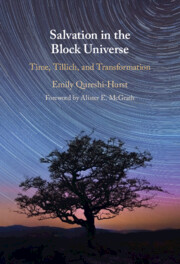
Does time really pass? Should theology mould itself to fit with the findings of physics and philosophy? How should the interdisciplinary dialogue between science and religion proceed? In Salvation in the Block Universe, Emily Qureshi-Hurst tackles these important questions head-on. She offers a focused treatment of a particular problem – the problem of salvation in the block universe – and a broader exploration of a theological methodology that makes 'science and religion' not only possible but desirable via Paul Tillich's method of correlation. By bringing time and salvation into dialogue, Dr Emily Qureshi-Hurst's original insights move the 'science and religion' conversation forward into new and productive territory. Qureshi-Hurst also provides tools for other theologians and philosophers to do the same. Essential reading for anyone interested in the interactions between philosophy, religion, and science, she asks: without the reality of change, is personal salvation during one's lifetime even possible?
The philosophical ‘problem of evil’ goes back at least as far as Epicurus and has remained a powerful argument against the existence of God in contemporary philosophy. The argument is rooted in apparent contradictions between God’s divine attributes and various conditions of human existence. But these contradictions arise only given certain assumptions of what we should expect both God and the world to be like given God’s existence. In this article, I argue that we can utilise the work of the twentieth-century French philosopher Simone Weil to craft a coherent metaphysical picture of God, creation, and suffering that rejects these common assumptions. Further, I contend that this picture very plausibly follows from commonly accepted tenets of traditional monotheism. Given this, I argue that this Weil-inspired framework provides serious reasons for reframing the problem of evil and its corresponding theodicies by presenting a radically different view of how God must relate to creation. Yet, this picture does not necessarily vindicate the theist. I argue that this picture may leave us with a new question about creation in the face of evil. Namely, is it possible to understand God’s initial creative act as Weil describes it – as an act of love?
James Dominic argues in response to a previous article by me that the view according to which God is the formal cause of creatures is unorthodox and ultimately incoherent. This is because it involves either making God a part of creatures, or dividing God into finite parts, both of which, he claims, lead to contradictions with traditional Christian claims. However, Rooney both misunderstands central parts of my presentation, and fails to make his case.