To save content items to your account,
please confirm that you agree to abide by our usage policies.
If this is the first time you use this feature, you will be asked to authorise Cambridge Core to connect with your account.
Find out more about saving content to .
To save content items to your Kindle, first ensure no-reply@cambridge.org
is added to your Approved Personal Document E-mail List under your Personal Document Settings
on the Manage Your Content and Devices page of your Amazon account. Then enter the ‘name’ part
of your Kindle email address below.
Find out more about saving to your Kindle.
Note you can select to save to either the @free.kindle.com or @kindle.com variations.
‘@free.kindle.com’ emails are free but can only be saved to your device when it is connected to wi-fi.
‘@kindle.com’ emails can be delivered even when you are not connected to wi-fi, but note that service fees apply.
Thucydides presents the case for Sparta in an appropriately laconic manner.1 There is no Spartan equivalent in his book of the Funeral Oration – the longest and most famous speech – nor of the Athenians’ speech at Sparta – the seventh longest speech and the first to offer an explicit account of “human nature” (1.76.3). We find no speech here in which a Spartan statesman or citizen gives an eloquent, elaborate, and theoretically sophisticated account of the greatness of Sparta, its education and regime, and its understanding of the character and condition of human beings. Of the nineteen longest speeches among the forty-eight in the book, ten are by Athenians but none are by Spartans, and it is a Spartan, Brasidas, who gives the shortest speech in the book.2 Of the nineteen named individuals who give speeches in the book, ten are Athenian and the sum total of their speeches is 13,639 words, whereas five are Spartan and the sum total of their speeches is 3,673 words.3 Of Pericles, the man whom he praises most extensively in the book, Thucydides says that he was “most capable [or most powerful – δυνατώτατος] at both speaking and acting” (1.139.4).4 Of Brasidas, the man to whom Thucydides devotes the second most extensive praise in his book and the Spartan whom Thucydides praises most, he remarks that “he was not without a capacity [οὐδὲ ἀδύνατος] for speaking, for a Spartan” (4.84.2).5 The Spartans are men of few words and therefore, inevitably, in contrast with the case for Athens presented in the book, the case for Sparta here is understated and indirect. But that case is no less powerful for being austere rather than dazzling, pithy rather than eloquent, and implicit rather than explicit.6
Thucydides’ account of the demise of the Athenian expedition to conquer Sicily appears to vindicate the Spartans’ understanding of that which is human, that is, of the fundamental character and condition of human beings, as one according to which we are morally free beings who are ruled by just gods. However, Thucydides points to grave problems with that understanding, most clearly–but not only–from his account of the Athenian response to the Sicilian disaster through to the end of the book (8.1-109).
Pericles seeks to provide the Athenians with an education that will liberate their natural reason from the constraints of piety and tradition and guide their naturally self-interested passions toward devotion to their community. In this way he hopes to secure for Athens a regime that is based on the natural energy of human beings – the “power of nature” (1.138.3) – rather than on subservience to human and divine law. Thucydides’ account indicates, however, that Pericles’ effort runs afoul of the divisive and violent character of human passion and the abiding power of piety within the human soul and, possibly, beyond it. In this way, Thucydides’ account calls into question whether any political society can be based on the liberation of human nature and hence whether human nature must not be subordinated to a higher power of some kind if political society is to endure and flourish.
This article examines how divine interventions intersect with human emotional responses in Xenophon. While existing literature has explored Xenophon’s religious attitude, little work has been done on Xenophon’s portrayal of divine action and its contribution to a comprehensive Xenophontic theory of emotions. Xenophon’s works contain numerous instances of divine intervention in which the agent guiding the main action is the divinity, and its interventions even go beyond the influence on humans, extending to the realm of nature itself. Do these divine interventions imply a lack of human free will? My aim is to demonstrate that in scenarios involving divine intervention, human agency can be influenced in different ways: it can either be enhanced or undermined by divine action. To demonstrate this, the study focusses on four key emotions—gratitude (charis), fear (phobos, deidô, sebô, phrikê), hope (elpis) and confidence (tharsos)—as they emerge in scenarios of divine intervention across Xenophon’s corpus.
Thucydides' book on the war between the Peloponnesians and the Athenians has generally been considered a historical chronicle. By contrast, Peter Ahrensdorf here makes the case that it is better understood as a work of philosophy, inasmuch as it seeks to understand the permanent truth about human nature. Thucydides, he argues, focuses on this particular war because of its theoretical significance. It presents a clash, not only between military powers, but between two theoretical outlooks – Periclean Athenians' progressive and humanistic understanding of the fundamental character and condition of human beings, and the Spartans' traditional and religious understanding. Ahrensdorf leads us through Thucydides' examination of the case for and against both Athens and Sparta and shows how Thucydides ultimately offers for our consideration an account of himself as an individual who – unlike outstanding characters such as such Alcibiades, the Athenian ambassadors at Sparta and Melos, Diodotus, and Pericles – ascends to a truly independent and genuinely philosophic understanding of the human condition.
Addressing adversity and hardships that readers were likely to encounter in ordinary life (falls into poverty or bankruptcy, loss of parents, lover, caste and home, malignant misrepresentations, sexual harassment, domestic cruelty), these fictions were described as novels. In modeling the idealized responses of characters from the mercantile and professional ranks or from the lesser gentry to suffering and misfortune, Eliza Parsons, Jane West, Elizabeth Bonhote, Mrs. Gunning, Elizabeth Helme, Anna Maria Bennett, Mary Meeke, Ann Howell, Isabella Kelly, Susannah Rowson and many anonymous authors promoted new, proto-Victorian values. Novels of Education addressed issues of parenting and upbringing up to and including courtship and centered on debates about filial obedience, especially in choice of a spouse. Marital Domestic Fiction debated issues related to adultery, divorce, widowhood, spinsterhood, and second marriages. Female Biography combined the two with elements of other genres to follow one or more characters through a “Life.”
Chapter 6 outlines the ways different practitioners of peithō’s arts managed her ambiguity through expressions and performances of piety toward her divinity. The chapter examines diverse figures from ancient Greek comedy and oratory who used prayerful reverence toward Peithō to bolster their own ēthos and secure success for their rhetorical projects. The chapter surveys the persuasive work of characters from the Aristophanes’ Lysistrata and Menander’s Epitrepontes as well as historical speeches from Demosthenes and Isocrates. Each of the orator-like figures examined reveals both the advantages and pitfalls of partnering with Peithō and the degrees to which the coercive or corrupting qualities of her influence might be deflected. These performances offered the ancient audience a variety of educational models for how one might productively harness Peithō’s assistance in rhetorical speech: by cultivating respectful deference toward her divinity and reconciling oneself to a lack of complete control before her power.
Calvin and Perception in Early Modern Visual Culture is the first monograph to return John Calvin's Institutes of the Christian Religion (1559) to its original visual culture. AnnMarie Bridges draws on early modern optics, art theory, rhetoric, psychology, and religion to reconstruct the perceptual assumptions of Calvin's earliest readers. Her study reveals the Institutes' unrecognized concern with 'perception'-pre-conscious processing believed to occur in the imagination, capable of distorting sense experience before conscious thought could even occur. Illuminating Calvin's most striking visual metaphors-from the spectacles of scripture to the factory of idols-and through close readings of topics like accommodation, idolatry, faith, and Calvin's Latin prose, Bridges advocates a paradigm shift in how we read Calvin's most cited work, displacing 'knowledge' in favor of 'perception versus delusion.' In so doing, her study invites reflection on perceptual instability in our own cultural moment, where the challenge is not only to know what is true, but even to perceive what is real.
The Spanish Inquisition developed the heresy known as alumbradismo out of disparate evidence: the heresy existed only in documents by, for, or about the Inquisition. Defendants charged as alumbrados were often acted in ways incommensurate with orthodox Spanish Catholicism; their defining characteristic across time was an emphasis on interior religious experience, especially mental prayer, which would lead toward the abandonment of one’s soul in God. However, the idea that they were members of an organized group—despite lacking any self-formulated doctrine or teachings, much less a means for global communication or dissemination of their ideas—was a stretch of logic that validated inquisitorial persecution but fails to adhere to modern historians’ concepts of proof. It was the Inquisition’s persecutorial discourse and bureaucracy that provided the connective threads for this “sect” when the alumbrados themselves failed to do so.
Unlike any other ancient author, the philosopher and priest of Apollo at Delphi discussed all aspects of religious tradition, praxis, and even personal piety. He talks about religion more or less in all parts of his oeuvre, either in connection with philosophy, history, music and the household, or with myths, symbols, and rituals. He deals with personal religion both as a historian and from the perspective of the experiences of personal life – as a biographer of illustrious Greeks and Romans, as a priest and initiate, and as a husband and father. Several of the speakers in his dialogues talk about religious matters on a personal level, and the author also expresses his views on the importance of religion for the individual in his own voice in works such as On Isis and Osiris, That Epicurus Actually Makes a Pleasant Life Impossible, or the Consolation to His Wife. Once the religious perspective is recognized not only as a general trait of Plutarch’s thought, but also as an aspect of his philosophy as an ars vitae, it becomes visible across the whole of his oeuvre.
The first set of chapters operates at the level of patrons and their communities—imperial and local—to grapple with architectural rebuilding as a mechanism through which shared pasts, presents, and futures were articulated and substantiated. Chapter 1 examines architectural rebuilding as an ideological virtue. In particular, it looks to evidence from Roman and late antique histories, coins, and inscribed statue bases to chart the place and shape of architectural rebuilding (in comparison with and juxtaposition to new construction projects) within the broader commemorative landscape of honor and virtue in cities across the Mediterranean.
Ancient audiences ascribed personal religious views to individual playwrights – a fact that confirms ‘personal religion’ as a meaningful category in the study of ancient Greek society in general and the theatre in particular. Aeschylus was especially devoted to Demeter; Sophocles was exceptionally pious; Euripides was hell-bent to show that there were no gods. The oeuvres of these playwrights inspired such inferences, to be sure, but other factors mattered too. Comedies staged the tragic poets as characters and ascribed various religious views to them. Face-to-face encounters with the playwrights gave rise to anecdotes and recollections, which no doubt circulated orally but were also occasionally written down. All this meant that the playwrights could build on their public personae and assume that audiences would recognize characteristic concerns in their plays. We uncover a dynamic set of interactions in which the poet shaped his plays but was also shaped by how audiences received them. We show that we should not construct an opposition between personal and polis religion: The religious views ascribed to the tragedians were personal and communally owned.
This chapter asks what the main currents in classical Greek philosophy understand by ‘personal religion’. How do they conceive of the beliefs and uplifting they want religious people to display? Do we have the necessary conceptual framework to understand the phenomenon of ‘personal religion’. In the study of ancient Greek religion, philosophers are often revisited to find the clearest analysis of religious concepts, though mainly in terms of the individual integrating norms of civic religion. Yet in many places the philosophers refer to those concepts and virtues in contexts outside civic religion, thus opening a broader understanding of personal religion. In connection with this the chapter also investigates what philosophers mean if they refer to their basic principles as ‘divine’. Do they introduce new divinities? Or are they introducing new ways of dealing with traditional gods? This leads to asking whether philosophical life replaces traditional religion. Very often, this is just assumed to be the case, entailing the corollary point that metaphysics comes to replace religion. Yet a case can be made that philosophers themselves avoided this merging of metaphysics and religion.
The clergy were important to the crown because they were (compared with today) very numerous – historians have described the country as ‘swarming with clerics’ and their ‘vast numbers’ as ‘one of the surprises of medieval history’; collectively they were very rich, owning perhaps 20–30 per cent of England’s landed wealth; many had skills which few laymen possessed; and, most importantly, they could, through their performance of religious ritual, send souls to paradise or perdition – hell – in the everlasting world to come. Religion was the way that medieval people made sense of the world; it was not an optional extra in life but affected all aspects of society. Everyone was a church member.
Focusing on the often too easily neglected concept of piety, Job Getcha sheds light on the natural bond between liturgy and spirituality. It would be erroneous to see them simply as the objective or communal and subjective or individual sides of the same reality, since an argument can be set up that spirituality itself is as liturgical as the liturgy is spiritual.
Arndt Emmerich and Alyaa Ebbiary explore the evolution of scholarship on Salafi Islamic movements, highlighting how the field has matured over time. The chapter emphasizes recent research that recognizes the agency exhibited by Salafi women in engaging with their faith. These women adhere to the core rulings while negotiating secondary ones to ensure they can live fulfilling lives while respecting tradition.
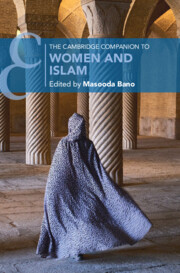
The Cambridge Companion to Women and Islam provides a comprehensive overview of a timely topic that encompasses the fields of Islamic feminist scholarship, anthropology, history, and sociology. Divided into three parts, it makes several key contributions. The volume offers a detailed analysis of textual debates on gender and Islam, highlighting the logic of classical reasoning and its enduring appeal, while emphasizing alternative readings proposed by Islamic feminists. It considers the agency that Muslim women exhibit in relation to their faith as reflected in women's piety movements. Moreover, the volume documents how Muslim women shape socio-political life, presenting real-world examples from across the Muslim world and diaspora communities. Written by an international team of scholars, the Companion also explores theoretical and methodological advances in the field, providing guidance for future research. Surveying Muslim women's experiences across time and place, it also presents debates on gender norms across various genres of Islamic scholarship.
Pakistani Tablighis, practitioners of the transnational Islamic piety movement the Tablighi Jamaat, say that Muslims have abandoned religion (din) and been led astray by the world (dunya) and this has thrust the world into a state of moral chaos (fitna). They insist that only their form of face-to-face preaching (dawat) can remedy this situation. Drawing on Bakhtin’s (1981) notion of chronotope, or distinct imaginaries of space and time, anthropologists have argued that chronotopes produce a “plot structure” for social interaction that instantiates different social persona and forms of agency. In this article, I argue that dawat is organized around a chronotope of piety that encourages deference to others as well as defers the realization of piety to the future, thereby creating a self-limiting and self-regulating form of pious authority that Tablighis see as the basis for the creation and moral reproduction of the Islamic community. Pious authority takes on political significance as an alternative form of sovereignty against the backdrop of religious and political fragmentation engendered by state- and market-driven Islamization in Pakistan.
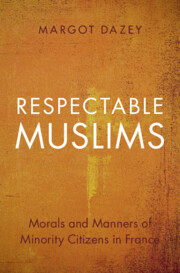
How do Muslims deal with the ever-increasing pressure to assimilate into European societies? Respectable Muslims tells the story of pious citizens who struggle for fair treatment and dignity through good manners and social upliftment. Based on an ethnographic inquiry into France's most prominent Muslim organization, the Union des organisations islamiques de France, the book shows how a non-confrontational approach underpins the fast-expanding Islamic revival movement in Europe. This method is mapped into Islamic notions of proper conduct, such as ihsān (excellence) or ṣabr (patience). These practices of exemplariness also reflect the often-overlooked class divisions separating Muslim communities, with middle-class leaders seeking to curb the so-called 'conspicuous' practices of lower-class worshippers. Chapters demonstrate that the insistence on good behavior comes with costs, both individually and collectively. Respectable Muslims expands on the concept of respectability politics to engage in a trans-Atlantic conversation on the role of class and morals in minority politics.
In discussing Islamic banking and finance (IBF), I first provide a brief overview of its development in Gulf monarchies, before turning to an investigation of particularities of its form and substance. I address a set of issues related to, on the one hand, the adoption, governance and regulation of IBF and on the other hand, the conformity of its practice with its alleged purposes. My aim is to uncover the actual goals of IBF, that has become prominent in the Gulf (and in the global economy) in recent decades. The analysis shows that IBF is a means for regimes to both appease their restive populations and respond positively to the material interests of key segments of society. Thus, ruling priorities related to enrichment and social management cohere; these are the principal purposes, even though ruling elites cloak their intentions in religiosity and ethical commitments. Like the other institutionalized practices discussed in this book, IBF represents the conjoined instrumentalization of (oil) wealth and Islamic doctrine for the sake of social control, and beyond that, the ongoing political domination and material enrichment of the royal family.