To save content items to your account,
please confirm that you agree to abide by our usage policies.
If this is the first time you use this feature, you will be asked to authorise Cambridge Core to connect with your account.
Find out more about saving content to .
To save content items to your Kindle, first ensure no-reply@cambridge.org
is added to your Approved Personal Document E-mail List under your Personal Document Settings
on the Manage Your Content and Devices page of your Amazon account. Then enter the ‘name’ part
of your Kindle email address below.
Find out more about saving to your Kindle.
Note you can select to save to either the @free.kindle.com or @kindle.com variations.
‘@free.kindle.com’ emails are free but can only be saved to your device when it is connected to wi-fi.
‘@kindle.com’ emails can be delivered even when you are not connected to wi-fi, but note that service fees apply.
Although MacDonald is chiefly known as a literary figure, he saw himself first and foremost as a preacher, preaching thousands of sermons across his career and publishing five volumes explicitly on spirituality. This chapter explores these sermons, both spoken and unspoken, seeing them as metaphysical landscapes providing a space and a medium for theological reflection and spiritual formation. MacDonald’s theological aesthetic is to be found not only in the synthetic biblical hermeneutic he employed but also in the sense of the transcendent which pervades his sermons; his modus operandi in the sermons is the divine sonship, with an emphasis on ‘our real life with Christ concealed’, a distinctive feature of Scottish spirituality. MacDonald was a spiritual explorer, always in search of the inexhaustible ‘treasures of darkness’.
The article uses the recent installation of Sarah Mullaly as Archbishop of Canterbury as the impetus to reflect on the continuing opposition by some within the Anglican Communion to the ordination of women on the basis of a perceived prohibition in the Christian Scriptures. The article explores the permissibility of women teaching and preaching in the mixed Christian assembly, the idea of functional subordination of both the second person of the Trinity and of women, the issue of cultural conditioning, the submission of women and headship of men as a ‘creational principle’ and concluding that these arguments are not well founded and are indeed problematic. It also concludes that there is no barrier to the ordination of women in the Anglican Communion. Any such continued opposition does not represent the mind of God and cannot be justified by use of the Scriptures.
This chapter sets out the book’s central claim, namely that deafness offers a new perspective on early modern England. It does this by revealing both the diversity of deaf experiences and the cultural weight attached to speech and hearing. Drawing on extensive archival research, it recovers the lives of deaf and deafened people across the social spectrum, showing how prelingually deaf individuals using sign language to work, marry and participate in religious life. Their stories challenge long-standing assumptions that a primarily oral society excluded them. Instead, deaf people were more integrated than printed sources or legal guides suggest, even as prejudice about speech and rationality persisted. The chapter also introduces the methodological challenges of writing deaf history, foregrounding the rarity of first-person accounts and the importance of interpreters, family networks and teachers. By combining insights from medical, theological, legal and cultural models of disability, the chapter reframes deafness as a historically situated experience that illuminates broader questions of knowledge, communication and what it meant to be human in early modern England.
Scholars have long noted that Paul’s biography—the story of a grave sinner converted though God’s grace—is as theologically relevant to Augustine as the apostle’s ideas. But scholars have also argued that Augustine’s account of Paul’s story misconstrues the apostle’s own concerns: whereas Augustine discovers in Paul the paradigm of how God saves the individual’s soul, Paul himself was more interested in salvation history and the extension of God’s covenantal promises to the gentiles. The present article, however, seeks to show how, in at least one way, Augustine’s attention to Paul is bound up with history and the community. Specifically, the article explores how Augustine’s preaching on Paul’s conversion is, in several instances, preceded by a recounting of Paul’s presence at the martyrdom of Stephen. In his predicatory exegesis of these events, Augustine highlights and dramatizes a mimetic chain of mercy from the crucified Christ through the martyr Stephen to the persecutor-turned-apostle Paul. Augustine brings these biblical figures to life before his congregants’ mental eyes, thereby connecting his hearers to seminal moments in salvation history and, in the process, extending that history and the growth of the church into the present and the future.
Cas Wepener argues that there is a closer connection between liturgics and homiletics than one usually assumes. The proclamation of the Word has always been a crucial part of the Church’s liturgical services, but, maybe more significantly, it continues to co-shape the contexts in which its relevance can be shown and lived.
Over the time of his ministry, Augustine came more strongly to see that only in heaven will we find the fullness of peace. This chapter reviews Augustine’s preaching on heaven and its peace first in its ecclesial and liturgical settings. It then takes into consideration objections faced by his people to Christian faith in the resurrection of the dead. Then it reviews the face-to-face vision of God and the communal dimensions of the heavenly Jerusalem where angels and saints experience peace together. The chapter focuses on Augustine’s preaching on the words “amen” and “alleluia” that express our whole activity in heaven’s peace.
This introduction extols reasons to study Augustine’s sermons for the academy and Church today. It introduces the sixteen chapters written by an international team of experts. It then lays the foundation of humility for the rest of the volume by considering this theme in the volume’s three parts: Augustine’s pastoral task of preaching sermons; sermons on the Scriptures and liturgical feasts; and preaching themes.
While studies frequently concern preachers and their audiences, this chapter avoids the word “audience” and relies more upon the phrase that Augustine uses for the people who stand before him when he preaches: fratres mei (my brethren). The chapter first considers Augustine as preacher with a critical use of Possidius’s Life of Augustine. One of Augustine’s most devoted episcopal friends, Possidius knew him for nearly 40 years and heard him preach many times. The chapter then considers how Augustine understood the people before him. It treats how he spoke to them and how he allows us to glimpse something of who they are and how they think, with a focus on the descriptions of his people in ep. 29. Attending to this biography and letter can help us have a greater appreciation for the study of Augustine as a preacher and those with him when we focus on the extant sermon collection.
Augustine’s preaching touches numerous aspects of his theology which are predominantly present in his most important treatises. The sacraments of the Church are treated in his controversies with heretics but they are also very much present in his sermons, where he teaches the sound doctrine of the Church and performs the Christian rites for the edification of the faithful. This chapter examines Augustine’s teaching on baptism and the Eucharist in his preaching. Having considered his definition of the sacraments in general in his preached works, it presents his teaching on the sacraments in his catechesis to the baptism candidates and to the newly baptised Christians of his congregation. The study further takes into consideration what Augustine says on baptism and the Eucharist in his sermons while addressing the problems of the Donatists and Pelagians. Augustine makes difficult theological concepts understandable to his flock by adapting his language to them.
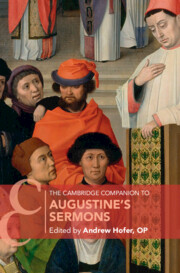
Augustine of Hippo is known for some of the greatest theological masterpieces in Christian history, notably, his Confessions, The Trinity, and The City of God. Over 900 of his sermons, a treasure trove of his insights into God, Scripture, and humanity, have also survived. Given the wide dissemination of many of these texts over the past 1600 years, Augustine is arguably the most influential preacher since the time of the apostles. In recent decades, scholars have paid more attention to his sermons, including those newly discovered, with the result that Augustine's preaching has become increasingly accessible to a broad audience. The Cambridge Companion to Augustine's Sermons furthers this work by offering essays from an international team of experts. It provides a reliable guide for scholars and students of early Christian biblical exegesis, liturgy, doctrine, social practices, and homiletics, as well as for those dedicated to the retrieval of early preaching for the Church today.
What can we learn from Augustine’s preaching about the nature and purpose of preaching? In this paper, I will argue that in his preaching Augustine presents to his audience a theology of words and the Word that achieves what it declares; that is to say, rather than a mere doctrinal curiosity, Augustine’s preached theology of words and the Word accomplishes a homiletical goal that transcends the transmission of an idea and, instead, guides the faithful listener’s heart towards the eternal Word of God through the temporal words of the preacher and the written words of scripture. To put it another way, Augustine’s theology of words and the Word is both a theological claim and a practical pastoral tool.
Chapter 1 explores the use of gesture in preaching, with reference to the branch of rhetoric known as pronunciatio, which provided the theoretical basis for much of the discussion of gesture in the early modern period. The basic rules of pronunciatio were derived from classical sources, but were developed and adapted by sixteenth-century writers on sacred rhetoric. All these writers were united by a shared insistence on the need for decorum and moderation, but in the early seventeenth century a contrast began to emerge between the techniques favoured by Reformed theologians in the Ramist tradition, who stressed the importance of bodily restraint and self-control, and the more dramatic style of preaching pioneered by Jesuit rhetoricians in France. One of the unexpected findings of this chapter is that the Jesuit style was widely admired and copied by seventeenth-century English Protestant preachers as a way of giving their sermons more emotional impact. Against the common assumption of an anti-theatrical prejudice in early modern Protestantism, we should think of a dynamic relationship between the pulpit and the stage in which preachers and actors watched and learned from each other.
This article examines sermons for the crusade against the Hussite king of Bohemia, George of Poděbrady, preached by Thomas Harder, an Augustinian canon and parish priest in Klosterneuburg, in the summer of 1467. These texts give us a direct insight into how preachers in fifteenth-century parishes might have dealt with the general commission to publicize the crusade, as they incorporate the crusade agenda into the pastoral content. Like his twelfth and thirteenth-century predecessors, Thomas Harder knew how to exploit the penitential and edifying potential of the crusade, combined with concerns for individual religious improvement and moral reform. Through an analysis of intertextual links, this study shows that he also systematically gathered, processed and disseminated topical information relevant to the fight against Bohemian heresy. Although he followed in the footsteps of high medieval crusade preachers in the themes he addressed, he also drew on more contemporary and local sources to inform his discourse and provide explanation of the immediate political circumstances.
Even amidst a decline in religious affiliation, nearly half of the U.S. population still attends religious services at least once a month, and congregations remain the single largest non-profit organizational type across the nation. Therefore, congregational influence on political attitudes and behavior is a crucial line of inquiry. We analyze interviews of 94 congregational leaders to better understand why they address or avoid political issues when preaching. Our research reveals that clergy use theological and pragmatic reasoning to determine whether they explicitly include political discourse in their sermons. Our findings are noteworthy in that clergy from a wide range of religious traditions use similar reasoning, and the same rationale can lead different clergy to adopt contrasting approaches to political content in sermons. Thus, this paper provides nuanced insight into the relationship between religion and politics and may help foster greater mutual understanding in a deeply divided political and social climate.
Violence in Nicene–Homoian relations is abundantly attested in Africa and attracts most scholarly attention. Chapter 2 attempts to place the problems of violence and coercion in a larger context and examine issues such the role of wealth and political power in the establishment of the Homoian church in Africa and its ability to spread throughout African society and compete with the Nicene church.
This chapter focuses on popular culture as seen by the late antique church, in particular as visible through the sermons of Caesarius of Arles. First the key features of Caesarius’ opus are introduced, along with the methodological problems it poses for scholars, including a close discussion of Serm. 1. Caesarius’ ideological programme is discussed, including his use of the concepts of rusticitas and imperitia. The bishop’s concern with the bodily habitus of his congregation is considered next, then his attack on scurriltas, singing and dancing as key features of popular culture. This chapter therefore considers popular culture both substantively and discursively, while exploring the ways in which Caesarius and the church sought to appropriate elements of this popular culture, while at the same time seeking to oppose it, in an ongoing dialectic.
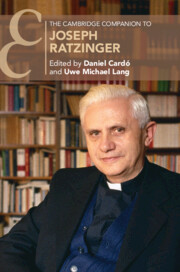
Among the most important modern Catholic thinkers, Joseph Ratzinger, later Pope Benedict XVI, fundamentally shaped Christian theology in the 20th and early 21st centuries. His collaborations and debates with figures such as Henri de Lubac, Karl Rahner, Jean Daniélou, Hans Küng, Hans Urs von Balthasar, and Jürgen Habermas reflect the key role he has played in the development of Christian life and doctrine. The Cambridge Companion to Joseph Ratzinger conveys the depth and breadth of his significant legacy to contemporary Catholic theology and culture. With contributions from an international team of scholars, the volume assesses Ratzinger's theological synthesis in response to contemporary challenges that Christianity faces. It surveys the major themes and topics that Ratzinger explored, and highlights aspects of the ideas that he developed in his engagement with a wide variety of intellectual and religious currents. Collectively, the essays in this volume demonstrate how Ratzinger's epochal contributions to Christian thought will reverberate for generations to come.
This chapter defines Andrewes’ position in terms of its opposition to a body of both religious and political opinion labelled puritan. While Andrewes’ anti-puritanism is shown to have been rooted in traditional conformist concerns about conformity and church government, it also, Hooker-like, encompassed wider issues of religious style and modes of being. Crucial here was what Andrewes identified and excoriated as the puritan cult of the sermon and view of faith centred solely on knowledge rather than practice or works. According to Andrewes, the result was hypocrisy on a heroic pharisaical scale and a histrionic, wholly performative, style of both preaching and piety.
This chapter analyses Andrewes’ account of the central ordinances of divine worship – preaching, prayer, the sacrament and the right conduct of the public worship of God. It argues that Andrewes produced a significant re-evaluation of the roles of those ordinances and practices in the life of the church and of the life of faith; one which downplayed the role of the word preached, and played up those of public prayer and, in particular, of the sacrament. For Andrewes, it was the sacrament that was at the centre of both corporate worship and the devotional life of the Christian; a view founded on his deeply incarnational and Trinitarian theology. As for the reverent conduct of divine worship, that was a natural, indeed a necessary, corollary of the divine presence in the church and the sacrament. All of which was presented as in stark contrast to, and indeed in reaction against, what Andrewes presented as the characteristic religious values and practices of the puritans.
This essay approaches the vernacular style of Henry Daniel’s Liber uricrisiarum (c. 1379) through his Dominican order’s preoccupation with a properly calibrated preacher’s style. Good preachers must strike a balance to communicate their learning, but never obscurely; to speak plainly but not without grace. Thomas Waleys called this mode a grossus stilus, a simple style, and this is an aptly gross name for Daniel’s way with Middle English, as he instructs his readers in the medieval art of inspecting urine for medical diagnosis. I contextualise Daniel’s own stylistic programme (as articulated in theory in his prologue and then proved in practice in the rest of the Liber) within a long tradition of literary theorising around jargon and plain speech found across the rhetorical manuals and guides to preaching of the Dominican curriculum. While they expressed their arguments in Latin, these texts offered a theory of vernacular eloquence that – as the Liber would prove – could circulate amongst the apparently disparate fields of preaching and Middle English medicine.