To save content items to your account,
please confirm that you agree to abide by our usage policies.
If this is the first time you use this feature, you will be asked to authorise Cambridge Core to connect with your account.
Find out more about saving content to .
To save content items to your Kindle, first ensure no-reply@cambridge.org
is added to your Approved Personal Document E-mail List under your Personal Document Settings
on the Manage Your Content and Devices page of your Amazon account. Then enter the ‘name’ part
of your Kindle email address below.
Find out more about saving to your Kindle.
Note you can select to save to either the @free.kindle.com or @kindle.com variations.
‘@free.kindle.com’ emails are free but can only be saved to your device when it is connected to wi-fi.
‘@kindle.com’ emails can be delivered even when you are not connected to wi-fi, but note that service fees apply.
Chapter 6 takes a relevance theory approach to the question of how sound-patterning in poetic language can contribute to interpretation. It includes a survey of approaches from linguistics and stylistics which consider the relationship between sound and meaning, including those which claim an inherent sound–meaning correspondence and those which dismiss such associations as phonaesthetic fallacy. The chapter then moves to a description and analysis of parts of ‘Ode on Melancholy’ by John Keats. The poem’s form is described using bracketed grid theory and a broad phonetic transcription. The question of whether and how sound patterns can come to seem meaningful in interpretation is addressed using the idea that salience of form, whether metrical or phonetic, encourages the reader to explore interpretive possibilities. In parts of this analysis the chapter uses a spreading activation model of lexical access alongside relevance theory. A key claim is that lines of alliteration in poetry cause a lingering of activation and reactivation between words, which enables a merging of conceptual material. The approaches taken in this chapter explain variable interpretations of sound patterns in the reading of poetic language without resorting to a claim that sounds inherently hold meaning, or that such readings are fallacious.
Nina Hjelde, Manchester University NHS Foundation Trust, Greater Manchester,Brendan McGrath, Manchester University NHS Foundation Trust, Greater Manchester,Andrew Mockridge, Northern Care Alliance NHS Foundation Trust, Greater Manchester
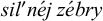
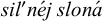
This article addresses the effect of phrasal rhythm on synthetic adjectival comparative forms in Russian that exhibit optional truncation of the final vowel, such as ${sil'n\acute{e}e}$ ˜ ${sil'n\acute{e}j}\ {slon\acute{a}}$ ‘stronger than an elephant’. In a corpus study of such comparative forms, using a generalised mixed-effects model to analyse these data, we show that phrasal rhythm affects the distribution of truncation. It is dispreferred in contexts like ${sil'n\acute{e}e\ z\acute{e}bry}$ ‘stronger than a zebra’, where it would yield two adjacent stressed syllables (${sil'n\acute{e}j\ z\acute{e}bry}$). This effect is categorical, and the study does not identify any gradient effect of distance on truncation. Stress placement in the comparative form itself also affects the distribution of -ee vs.-ej: comparative forms with stress on the suffix exhibit a lower proportion of truncation. These findings show that Russian exhibits rhythmic optimisation at the phrase level.

Martin Amis’s prose style has been profoundly influential, and so has the consistency with which he foregrounded questions of style in his fiction and non-fiction. This chapter discusses what Amis meant when he spoke about style. It also discusses what it might be possible to say about style as such and argues that we can only really argue about a given style. It goes on to anatomise Martin Amis’s prose style using the tools of close reading, quoting from his novels Money and Time’s Arrow as well as his memoir Experience and his short story ‘The Coincidence of the Arts’. It discusses Amis’s style as a hybrid of postmodern and liberal-humanist insights into the nature of the world; as essentially urban; as positing style as a dandified response to British post-imperial decline; and, finally, as intrinsically comic.
The Classic Bardic period is remarkable for its conservation of dán díreach, a highly elaborate set of formal protocols that underwrote bardic composition of eulogy, elegy, and satire. Dán díreach features complex syllabic meters, such as deibhidhe and rannuigheacht, that accompanied a rich set of rhetorical and generic conventions at the core of the bardic repertoire. This chapter examines the intricacies and affordances of such forms, as well as other styles that traveled outside of the aristocratic milieu, which were characterized by an increased use of alliterative meters such as ógláchas and brúilingeacht, a preponderance of folk motifs and song forms, and an emphasis on topics and concerns that tended not to find their way into the poems of the professional bards.
As the accentual and highly alliterative meters of pre-Christian poetry came in contact with Latin hymnody, they incorporated forms of syllabic versification. These nùa chrutha [new forms] emerged from an ecclesiastical setting and were initially resisted by the filid, but they were then slowly folded together with native compositional tendencies on the way to the highly formal dán díreach style (syllabic, stanzaic, complexly rhymed) that would dominate professional Irish poetry until the seventeenth century. This chapter will look at the development of early Irish versification.
Interpersonal synchrony, such as dancing to a shared rhythm, elicits bonding and rewards, leading many to see it as a mechanism for group cohesion. Yet synchronized activities also reduce ingroup bias, rapidly bond strangers, flatten hierarchies and blur roles, and evoke trance states. Synchrony thus softens many boundaries that “groupishness” requires. Perhaps in consequence, cultural authorities frequently condemn expressive dance music rather than embracing it as a tool for social cohesion. Aiming to account for these multifarious features, this review integrates findings from cognitive motor science, biomusicology, and adjacent fields to synthesize the relaxed priors through synchrony (RePS) model. Highlighting synchrony’s effects on high-level social predictive processing, RePS depicts the sensorimotor signals associated with beat perception and synchrony as lending precision to bottom-up prediction error at temporally granular (< 2-second) scales. Precision for abstract social priors is thereby reduced, inverting the social brain’s characteristic “top-heaviness.” With categorical beliefs about roles and groups no longer scaffolding coordination and joint action, local-timescale planning and processing evoke low psychological construal. Tighter links between motivation and reward facilitate disinhibited enjoyment orthogonal to status and group boundaries. In the entropic cognitive state that results, relaxed social priors are more easily revisable, enabling coordinated change and updating, as in ritual celebrations. This model affords rich opportunities for empirical testing and interdisciplinary theory-building. Overall, RePS explains why authorities frequently dislike synchrony, why dance plays centrally in social transitions such as weddings, and why rhythmic music is associated with trance. More than a bonding device, synchrony facilitates change.
This chapter is concerned with Pindar’s poems as performance events, compounds of words, vocal melody, and instrumental music. My central claim is that such performances, as well as being events that are listened to, direct and refashion the act of listening. Following an overview of Pindar’s references to music, with which he positions himself as a creative participant in music’s still-developing history, I elaborate this claim in readings of Nemean 4, fr. 152, and Paean 8. In each of these texts, Pindar’s combinations of unusual diction, intertextuality, rhythmical framing, and other aspects of poetic form enable his audiences to listen to words and their meanings anew, and thereby to apprehend musical sound taking on fresh significance.
A phenomenon that received considerable attention is the propensity for an alternating rhythm in speech. However, algorithms for the calculation of linguistic rhythm are sparse and limited to binary alternation and very short and isolated structures. In the context of a production study, I introduce an algorithm for the calculation of rhythmic well-formedness that goes beyond such a binary alternation and works for sequences larger than short phrases. The algorithm is based on the idea that rhythmicity is defined by a balanced distance of similarly prominent syllables. The study shows that the produced sentences as well as the perceived prominence of the German object pronoun ihn, "him," vary systematically with the predicted degree of rhythmicity. The algorithm can be applied to any linguistic structure once the accented syllables are identified.
In spoken communication, one can observe a near-constant presence of both communicative gestures and noncommunicative movements, involving the limbs for actions or locomotion. This suggests that the physical underpinning of spoken communication extends beyond the articulatory system. It may find its roots in breathing, a pivotal element that plays a crucial role in the control and rhythms of both speech and limb movement. This hypothesis has recently garnered attention in interdisciplinary research. Within this framework, this chapter examines evidence of the impact of breathing and limb movements on speech rhythms. First, it highlights breathing as a fundamental rhythm unique to speakers, acting as a conductor for the temporal organization of speech at various linguistic levels. The chapter then further explores the influence of co-speech gestures and noncommunicative motions on the temporal organization of speech. The intricate interplay between speech and breathing, as well as speech and motion, conceptualizes breathing as a potential bridge connecting speech and limb motions at different levels.
Music rhythm and speech rhythm share acoustic, temporal and syntactic similarities, and neuroscience research has shown that similar areas and networks in the brain are recruited to process both types of signals. Rhythm is a core predictive element for both music and speech, allowing for facilitated processing of upcoming, predicted elements. The combined study of music and speech rhythm processing can be particularly insightful, considering the stronger regularity and predictability of musical rhythm. Although speech rhythm is less regular, it still contains regularities, notably at syllabic and prosodic levels. In this chapter, we outline different research lines investigating connections between music and speech rhythm processing, including the recently proposed processing rhythm in speech and music framework, as well as music rhythm interventions and stimulations that aim to improve speech signal processing both in the short term and the long term. Implications for developmental language disorders and future research perspectives are outlined.
Almost no seminar, book, or YouTube tutorial on successful public speaking is without the established and traditional “cork exercise.” It is supposed to enhance speakers’ rhythm and intelligibility, for which there is, however, no scientific evidence so far. Our experiment addresses this gap. Twenty speakers performed a presentation task three times: (1) before a cork exercise intervention, (2) immediately after it, and (3) some minutes later after having completed a distractor questionnaire. The intervention was a video recorded by a professional media trainer. Results show significant rhythmic (and related melodic and articulatory) differences between presentations (1) and (2), suggesting a positive effect for speakers in (2). However, in presentation (3), all measurements revert to the baseline presentation (1) level. Thus, the "cork exercise" basically works and yields positive effects; however, they are short-lived. The chapter ends with suggestions for further research and practical ideas for a more sustainable design of the cork exercise.
We conducted two experiments, testing the iambic–trochaic law (ITL) with speakers of English, Greek, and Korean. They heard sequences of tones varying in duration, intensity, or both; stimuli differed in the magnitude of the acoustic differences between alternating tones and involved both short and long inter-stimulus intervals. While the results were not always compatible with ITL predictions and did not show strong grouping preferences, language-related differences did emerge, with Korean participants showing a preference for trochees, and Greek participants being more sensitive to duration differences than the other two groups. Importantly, grouping preferences showed substantial individual variation, evinced by responses to both test sequences and controls (sequences of identical tones). These findings indicate that results from ITL experiments are influenced by linguistic background but are also difficult to replicate, as individual preferences and specific experimental conditions influence how participants impose rhythm structure to sound sequences.
Time has long been recognized as a foundational lens in management research, yet most theories draw on Western linear assumptions that overlook alternative temporal logics. This introduction to the special issue on Advancing Temporal Research in Chinese Management situates China as a unique context where rapid economic transformation intersects with enduring cultural traditions. We develop a 3C framework, compressing, cyclic, and continuing, that captures an understudied Chinese temporal lens. Compressing reflects the urgency of accelerated growth and time scarcity; cyclic emphasizes recurring rhythms rooted in agrarian heritage, cultural practices, and institutional cycles; continuing highlights persistence and long-term orientation embedded in Confucian values and historical endurance. By applying this framework, we synthesize insights from the eight accepted articles and demonstrate how temporal dynamics shape organizational identity, entrepreneurial reentry, innovation, ESG strategies, and performance persistence. The 3C framework not only enriches the two dominant streams of temporal research, activity mapping and actors’ temporal orientations, but also broadens their global relevance by integrating culturally infused perspectives. In doing so, this special issue advances comparative temporal research and positions time as a central construct for understanding Chinese management and its wider implications.
This book showcases the current state of the art of research on rhythm in speech and language. Decades of study have revealed that bodily rhythms are crucial for producing and understanding speech and language, and for understanding their evolution and variability across populations-not only adults, but also developmental and clinical populations. It is also clear that there is perplexing dimensionality and variability of rhythm within and across languages. This book offers the scientific foundation for harmonizing physiological universality and cultural diversity, fostering collaborative breakthroughs across research domains. Its fifty chapters cover physiology, cognition, and culture, presenting knowledge from neuroscience, cognitive science, psychology, phonetics, and communication research. Ideal for academics, researchers, and professionals seeking interdisciplinary insights into the essence of human communication. This title is also available as open access on Cambridge Core.
The afterword synthesizes the chapters in this volume to draw out themes, lessons, and future directions and acknowledges the importance of the ethnographic approach of this work. We expand on the three themes of ideals in tension with practices, the shifting nature of acquaintanceship to friendship, and the enactment of public and private across space and place. We argue for three valuable insights gained from reading these chapters together. First, they point towards the importance of how people read our intentions, friendship performances, and relationships. Second, friendships impinge on our ontological security. Third, there are rhythms to connections across space. Interactions are temporally bound and accounting for the temporal is helpful in completing analyses of friendships. Ultimately, we show how these chapters sit at the intersection of critical theory and symbolic interaction. We also underscore that this volume marks not the end, but a beginning of a renewed research agenda on critical friendship, one that began with contributors who were mostly strangers but who are now mostly friends.
Southern Min – the most commonly spoken variant of Taiwanese – has over 100 million speakers. This book provides the first comprehensive analysis of Taiwanese Southern Min (TSM) phonology, filling a critical gap in linguistic research. It demonstrates how the language's sound patterns have evolved over time, and explores its key phonological and tonal features. Beginning with an overview of the language's phonological system, it progresses to specialized topics, including segmental and tonal mutations, tonal domains, and metrical structures. Grounded in three purpose-built corpora, it integrates empirical data and statistical analyses to illuminate phonological processes and patterns. It also explores rarely addressed topics, including phonological interfaces, the rhythms of poetry and folk ballads, and the iGeneration dialectal variety, providing analytical clarity on complex phenomena. Serving as both a detailed reference for researchers and a supplementary text for phonology and Asian linguistics courses, its illuminating insights will inspire further research into this intricate linguistic system.
This chapter opens with the pivotal scene in Goethe’s bestselling novel, The Sorrows of Young Werther, when Werther reads Ossian to Charlotte. In describing this moment, Goethe reproduces Ossian’s patterns of rhythm and syntax in his own prose. The effect suggests that Werther and Charlotte share an embodied responsiveness to their reading. Goethe here seems to be drawing upon contemporary theories of universal rhythm and debates about prosody. The idea that poetic rhythm is a sensuous experience that can be shared between readers is then pushed to the extreme in the Roman Elegies, in which he playfully compares prosody to sex. The final section of this chapter focuses on Elective Affinities and shows how the novel’s comparison between chemical bonds and bonds of human affection extends also to a comparison between human relationships and the relational structures of language and metaphor.
Most exoskeletons are designed with the shoulder joint’s instantaneous center of rotation (ICR) in mind as a fixed joint, often also known as the center of the shoulder joint. In fact, shoulder ICR changes during shoulder abduction–adduction and flexion–extension. Abduction–adduction causes the ICR to move in the frontal plane, which is caused by the joint movement of the shoulder joint, including depressed elevation and horizontal translation, while the flexion–extension movement of the sagittal plane produces the shoulder extension movement. If the change in shoulder ICoR movements is not compensated for in the exoskeleton design, they can create discomfort and pain for the robot’s wearer. Although conventional exoskeletons typically treat the shoulder joint as a three degree of freedom spherical joint, this study incorporates a more sophisticated understanding of shoulder kinematics. The developed scapulohumeral rhythm compensation mechanism successfully compensates for shoulder joint motion, with simulation results confirming kinematics that closely match ergonomic shoulder movement patterns. First, the complex kinematics of the shoulder joint are analyzed. To meet the demand for mismatch compensation, a shoulder exoskeleton based on a winding mechanism is designed. A mismatch compensation model is established, and theoretical analysis and simulation verify that the designed shoulder exoskeleton has a mismatch compensation function. While solving the mismatch problem, the human–machine coupling model is established through OpenSim software. The simulation results show that the designed exoskeleton has a good assisting effect from the perspective of muscle force generation and shoulder torque.
The theoretical position that time principally enters mental life through the portal of perceptual organization and particularly through the formation of groups is introduced. The key concept of Gestalt, that the whole is other than the sum of the parts, is illustrated through both spatial and temporal examples. Particular emphasis is placed on the emergent properties of groups experienced in music.