Refine search
Actions for selected content:
4 results
A QUANTITATIVE DYNAMICAL BOREL–CANTELLI LEMMA FOR TWISTED RECURRENCE ON $[0,1]^d$

- Part of
-
- Journal:
- Bulletin of the Australian Mathematical Society , First View
- Published online by Cambridge University Press:
- 22 July 2026, pp. 1-12
-
- Article
-
- You have access
- HTML
- Export citation
-
Let $T:[0,1]^d \rightarrow [0,1]^d$
 be a piecewise expanding linear map such that each domain of linearity is a coordinate-parallel hyperrectangle that T sends to $[0,1]^d$
 . Let $\{\mathbf {r}_n\}$
 be a sequence of vectors with $\mathbf {r}_n=(r_{n, 1}, \ldots , r_{n, d}) \in (\mathbb {R}_{\geq 0})^d$
 . Let $m_d$
 denote d-dimensional Lebesgue measure. Let $\{f_n\}$
 be a sequence of piecewise Lipschitz coordinate-wise vector functions on $[0,1]^d$
 with a uniform Lipschitz constant. For any given $\epsilon> 0$
 , we obtain a unified counting function for the shrinking target and recurrence problems: $$ \begin{align*}\sum_{n=1}^N \mathbb{1}_{R(f_n(\mathbf{x}), \mathbf{r}_n)}(T^n \mathbf{x})=\Psi(N)+O(\Psi^{1 / 2}(N)(\log \Psi(N))^{3 / 2+\varepsilon})\end{align*} $$

for $m_d$
 -almost every $\mathbf {x} \in [0,1]^d$
 and for all $N\in \mathbb N$
 , where $\Psi (N):=2^d \sum _{n=1}^N r_{n, 1} \cdots r_{n, d}$
 and $R(f_n(\mathbf {x}), \mathbf {r}_n)$
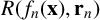 is a coordinate-parallel hyperrectangle centred at $f_n(\mathbf {x})$
 . Our result gives a unified statement to show that the quantitative dynamical Borel–Cantelli lemma can govern both the shrinking target and recurrence problems, thereby eliminating the need for separate treatments and different proofs. This result can also apply to the situation where both problems are present simultaneously along different directions in $[0,1]^d$
 .


Shrinking parallelepiped targets for
 $\beta $-dynamical systems
- Part of
-
- Journal:
- Ergodic Theory and Dynamical Systems / Volume 45 / Issue 6 / June 2025
- Published online by Cambridge University Press:
- 19 November 2024, pp. 1827-1842
- Print publication:
- June 2025
-
- Article
-
- You have access
- HTML
- Export citation
-
For
 $ \beta>1 $, let
 $ T_\beta $ be the
 $\beta $-transformation on
 $ [0,1) $. Let
 $ \beta _1,\ldots ,\beta _d>1 $ and let
 $ \mathcal P=\{P_n\}_{n\ge 1} $ be a sequence of parallelepipeds in
 $ [0,1)^d $. Define When each
 $$ \begin{align*}W(\mathcal P)=\{\mathbf{x}\in[0,1)^d:(T_{\beta_1}\times\cdots \times T_{\beta_d})^n(\mathbf{x})\in P_n\text{ infinitely often}\}.\end{align*} $$
 $ P_n $ is a hyperrectangle with sides parallel to the axes, the ‘rectangle to rectangle’ mass transference principle by Wang and Wu [Mass transference principle from rectangles to rectangles in Diophantine approximation. Math. Ann. 381 (2021) 243–317] is usually employed to derive the lower bound for
 $\dim _{\mathrm {H}} W(\mathcal P)$, where
 $\dim _{\mathrm {H}}$ denotes the Hausdorff dimension. However, in the case where
 $ P_n $ is still a hyperrectangle but with rotation, this principle, while still applicable, often fails to yield the desired lower bound. In this paper, we determine the optimal cover of parallelepipeds, thereby obtaining
 $\dim _{\mathrm {H}} W(\mathcal P)$. We also provide several examples to illustrate how the rotations of hyperrectangles affect
 $\dim _{\mathrm {H}} W(\mathcal P)$.


HIGHER-DIMENSIONAL SHRINKING TARGET PROBLEM FOR BETA DYNAMICAL SYSTEMS
- Part of
-
- Journal:
- Journal of the Australian Mathematical Society / Volume 114 / Issue 3 / June 2023
- Published online by Cambridge University Press:
- 22 March 2022, pp. 289-311
-
- Article
-
- You have access
- Open access
- HTML
- Export citation
-
We consider the two-dimensional shrinking target problem in beta dynamical systems (for general
 $\beta>1$) with general errors of approximation. Let
 $f, g$ be two positive continuous functions. For any
 $x_0,y_0\in [0,1]$, define the shrinking target set
 $$ \begin{align*}E(T_\beta, f,g):=\left\{(x,y)\in [0,1]^2: \begin{array}{@{}ll@{}} \lvert T_{\beta}^{n}x-x_{0}\rvert <e^{-S_nf(x)}\\[1ex] \lvert T_{\beta}^{n}y-y_{0}\rvert < e^{-S_ng(y)} \end{array} \ {\text{for infinitely many}} \ n\in \mathbb N \right\}, \end{align*} $$
where
 $S_nf(x)=\sum _{j=0}^{n-1}f(T_\beta ^jx)$ is the Birkhoff sum. We calculate the Hausdorff dimension of this set and prove that it is the solution to some pressure function. This represents the first result of this kind for the higher-dimensional beta dynamical systems.


TWO-DIMENSIONAL SHRINKING TARGET PROBLEM IN BETA-DYNAMICAL SYSTEMS
- Part of
-
- Journal:
- Bulletin of the Australian Mathematical Society / Volume 97 / Issue 1 / February 2018
- Published online by Cambridge University Press:
- 02 November 2017, pp. 33-42
- Print publication:
- February 2018
-
- Article
-
- You have access
- Export citation
-
In this paper, we investigate the two-dimensional shrinking target problem in beta-dynamical systems. Let
 $\unicode[STIX]{x1D6FD}>1$ be a real number and define the
 $\unicode[STIX]{x1D6FD}$ -transformation on
 $[0,1]$ by
 $T_{\unicode[STIX]{x1D6FD}}:x\rightarrow \unicode[STIX]{x1D6FD}x\;\text{mod}\;1$ . Let
 $\unicode[STIX]{x1D6F9}_{i}$ (
 $i=1,2$ ) be two positive functions on
 $\mathbb{N}$ such that
 $\unicode[STIX]{x1D6F9}_{i}\rightarrow 0$ when
 $n\rightarrow \infty$ . We determine the Lebesgue measure and Hausdorff dimension for the
 $\limsup$ set for any fixed
 $$\begin{eqnarray}W(T_{\unicode[STIX]{x1D6FD}},\unicode[STIX]{x1D6F9}_{1},\unicode[STIX]{x1D6F9}_{2})=\{(x,y)\in [0,1]^{2}:|T_{\unicode[STIX]{x1D6FD}}^{n}x-x_{0}|<\unicode[STIX]{x1D6F9}_{1}(n),|T_{\unicode[STIX]{x1D6FD}}^{n}y-y_{0}|<\unicode[STIX]{x1D6F9}_{2}(n)\text{ for infinitely many }n\in \mathbb{N}\}\end{eqnarray}$$
 $x_{0},y_{0}\in [0,1]$ .


