Refine search
Actions for selected content:
1 results
Continuous spectrum-shrinking maps and applications to preserver problems
- Part of
-
- Journal:
- Proceedings of the Edinburgh Mathematical Society / Volume 69 / Issue 4 / November 2026
- Published online by Cambridge University Press:
- 17 September 2026, pp. 1340-1371
-
- Article
-
- You have access
- HTML
- Export citation
-
For a positive integer
 $n$ let
 $\mathcal{X}_n$ be either the algebra
 $M_n$ of
 $n \times n$ complex matrices, the set
 $N_n$ of all
 $n \times n$ normal matrices, or any of the matrix Lie groups
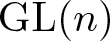 $\mathrm{GL}(n)$,
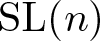 $\mathrm{SL}(n)$ and
 $\mathrm{U}(n)$. We first give a short and elementary argument that for two positive integers
 $m$ and
 $n$ there exists a continuous spectrum-shrinking map
 $\phi : \mathcal{X}_n \to M_m$ (i.e.,
 $\mathrm{sp}(\phi(X))\subseteq \mathrm{sp}(X)$ for all
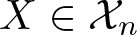 $X \in \mathcal{X}_n$) if and only if
 $n$ divides
 $m$. Moreover, in that case we have the equality of characteristic polynomials
 $k_{\phi(X)}(\cdot) = k_{X}(\cdot)^\frac{m}{n}$ for all
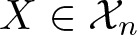 $X \in \mathcal{X}_n$, which in particular shows that
 $\phi$ preserves spectra. Using this, we show that whenever
 $n \geq 3$, any continuous commutativity-preserving and spectrum-shrinking map
 $\phi : \mathcal{X}_n \to M_n$ is of the form
 $\phi(\cdot)=T(\cdot)T^{-1}$ or
 $\phi(\cdot)=T(\cdot)^tT^{-1}$, for some
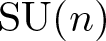
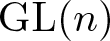
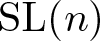
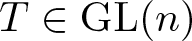 $T\in \mathrm{GL}(n)$. The analogous results fail for the special unitary group
 $\mathrm{SU}(n)$ but hold for the sets of semisimple matrices in either
 $\mathrm{GL}(n)$ or
 $\mathrm{SL}(n)$. As a consequence, we also recover (a strengthened version of) Šemrl’s influential characterization of Jordan automorphisms of
 $M_n$ via preserving properties.


