Refine search
Actions for selected content:
16 results
Introduction
-
- Book:
- Differential Topology
- Published online:
- 08 August 2026
- Print publication:
- 03 September 2026, pp 1-5
-
- Chapter
- Export citation
5 - Transversality
-
- Book:
- Differential Topology
- Published online:
- 08 August 2026
- Print publication:
- 03 September 2026, pp 86-104
-
- Chapter
- Export citation
Appendix - Solutions to Selected Exercises
-
- Book:
- Differential Topology
- Published online:
- 08 August 2026
- Print publication:
- 03 September 2026, pp 323-383
-
- Chapter
- Export citation

Differential Topology
-
- Published online:
- 08 August 2026
- Print publication:
- 03 September 2026
REIDEMEISTER’S THEOREM USING TRANSVERSALITY
- Part of
-
- Journal:
- Bulletin of the Australian Mathematical Society / Volume 111 / Issue 2 / April 2025
- Published online by Cambridge University Press:
- 14 October 2024, pp. 356-367
- Print publication:
- April 2025
-
- Article
-
- You have access
- HTML
- Export citation
-
We recover Reidemeister’s theorem using
 $\mathcal {C}^{\infty }$ functions and transversality.

TRANSVERSALITY, REGULARITY AND ERROR BOUNDS IN VARIATIONAL ANALYSIS AND OPTIMISATION
- Part of
-
- Journal:
- Bulletin of the Australian Mathematical Society / Volume 106 / Issue 1 / August 2022
- Published online by Cambridge University Press:
- 09 June 2022, pp. 167-169
- Print publication:
- August 2022
-
- Article
-
- You have access
- HTML
- Export citation
Slices of parameter space for meromorphic maps with two asymptotic values
- Part of
-
- Journal:
- Ergodic Theory and Dynamical Systems / Volume 43 / Issue 1 / January 2023
- Published online by Cambridge University Press:
- 18 October 2021, pp. 99-139
- Print publication:
- January 2023
-
- Article
-
- You have access
- HTML
- Export citation
Non-dense orbits on homogeneous spaces and applications to geometry and number theory
- Part of
-
- Journal:
- Ergodic Theory and Dynamical Systems / Volume 42 / Issue 4 / April 2022
- Published online by Cambridge University Press:
- 18 March 2021, pp. 1327-1372
- Print publication:
- April 2022
-
- Article
-
- You have access
- Export citation
-
Let G be a Lie group, let
 $\Gamma \subset G$ be a discrete subgroup, let
 $X=G/\Gamma $ and let f be an affine map from X to itself. We give conditions on a submanifold Z of X that guarantee that the set of points
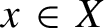 $x\in X$ with f-trajectories avoiding Z is hyperplane absolute winning (a property which implies full Hausdorff dimension and is stable under countable intersections). A similar result is proved for one-parameter actions on X. This has applications in constructing exceptional geodesics on locally symmetric spaces and in non-density of the set of values of certain functions at integer points.
Sharp Bertini Theorem for Plane Curves over Finite Fields
- Part of
-
- Journal:
- Canadian Mathematical Bulletin / Volume 62 / Issue 2 / June 2019
- Published online by Cambridge University Press:
- 07 January 2019, pp. 223-230
- Print publication:
- June 2019
-
- Article
-
- You have access
- Export citation
-
We prove that if
 $C$ is a reflexive smooth plane curve of degree
 $d$ defined over a finite field
 $\mathbb{F}_{q}$ with
 $d\leqslant q+1$, then there is an
 $\mathbb{F}_{q}$-line
 $L$ that intersects
 $C$ transversely. We also prove the same result for non-reflexive curves of degree
 $p+1$ and
 $2p+1$ when
 $q=p^{r}$.


METRIC REGULARITY—A SURVEY PART II. APPLICATIONS
- Part of
-
- Journal:
- Journal of the Australian Mathematical Society / Volume 101 / Issue 3 / December 2016
- Published online by Cambridge University Press:
- 08 July 2016, pp. 376-417
-
- Article
-
- You have access
- Export citation
Law and Social Theory: Three Problems
-
- Journal:
- Asian Journal of Law and Society / Volume 1 / Issue 2 / November 2014
- Published online by Cambridge University Press:
- 01 July 2014, pp. 235-254
-
- Article
-
- You have access
- HTML
- Export citation
How humans fly
-
- Journal:
- ESAIM: Control, Optimisation and Calculus of Variations / Volume 19 / Issue 4 / October 2013
- Published online by Cambridge University Press:
- 03 June 2013, pp. 1030-1054
- Print publication:
- October 2013
-
- Article
-
- You have access
- Export citation
Transversality theorem in o-minimal structures
-
- Journal:
- Compositio Mathematica / Volume 144 / Issue 5 / September 2008
- Published online by Cambridge University Press:
- 01 September 2008, pp. 1227-1234
- Print publication:
- September 2008
-
- Article
-
- You have access
- Export citation
Singularity-theoretic methods in robot kinematics
-
- Article
-
- You have access
- Export citation
CONSTANT HIGHER-ORDER MEAN CURVATURE HYPERSURFACES IN RIEMANNIAN SPACES
-
- Journal:
- Journal of the Institute of Mathematics of Jussieu / Volume 5 / Issue 4 / October 2006
- Published online by Cambridge University Press:
- 09 June 2006, pp. 527-562
- Print publication:
- October 2006
-
- Article
-
- You have access
- Export citation
The Stability Theorems for Subgroups of
 and

-
- Journal:
- Canadian Journal of Mathematics / Volume 46 / Issue 5 / 01 October 1994
- Published online by Cambridge University Press:
- 20 November 2018, pp. 995-1006
- Print publication:
- 01 October 1994
-
- Article
-
- You have access
- Export citation
-
In singularity theory, J. Damon gave elegant versions of the unfoldingand determinacy theorems for geometric subgroups of
. and . In this work, we propose a unified treatment of the smooth stability of germs and the structural stability of versai unfoldings for a large class of such subgroups.
 and

