To save content items to your account,
please confirm that you agree to abide by our usage policies.
If this is the first time you use this feature, you will be asked to authorise Cambridge Core to connect with your account.
Find out more about saving content to .
To save content items to your Kindle, first ensure no-reply@cambridge.org
is added to your Approved Personal Document E-mail List under your Personal Document Settings
on the Manage Your Content and Devices page of your Amazon account. Then enter the ‘name’ part
of your Kindle email address below.
Find out more about saving to your Kindle.
Note you can select to save to either the @free.kindle.com or @kindle.com variations.
‘@free.kindle.com’ emails are free but can only be saved to your device when it is connected to wi-fi.
‘@kindle.com’ emails can be delivered even when you are not connected to wi-fi, but note that service fees apply.
Ruth Gipps occupies a distinctive yet historically overlooked position in twentieth-century British music. Her five symphonies, composed between 1942 and 1985, articulate a sustained engagement with the English national-romantic tradition while asserting a woman’s creative authority within a genre long dominated by men. This chapter examines Gipps’s symphonic oeuvre in the context of her dual career as composer and conductor, tracing the intersections between gender, professional marginalisation and musical identity. The discussion reveals how Gipps’s tonal, pastoral style both aligned with and resisted post-war modernist aesthetics, reflecting broader tensions between tradition and innovation in mid-century Britain. The chapter also explores how Gipps’s self-determination – manifested in founding and conducting her own orchestras – enabled her to sustain a symphonic career despite institutional exclusion. Her work invites reconsideration of the English symphonic canon and of women’s contributions to its development and preservation.
Chapter 2 focuses on a new, distinct style of postwar avant-garde emerging in Yugoslavia in the 1950s – modernist music that incorporates Byzantine chants and a system of eight modes. Serbian composer Stevan Stojanović Mokranjac, one of the first transcribers of Byzantine chants and their classification into eight modes – or Octoechos – opened the door for the reemergence of Orthodox Christian liturgical choral music at the turn of the twentieth century. However, in 1956, Ljubica Marić introduced a new style of modernism in Yugoslav music that featured Byzantine and folk motives interspersed with contemporary techniques. As the first professional woman composer in Yugoslavia, Marić paved the way for new generations of women and composers who were searching for ways to express their Serbian heritage through music at a time when the country was redefining its national identity. Furthermore, she also set the stage for composers like Miloš Petrović, who developed a distinct, experimental style by combining Western (jazz, improvisation, and popular genres) with Eastern (Byzantine Orthodox Christian chants).
Elizabeth Maconchy inhabited a variety of different worlds. She was a female composer at a time when there were considerably fewer of them than their male counterparts; she was a wife and mother; she was English born to Irish parents, spending much of her childhood in Ireland before moving back to England as a teenager to study at the Royal College of Music; and she had a life-changing bout of tuberculosis in an era when the treatment largely involved cold, fresh air and a retreat from hard work. These worlds, as well as the colourful and thrilling variety of Maconchy’s music, are explored in Maconchy in Context, the first in the series to be devoted to a female composer.
‘I don’t like this term Woman Composer’, Maconchy wrote in 1975. She was hardly alone in expressing frustration about her gender being foregrounded. It was a recurring refrain among Maconchy’s contemporaries and their predecessors. Despite the efforts of women like Ethel Smyth and Rebecca Clarke, there was a remarkable continuity in the kinds of gender prejudice experienced by women composers in Britain throughout the twentieth century, and the conceptual frameworks that were used to understand their music. Stereotypes about ‘masculine’ and ‘feminine’ music proved difficult to change, as did deeply entrenched ideas about the limits of women’s compositional capacities. The careers of Maconchy’s British predecessors help to contextualise both her reception in the British press, and her own conception of what significance her gender had for her composing. This chapter discusses Smyth and Clarke, but also intersects with Maude Valérie White and Poldowski (the pseudonym of Régine Wieniawski),
This chapter interrogates the widespread modern framing of Strozzi’s life and music through the unanswerable asking of whether or not she was a courtesan, and proposes alternative viewpoints from which and with which to understand and represent her. Working from a reception study of popular and academic cultural framings, new engagement with primary materials, and intersectional feminist perspectives on the analysis and representation of contested gendered experiences, this chapter asks what it is that this repeated question does – its functions and its fall-outs – and suggests another way of engaging with the scanty material evidence that has survived of Strozzi’s life. This chapter concludes with a proposal to retire the courtesan question in favor of a more grounded and culturally sensitive understanding of Strozzi’s family life through common seicento Venetian relationship practices, restoring Strozzi’s own representation of herself to the forefront of our representations of her music and person.
This chapter explores the practical realities of what it is to perform Strozzi’s music in a twenty-first century context and the artistic possibilities those realities open up, the challenges they raise, and the potentialities they create. Combining personal experience, recent classical music industry research, and cross-genre artistic ideas and insights, this chapter suggests new ways in which Strozzi’s works might be made to sing, in multiple meanings of that word. Identifying barriers to performing Strozzi’s music, this chapter then turns to Strozzi’s working practices in search of tools with which to overcome or side-step those barriers. Through sharing the author’s methods for creating new performances of Strozzi’s works, inspired by Strozzi’s example, this chapter concludes with an invitation to readers to discover their own ways of singing Strozzi today.
In 1849–50, Étienne Duverger co-edited La Violette: Revue musicale et littéraire in New Orleans. He published this feuilleton with an aim to instill the idea of the Parisian salon among women in the French Quarter of New Orleans, and he encouraged them to adopt a new repertoire (Chopin) and a new stance (in the public gaze rather than out of it). In other words, he urged them to come out of the shadows (where violets hide) and into a broader light. His efforts, however, failed. This essay argues that while the rising domination of US-American culture (over that of the French) contributed to the breakdown of Duverger’s mission, the data that can be gleaned from this publication provides the most detailed account of salon activities in the South, and possibly the entire nation. Thus, La Violette proves invaluable as a resource for women’s musical culture in this period.
Germaine Tailleferre (1892–1983) is now remembered largely because she was a member of Les Six, a group of French composers active in the late 1910s and early 1920s. Tailleferre encountered many obstacles, most notably a difficult personal life including two brief marriages to men who were unsupportive of her musical career; it is also true that critics tended to focus on her gender rather than her musical style. This Element tells the fascinating story of Tailleferre's life and long career and, most significantly, explores the development of her musical style and her role in the development of neoclassicism in France. In recent years, international performers have rediscovered her appealing, lively music and have at last started to bring Tailleferre to wider audiences. This Element will contribute to the rediscovery of Tailleferre and will reveal her to be a significant force in twentieth-century French music.
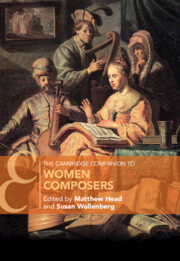
Moving beyond narratives of female suppression, and exploring the critical potential of a diverse, distinguished repertoire, this Companion transforms received understanding of women composers. Organised thematically, and ranging beyond elite, Western genres, it explores the work of diverse female composers from medieval to modern times, besides the familiar headline names. The book's prologue traces the development of scholarship on women composers over the past five decades and the category of 'woman composer' itself. The chapters that follow reveal scenes of flourishing creativity, technical innovation, and (often fleeting) recognition, challenging long-held notions around invisibility and neglect and dismissing clichés about women composers and their work. Leading scholars trace shifting ideas about composers and compositional processes, contributing to a wider understanding of how composers have functioned in history and making this volume essential reading for all students of musical history. In an epilogue, three contemporary composers reflect on their careers and identities.
Throughout his life, Vaughan Williams was a notorious flirt. This love of women and flirtation permeates not only his music, but his professional and personal relationships alike. Yet, perhaps somewhat paradoxically, Vaughan Williams was also a strong advocate for many women who sought to develop professional careers in the male-dominated music world. This conflict between his behaviour and actions presents a conundrum for those looking to investigate his broader advocacy of women on the one hand and his private behaviour on the other. This chapter explores the contradictory nature of Vaughan Williams’s behaviour and beliefs, from his period of teaching at the Royal College of Music, to the emergence of the nickname ‘Uncle Ralph’ and all that name entailed, revealing a more complex portrait than has hitherto been proposed of the composer’s relationship with his female composition students, in particular.
Scholars of nineteenth-century music often use the term “long nineteenth century” to refer to the 125-year period between the beginnings of the French Revolution and the First World War. If the nineteenth century was long, however, it was also deep, containing vast numbers of musical scores that extend well beyond the canonical works that have dominated scholarly journals, recital halls, and course syllabi. My chapter focuses on a composer from the deepest regions of the Lied genre—Marie Franz—who wrote inventive and affecting songs that raise important questions about the analysis and performance of nineteenth-century song. Franz’s songs suggest that as much as we should attend to the activities that women musicians engaged in during this period, we should also attend to the pieces that they wrote, no matter how small in size or few in number. They prove that even in the most private spaces women were composing songs of bracing originality, and that discovering the full scope of that originality often requires digging deeply for unpublished repertoire. And they show that to fully illuminate the astonishing, extensive, and little-studied songs from this century, we need the commitment not just of scholars, but also of performers.
The String Quartet in E flat major (1834) by Fanny Hensel, née Mendelssohn, is one of the most important works by a female composer written in the nineteenth century. Composed at a turning point in her life (as Hensel was not only grappling with her own creative voice but also coming to terms with her identity as a married woman, and the role her family expected of her), the quartet is significant in showing a woman composing in a genre that was then almost exclusively the domain of male artists. Benedict Taylor's illuminating book situates itself within developing scholarly discourse on the music of women composers, going beyond apologetics – or condemnation of those who hindered their development – to examine the strength and qualities of the music and how it responded to the most progressive works of the period.
The MacDowell Colony in Peterborough, New Hampshire figured prominently in Amy Beach’s life. Her friendship with the artist colony’s founder, Marian MacDowell, ensured Beach an open invitation; she held eighteen residencies between 1921 and 1941. The colony offered Beach the perfect environment for her creative work: a direct experience of nature and the uninterrupted solitude of a studio of her own amid a community of creative workers. Beach was at the height of her career during these years. She mentored many of the younger women composers who came to work at the colony and composed much of her best music there. Beach became a devoted supporter of the MacDowell Colony. She organized benefit concerts and spoke passionately on its behalf whenever she had the chance. On her death, she left the rights to her music to the colony, a gift that continues to earn income today.
This chapter assesses the state of Clara Schumann studies and argues that more attention needs to be devoted to her musical works. It previews three of the book’s main arguments: (1) that Clara Schumann should be viewed as her own song composer, rather than as a composer whose style and success are measured against her husband’s; (2) that detailed musical analysis has a crucial role to play in demonstrating her importance to the history of the nineteenth-century Lied; and (3) that musical form is indelibly linked to poetic form and meaning. The chapter also briefly outlines the content of the chapters to come.
The epilogue reflects on what the study of Clara Schumann’s songs reveals about the seemingly fathomless depths of the nineteenth-century Lied and the staggering number of little-known songs by underrepresented composers whose names may be less familiar than Schumann’s but whose music is no less deserving of being published, performed, recorded, analyzed, and celebrated.
In Chapter 1, Sophie Fuller considers the musical landscape which composers working in the earlier twentieth century inhabited. From the early days of the twentieth century, when women were expected to concentrate upon song and small-scale piano works, to the wider opportunities which opened up during the interwar period, Fuller considers a range of composers, including Cécile Chaminade, Maude Valérie White, Louise Adolpha Le Beau, Ethel Smyth, Adela Maddison, Poldowski (Irene Wieniawska), Marguerite Canal, Jeanne Leleu, Elizabeth Maconchy, Grace Williams, Ruth Crawford Seeger, Elsa Barraine, Germaine Tailleferre, and Alma Mahler.
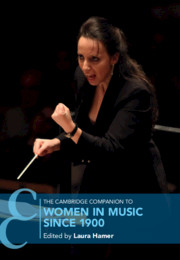
This Companion explores women's work in music since 1900 across a broad range of musical genres and professions, including the classical tradition, popular music, and music technology. The crucial contribution of women to music education and the music industries features alongside their activity as composers and performers. The book considers the gendered nature of the musical profession, in areas including access to training, gendered criticism, sexualization, and notions of 'gender appropriate' roles or instruments. It covers a wide range of women musicians, such as Marin Alsop, Grace Williams, Billie Holiday, Joni Mitchell and Adele. Each thematic section concludes with a contribution from a practitioner in her own words, reflecting upon the impact of gender on her own career. Chapters include suggestions for further reading on each of the topics covered, providing an invaluable resource for students of Feminist Musicology, Women in Music, and Music and Gender.
Recommend this
Email your librarian or administrator to recommend adding this to your organisation's collection.