About Cambridge Handbooks in Language and Linguistics
Genuinely broad in scope, each handbook in this series provides a complete state-of-the-field overview of a major sub-discipline within language study and research. Grouped into broad thematic areas, the chapters in each volume encompass the most important issues and topics within each subject, offering a coherent picture of the latest theories and findings. Together, the volumes will build into an integrated overview of the discipline in its entirety.
To save content items to your account,
please confirm that you agree to abide by our usage policies.
If this is the first time you use this feature, you will be asked to authorise Cambridge Core to connect with your account.
Find out more about saving content to .
To save content items to your Kindle, first ensure no-reply@cambridge.org
is added to your Approved Personal Document E-mail List under your Personal Document Settings
on the Manage Your Content and Devices page of your Amazon account. Then enter the ‘name’ part
of your Kindle email address below.
Find out more about saving to your Kindle.
Note you can select to save to either the @free.kindle.com or @kindle.com variations.
‘@free.kindle.com’ emails are free but can only be saved to your device when it is connected to wi-fi.
‘@kindle.com’ emails can be delivered even when you are not connected to wi-fi, but note that service fees apply.
Language standardization is the process by which conventional forms of a language are established and maintained. Bringing together internationally renowned experts, this Handbook provides a comprehensive overview of standardization, norms and standard languages. Chapters are grouped into five thematic areas: models and theories of standardization, questions of authority and legitimacy, literacy and education, borders and boundaries, and standardization in Late Modernity. Each chapter addresses a specific issue in detail, illustrating it with linguistic case studies and taking into account the particular political, social and cultural context. Showcasing cutting-edge research, it offers fresh perspectives that go beyond traditional accounts of the standardization of national European languages, and affords new insights into minoritized, indigenous and stateless languages. Surveying a wide range of languages and approaches, this Handbook is an essential resource for all those interested in language standards and standard languages.
Sociopragmatics is a rapidly growing field and this is the first ever handbook dedicated to this exciting area of study. Bringing together an international team of leading editors and contributors, it provides a comprehensive, cutting-edge overview of the key concepts, topics, settings and methodologies involved in sociopragmatic research. The chapters are organised in a systematic fashion, and span a wide range of theoretical research on how language communicates multiple meanings in context, how it influences our daily interactions and relationships with others, and how it helps construct our social worlds. Providing insight into a fascinating array of phenomena and novel research directions, the Handbook is not only relevant to experts of pragmatics but to any reader with an interest in language and its use in different contexts, including researchers in sociology, anthropology and communication, and students of applied linguistics and related areas, as well as professional practitioners in communication research.
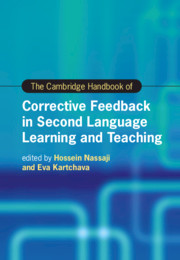
Corrective feedback is a vital pedagogical tool in language learning. This is the first volume to provide an in-depth analysis and discussion of the role of corrective feedback in second and foreign language learning and teaching. Written by leading scholars, it assembles cutting-edge research and state-of-the-art articles that address recent developments in core areas of corrective feedback including oral, written, computer-mediated, nonverbal, and peer feedback. The chapters are a combination of both theme-based and original empirical studies carried out in diverse second and foreign language contexts. Each chapter provides a concise review of its own topic, discusses theoretical and empirical issues not adequately addressed before, and identifies their implications for classroom instruction and future research. It will be an essential resource for all those interested in the role of corrective feedback in second and foreign language learning and how they can be used to enhance classroom teaching.
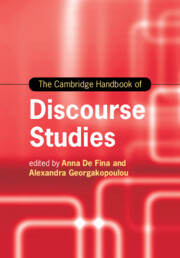
Discourse studies, the study of the ways in which language is used in texts and contexts, is a fast-moving and increasingly diverse field. With contributions from leading and upcoming scholars from across the world, and covering cutting-edge research, this Handbook offers an up-to-date survey of Discourse Studies. It is organized according to perspectives and areas of engagement, with each chapter providing an overview of the historical development of its topic, the main current issues, debates and synergies, and future directions. The Handbook presents new perspectives on well-established themes such as narrative, conversation-analytic and cognitive approaches to discourse, while also embracing a range of up-to-the-minute topics from post-humanism to digital surveillance, recent methodological orientations such as linguistic landscapes and multimodal discourse analysis, and new fields of engagement such as discourses on race, religion and money.
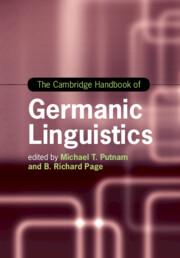
The Germanic language family ranges from national languages with standardized varieties, including German, Dutch and Danish, to minority languages with relatively few speakers, such as Frisian, Yiddish and Pennsylvania German. Written by internationally renowned experts of Germanic linguistics, this Handbook provides a detailed overview and analysis of the structure of modern Germanic languages and dialects. Organized thematically, it addresses key topics in the phonology, morphology, syntax, and semantics of standard and nonstandard varieties of Germanic languages from a comparative perspective. It also includes chapters on second language acquisition, heritage and minority languages, pidgins, and urban vernaculars. The first comprehensive survey of this vast topic, the Handbook is a vital resource for students and researchers investigating the Germanic family of languages and dialects.
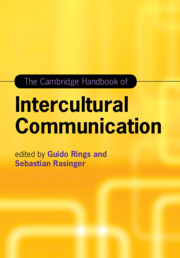
A highly interdisciplinary overview of the wide spectrum of current international research and professional practice in intercultural communication, this is a key reference book for students, lecturers and professionals alike. Key examples of contrastive, interactive, imagological and interlingual approaches are discussed, as well as the impact of cultural, economic and socio-political power hierarchies in cultural encounters, essential for contemporary research in critical intercultural communication and postcolonial studies. The Handbook also explores the spectrum of professional applications of that research, from intercultural teaching and training to the management of culturally mixed groups, facilitating use by professionals in related fields. Theories are introduced systematically using ordinary language explanations and examples, providing an engaging approach to readers new to the field. Students and researchers in a wide variety of disciplines, from cultural studies to linguistics, will appreciate this clear yet in-depth approach to an ever-evolving contemporary field.
The plural form 'Englishes' conveys the diversity of English as a global language, pinpointing the growth and existence of a large number of national, regional and social forms. The global spread of English and the new varieties that have emerged around the world has grown to be a vast area of study and research, which intersects multiple disciplines. This Handbook provides a comprehensive and authoritative survey of World Englishes from 1600 to the present day. Covering topics such as variationist sociolinguistics, pragmatics, contact linguistics, linguistic anthropology, corpus- and applied linguistics and language history, it combines discussion of traditional topics with a variety of innovative approaches. The chapters, all written by internationally acclaimed authorities, provide up-to-date discussions of the evolution of different Englishes around the globe, a comprehensive coverage of different models and approaches, and some original perspectives on current challenges.
Providing a comprehensive survey of cutting-edge work on second language learning, this Handbook, written by a team of leading experts, surveys the nature of second language learning and its implications for teaching. Prominent theories and methods from linguistics, psycholinguistics, processing-based, and cognitive approaches are covered and organised thematically across sections dealing with skill development, individual differences, pedagogical interventions and approaches, and context and environment. This state-of-the-art volume will interest researchers in second language studies and language education, and will also reach out to advanced undergraduate and graduate students in these and other related areas.
This book provides an in-depth and comprehensive state-of-the-art study of 'African languages' and 'language in Africa' since its beginnings as a 'colonial science' at the turn of the twentieth century in Europe. Compiled by 56 internationally renowned scholars, this ground breaking study looks at past and current research on 'African languages' and 'language in Africa' under the impact of paradigmatic changes from 'colonial' to 'postcolonial' perspectives. It addresses current trends in the study of the role and functions of language, African and other, in pre- and postcolonial African societies. Highlighting the central role that the 'language factor' plays in postcolonial transformation processes of sociocultural modernization and economic development, it also addresses more recent, particularly urban, patterns of communication, and outlines applied dimensions of digitalization and human language technology.
Presenting a field-defining overview of one of the most appliable linguistic theories available today, this Handbook surveys the key issues in the study of systemic functional linguistics (SFL), covering an impressive range of theoretical perspectives. Written by some of the world's foremost SFL scholars, including M. A. K. Halliday, the founder of SFL theory, the handbook covers topics ranging from the theory behind the model, discourse analysis within SFL, applied SFL, to SFL in relation to other subfields of linguistics such as intonation, typology, clinical linguistics and education. Chapters include discussion on the possible future directions in which research might be conducted and issues that can be further investigated and resolved. Readers will be inspired to pursue the challenges raised within the volume, both theoretically and practically.
The ability to speak two or more languages is a common human experience, whether for children born into bilingual families, young people enrolled in foreign language classes, or mature and older adults learning and using more than one language to meet life's needs and desires. This Handbook offers a developmentally oriented and socially contextualized survey of research into individual bilingualism, comprising the learning, use and, as the case may be, unlearning of two or more spoken and signed languages and language varieties. A wide range of topics is covered, from ideologies, policy, the law, and economics, to exposure and input, language education, measurement of bilingual abilities, attrition and forgetting, and giftedness in bilinguals. Also explored are cross- and intra-disciplinary connections with psychology, clinical linguistics, second language acquisition, education, cognitive science, neurolinguistics, contact linguistics, and sign language research.
A state-of-the-art, in-depth survey of the topics, approaches and theories in Spanish linguistics today. The language is researched from a number of different perspectives. This Handbook surveys the major advances and findings, with a special focus on recent accomplishments in the field. It provides an accurate and complete overview of research, as well as facilitating future directions. It encourages the reader to make connections between chapters and units, and promotes cross-theoretical dialogue. The contributions are by a wide range of specialists, writing on topics including corpus linguistics, phonology and phonetics, morphosyntax, pragmatics, the role of the speaker and speech context, language acquisition and grammaticalization. This is a must-have volume for researchers looking to contextualize their own research and for students seeking a one-stop resource on Spanish linguistics.
The linguistic study of Japanese, with its rich syntactic and phonological structure, complex writing system, and diverse sociohistorical context, is a rapidly growing research area. This book, designed to serve as a concise reference for researchers interested in the Japanese language and in typological studies of language in general, explores diverse characteristics of Japanese that are particularly intriguing when compared with English and other European languages. It pays equal attention to the theoretical aspects and empirical phenomena from theory-neutral perspectives, and presents necessary theoretical terms in clear and easy language. It consists of five thematic parts including sound system and lexicon, grammatical foundation and constructions, and pragmatics/sociolinguistics topics, with chapters that survey critical discussions arising in Japanese linguistics. The Cambridge Handbook of Japanese Linguistics will be welcomed by general linguists, and students and scholars working in linguistic typology, Japanese language, Japanese linguistics and Asian Studies.
The best survey of cognitive linguistics available, this Handbook provides a thorough explanation of its rich methodology, key results, and interdisciplinary context. With in-depth coverage of the research questions, basic concepts, and various theoretical approaches, the Handbook addresses newly emerging subfields and shows their contribution to the discipline. The Handbook introduces fields of study that have become central to cognitive linguistics, such as conceptual mappings and construction grammar. It explains all the main areas of linguistic analysis traditionally expected in a full linguistics framework, and includes fields of study such as language acquisition, sociolinguistics, diachronic studies, and corpus linguistics. Setting linguistic facts within the context of many other disciplines, the Handbook will be welcomed by researchers and students in a broad range of disciplines, including linguistics, cognitive science, neuroscience, gesture studies, computational linguistics, and multimodal studies.
Providing a contemporary and comprehensive look at the topical area of areal linguistics, this book looks systematically at different regions of the world whilst presenting a focussed and informed overview of the theory behind research into areal linguistics and language contact. The topicality of areal linguistics is thoroughly documented by a wealth of case studies from all major regions of the world and, with chapters from scholars with a broad spectrum of language expertise, it offers insights into the mechanisms of external language change. With no book currently like this on the market, The Cambridge Handbook of Areal Linguistics will be welcomed by students and scholars working on the history of language families, documentation and classification, and will help readers to understand the key area of areal linguistics within a broader linguistic context.
Change is an inherent feature of all aspects of language, and syntax is no exception. While the synchronic study of syntax allows us to make discoveries about the nature of syntactic structure, the study of historical syntax offers even greater possibilities. Over recent decades, the study of historical syntax has proven to be a powerful scientific tool of enquiry with which to challenge and reassess hypotheses and ideas about the nature of syntactic structure which go beyond the observed limits of the study of the synchronic syntax of individual languages or language families. In this timely Handbook, the editors bring together the best of recent international scholarship on historical syntax. Each chapter is focused on a theme rather than an individual language, allowing readers to discover how systematic descriptions of historical data can profitably inform and challenge highly diverse sets of theoretical assumptions.
Linguistic typology identifies both how languages vary and what they all have in common. This Handbook provides a state-of-the art survey of the aims and methods of linguistic typology, and the conclusions we can draw from them. Part I covers phonological typology, morphological typology, sociolinguistic typology and the relationships between typology, historical linguistics and grammaticalization. It also addresses typological features of mixed languages, creole languages, sign languages and secret languages. Part II features contributions on the typology of morphological processes, noun categorization devices, negation, frustrative modality, logophoricity, switch reference and motion events. Finally, Part III focuses on typological profiles of the mainland South Asia area, Australia, Quechuan and Aymaran, Eskimo-Aleut, Iroquoian, the Kampa subgroup of Arawak, Omotic, Semitic, Dravidian, the Oceanic subgroup of Austronesian and the Awuyu-Ndumut family (in West Papua). Uniting the expertise of a stellar selection of scholars, this Handbook highlights linguistic typology as a major discipline within the field of linguistics.
The Cambridge Handbook of Morphology describes the diversity of morphological phenomena in the world's languages, surveying the methodologies by which these phenomena are investigated and the theoretical interpretations that have been proposed to explain them. The Handbook provides morphologists with a comprehensive account of the interlocking issues and hypotheses that drive research in morphology; for linguists generally, it presents current thought on the interface of morphology with other grammatical components and on the significance of morphology for understanding language change and the psychology of language; for students of linguistics, it is a guide to the present-day landscape of morphological science and to the advances that have brought it to its current state; and for readers in other fields (psychology, philosophy, computer science, and others), it reveals just how much we know about systematic relations of form to content in a language's words - and how much we have yet to learn.
Formal semantics - the scientific study of meaning in natural language - is one of the most fundamental and long-established areas of linguistics. This Handbook offers a comprehensive, yet compact guide to the field, bringing together research from a wide range of world-leading experts. Chapters include coverage of the historical context and foundation of contemporary formal semantics, a survey of the variety of formal/logical approaches to linguistic meaning and an overview of the major areas of research within current semantic theory, broadly conceived. The Handbook also explores the interfaces between semantics and neighbouring disciplines, including research in cognition and computation. This work will be essential reading for students and researchers working in linguistics, philosophy, psychology and computer science.
Phonology - the study of how the sounds of speech are represented in our minds - is one of the core areas of linguistic theory, and is central to the study of human language. This handbook brings together the world's leading experts in phonology to present the most comprehensive and detailed overview of the field. Focusing on research and the most influential theories, the authors discuss each of the central issues in phonological theory, explore a variety of empirical phenomena, and show how phonology interacts with other aspects of language such as syntax, morphology, phonetics, and language acquisition. Providing a one-stop guide to every aspect of this important field, The Cambridge Handbook of Phonology will serve as an invaluable source of readings for advanced undergraduate and graduate students, an informative overview for linguists and a useful starting point for anyone beginning phonological research.