To save content items to your account,
please confirm that you agree to abide by our usage policies.
If this is the first time you use this feature, you will be asked to authorise Cambridge Core to connect with your account.
Find out more about saving content to .
To save content items to your Kindle, first ensure no-reply@cambridge.org
is added to your Approved Personal Document E-mail List under your Personal Document Settings
on the Manage Your Content and Devices page of your Amazon account. Then enter the ‘name’ part
of your Kindle email address below.
Find out more about saving to your Kindle.
Note you can select to save to either the @free.kindle.com or @kindle.com variations.
‘@free.kindle.com’ emails are free but can only be saved to your device when it is connected to wi-fi.
‘@kindle.com’ emails can be delivered even when you are not connected to wi-fi, but note that service fees apply.
In 1570's New Kingdom of Granada (modern Colombia), a new generation of mestizo (half-Spanish, half-indigenous) men sought positions of increasing power in the colony's two largest cities. In response, Spanish nativist factions zealously attacked them as unequal and unqualified, unleashing an intense political battle that lasted almost two decades. At stake was whether membership in the small colonial community and thus access to its most lucrative professions should depend on limpieza de sangre (blood purity) or values-based integration (Christian citizenship). A Tale of Two Granadas examines the vast, trans-Atlantic transformation of political ideas about subjecthood that ultimately allowed some colonial mestizos and indios ladinos (acculturated natives) to establish urban citizenship alongside Spaniards in colonial Santafé de Bogotá and Tunja. In a spirit of comparison, it illustrates how some of the descendants of Spain's last Muslims appealed to the same new conceptions of citizenship to avoid disenfranchisement in the face of growing prejudice.
We, the King challenges the dominant top-down interpretation of the Spanish Empire and its monarchs' decrees in the New World, revealing how ordinary subjects had much more say in government and law-making than previously acknowledged. During the viceregal period spanning the post-1492 conquest until 1598, the King signed more than 110,000 pages of decrees concerning state policies, minutiae, and everything in between. Through careful analysis of these decrees, Adrian Masters illustrates how law-making was aided and abetted by subjects from various backgrounds, including powerful court women, indigenous commoners, Afro-descendant raftsmen, secret saboteurs, pirates, sovereign Chiriguano Indians, and secretaries' wives. Subjects' innumerable petitions and labor prompted – and even phrased - a complex body of legislation and legal categories demonstrating the degree to which this empire was created from the “bottom up”. Innovative and unique, We, the King reimagines our understandings of kingship, imperial rule, colonialism, and the origins of racial categories.
In the seventeenth century, Veracruz was the busiest port in the wealthiest colony in the Americas. People and goods from five continents converged in the city, inserting it firmly into the early modern world's largest global networks. Nevertheless, Veracruz never attained the fame or status of other Atlantic ports. Veracruz and the Caribbean in the Seventeenth Century is the first English-language, book-length study of early modern Veracruz. Weaving elements of environmental, social, and cultural history, it examines both Veracruz's internal dynamics and its external relationships. Chief among Veracruz's relationships were its close ties within the Caribbean. Emphasizing relationships of small-scale trade and migration between Veracruz and Caribbean cities like Havana, Santo Domingo, and Cartagena, Veracruz and the Caribbean shows how the city's residents – especially its large African and Afro-descended communities – were able to form communities and define identities separate from those available in the Mexican mainland.
As Chile has continued to grow and prosper in the twenty-first century, this new edition of the definitive history of the country brings the story of its political, social and cultural development up to date. It describes how Ricardo Lagos and Michelle Bachelet, both highly educated Socialists, modernized the country and integrated new interests into Chilean political life, and how the billionaire, Harvard-trained economist Sebastian Piñera, who succeeded Bachelet, addressed the problems caused by the 2010 tsunami. In the last twenty years Chile diversified its economy, replaced a number of Pinochet's organizations with more inclusive institutions, cultivated Chilean culture, modernized its constitution, and fomented reconciliation of the various political factions – until economic crisis in early 2018 caused political chaos and occasionally violent public protest. Based on new statistics to measure Chile's economic and social development, this volume celebrates Chile's achievements and dissects its failures.
Between 1947 and 1954, the Mexican and US governments waged a massive campaign against a devastating livestock plague, aftosa or foot-and-mouth disease. Absorbing over half of US economic aid to Latin America and involving thousands of veterinarians and ranchers from both countries, battalions of Mexican troops, and scientists from Europe and the Americas, the campaign against aftosa was unprecedented in size. Despite daunting obstacles and entrenched opposition, it successfully eradicated the virus in Mexico, and reshaped policies, institutions, and knowledge around the world. Using untapped sources from local, national, and international archives, Thomas Rath provides a comprehensive history of this campaign, the forces that shaped it – from presidents to peasants, scientists to journalists, pistoleros to priests, mountains to mules – and the complicated legacy it left. More broadly, it uses the campaign to explore the formation of the Mexican state, changing ideas of development and security, and the history of human–animal relations.
Now notorious for its aridity and air pollution, Mexico City was once part of a flourishing lake environment. In nearby Xochimilco, Native Americans modified the lakes to fashion a distinctive and remarkably abundant aquatic society, one that provided a degree of ecological autonomy for local residents, enabling them to protect their communities' integrity, maintain their way of life, and preserve many aspects of their cultural heritage. While the area's ecology allowed for a wide array of socioeconomic and cultural continuities during colonial rule, demographic change came to affect the ecological basis of the lakes; pastoralism and new ways of using and modifying the lakes began to make a mark on the watery landscape and on the surrounding communities. In this fascinating study, Conway explores Xochimilco using native-language documents, which serve as a hallmark of this continuity and a means to trace patterns of change.
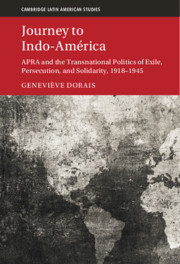
The American Popular Revolutionary Alliance (APRA) was a Peruvian political party that played an important role in the development of the Latin American left during the first half of the 1900s. In Journey to Indo-América, GenevieÌve Dorais examines how and why the anti-imperialist project of APRA took root outside of Peru as well as how APRA's struggle for political survival in Peru shaped its transnational consciousness. Dorais convincingly argues that APRA's history can only be understood properly within this transnational framework, and through the collective efforts of transnational organization rather than through an exclusive emphasis on political figures like APRA leader, Víctor Raúl Haya de la Torre. Tracing circuits of exile and solidarity through Latin America, the United States, and Europe, Dorais seeks to deepen our appreciation of APRA's ideological production through an exploration of the political context in which its project of hemispheric unity emerged. This title is also available as Open Access on Cambridge Core.
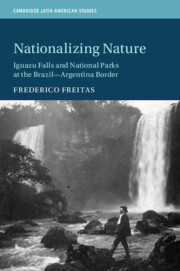
Today, one-quarter of all the land in Latin America is set apart for nature protection. In Nationalizing Nature, Frederico Freitas uncovers the crucial role played by conservation in the region's territorial development by exploring how Brazil and Argentina used national parks to nationalize borderlands. In the 1930s, Brazil and Argentina created some of their first national parks around the massive Iguazu Falls, shared by the two countries. The parks were designed as tools to attract migrants from their densely populated Atlantic seaboards to a sparsely inhabited borderland. In the 1970s, a change in paradigm led the military regimes in Brazil and Argentina to violently evict settlers from their national parks, highlighting the complicated relationship between authoritarianism and conservation in the Southern Cone. By tracking almost one hundred years of national park history in Latin America's largest countries, Nationalizing Nature shows how conservation policy promoted national programs of frontier development and border control.
Islanders and Empire examines the role smuggling played in the cultural, economic, and socio-political transformation of Hispaniola from the late sixteenth to seventeenth centuries. With a rare focus on local peoples and communities, the book analyzes how residents of Hispaniola actively negotiated and transformed the meaning and reach of imperial bureaucracies and institutions for their own benefit. By co-opting the governing and judicial powers of local and imperial institutions on the island, residents could take advantage of, and even dominate, the contraband trade that reached the island's shores. In doing so, they altered the course of the European inter-imperial struggles in the Caribbean by limiting, redirecting, or suppressing the Spanish crown's policies, thus taking control of their destinies and that of their neighbors in Hispaniola, other Spanish Caribbean territories, and the Spanish empire in the region.
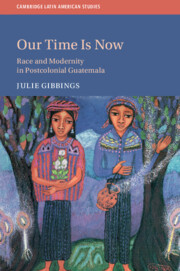
Postcolonial histories have long emphasized the darker side of narratives of historical progress, especially their role in underwriting global and racial hierarchies. Concepts like primitiveness, backwardness, and underdevelopment not only racialized and gendered peoples and regions, but also ranked them on a seemingly naturalized timeline - their 'present' is our 'past' - and reframed the politics of capitalist expansion and colonization as an orderly, natural process of evolution towards modernity. Our Time is Now reveals that modernity particularly appealed to those excluded from power, precisely because of its aspirational and future orientation. In the process, marginalized peoples creatively imagined diverse political futures that redefined the racialized and temporal terms of modernity. Employing a critical reading of a wide variety of previously untapped sources, Julie Gibbings demonstrates how the struggle between indigenous people and settlers to manage contested ideas of time and history as well as practices of modern politics, economics, and social norms were central to the rise of coffee capitalism in Guatemala and to twentieth century populist dictatorship and revolution.
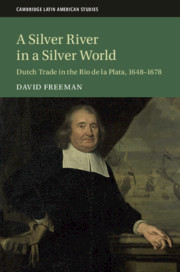
Drawing on a wide and rich array of sources, this book explores the nature and extent of Dutch trade and commerce in the Río de la Plata during three decades of the least-studied century (1650–1750) of Spain's rule in the Americas. In doing so, it raises important questions about trade in colonial South America and how it was impacted by the Dutch, suggesting that these transactions were carried out within the confines of the law, contradicting common beliefs among scholars that this trading was not regulated. The book contributes to a growing literature on contraband trade, administration, networks, and corruption while challenging narratives of exclusively Spanish influence on the Americas.
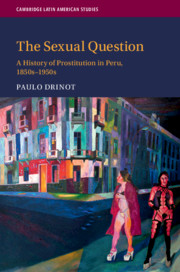
The creation of Lima's red light district in 1928 marked the culminating achievement of the promoters of regulation who sought to control the spread of venereal disease by medically policing female prostitutes. Its closure in 1956 was arguably the high point of abolitionism, a transnational movement originating in the 1860s that advocated that regulation was not only ineffective from a public health perspective, but also morally wrong. The Sexual Question charts this cyclic process of regulation and abolition in Peru, uncovering the ideas, policies, and actors shaping the debates on prostitution in Lima and beyond. The history of prostitution, Paulo Drinot shows, sheds light on the interplay of gender and sexuality, medicine and public health, and nation-building and state formation in Peru. With its compelling historical lens, this landmark study offers readers an engaging narrative, and new perspectives on Latin American studies, social policy, and Peruvian history.
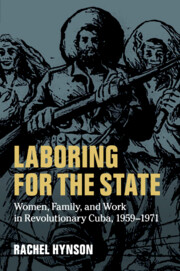
Contrary to claims that socialism opposed the family unit, Rachel Hynson argues that the revolutionary Cuban government engaged in social engineering to redefine the nuclear family and organize citizens to serve the state. Drawing on Cuban newspapers and periodicals, government documents and speeches, long-overlooked laws, and oral histories, Hynson reveals that by 1961, and increasingly throughout this decade, revolutionary citizenship was earned through labor. While men were to work outside the home in state-approved jobs, women found their citizenship tied to affording the state control over their reproduction and sexual labor. Through all four campaigns examined in this book - the projects to control women's reproduction, promote marriage, end prostitution, and compel men into state-sanctioned employment - Hynson shows that the state's progression toward authoritarianism and its attendant monopolization of morality were met with resistance and counter-narratives by citizens who so opposed the mandates of these campaigns that Cuban leadership has since reconfigured or effaced these programs from the Revolution's grand narrative.
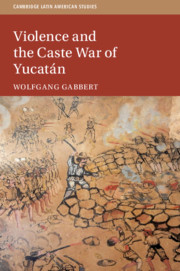
Violence and The Caste War of Yucatán analyzes the extent and forms of violence employed during one of the most significant indigenous rural revolts in nineteenth-century Latin America: the Caste War of Yucatán in the tropical southeast of Mexico. Combining the results of historical, anthropological, and sociological research with the thorough investigation of primary sources from numerous archives, the book ascertains that violence was neither random nor the result of individual bloodthirstiness but in many cases followed specific patterns related to demographic, economic, political, and military factors. In addition to its use against the enemy, violence also played a role in the establishment and maintenance of order and leadership within the ranks of the contending parties. While the Caste War has been widely considered a conflict between the whites and the Maya, this book shows that Indians and non-Indians fought and died on both sides.
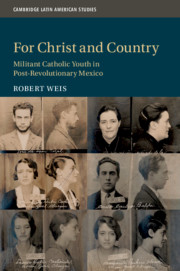
Why did José de León Toral kill Álvaro Obregón, leader of the Mexican Revolution? So far, historians have characterized the motivations of the young Catholic militant as the fruit of fanaticism. This book offers new insights on how diverse sectors experienced the aftermath of the Revolution by exploring the religious, political, and cultural contentions of the 1920s. Far from an isolated fanatic, León Toral represented a generation of Mexicans who believed that the revolution had unleashed ancient barbarism, sinful consumerism, and anticlerical tyranny. Facing attacks against the Catholic essence of Mexican nationalism, they emphasized asceticism, sacrifice, and the redemptive potential of violence. Their reckless enthusiasm to launch assaults was a sign of their devotion. León Toral insisted that 'only God' was his accomplice; in fact, he was cheered by thousands who dreamed of bringing the Kingdom of Christ to beleaguered Mexico.
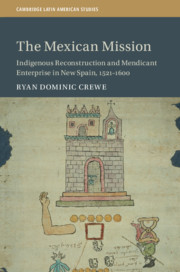
In the sixty years following the Spanish conquest, indigenous communities in central Mexico suffered the equivalent of three Black Deaths, a demographic catastrophe that prompted them to rebuild under the aegis of Spanish missions. Where previous histories have framed this process as an epochal spiritual conversion, The Mexican Mission widens the lens to examine its political and economic history, revealing a worldly enterprise that both remade and colonized Mesoamerica. The mission exerted immense temporal power in struggles over indigenous jurisdictions, resources, and people. Competing communities adapted the mission to their own designs; most notably, they drafted labor to raise ostentatious monastery complexes in the midst of mass death. While the mission fostered indigenous recovery, it also grounded Spanish imperial authority in the legitimacy of local native rule. The Mexican mission became one of the most extensive in early modern history, with influences reverberating on Spanish frontiers from New Mexico to Mindanao.
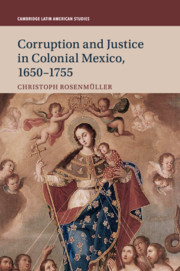
Corruption is one of the most prominent issues in Latin American news cycles, with charges deciding the recent elections in Mexico, Brazil, and Guatemala. Despite the urgency of the matter, few recent historical studies on the topic exist, especially on Mexico. For this reason, Christoph Rosenmüller explores the enigma of historical corruption. By drawing upon thorough archival research and a multi-lingual collection of printed primary sources and secondary literature, Rosenmüller demonstrates how corruption in the past differed markedly from today. Corruption in Mexico's colonial period connoted the obstruction of justice; judges, for example, tortured prisoners to extract cash or accepted bribes to alter judicial verdicts. In addition, the concept evolved over time to include several forms of self-advantage in the bureaucracy. Rosenmüller embeds this important shift from judicial to administrative corruption within the changing Atlantic World, while also providing insightful perspectives from the lower social echelons of colonial Mexico.
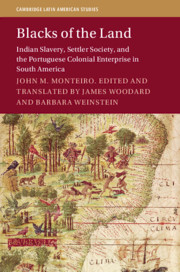
Originally published in Portuguese in 1994 as Negros da Terra, this field-defining work by the late historian John M. Monteiro has been translated into English by Professors Barbara Weinstein and James Woodard. Monteiro's work established ethnohistory as a field in colonial Brazilian studies and made indigenous history a vital part of how scholars understand Brazil's colonial past. Drawing on over two dozen collections on both sides of the Atlantic, Monteiro rescued Indians from invisibility, documenting their role as both objects and actors in Brazil's colonial past and, most importantly, providing the first history of Indian slavery in Brazil. Monteiro demonstrates how Indian enslavement, not exploration or the search for mineral wealth, was the driving force behind expansion out of São Paulo and through the South American backcountry. This book makes a groundbreaking contribution not only to Latin American history, but to the history of indigenous slavery in the Americas generally.
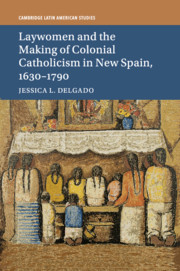
In the first history of laywomen and the church in colonial Mexico, Jessica L. Delgado shows how laywomen participated in and shaped religious culture in significant ways by engaging creatively with gendered theology about women, sin, and guilt in their interactions with church sacraments, institutions, and authorities. Taking a thematic approach, using stories of individuals, institutions, and ideas, Delgado illuminates the diverse experiences of urban and rural women of Indigenous, Spanish, and African descent. By centering the choices these women made in their devotional lives and in their relationships to the aspects of the church they regularly encountered, this study expands and challenges our understandings of the church's role in colonial society, the role of religion in gendered and racialized power, and the role of ordinary women in the making of colonial religious culture.