To save content items to your account,
please confirm that you agree to abide by our usage policies.
If this is the first time you use this feature, you will be asked to authorise Cambridge Core to connect with your account.
Find out more about saving content to .
To save content items to your Kindle, first ensure no-reply@cambridge.org
is added to your Approved Personal Document E-mail List under your Personal Document Settings
on the Manage Your Content and Devices page of your Amazon account. Then enter the ‘name’ part
of your Kindle email address below.
Find out more about saving to your Kindle.
Note you can select to save to either the @free.kindle.com or @kindle.com variations.
‘@free.kindle.com’ emails are free but can only be saved to your device when it is connected to wi-fi.
‘@kindle.com’ emails can be delivered even when you are not connected to wi-fi, but note that service fees apply.
An absorbing study of the development and reception of musical culture in Ireland by a pioneering and deservedly renowned author.
This volume is a collection of fourteen essays on the history and reception of Irish music and music in Ireland. It addresses three prevailing themes: the historiography of Irish music, the influence of music on Irish writing (and vice versa), and the cultural identity and reception of Irish music both domestically and in the world at large. Its principal protagonists include Thomas Moore, W. H. Grattan Flood, George Moore, Edward Martyn, Charles Villiers Stanford, James Joyce, Dora Pejačević, Ina Boyle, Aloys Fleischmann and Jennifer Walshe. These essays also identify and interrogate key questions underpinning a general crisis of reception in relation to Irish music, and particularly art music, within the domain of Irish studies. Fieldwork examines this crisis in the aftermath of The Encyclopaedia of Music in Ireland (published in 2013) and a major retrospective of Irish art music, Composing the Island (curated and presented in 2016). It thereby engages closely with contemporary Irish art music and the challenges which this music has faced in the early decades of the twenty-first century.
This well-conceived and beautifully written work testifies to Harry White's central place in the shaping of the discourse surrounding the cultural history of Irish music over the last 40 years. White's gift for expression and memorably poetic turns of phrase allows the complexity of ideas and range of historical and literary knowledge examined in these essays to be deftly excavated and evaluated. Curiosity, provocativeness, imagination and literature are threaded through his exploration of how Irish history and experience have been imagined musically.
Traces the position, experiences and reception of women in Irish traditional music through detailed ethnographic and statistical findings.
This book is the first of its kind to engage with the larger subject of women in commercial Irish traditional music. It considers the experiences of performers in the various commercial arenas of the tradition, while also engaging in critical discussions of choice, agency, feminism and sexualisation. It reveals how the commercial music industry and Celtic music label continues to place women within a stereotypical idealised role or occupation.
The book provides new insight into the legacy of women-led bands and compilations as well as their impact on Irish traditional music over five decades. Its findings on commercial dance shows are equally significant. While these shows had a positive impact on performers, at the same time they enforced gendered, racial and heteronormative expectations.
Drawing on extensive ethnographic and statistical research, the book finds strong evidence that women and other marginalised practitioners continue to face greater challenges and different expectations when maintaining a professional career and participating in Irish traditional music. It also uncovers characteristics and dynamics related to the recreational and commercial spaces of the Irish traditional music and Irish dance scene that enable harmful and predatory behaviour.
The author's findings support understandings and aid future legislation for creating a safe, inclusive and equitable performance space for all.
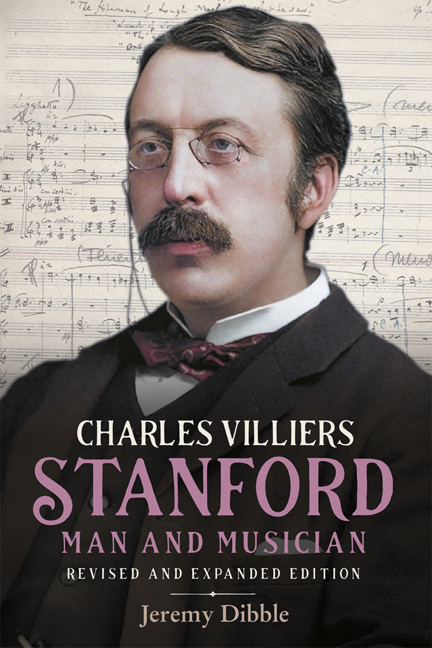
Substantially revised and expanded edition that sheds new light on Stanford's career as composer, conductor and teacher, as well as promoter of opera in English and arranger of Irish folk music.