Studies in Celtic History aims to provide a forum for new research into all aspects of the history of Celtic-speaking peoples throughout the whole of the medieval period. The term `history' is understood broadly: any study, regardless of discipline, which advances our knowledge and understanding of the history of Celtic-speaking peoples will be considered. Studies of primary sources, and of new methods of exploiting such sources, are encouraged.
To save content items to your account,
please confirm that you agree to abide by our usage policies.
If this is the first time you use this feature, you will be asked to authorise Cambridge Core to connect with your account.
Find out more about saving content to .
To save content items to your Kindle, first ensure no-reply@cambridge.org
is added to your Approved Personal Document E-mail List under your Personal Document Settings
on the Manage Your Content and Devices page of your Amazon account. Then enter the ‘name’ part
of your Kindle email address below.
Find out more about saving to your Kindle.
Note you can select to save to either the @free.kindle.com or @kindle.com variations.
‘@free.kindle.com’ emails are free but can only be saved to your device when it is connected to wi-fi.
‘@kindle.com’ emails can be delivered even when you are not connected to wi-fi, but note that service fees apply.
Examines common themes and connections in Gaelic storytelling from the Middle Ages to present day.
From the great medieval saga Táin Bó Cúailnge to cautionary folk tales in contemporary Gaeltacht areas, storytelling has remained a cornerstone of Gaelic culture for over a thousand years. Pre-Christian motifs and ecclesiastical influences, with nods to classical literature and poetic devices, provide the framework for many stories that remain familiar today (such as St Patrick's journey across Ireland and the exploits of Finn mac Cumhaill). However, despite this rich tradition, scholarship on Gaelic storytelling that crosses both medieval and modern fields is a rarity; as a result, there is a question mark over what of the early tradition remains in the modern, and what this can tell us about the ecology and the survival of Gaelic storytelling.
This volume presents ground-breaking research from scholars in both areas, providing a dynamic insight into the refractions of Gaelic storytelling across a broad chronological period. Contributors address matters such as composition, style, narrative techniques, audience, and the importance of physical and social landscapes, drawing on a variety of methodologies, including philological, narratological, comparative literature, folkloristic, and translation studies. From seminal research on notions of scél "story" and truth to an exploration of the issues facing a Gaelic translator today, these essays work together to widen and deepen our understanding of how and why stories were so fundamental - and remain so fundamental - to Gaelic culture.
Explores medieval Irish interest in Classical mythology and historiography and how it could be situated within the framework of Christian salvation history.
From allusions to the Olympians in seventh-century glosses to twelfth- and thirteenth-century vernacular adaptations of the epics of Vergil, Lucan, and Statius, Irish authors creatively re-imagined Greco-Roman mythology throughout the Middle Ages. They developed many strategies for situating the Classical deities within medieval Christian historiography, but rarely did they downplay or eliminate them. Some of these strategies, as this study reveals, reflected wider medieval European trends in Classical reception and mythography, whilst others were strikingly original and paralleled the ways in which Irish authors imagined the supernatural beings of their own pre-Christian past.
This book examines why Irish authors were interested in the history and mythology of the ancient Mediterranean, and how Classical polytheism influenced their ideas about their own pagan past. It explores the ways in which depictions of Irish Otherworldly characters both shaped and were shaped by the gods and supernatural figures of the Classical adaptations. Based on close readings of texts such as the Irish version of Lucan, In Cath Catharda, this book argues that Classical scholarship in medieval Ireland was closely tied to medieval ideas about salvation history. Ultimately, it concludes that medieval Irish authors and audiences applied the same interpretive tools used for biblical exegesis to characters and events from Greco-Roman mythology, history, and literature, and to the supernatural inhabitants of pre-Christian Ireland alike.
Illuminates the dynamics of church raiding by Vikings in Ireland, relating this phenomenon to their wider objectives and political ambitions.
This book offers the first comprehensive investigation of Viking raids on Irish churches from the late eighth to the early eleventh century, drawing on a wide range of sources, including Irish legal and literary material, archaeological and historical evidence and English and Frankish chronicles. Through a rigorous quantitative analysis of annalistic evidence, it sheds light on all aspects of this phenomenon: its chronological development, geographical distribution, immediate purpose and the broader context of Viking engagement with Gaelic Irish royal polities. Challenging the view that such raiding was merely a precursor to settlement and trade, it demonstrates that these attacks remained intrinsic to Viking activities throughout this period; it argues in particular that human captives-rather than metalwork or bullion-constituted the primary objective of church raids, with many held for ransom or sold into slavery. By tracing the evolution of random raids to strategically motivated attacks, it establishes church raiding as a deliberate instrument of political strategy, until the Battle of Clontarf (1014) marked a turning point in Viking-Irish relations.
A new interpretation of Celtic Christianity, supported by images of Christ taken from manuscripts, metalwork and sculpture, and showing how it departed from continental practice largely due to a differing perception and application of Pelagianism.
Was femininity in early Irish society perceived as weak and sinful, innately inferior to masculinity? Was it seen as powerful and dangerous, a threat to the peace and tranquility of male society? Orwas there a more nuanced view, an understanding that femininity, or femininities, could be presented in a variety of ways according to the pragmatic concerns of the writer? This book examines the sources surviving from fifth- to ninth-century Ireland, aiming to offer a fresh view of authorial perceptions of the period. It seeks to highlight the complexities of those perceptions, the significance of authorial aims and purposes in the construction of femininity, and the potential disjunction between societal "reality" and the images presented to us in the sources. This careful analysis of a broad range of early Irish sources demonstrates how fluid constructions of gender could be, and presents a new interpretation of the position of femininity in the thought world of early Irish authors.
Helen Oxenham worked at the Department of Anglo-Saxon, Norse and Celtic in Cambridge as supervisor and researcher on the Mapping Miracles project. She now works for The EnglishHeritage Trust.
The First Life of St Samson of Dol (Vita Prima Samsonis) is a key text for the study of early Welsh, Cornish, Breton and indeed west Frankish history. In the twentieth century it was the subject of unresolved scholarly controversy that tended to limit its usefulness. However, more recent research has firmly re-established its significance as a historical source. This volume presents the results of new, multi-disciplinary, assessment of the text and its context. What emerges from the studies collected here is a context of greater plausibility for the First Life of St Samson of Dol as an early and essentially historical text, potentially at the centre of early British Christianity and its influence on the Continent. The landscape of that Christianity is gradually emerging from the shadows and it is a landscape in which the career of St Samson, the first Insular peregrinus, is shown to be of considerable importance. Lynette Olson is an Honorary Associate of the Department of History, University of Sydney. Contributors: Caroline Brett, Karen Jankulak, Constant J. Mews, Lynette Olson, Joseph-Claude Poulin, Richard Sowerby, Ian N. Wood, Jonathan M. Wooding.
The way in which saints' cults operated across and beyond political, ethnic and linguistic boundaries in the medieval British Isles and Ireland, from the sixth to the sixteenth centuries, is the subject of this book. In a series of case studies, the contributions highlight the factors that allowed particular cults to prosper in, or that made them relevant to, a variety of cultural contexts. The collection has a particular emphasis on northern Britain, and the role of devotional interests in connecting or shaping a number of polities and cultural identities (Pictish, Scottish, Northumbrian, Irish, Welsh and English) in a world of fluid political and territorial boundaries. Although the bulk of the studies are concerned with the significance of cults in the insular context, many of the articles also touch on the development of pan-European devotions (such as the cults of St Brendan, The Three Kings or St George).
Contributors: James E. Fraser, Thomas Owen Clancy, Fiona Edmonds, John Reuben Davies, Karen Jankulak, Sally Crumplin, Joanna Huntington, Steve Boardman, Eila Williamson, Jonathan Wooding
Powys, extending over north-east and central Wales, was one of three great medieval Welsh polities, along with Gwynedd to the north and Deheubarth (south-west), occupying nearly a quarter of the country. However, it has been somewhat neglected by historians, who have tended to dismiss it as a satellite realm of England, and viewed its leaders as obstacles to the efforts of Gwynedd leaders to construct a principality of Wales. This book provides the first full, authoritative history of Powys in the twelfth and thirteenth centuries. It argues in particular that the Powysian rulers were dogged and resourceful survivors in the face of pressure from Welsh rivals and the problems of internal fragmentation; and that, paradoxically, co-operation with the English and intermarriage with marcher families underlay a desire to regain lands to the east lost in earlier centuries.
Dr David Stephenson is an Honorary Research Fellow in the School of History, Welsh History and Archaeology, Bangor University.
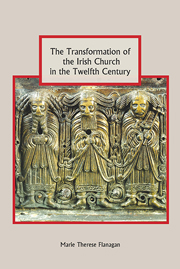
The twelfth century saw a wide-ranging transformation of the Irish church, a regional manifestation of a wider pan-European reform movement. This book, the first to offer a full account of this change, moves away from the previous concentration on the restructuring of Irish dioceses and episcopal authority, and the introduction of Continental monastic observances, to widen the discussion. It charts changes in the religious culture experienced by the laity as well as the clergy and takes account of the particular Irish experience within the wider European context. The universal ideals that were defined with increasing clarity by Continental advocates of reform generated a series of initiatives from Irish churchmen aimed at disseminating reform ideology within clerical circles and transmitting it also to lay society, even if, as elsewhere, it often proved difficult to implement in practice. Whatever the obstacles faced by reformist clergy, their genuine concern to transform the Irish church and society cannot be doubted, and is attested in a range of hitherto unexploited sources this volume draws upon. Marie Therese Flanagan is Professor of Medieval History at the Queen's University of Belfast.
Ireland has the most substantial corpus of annalistic chronicles for the early period in western Europe. They are crucial sources for understanding the Gaelic world of Ireland and Scotland, and offer insights into contacts with the wider Christian world. However, there is still a high degree of uncertainty about their development, production, and location prior to 1100, which makes it difficult to draw sound conclusions from them. This book analyses the principal Irish chronicles, especially the "Annals of Ulster", "Annals of Tigernach", and the "Chronicum Scotorum", identifying their inter-relationships, the main changes to the texts, and the centres where they were written in the tenth and eleventh centuries - a significant but neglected period. The detailed study enables the author to argue that the chroniclers were in contact with each other, exchanging written notices of events, and that therefore the chronicle texts reflect the social connections of the Irish ecclesiastical and secular elites. The author also considers how the sections describing the early Christian period (approximately 431 to 730 AD) were altered by subsequent chroniclers; by focussing on the inclusion of material on Mediterranean events as well as on Gaelic kings, and by comparing the chronicles with other contemporary texts, he reconstructs the chronicles' contents and chronology at different times, showing how the accounts were altered to reflect and promote certain views of history. Thus, while enabling readers to evaluate the sources more effectively, he also demonstrates that the chronicles were sophisticated and significant documents in themselves, reflecting different facets of contemporary medieval society and their shifting attitudes to creating and changing accounts of the past. Dr Nicholas Evans is an Honorary Research Fellow at the University of Glasgow.