To save content items to your account,
please confirm that you agree to abide by our usage policies.
If this is the first time you use this feature, you will be asked to authorise Cambridge Core to connect with your account.
Find out more about saving content to .
To save content items to your Kindle, first ensure no-reply@cambridge.org
is added to your Approved Personal Document E-mail List under your Personal Document Settings
on the Manage Your Content and Devices page of your Amazon account. Then enter the ‘name’ part
of your Kindle email address below.
Find out more about saving to your Kindle.
Note you can select to save to either the @free.kindle.com or @kindle.com variations.
‘@free.kindle.com’ emails are free but can only be saved to your device when it is connected to wi-fi.
‘@kindle.com’ emails can be delivered even when you are not connected to wi-fi, but note that service fees apply.
Under the Paris Agreement, nations have committed to preventing dangerous global warming. Scenarios for achieving net-zero emissions in the second half of this century depend on land (forests and bioenergy) to remove carbon from the atmosphere. Modelled levels of land-based mitigation could reduce the availability of productive agricultural land, and encroach on natural land, with potentially significant social and environmental consequences. However, these issues are poorly recognized in the policy-uptake of modelled outputs. Understanding how science and policy interact to produce expectations about mitigation pathways allows us to consider the trade-offs inherent in relying on land for mitigation.
Biomass energy with carbon capture and storage (BECCS) is represented in many integrated assessment models as a keystone technology in delivering the Paris Agreement on climate change. This paper explores six key challenges in relation to large scale BECCS deployment and considers ways to address these challenges. Research needs to consider how BECCS fits in the context of other mitigation approaches, how it can be accommodated within existing policy drivers and goals, identify where it fits within the wider socioeconomic landscape, and ensure that genuine net negative emissions can be delivered on a global scale.
A major challenge in addressing the loss of benefits and services provided by the natural environment is that it can be difficult to find ways for those who benefit from them to pay for their preservation. We examine one such context in Malawi, where erosion from soils disturbed by agriculture affects not only farmers’ incomes, but also damages aquatic habitat and inhibits the storage and hydropower potential of dams downstream. We demonstrate that payments from hydropower producers to farmers to maintain land cover and prevent erosion can have benefits for all parties involved.
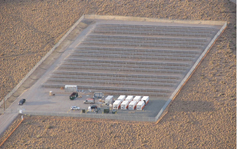
Technologies and practices to remove carbon from the atmosphere (‘negative emissions technologies’) will be challenging to scale-up. Efforts to incentivize or govern their scale-up globally risk failing if they miss the social challenges. This paper analyzes prospective challenges for negative emissions through examining how decarbonization practices are evolving in one particular landscape: the Imperial Valley in southeast California, a desert landscape engineered for industrial agriculture. Based on semi-structured interviews and site visits, this paper examines how community actors have received, participated in, imagined or contested new energy technologies and climate practices, and draws out takeaways for negative emissions policy.
Neuroimaging methods provide insight into the neural mechanisms underlying the decision process, characterizing choice at the individual level and, in a growing number of contexts, predicting national- and market-level behavior. This dual capacity to examine heterogeneity while forecasting aggregate choice is particularly beneficial to those studying environmental decision-making. To effectively reduce residential energy usage and foster other pro-environmental behaviors, policy-makers must understand the effects of information frames and behavioral nudges across individuals who hold a diverse array of attitudes toward the environment and face a broad range of barriers to action. This paper articulates the potential of neuroeconomic methods to aid environmental policy-makers interested in behavior change, especially those interested in closing the energy efficiency gap. Investigation into the roles of affect, eco-labeling and social norms will be discussed, as well as personal identity and climate change beliefs. Combining neuroimaging with behavioral economics experiments can inform the development of effective messaging, characterize the influence of individual differences on the decision process and aid in forecasting the efficacy of policy interventions at scale.
Most domestic environmental laws control the act of emitting pollutants into the environment. As a result, they do not apply squarely to negative emissions technologies (NETs) that remove ambient contaminants and do not emit pollutants themselves. As a result, current US environmental laws cannot readily govern a NET unless it has features that would typically allow regulation of a clean-up, such as ownership of the polluted resources, being at fault for polluting them or instituting projects to restore them. We should reinterpret such laws to focus on actual disruption or harm to the environment instead of using emission of pollutants as a proxy for ecological damage.
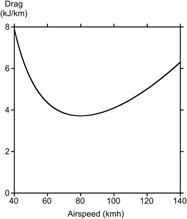
Aircraft that take off and land verticallywith rotors or horizontal propellers like drones use more energy than conventional aircraft whose lift is provided by wings. Drones with propellers are less efficient than helicopters with large rotors. The poor energy density of batteries compared to hydrocarbon fuels limits the range and endurance of the electrically powered aircraft. Although the ratio of the mass of payload and fuel (or battery) to the total aircraft mass for the proposed Amazon drone is not that different from the same ratio for a Boeing 747, the range and time in the air is very much less. In principle, a conventional aircraft powered by photovoltaic panels covering a wing with a span of 6 m could match the performance of the proposed Amazon drone.
Amazon has proposed delivering packages by an electrically powered drone capable of vertical take off and landing. By comparison with helicopters, the energy needed to move a 2.5 kg package is estimated to be more than 130 times the energy used in delivering the same package in a small delivery truck. By comparison, a conventional airplane with the same mass could, in principle, be powered by photovoltaic panels, covering the wings, and it would use an energy equivalent to about 3 times the energy used by a small delivery truck. Based on the performance of existing small helicopters, the analysis shows that an electrically powered air taxi would only be able to make journeys of 10 min or less. Vertical take-off and landing add to energy requirements, and drones using a large number of propellers are less efficient than helicopters. The major limitation, not surprisingly, is the poor energy density of batteries compared to liquid hydrocarbon fuels.
Material choices can affect both the environmental conditions and the human health impacts of buildings. Decision making can be improved through greater transparency and a broader view of materials impact.
With more architects and engineers recognising the impacts of global climate change, a renewed focus on carbon emissions from buildings is underway. Material choices in the built environment have significant impacts on both the building’s carbon emissions and the health of building occupants. As the operational carbon in buildings falls through improved efficiencies and design, the amount of embodied carbon released from the extraction, manufacturing, and transportation of materials and products is becoming relatively more significant. Through the selection of materials, designers can reduce the overall carbon emissions of buildings while maintaining high standards for occupant health.
During the past decade, solar power has experienced transformative price declines, enabling it to grow to supply 1% of U.S. and world electricity. Addressing grid integration challenges, increasing grid flexibility, and further reducing cost will enable even greater potential for solar as an electricity source.
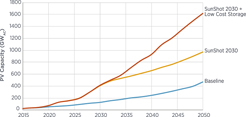
During the past decade, solar power has experienced transformative price declines, enabling it to become a viable electricity source that is supplying 1% of U.S. and world electricity. Further cost reductions are expected to enable substantially greater solar deployment, and new Department of Energy cost targets for utility-scale photovoltaics (PV) and concentrating solar thermal power are $0.03/kW h and $0.05/kW h by 2030, respectively. However, cost reductions are no longer the only significant challenge for PV—addressing grid integration challenges and increasing grid flexibility are critical as the penetration of PV electricity on the grid increases. The development of low cost energy storage is particularly synergistic with low cost PV, as cost declines in each technology are expected to support greater market opportunities for the other.
The paper presents a comprehensive overview of electrical and thermal energy storage technologies but will focus on mid-size energy storage technologies for demand charge avoidance in commercial and industrial applications.
Utilities bill customers not only on energy use but peak power use since transmission costs are a function of power and not energy. Energy storage (ES) can deliver value to utility customers by leveling building demand and reducing demand charges. With increasing distributed energy generation and greater building demand variability, utilities have raised demand charges and are even including them in residential electricity bills. This article will present a comprehensive overview of electrical and thermal energy storage technologies but will focus on mid-size energy storage technologies for demand charge avoidance in commercial and industrial applications. Of the ES technologies surveyed, lithium ion batteries deliver the highest value for demand charge reduction especially with systems that have larger power to energy ratios. Current lithium ion ES systems have payback periods below 5 years when deployed in markets with high demand charges.
Fusion energy is one of the options to contribute to the energy demand of future generations without adding to global warming. In this paper, we present the status of fusion energy research on the basis of magnetic confinement.
Fusion energy is one of the options to contribute to the energy demand of future generations without contributing to global warming. In this paper, we present the status of fusion energy research on the basis of magnetic confinement. In France, the first fusion reactor ITER is under construction. Its success will be measured on the expectation to deliver 500 MW thermal power—a factor of 10 above the power to maintain the energy producing process. ITER is based on the tokamak concept. In addition, Wendelstein 7-X, an ambitious stellarator, has recently started operation. Both confinement concepts—the tokamak and the stellarator—will be discussed along with general topics regarding fusion technology, operational safety, fusion waste, possible electricity costs, and roadmaps toward a fusion reactor as a power source.
We raise for debate and discussion what in our opinion is a growing mis-control and mis-protection of U.S. energy research. We outline the origin of this mis-control and mis-protection, and propose two guiding principles to mitigate them and instead nurture research: (1) focus on people, not projects; and (2) culturally insulate research from development, but not science from technology.
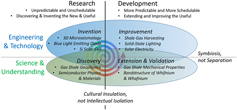
Energy research is critical to continuing advances in human productivity and welfare. In this Commentary, we raise for debate and discussion what in our view is a growing mis-control and mis-protection of U.S. energy research. This flawed approach originates in natural human tendencies exacerbated by an historical misunderstanding of research and development, science and technology, and the relationships between them. We outline the origin of the mis-control and mis-protection, and propose two guiding principles to mitigate them and instead nurture research: (i) focus on people, not projects; and (ii) culturally insulate research from development, but not science from technology. Our hope is to introduce these principles into the discourse now, so they can help guide policy changes in U.S. energy research and development that are currently being driven by powerful geopolitical winds.
Summary: Two foundational guiding principles are proposed to mitigate a growing mis-control and mis-protection of U.S. energy research, and instead to nurture it.
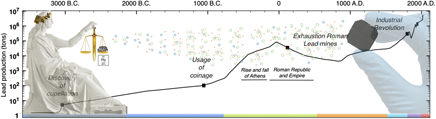
Analyzing the repetitive pattern of historical lead poisoning that to present-day has shaped our legislatorial systems regarding lead consumption, this work focuses on creating awareness and caution toward lead halide perovskite commercialization while concurrently pointing out considerations and ambiguity in policies and regulations.
Lead halide perovskites have caused a paradigm shift in state-of-the-art photovoltaic technology half a decade ago and have gained tremendous momentum ever since. Given their seemingly imminent commercialization, rigorous scrutiny regarding their potential environmental impact is becoming increasingly relevant. In light of the current need for sustainable energy resources, several start-up and spin-off companies have been established, initially promising modules on the market by the end of 2017. On the downside, lead representing approximately one third by weight of the absorber layer in such photovoltaic devices is enough reason to become wary about the potential environmental impact of their large-scale implementation. Whilst many have wondered where the acceptable boundaries lie regarding lead consumption, it remains a focal point in many discussions, as it seems almost unattainable to ban lead usage from our society. Currently listed as one of the ten chemicals of major health concern by the World Health Organization, the magnitude of misgivings expands even more as recent studies also demonstrate promising applications of lead halide perovskites in light emitting diodes, lasers, batteries, and photodetectors. Hence, there is no doubt that a discussion should be commenced on how to assess and handle the impact of lead in a new technology of such high potential.
By reflecting on the historical experience gained from anthropogenic lead poisoning that is still shaping our legislatorial systems at present-day, this work investigates and carefully scrutinizes current legislation that governs the exploitation of lead halide perovskites in optoelectronic applications. Analyzing the repetitive pattern of historical lead consumption, focus is extended on creating awareness and caution toward lead halide perovskite commercialization while concurrently pointing out considerations and ambiguity in policies and regulations. Ultimately, this work aims to initialize a discussion on “if” and “how” this burgeoning class of materials can enter the consumer market.
We offer a cross section of the numerous challenges andopportunities associated with the integration of large-scale batterystorage of renewable energy for the electric grid. Thesechallenges range beyond scientific and technical issues, topolicy issues, and even social challenges associated withthe transition to a more sustainable energylandscape.
The commissioning on 1 December 2017 of the Tesla-Neoen 100 MWlithium-ion grid support battery at Neoen’s Hornsdale wind farm inSouth Australia, at the time the world’s largest, has focused theattention of policy makers and energy professionals on the broaderprospects for renewable energy storage. An adequate and resilientinfrastructure for large-scale grid scale and grid-edge renewableenergy storage for electricity production and delivery, eitherlocalized or distributed, is a crucial requirement for transitioningto complete reliance on environmentally protective human energysystems. Its realization will require a strong synergy betweentechnological advances in variable renewable energy storage and thegovernance policies that promote and support them. We examine howexisting regulations and governance policies focusing on large-scalebatteries have responded to this challenge around the world. Weoffer suggestions for potential regulatory and governance reform toencourage investment in large-scale battery storage infrastructurefor renewable energy, enhance the strengths, and mitigate risks andweaknesses of battery systems, including facilitating thedevelopment of alternatives such as hybrid systems and eventuallythe uptake of hydrogen fuel and storage.
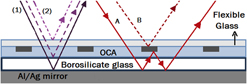
The review article describes the composition, working, and benefits of the electrodynamic screen (EDS) film, a self-cleaning surface technology that can be retrofitted onto solar and thermal energy collectors. The EDS film avoids the use of water and robotic parts that are the common cleaning techniques used in solar/thermal power plants and thus emerges as a viable and scalable solution to the soiling problem faced recurrently by these plants. The article summarizes different experiments conducted to improve the efficiency of the EDS film in terms of reflectivity and performance. Field test results are also included to underscore the success of the EDS film operation.
Dust build-up or soiling on thermal and solar energy collector surfaces is a major problem and its cleaning is a major issue for solar energy conversion. Here, a self-cleaning technology is described as a scalable and viable solution to clear the surfaces. EDS film technology does not require water, manual labor, or moving parts to function, and the power needed to operate EDS is almost negligible and can be derived from the harvesting device itself. The EDS films thereby help mitigate the energy loss caused by soiling in solar and thermal harvesting systems. An EDS film with reflective or transparent electrodes can be retrofitted on concentrated solar power mirrors and on photovoltaic (PV) panels to sustain and aid their unhindered reflection and absorption of incident sunlight, respectively. We report experiments and describe methods used to increase the reflectivity of the electrodes of an EDS film. Results obtained from lab test setups and field test units that define the functionality, reflectivity, and stability of the electrodes on the EDS films are also presented. Field test results that compare and report the performance of PV panel output current over long periods of testing, with and without EDS films are also discussed. Test results from 3-month outdoor testing, which demonstrate recovery back to >95% of the pristine system, after decrease to 80–90% before EDS film activation, are also shown.
We present and analyze three powerful long-term historical trends in the electrification of energy by free-fuel sources. These trends point toward a future in which energy is affordable, abundant, and efficiently deployed; with major economic, geo-political, and environmental benefits to humanity.
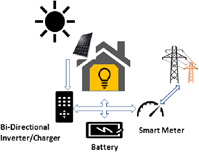
We present and analyze three powerful long-term historical trends in energy, particularly electrical energy, as well as the opportunities and challenges associated with these trends. The first trend is from a world containing a diversity of energy currencies to one whose predominant currency is electricity, driven by electricity’s transportability, exchangeability, and steadily decreasing cost. The second trend is from electricity generated from a diversity of sources to electricity generated predominantly by free-fuel sources, driven by their steadily decreasing cost and long-term abundance. These trends necessitate a just-emerging third trend: from a grid in which electricity is transported unidirectionally, traded at near-static prices, and consumed under direct human control; to a grid in which electricity is transported bidirectionally, traded at dynamic prices, and consumed under human-tailored artificial agential control. These trends point toward a future in which energy is not costly, scarce, or inefficiently deployed but instead is affordable, abundant, and efficiently deployed; with major economic, geo-political, and environmental benefits to humanity.
With the aim to overcome the problems of climatic changes and rising ocean levels, one option is to produce large-scale sustainable energy by nuclear fusion of hydrogen and other very light nuclei similar to the energy source of the sun. Sixty years of worldwide research for the ignition of the heavy hydrogen isotopes deuterium (D) and tritium (T) have come close to a breakthrough for ignition. The problem with the DT fusion is that generated neutrons are producing radioactive waste. One exception as the ideal clean fusion process – without neutron production – is the fusion of hydrogen (H) with the boron isotope 11B11 (B11). In this paper, we have mapped out our research based on recent experiments and simulations for a new energy source. We suggest how HB11 fusion for a reactor can be used instead of the DT option. We have mapped out our HB11 fusion in the following way: (i) The acceleration of a plasma block with a laser beam with the power and time duration of the order of 10 petawatts and one picosecond accordingly. (ii) A plasma confinement by a magnetic field of the order of a few kiloteslas created by a second laser beam with a pulse duration of a few nanoseconds (ns). (iii) The highly increased fusion of HB11 relative to present DT fusion is possible due to the alphas avalanche created in this process. (iv) The conversion of the output charged alpha particles directly to electricity. (v) To prove the above ideas, our simulations show for example that 14 milligram HB11 can produce 300 kWh energy if all achieved results are combined for the design of an absolutely clean power reactor producing low-cost energy.
This paper reviews previous studies on metamaterials and its application to wireless power transfer (WPT) technologies, as well as discussing about development opportunities and technical challenges for the contactless charging of electric vehicles (EVs). The EV establishes a bridge between sustainable energies and our daily transportation, especially the park-and-charge and move-and-charge for EVs have attracted increasing attentions from the academia and the industry. However, the metamaterials-based WPT has been nearly unexplored specifically for EVs by now. Accordingly, this paper gives an overview for the metamaterial-based WPT technologies, with emphasizes on enhancing efficiency, increasing distance, improving misalignment tolerance, and compacting size. From the perspective of EV wireless charging, this paper discusses about the breakthrough to current WPT technique bottlenecks and prospective EV charging scenarios by utilizing the left-handed material. Meanwhile, the technical issues to be addressed are also summarized in this paper, which aims to arouse emerging research topics for the future development of EV wireless charging systems.