We partner with a secure submission system to handle manuscript submissions.
Please note:
You will need an account for the submission system, which is separate to your Cambridge Core account. For login and submission support, please visit the
submission and support pages.
Please review this journal's author instructions, particularly the
preparing your materials
page, before submitting your manuscript.
Click Proceed to submission system to continue to our partner's website.
To save this undefined to your undefined account, please select one or more formats and confirm that you agree to abide by our usage policies. If this is the first time you used this feature, you will be asked to authorise Cambridge Core to connect with your undefined account.
Find out more about saving content to .
To send this article to your Kindle, first ensure no-reply@cambridge.org is added to your Approved Personal Document E-mail List under your Personal Document Settings on the Manage Your Content and Devices page of your Amazon account. Then enter the ‘name’ part of your Kindle email address below. Find out more about sending to your Kindle.
Find out more about saving to your Kindle.
Note you can select to save to either the @free.kindle.com or @kindle.com variations. ‘@free.kindle.com’ emails are free but can only be saved to your device when it is connected to wi-fi. ‘@kindle.com’ emails can be delivered even when you are not connected to wi-fi, but note that service fees apply.
While hunting scenes are well attested in Indian rock art, only two depictions of butchering are known from sites in India, and are very rare globally. Here, the authors present the discovery of a rare depiction of deer butchering, found at Maser in the Raisen District of Madhya Pradesh, India.
The discovery of eight biface lithic artefacts at Kashiwabara in Japan demonstrates the use of lithic reduction strategies, and suggests that mobile hunter-gatherers on the Japanese Islands were caching artefacts during the Incipient period of Jomon (c. 15–11 500 cal BP). This has parallels with hunter-gatherer behaviour in North America, and indicates that caching strategies may not have been unique to Palaeoindians.
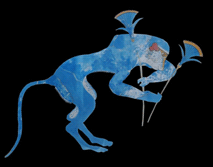
A review of Minoan frescoes and artefacts suggests interactions with two primate groups in sacred and leisure contexts, respectively. This demonstrates the early exchange of iconography and knowledge of monkeys between the Aegean and North Africa.
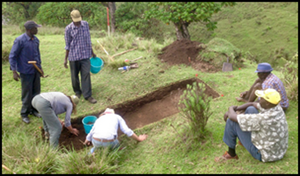
Drawing upon new evidence emerging from Kenya's Cherangani Hills, this research project furthers current understanding of the archaeology of Late Iron Age forest-dwelling communities in East Africa, focusing on a series of intriguing earthworks deep inside forest environments that are reminiscent of the ‘Sirikwa’ tradition.
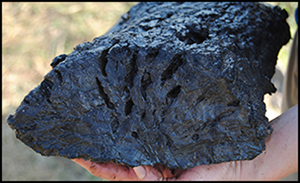
Excavation at nuraghe S'Urachi has yielded a wide range of archaeobotanical materials preserved through charring and waterlogging. This unusual evidence allows us to study the agricultural practices and diet of this community in the first millennium BC and to understand better the economic and cultural interactions between Sardinia and the wider Phoenician and Mediterranean world.
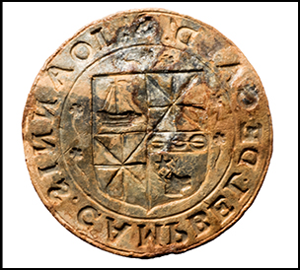
The great feud between the clans Campbell and MacDonald in the early seventeenth century AD was part of a power struggle for control of Islay, the seat of the Lord of the Isles, and encompassed wider political, economic and religious change in the region and beyond from the sixteenth century. The discovery of a seal matrix found during excavations at Dunyvaig Castle reveals the personal story of Sir John Campbell of Cawdor (1576–1642) in these broader political events.