Contents
Research Article
Irrational Numbers arising from Certain Differential Equations
-
- Published online by Cambridge University Press:
- 20 November 2018, pp. 117-120
-
- Article
-
- You have access
- Export citation
Triangularizing Solvable Groups of Unipotent Matrices over a Skew Field
-
- Published online by Cambridge University Press:
- 20 November 2018, pp. 121-123
-
- Article
-
- You have access
- Export citation
Numerical-Valued Fourier Transforms
-
- Published online by Cambridge University Press:
- 20 November 2018, pp. 125-127
-
- Article
-
- You have access
- Export citation
Approximation by Generalised Polynomials with Integral Coefficients
-
- Published online by Cambridge University Press:
- 20 November 2018, pp. 129-131
-
- Article
-
- You have access
- Export citation
-
Let C[0,1] be the space of all continuous real valued functions defined in [0,1] with the supremum norm
1
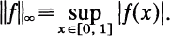
The subspace of C[0,1] consisting of all functions f(x) for which f(0) and f(l) are integers will be denoted by C 0[0,1], Let
 be a sequence of real numbers satisfying:
2

 be a sequence of real numbers satisfying:
On Numbers Analogous to the Carmichael Numbers
-
- Published online by Cambridge University Press:
- 20 November 2018, pp. 133-143
-
- Article
-
- You have access
- Export citation
-
A base a pseudoprime is an integer n such that
1

A Carmichael number is a composite integer n such that (1) is true for all a such that (a, n ) = l. It was shown by Carmichael [1] that, if n is a Carmichael number, then n is the product of k(>2) distinct primes P 1,P 2,P 3, … Pk , and P i-1|n-1(i=1, 2, 3, …, k).
Note on Burde's Rational Biquadratic Reciprocity Law
-
- Published online by Cambridge University Press:
- 20 November 2018, pp. 145-146
-
- Article
-
- You have access
- Export citation
-
A short proof is given of a biquadratic reciprocity law proved by Burde in 1969.
Let p and q be primes ≡1 (mod 4) such that (p | q) = (q | p) = 1. Then there are integers a, b, c, d with

Set

