Contents
Research Article
Sur la Structure Extremale de la Somme de Deux Convexes
-
- Published online by Cambridge University Press:
- 20 November 2018, pp. 1-7
-
- Article
-
- You have access
- Export citation
Stochastic Measure Diffusion Processes
-
- Published online by Cambridge University Press:
- 20 November 2018, pp. 129-138
-
- Article
-
- You have access
- Export citation
Brownian Motion—Wiener Process
-
- Published online by Cambridge University Press:
- 20 November 2018, pp. 257-279
-
- Article
-
- You have access
- Export citation
Central Limit Theorem for Absolute Deviations from the Sample Mean and Applications
-
- Published online by Cambridge University Press:
- 20 November 2018, pp. 391-396
-
- Article
-
- You have access
- Export citation
Geometric Inequalities for Plane Convex Bodies
-
- Published online by Cambridge University Press:
- 20 November 2018, pp. 9-16
-
- Article
-
- You have access
- Export citation
Permutations Related to Secant, Tangent and Eulerian Numbers
-
- Published online by Cambridge University Press:
- 20 November 2018, pp. 281-291
-
- Article
-
- You have access
- Export citation
-
It is well known that
1
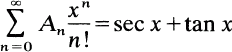
where An denotes the number of "up-down" or alternating permutations
2

of 1, 2, …, n. The numbers A2n and A2n+1 are known as the secant and tangent numbers respectively and A2n = (—l)"E2n , where En is the Euler number.
Semilinear Second Order Elliptic Oscillation
-
- Published online by Cambridge University Press:
- 20 November 2018, pp. 139-157
-
- Article
-
- You have access
- Export citation
-
These pages summarize recent progress on the oscillation problem for semilinear elliptic partial differential equations of the form
(1)


in unbounded domains Ω in n-dimensional Euclidean space R n. Our attention is restricted to the second order symmetric equation (1), and completeness is not attempted; the emphasis is on results obtained in the last five years.
On Localization at an Ideal
-
- Published online by Cambridge University Press:
- 20 November 2018, pp. 397-401
-
- Article
-
- You have access
- Export citation
Strongly Monotone Solutions of Retarded Differential Equations
-
- Published online by Cambridge University Press:
- 20 November 2018, pp. 403-412
-
- Article
-
- You have access
- Export citation
-
Let us consider the retarded differential equation
1

for which the following assumptions are made:
(i) p: [t0, ∞) → [0, ∞) is continuous and not identically zero for all large t.
(ii) σ [t0, ∞)→ ℝ is continuous, strictly increasing,

(iii) φ: ℝ → ℝ is continuous, non-decreasing and

Nonoscillatory Solutions of x(m) = (-1)mQ(t)x
-
- Published online by Cambridge University Press:
- 20 November 2018, pp. 17-21
-
- Article
-
- You have access
- Export citation
Hitting Time Distributions When Σ xk/dk Has a Smooth Density
-
- Published online by Cambridge University Press:
- 20 November 2018, pp. 293-298
-
- Article
-
- You have access
- Export citation
-
In this paper we construct the hitting time distributions for stochastic processes Xk , taking on values amongst the integers 0, 1, …, d -1 for which
 has a smooth polynomial density with respect to the Lebesgue measure on [0,1].
 has a smooth polynomial density with respect to the Lebesgue measure on [0,1].
Rings all of Whose Pierce Stalks are Local
-
- Published online by Cambridge University Press:
- 20 November 2018, pp. 159-164
-
- Article
-
- You have access
- Export citation
Some Extensions of Hardy's Inequality
-
- Published online by Cambridge University Press:
- 20 November 2018, pp. 165-169
-
- Article
-
- You have access
- Export citation
Self-Converse Tournaments
-
- Published online by Cambridge University Press:
- 20 November 2018, pp. 23-27
-
- Article
-
- You have access
- Export citation
-
Let T n denote a tournament with vertices labelled 1, …, n. Any undefined terms can be found in [5]. The converse of T n is the tournament
 obtained by reversing the orientation of all the arcs in T n. A tournament is called self-converse (s.c.) if
 . The transitive tournaments are examples of s.c. tournaments. In this paper we provide a structural characterization of s.c. tournaments and we also characterize the score vectors of s.c. tournaments.
 obtained by reversing the orientation of all the arcs in T
 . The transitive tournaments are examples of s.c. tournaments. In this paper we provide a structural characterization of s.c. tournaments and we also characterize the score vectors of s.c. tournaments.
Infrasequential Topological Algebras
-
- Published online by Cambridge University Press:
- 20 November 2018, pp. 413-418
-
- Article
-
- You have access
- Export citation
A Proof of an Identity for Multiplicative Functions
-
- Published online by Cambridge University Press:
- 20 November 2018, pp. 299-304
-
- Article
-
- You have access
- Export citation
Hamiltonian Cycles in Strong Products of Graphs
-
- Published online by Cambridge University Press:
- 20 November 2018, pp. 305-309
-
- Article
-
- You have access
- Export citation
-
Abstract. Let
 denote the graph
 (k times) where
 is the strong product of the two graphs G and H. In this paper we prove the conjecture of J. Zaks [3]: For every connected graph G with at least two vertices there exists an integer k = k(G) for which the graph
 is hamiltonian.
 denote the graph
 (k times) where
 is the strong product of the two graphs G and H. In this paper we prove the conjecture of J. Zaks [3]: For every connected graph G with at least two vertices there exists an integer k = k(G) for which the graph
 is hamiltonian.
Bounds on the Coarseness of the n-Cube
-
- Published online by Cambridge University Press:
- 20 November 2018, pp. 171-175
-
- Article
-
- You have access
- Export citation
-
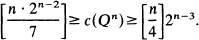
The coarseness, c(G), of a graph G is the maximum number of edge disjoint nonplanar subgraphs contained in G For the n-dimensional cube Q n we obtain the inequalities
A Commutattvity Theorem for Rings and Groups
-
- Published online by Cambridge University Press:
- 20 November 2018, pp. 419-423
-
- Article
-
- You have access
- Export citation
On Pseudo-Lucas Numbers of the form 2s2
-
- Published online by Cambridge University Press:
- 20 November 2018, pp. 29-34
-
- Article
-
- You have access
- Export citation
-
I [1] have shown that

are the only square pseudo-Lucas numbers in the set of pseudo-Lucas numbers defined by
1
In this paper, it is shown that none of the pseudo-Lucas numbers are of the form 2S 2, where S is an integer.
