Contents
Research Article
Open Disk Packings of a Disk
-
- Published online by Cambridge University Press:
- 20 November 2018, pp. 395-415
-
- Article
-
- You have access
- Export citation
On the Summability of a Class of Derived Fourier Series
-
- Published online by Cambridge University Press:
- 20 November 2018, pp. 79-84
-
- Article
-
- You have access
- Export citation
-
Let f(t) be integrable L(-π, π) and periodic with period 2 π and let
1.1

be its Fourier series. The series
1.2

obtained by term by term differentiation of the series (1.1) is called the derived Fourier series of f.

Some Interpolators Properties of Laguerre Polynomials*
-
- Published online by Cambridge University Press:
- 20 November 2018, pp. 559-571
-
- Article
-
- You have access
- Export citation
On Stability of Solutions of Certain Differential Equations of the Third Order
-
- Published online by Cambridge University Press:
- 20 November 2018, pp. 681-688
-
- Article
-
- You have access
- Export citation
-
The purpose of this paper is to obtain a set of sufficient conditions for “global asymptotic stability” of the trivial solution x = 0 of the differential equation
1.1

using a Lyapunov function which is substantially different from similar functions used in [2], [3] and [4], for similar differential equations. The functions f1, f2 and f3 are real - valued and are smooth enough to ensure the existence of the solutions of (1.1) on [0, ∞). The dot indicates differentiation with respect to t. We are taking a and b to be some positive parameters.
A Correspondence Principle for Momentum Operators
-
- Published online by Cambridge University Press:
- 20 November 2018, pp. 247-250
-
- Article
-
- You have access
- Export citation
Applying the Cauchy Integral
-
- Published online by Cambridge University Press:
- 20 November 2018, pp. 689-693
-
- Article
-
- You have access
- Export citation
-
It could perhaps be reasonably maintained that for most students of calculus the definite integral
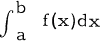 is in fact the Cauchy Integral. That is to say,
 where F is a primitive of f.
If done heuristically, the discussion of the Riemann integral serves two purposes. Firstly, it indicates that every continuous function has a primitive.
 is in fact the Cauchy Integral. That is to say,
 where F is a primitive of f.
An Integral for Cesàro Summable Series
-
- Published online by Cambridge University Press:
- 20 November 2018, pp. 85-97
-
- Article
-
- You have access
- Export citation
-
The pk+2 - integral of James [2] is strong enough to integrate a trigonometric series of the form
1.1

which is summable (C, k) in [0,2π], provided an extra condition holds involving the conjugate series
1.2

Considering series with coefficients o(n), Taylor [5] constructed an integral (the AP-integral) which successfully integrates series of the form (1. 1) which are Abel summable provided an extra condition holds involving the Abel means of the conjugate series (1.2).
Coincidence Producing Maps Onto Trees
-
- Published online by Cambridge University Press:
- 20 November 2018, pp. 417-423
-
- Article
-
- You have access
- Export citation
On Complex Homogeneous Manifolds
-
- Published online by Cambridge University Press:
- 20 November 2018, pp. 251-256
-
- Article
-
- You have access
- Export citation
On A Theorem of Niven
-
- Published online by Cambridge University Press:
- 20 November 2018, pp. 573-578
-
- Article
-
- You have access
- Export citation
-
In 1940, I. Niven [2] proved that the gaussian integer z = x + iy is the sumof two squares of gaussian integers if, and only if, y is even and not bothof 1/2x and 1/2y are rational odd integers. In this note we calculate thetotal number g2(z) of representations of z in this form.
1

where a, b, c, d are rational integers, if and only if
2


A Note on Fourier Transforms and Imbedding Theorems
-
- Published online by Cambridge University Press:
- 20 November 2018, pp. 695-698
-
- Article
-
- You have access
- Export citation
On General Polynomials
-
- Published online by Cambridge University Press:
- 20 November 2018, pp. 579-583
-
- Article
-
- You have access
- Export citation
-
Let d denote a fixed integer > 1 and let GF(q) denote the finite field ofq = pn elements. We consider q fixed ≥ A(d), where A(d) is a(large) constant depending only on d. Let
1

where each aiεGF(q). Let nr(r = 2, 3, …, d) denote thenumber of solutions in GF(q) of

for which x1, x2, …, xr are alldifferent.

Some Relationships between Filters*
-
- Published online by Cambridge University Press:
- 20 November 2018, pp. 257-260
-
- Article
-
- You have access
- Export citation
On Uniform Approximations of Abstract Functions
-
- Published online by Cambridge University Press:
- 20 November 2018, pp. 99-108
-
- Article
-
- You have access
- Export citation
Which Graphs have only Self-Converse Orientations?
-
- Published online by Cambridge University Press:
- 20 November 2018, pp. 425-429
-
- Article
-
- You have access
- Export citation
Note on Pointwise Convergence on the Choquet Boundary
-
- Published online by Cambridge University Press:
- 20 November 2018, pp. 109-113
-
- Article
-
- You have access
- Export citation
-
In [6] J. Rainwater obtained the following theorem.
Theorem. Let N be a normed linear space, {xn} a bounded sequence of elements in N and X ∊ N.
 for each extreme point f of the unit ball of N✶, then {xn} converges weakly to x.
Now let X be a compact Hausdorff space and H a linear subspace of C(X) (all real-valued continuous functions on X ) which separates the points of X and contains the constant functions. If x∊X, then MX(H) denotes the set of positive linear functionals μ on C(X) such that μ(h) = h(x) for all h in H.
 for each extreme point f of the unit ball of N
On a Theorem in the Generalised Fourier Transform
-
- Published online by Cambridge University Press:
- 20 November 2018, pp. 699-709
-
- Article
-
- You have access
- Export citation
-
The function
 was defined by G.N. Watson, [9, (i)]in 1931 by the integral relation∗

+ another term with μ and v interchanged;

 was defined by G.N. Watson, [9, (i)]in 1931 by the integral relation


The Injective Envelope of S-Sets
-
- Published online by Cambridge University Press:
- 20 November 2018, pp. 261-273
-
- Article
-
- You have access
- Export citation
On the Steiner Problem
-
- Published online by Cambridge University Press:
- 20 November 2018, pp. 431-450
-
- Article
-
- You have access
- Export citation
On Extremal Polynomials
-
- Published online by Cambridge University Press:
- 20 November 2018, pp. 585-594
-
- Article
-
- You have access
- Export citation