We partner with a secure submission system to handle manuscript submissions.
Please note:
You will need an account for the submission system, which is separate to your Cambridge Core account. For login and submission support, please visit the
submission and support pages.
Please review this journal's author instructions, particularly the
preparing your materials
page, before submitting your manuscript.
Click Proceed to submission system to continue to our partner's website.
To save this undefined to your undefined account, please select one or more formats and confirm that you agree to abide by our usage policies. If this is the first time you used this feature, you will be asked to authorise Cambridge Core to connect with your undefined account.
Find out more about saving content to .
To send this article to your Kindle, first ensure no-reply@cambridge.org is added to your Approved Personal Document E-mail List under your Personal Document Settings on the Manage Your Content and Devices page of your Amazon account. Then enter the ‘name’ part of your Kindle email address below. Find out more about sending to your Kindle.
Find out more about saving to your Kindle.
Note you can select to save to either the @free.kindle.com or @kindle.com variations. ‘@free.kindle.com’ emails are free but can only be saved to your device when it is connected to wi-fi. ‘@kindle.com’ emails can be delivered even when you are not connected to wi-fi, but note that service fees apply.
A few studies have analyzed the impact of COVID-19 pandemic on psychiatric Emergency Department (ED) accesses. The pandemic may indeed have influenced the phase of day accesses for patients with psychiatric disorders.
Objectives
Aim of this cross-sectional study is to analyze how COVID-19 weighed on psychiatric patients daily accesses over the course of three years.
Methods
Data on 219 patients were retrospectively collected from the ED in the Policlinico Tor Vergata, Rome. According to the stage of the day, accesses were divided into 4 groups: between 00:00 and 6:00; between 6:00 a.m. and 12:00 a.m.; between 12:00 a.m. and 18:00 p.m.; between 18:00 p.m. and 00:00 p.m.
Results
Performing a regression analysis, a relation was found between psychiatric symptoms, stage of the day admission and year. In 2019 the admissions seem to be homogeneously distributed, however during 2021 and 2020 the admissions rates have a delayed evening trend.
Conclusions
Despite the low number of accesses considered, the Covid-19 pandemic appears to exert an effect that still lasts in terms of both accesses and worsening or new onset of psychiatric symptoms. Measures taken to prevent the spread of infections may have affected access in the ED of patients in various ways. However, the trend of increasing evening accesses could be related to a saturation of territorial psychiatric services that work mainly until the afternoon. Thus, an enhancement of territorial psychiatric services seems highly necessary to cope with what could be an increase in psychopathology in patients without previous diagnosis.
Volume reductions in brain structures of patients with schizophrenia spectrum disorder (SSD) have repeatedly been found in voxel-based morphometry MRI studies. Hence, an underlying neurodegenerative etiological component of SSD is currently being discussed. In recent years, the imaging method of optical coherence tomography (OCT) has shown its potential in evaluating structural changes in the retina in patients with confirmed neurodegenerative disorders, providing a window into the brain.
Objectives
To evaluate potential differences in measurements of retinal layers between patients with schizophrenia spectrum disorder and healthy controls with OCT.
Methods
Twenty-six patients with schizophrenia or schizoaffective disorder and 23 age- and sex-matched healthy controls were examined with the Heidelberg Spectralis OCT system to derive a single-layer analysis of both retinas. The segmentation of retinal layers was manually corrected to minimize artifacts and software imprecisions.
Results
Compared to the control group, SSD patients showed reduced thickness and volume measurements for nearly all retinal layers, and these differences reached significance for macular volume, macular thickness, retinal nerve fiber layer (RNFL) and inner nucleiform layer (INL). Furthermore, a significant correlation between the duration of illness and the total volume of the RNFL was found.
Conclusions
Our OCT measurements demonstrate reduced single retinal layer thickness in patients with SSD. In the context of the MRI volume changes, our results provide further evidence that structural changes seen in the brain of patients are also observable in the retina, potentially allowing further insights into the different components of the nervous system that are altered in this highly etiologically complex disorder.
Electroconvulsive therapy (ECT) is proposed to exert an effect on white matter (WM) microstructure, but the limited power of previous studies made it difficult to highlight consistent patterns of change in diffusion metrics.
Objectives
We initiated a multi-site mega-analysis and sought to address whether changes in WM microstructure occur following ECT.
Methods
To this end, diffusion tensor imaging (DTI) data (n=58) from 4 different sites were harmonized before pooling them by using ComBat, a batch-effect correction tool that removes inter-site technical variability, preserves inter-site biological variability and maximizes statistical power. Downstream statistical analyses aimed to quantify changes in Fractional anisotropy (FA), Mean Diffusivity (MD), Radial Diffusivity (RD) and Axial Diffusivity (AD), by employing whole-brain, tract-based spatial statistics (TBSS).
Results
ECT increases FA in the right splenium of the corpus callosum and the left cortico-spinal tract. Both the left superior longitudinal fasciculus and the right inferior fronto-occipital fasciculus showed increases in AD. Increases in MD and RD could be observed in overlapping white matter structures of both hemispheres. Finally, responders showed significantly smaller FA values in the left forceps major and smaller AD values in the right uncinate fasciculus compared with non-responders.
Conclusions
This is the first and largest multi-site mega-analysis to demonstrate that ECT normalizes altered WM microstructure in important brain circuits that are implicated in the pathophysiology of depression. Furthermore, responders appear to present a more decreased WM integrity at baseline, which if replicated could serve as a biomarker for ECT response.
N-Methyl-D-Aspartate Receptor (NMDAR) hypofunction is hypothesised to underlie psychosis but this has not been tested early in illness.
Objectives
Our aim was to determine if NMDAR availability was lower in patients with first episode psychosis compared to healthy controls.
Methods
To address this, we studied 40 volunteers (21 patients with first episode psychosis and 19 matched healthy controls) using PET imaging with an NMDAR selective ligand, [18F]GE179, that binds to the ketamine binding site to index its distribution volume ratio (DVR) and volume of distribution (VT). Striatal glutamatergic indices (glutamate and Glx) were measured simultaneously using magnetic resonance spectroscopy imaging (1H-MRS).
Results
Hippocampal DVR, but not VT, was significantly lower in patients relative to controls (p=0.02, Cohen’s d=0.81; p=0.15, Cohen’s d=0.49), and negatively associated with total (rho=-0.47, p= 0.04), depressive (rho=-0.67, p=0.002), and general symptom severity (rho=-0.74, p<0.001). Exploratory analyses found no significant differences in other brain regions (anterior cingulate cortex, thalamus, striatum and temporal cortex). We found an inverse relationship between hippocampal NMDAR availability and striatal glutamate levels in people with first-episode psychosis (rho = -0.74, p <0.001) but not in healthy controls (rho = -0.22, p = 0.44).
Conclusions
These findings are consistent with the NMDAR hypofunction hypothesis and identify the hippocampus as a key locus for relative NMDAR hypofunction, although further studies should test specificity and causality.
Higher thalamic volume has been found in children with obsessive-compulsive disorder (OCD) and children with clinical-level symptoms within the general population (Boedhoe et al. 2017, Weeland et al. 2021a). Functionally distinct thalamic nuclei are an integral part of OCD-relevant brain circuitry.
Objectives
We aimed to study the thalamic nuclei volume in relation to subclinical and clinical OCD across different age ranges. Understanding the role of thalamic nuclei and their associated circuits in pediatric OCD could lead towards treatment strategies specifically targeting these circuits.
Methods
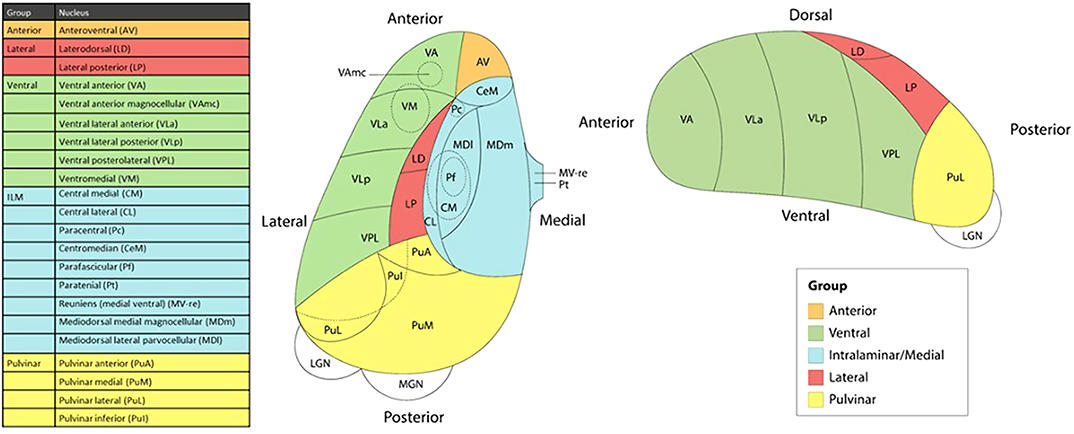
We studied the relationship between thalamic nuclei and obsessive-compulsive symptoms (OCS) in a large sample of school-aged children from the Generation R Study (N = 2500) (Weeland et al. 2021b). Using the data from the ENIGMA-OCD working group we conducted mega-analyses to study thalamic subregional volume in OCD across the lifespan in 2,649 OCD patients and 2,774 healthy controls across 29 sites (Weeland et al. 2021c). Thalamic nuclei were grouped into five subregions: anterior, ventral, intralaminar/medial, lateral and pulvinar (Figure 1).
Results
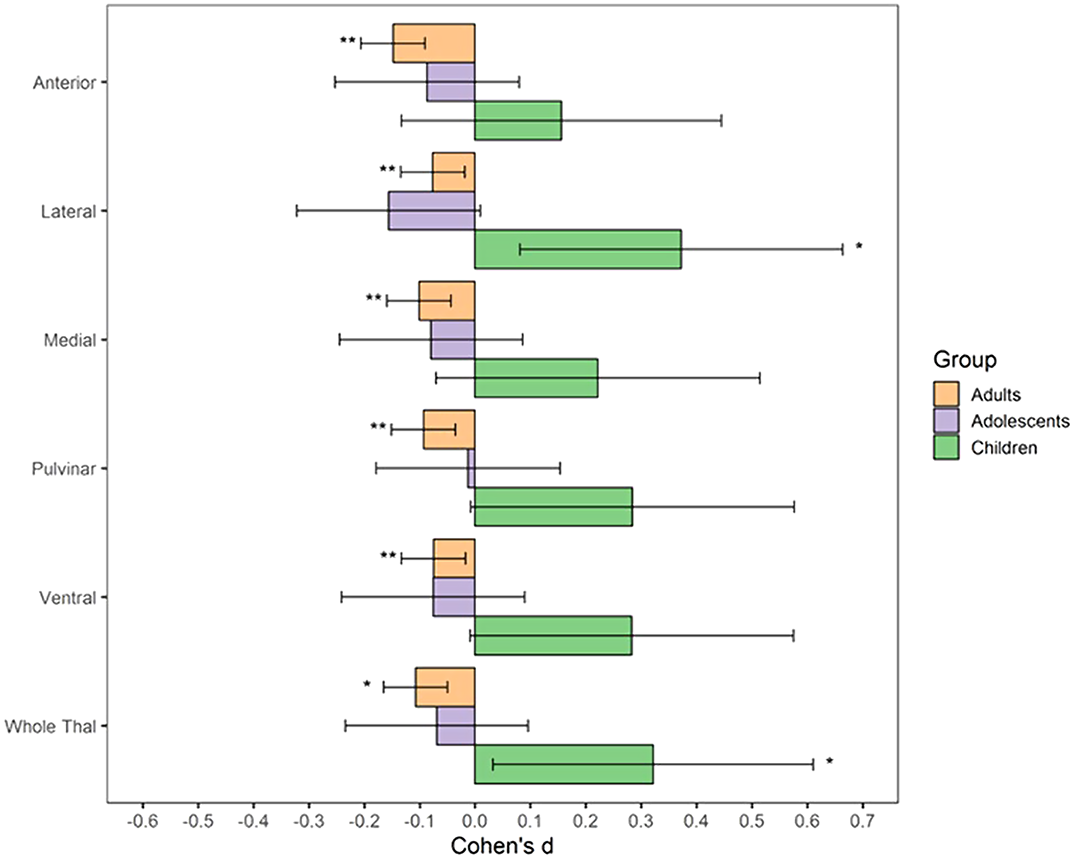
Both children with subclinical and clinical OCD compared with controls show increased volume across multiple thalamic subregions. Adult OCD patients have decreased volume across all subregions (Figure 2), which was mostly driven by medicated and adult-onset patients.
Conclusions
Our results suggests that OCD-related thalamic volume differences are global and not driven by particular subregions and that the direction of effects are driven by both age and medication status.
Obsessive-compulsive symptoms (OCS) have been described in many neurological disorders, including dementia. A meta-analysis by the authors (2021) reported a prevalence of OCS in dementia of approx. 35.8%, and a higher percentage in frontotemporal dementia (FTD) (46.7%). The literature also points that obsessive-compulsive disorder with late-life onset is rare, but those cases are frequently associated with neurologic injury, and some authors suggest a role of cognitive disfunction.
Objectives
Our main goal was to describe the neurobiologic and cognitive underpinnings of OCS in patients with dementia.
Methods
MEDLINE, CENTRAL and PsycNet databases were searched for articles about obsessive-compulsive symptoms in dementia. Search terms included “obsessive”, “compulsive”, “OCD”, “cognitive decline”, “cognitive dysfunction” and “dementia”. Titles, abstracts and full texts were screened independently by 2 reviewers.
Results
Correlations between dysfunction / lesions in various circuits in the context of dementia and OCS were found, such as (1) frontal regions (specially the orbitofrontal cortex) and anterior cingulate cortex (2) fronto-striatal-thalamic circuits (3) temporal structures; (4) cerebellar structures; (5) serotoninergic, dopaminergic, and cholinergic neurotransmission. A high proportion of studies concerned FTD. Regarding cognitive mechanisms, there is a focus on the importance subjective concerns about cognitive functioning, which could exacerbate obsessional beliefs and maladaptive responses to intrusions.
Conclusions
The main brain circuits implicated in dementia, specially FTD, and OCS are those involving frontal regions and the fronto-striatal-thalamic circuits, with areas such as the temporal and cerebellar structures algo being studied. The correlation between dysfunctional circuits in dementia and OCS could give us new hints about OCD and its treatment.
Early life stress (ELS) is a significant risk factor for major depressive disorder (MDD) in adults. Functional magnetic resonance imaging (fMRI) studies using face emotion processing paradigms have found altered blood-oxygen-level-dependent (BOLD) responses in the cortico-limbic network both in individuals exposed to ELS and in patients with MDD. Thus, early life stress may have a long-lasting impact on brain areas responsible for the processing of socio-affective cues.
Objectives
By applying a facial emotion recognition (FER) fMRI paradigm, we examined the long-term effect of childhood adversity on brain activity in MDD patients with and without ELS.
Methods
MDD patients without ELS (MDD, N=19), those with ELS (MDD+ELS, N=21), and healthy controls (HC, N=21) matched for age, sex, and intelligence quotient underwent fMRI scanning while performing a block design FER task with faces expressing negative emotions. The severity of ELS was assessed with the 28-item Childhood Trauma Questionnaire.
Results
Both MDD and MDD+ELS patients were slightly impaired in recognizing sad faces. Statistical analysis of brain activity found that MDD+ELS patients had significantly reduced negative BOLD responses in the right anterior paracingulate gyrus, subcallosal cortex accumbens compared to HCs. Moreover, the MDD+ELS group had a significantly increased negative BOLD signal in the right postcentral and precentral gyri relative to the HC group. MDD+ELS patients had reduced negative BOLD response in their anterior paracingulate gyrus compared to the MDD group.
Conclusions
Our results support that adult MDD patients with significant ELS are impaired in facial emotion recognition and they display functional alterations in the frontostriatal circuits.
Disclosure
This work was financially supported by the Hungarian Brain Research Program (2017-1.2.1-NKP-2017-00002)
Difficult working conditions could be associated with addictive behaviors.
Objectives
To examine the prospective associations between atypical working hours and substance use, including sugar and fat consumption.
Methods
In the CONSTANCES cohort, a total of 47,288 men and 53,324 women currently employed were included from 2012-2017 for tobacco and cannabis outcomes, and 35,647 and 39,767, respectively from 2012-2016 for alcohol and sugar and fat outcomes, and they were then followed up annually. Atypical working hours were self-reported at baseline and considered three different indicators: night shifts, weekend work and non-fixed working hours. Generalized linear models computed odds of substance use and sugar and fat consumption at follow-up according to baseline atypical working hours while adjusting for sociodemographic factors, baseline depression and baseline level of consumption.
Results
Night shifts increased significantly the odds of using tobacco in women (Odds ratios, ORs varying from 1.55 to 1.62) and cannabis in men (ORs varying from 1.80 to 1.95). Weekend work increased the odds of using tobacco (ORs varying from 1.51 to 1.67) and alcohol (OR of 1.16) in women. Non-fixed working hours increased the odds of using tobacco and alcohol in men and women (ORs varying from 1.15 to 1.19 and 1.12 to 1.14, respectively). Dose-dependent relationships were found for tobacco use in women (P for trends<0.0001). No significant associations were found for sugar and fat consumption.
Conclusions
The role of atypical working hours on substance use should be taken into account by public health policy makers and clinicians for information and prevention strategies, especially among women.
Disclosure
Nadine Hamieh was supported by a grant from “Direction de la recherche, des études, de l’évaluation et des statistiques”, DREES, Ministry of Labour, France.
Intellectual disability (ID) has been linked to substance use-related problems (SUP). However, previous research is limited by the small sample sizes, lack of general population comparison and have not accounted for familial confoundings. The role of other psychiatric comorbidities also remains unknown.
Objectives
To examine the risk of SUP in individuals with mild-ID and assess whether the associations depend on other psychiatric comorbidities, controlling for potential familial confounding.
Methods
Population-based cohort study of individuals born in Sweden 1973-2003. We identified 19,078 individuals with mild-ID, 953,900 reference individuals from the general population, and 20,722 full-siblings of individuals with mild-ID. Conditional logistic regression models were used to compare individuals with mild-ID to the general population and their full-siblings regarding the risk of SUP, including alcohol and substance use disorders, alcohol and substance-related somatic diseases, substance-related crime, and substance-related death. Analyses were repeated stratified by the presence of psychiatric comorbidities.
Results
Individuals with mild-ID had increased risks of any SUP (adjusted OR [95%CI]: 1.41 [1.35, 1.47]), compared to the general population, including alcohol-related somatic diseases (3.27 [1.92, 5.59]), alcohol (2.05 [1.91, 2.22]) and drug-use disorder (1.79 [1.69, 1.91]), and alcohol (1.36 [1.19, 1.49]) and drug-related crime (1.27 [1.19, 1.36]). The risk of SUP for individuals with mild ID was particularly elevated with comorbid mood (3.74 [3.47, 4.04]), anxiety (3.30 [3.09, 3.53]) and attention-deficit/hyperactivity disorders (2.61 [2.44, 2.80]). Increased risk of SUP remained significant when controlling for familial confounding.
Conclusions
Individuals with mild-ID, especially those with other psychiatric comorbidities, are at increased risks of SUP.
It remains unclear whether substance use in youth could be associated with a lower likelihood of accessing employment.
Objectives
To examine prospectively associations between substance use and the risk of not getting employed among young people.
Methods
From the French population-based CONSTANCES cohort, 2,873 students who never worked were included between 2012 and 2018 and followed-up for 2.7 years in average. Generalized estimating equations computed the odds of being unemployed versus employed according to substance use at baseline controlling for sociodemographic factors and depressive state. Tobacco use (smoking status and number of cigarettes), cannabis use frequency, and at-risk alcohol use according to the Alcohol Use Disorder Identification Test (total score >7) were introduced separately in the models.
Results
Tobacco use wasn’t significantly associated with employment. Cannabis use at least weekly, and at-risk alcohol use, were associated with increased odds of being unemployed (OR=1.85, 95%CI(1.29, 2.64)) and OR=1.34, 95%CI(1.04, 1.71)), respectively. Additional analyses on sub-scores of alcohol use suggested that the association was mainly driven by alcohol dependence rather than frequency of use.
Conclusions
Public health campaigns must target youth by advising them of the detrimental roles of regular cannabis use and at-risk alcohol use and their lower chances of getting employed.
The use of non-medical fentanyl and structurally related compounds has changed drastically over the last ten years. Community members working with individuals who use fentanyl intentionally currently struggle with the rapidly evolving drug markets and patterns of use, thereby failing to adapt treatment approaches and harm reduction strategies to individuals with severe opioid use disorder (OUD) and concurrent psychiatric disorders.
Objectives
This systematic review aims to evaluate intentional fentanyl among PWUD by summarizing demographic variance, concurrent disorders, and resulting patterns of use.
Methods
The search strategy in this study was developed with a combination of free text keywords and Mesh and non-Mesh keywords, and adapted with database-specific filters to Ovid MEDLINE, Embase, Web of Science, and PsychINFO (May 2021). The search results resulted in 4437 studies after de-duplication, of which 132 were selected for full-text review. A total of 42 articles were included in this review.
Results
It was found that individuals who use fentanyl intentionally were more likely to be young, male, and Caucasian. Individuals who intentionally use fentanyl were more commonly homeless, unemployed or working illegally, and live-in cities. Independent correlates of any purposeful fentanyl use included moderate/severe depression.
Conclusions
Individuals who intentionally use fentanyl are more likely to report injection drug use and polysubstance use, including cocaine use, heroin use, and methamphetamine use. Among PWUD, individuals who intentionally use fentanyl have the most severe substance use patterns, the most precarious living situation, and the most extensive overdose history and higher proportion of ever having a mental health diagnosis.
Video games are among the most popular leisure time activities. While majority of gamers play in a healthy manner, a minority shows gaming disorder (GD) symptoms and experiences detrimenting effects in their lives. Even though gaming time is moderately associated with gaming disorder symtoms, research suggests that it is not a reliable predictor by itself.
Objectives
The aim of the present study is to explore whether depression symptoms, self-esteem, attention-deficit/hyperactivity disorder (ADHD) and escapism (when gaming is motivated by the avoidance of everyday problems) moderate the association between gaming time and GD symptoms and whether this is different for boys and girls.
Methods
Data was collected from a representative sample of 5th grade students of public education institutions in Budapest. Sample selection was carried out by one-step sampling stratified for school type, district, and maintainer; the sampling unit was the class. Data from 2126 students were analyzed (49.3% male, mean age 10.7 years, SD=0.54).
Results
Depression symptoms moderated the association between gaming time and GD symtoms in both genders. For those with higher depression symptoms the aforementioned association was stronger. Furthermore, self-esteem had a moderator effect only among girls, while escapism motivation and ADHD only among boys. In these cases, the association between gaming time and GD symptoms was stronger among those with lower self-esteem, and higher ADHD and escapism scores.
Conclusions
Results suggest that gaming time is more strongly connected to GD symptoms in certain conditions, but its predictive value is limited even in those cases.
Disclosure
Funding statement: This study was supported by the Hungarian National Research, Development and Innovation Office (KKP126835). Orsolya Király was supported by the János Bolyai Research Scholarship of the Hungarian Academy of Sciences and by the ÚNKP-21-5
Recent reports suggest that Delta-8 THC use has surged during the past year. Although Delta-8 THC is believed to have relatively low psychoactive potency, its effects are not well characterized and the associated individual and public health risks are unknown.
Objectives
Identify patterns of Delta-8 THC use among US adult cannabis users and examine associations with sociodemographic characteristics and cannabis use-related variables.
Methods
We surveyed 4,349 US adult cannabis users recruited via online advertisements. We calculated frequencies of sociodemographic characteristics in past 30-day Delta-8 THC users. Odds ratios were used to indicate associations between sociodemographic characteristics and past 30-day Delta-8 THC use.
Results
Respondents aged 45–64 years were significantly more likely than other age groups to have used Delta-8 THC during the past 30 days (odds ratio=1.48, 95% CI 1.04, 2.11). Fifty-eight percent of the sample had heard of Delta-8 THC, 66.8% of which had first heard of it during the last year and 37.1% first heard of it via social media. The most common methods of consumption were vaping concentrates and edibles. We identified motivations for use of Delta-8 THC that potentially indicate a preference for legal options and/or a perception that Delta-8 THC has medical benefits.
Conclusions
This study provides a snapshot of patterns of Delta-8 THC use among US adult cannabis users. Further investigation of the perceived medical benefits of Delta-8 THC, the role of social media in promoting its use, and the effectiveness of restrictions on Delta-8 THC products would provide further information to guide public health policy regarding Delta-8 THC.
Several studies describe that the coexistence of a substance use disorder with another psychiatric condition or “dual disorder” (DD) is associated with a worse evolution at all levels, including a greater burden of medical illnesses and greater mortality.
Objectives
To describe the presence of DD and related factors in patients admitted to a General Hospital that required assessment by a psychiatry service.
Methods
A descriptive study that includes patients admitted to the Hospital del Mar in Barcelona for all medical-surgical reasons and attended by the specific addiction psychiatry consultation service between January 2016 and October 2021. Sociodemographic and clinical data are collected including the history of consumption and the diagnosis of dual disorder. Chi-square test was used for comparison between groups.
Results
The sample was 1796 patients (Women: 345. Mean age: 50.3 years; SD: 12.6). 43.7% of the sample presented DD, with axis 1 disorders being the most frequent. There was an association of DD to factors as: being woman (54 vs 41.2% p <0.001), HIV positive serologies (54 vs 42.7% p <0.001), being homeless (49 vs 31.7% p <0.001) and cocaine consumption compared to other substances (53.4 vs 39.8% p <0.001).
Conclusions
In our sample, almost half of patients had DD. The representation of women was significantly lower, however they presented a higher proportion of DD. In this study we describe an association of DD with other biopsychosocial problems, and further studies are necessary to determine in which sense they are related and optimize patient care.
To ensure rational drug use, there is a need to continuously monitor the use of ADHD medication among children and adolescents.
Objectives
To describe the use of ADHD medication among Danish children and adolescents from 2010-2020.
Methods
Using the Danish national healthcare registries, we extracted data on filled prescriptions of ADHD medication (including methylphenidate, atomoxetine, guanfacine, dexamphetamine, and lisdexamphetamine) among children (age 6-12 years) and adolescents (age 13-17 years) between 2010-2020. We examined the annual incidence rate and prevalence proportion of ADHD drug use, and the proportion of children and adolescents having an ADHD diagnosis when initiating ADHD medication.
Results
From 2010-2020, the incidence followed a u-shaped trend with an incidence rate of 4.9/1,000 children and 4.4/1,000 adolescents in 2010, decreasing to 3.2/1,000 children and 3.0/1,000 adolescents in 2013, and rising to 4.9/1,000 children and 4.8/1,000 adolescents in 2020. The prevalence for children showed a similar trend, shifting from 17/1,000 in 2010, to 15/1,000 in 2016, and peaking at 19/1,000 children in 2020. However, among adolescents the prevalence increased steadily from 19/1,000 in 2010 to 29/1,000 in 2020. 67% of children and 53% of adolescents initiating ADHD medication had an ADHD diagnosis.
Conclusions
After an initial decline in incidence rates of ADHD medication use among Danish children and adolescents, there has been a rise in use the last five years. The same trend applied for the prevalence among children, whereas the prevalence among adolescents increased steadily over the entire period. More than half of children and adolescents initiating ADHD medication were diagnosed with ADHD.
Hypnotic drug use in children and adolescents is widely debated.
Objectives
To describe use of hypnotic drugs (melatonin, z-drugs and sedating antihistamines) among 5-24-year-old Scandinavians during 2012 to 2018.
Methods
Aggregate-level data from public data sources in Sweden, Norway and Denmark. We calculated annual prevalence (users/1000 inhabitants) stratified by sex, age group and country. Quantity of use (Defined Daily Dose (DDD)/user/day) was estimated for Norway and Denmark.
Results
Melatonin was most frequently used, with an increase from 2012 to 2018 in all countries. Sweden presented the highest rise (7 to 25/1,000) compared to Denmark (6 to 12/1,000) and Norway (10 to 20/1,000). The increase was strongest for females and 15-24-year-olds. Melatonin use was twice as common for males under age 15 years, and slightly more common for females thereafter. The annual prevalence of sedating antihistamine use doubled from 7 to 13/1,000 in Sweden, whereas it was more stable in Norway and Denmark, reaching 8/1,000 and 3/1,000, respectively. Z-drug use decreased in all countries, lowering to 4/1,000 in Sweden and Norway in 2018 and 2/1,000 in Denmark. The quantity of hypnotic use in Norway and Denmark was 1 DDD/user/day for melatonin, as compared to 0.1-0.3 for z-drugs and antihistamines.
Conclusions
There is an increasing use of melatonin and sedating antihistamines among Scandinavian children, adolescents and young adults. The increase is more pronounced in Sweden compared to Norway and Denmark. This Scandinavian discrepancy could reflect variation in frequency of sleep problems or national variation in clinical practice or health care access.
Inhibition capabilities have been shown to be a strong predictor of social and educational life outcomes (Mischel & Ebbesen, 1970; Shoda et al., 1990). Inhibition capabilities have an enormous impact on attention and impulsivity (Bari & Robbins, 2013). These two executive functions are associated with numerous psychiatric disorders but are not well understood in terms of white matter (WM) connectivity (Puiu et al., 2018). Novel techniques and statistical approaches in neuroimaging bring us closer to a biologically sustained model.
Objectives
This research aims to: 1) identify WM connections associated with attention/impulsivity performance and 2) characterize the differences in WM microstructure associated with the variation of the performance.
Methods
157 children (GESTE cohort, 8-12 years, 27 Dx ADHD, 2 Dx ASD) with b=1500mm2/s, 2mm isotropic dMRI acquisitions were included. Tractography was performed with TractoFlow pipeline (Theaud et al., 2020). Dimensionality reduction of diffusion metrics yielded two components : microstructural complexity (DTI Metrics, AFD & NuFo) and axonal density (AFD_fixel) (Chamberland et al., 2019). Attention/impulsivity were evaluated with the CPT3. Multivariate linear regression was performed in python.
Results
Lower microstructural complexity was associated with poorer attentional performance on regions of the parietal lobe to the occipital gyrus (P-O, p=0.044, R2=0.14, Figure 1.) and the Broadman’s area 8 to area 6 (SF8-SF6, p=0.002, R2=0.12, Figure 1.). Lower axonal density was associated with a less impulsive pattern on SF8-SF6 (p=0.001, R2=0.13, Figure 1.). Results remained significant when removing children with an ADHD or ASD diagnosis.
Conclusions
We identified underlying difference in WM microstructure that may be associated with the variation in attention/impulsivity performance in school-aged children.
Mental disorders and ADHD in people with ID are higher than in the general population.Clinicians may be reluctant to diagnose ADHD in people with ID. They could be denied effective treatment.
Objectives
The purpose of the study was to ascertain antipsychotic use in people with ID before and after the a diagnosis of ADHD.
Methods
A casenote review in an ID service for aduls with ADHD. Data collected on psychotropic use before and after the diagnosis.
Results
Forty-eight aduls with ADHD-ID were identified. 38(79%) were male and 10(21%) were female. 19 to 58 years of age. Four (8%) had mild ID; 44 (92%) had moderate to severe ID. 27(56%) had anxiety, mood disorders or psychosis. 21(44%) had ADHD only. Challenging behaviour was reported in 24 (50%) of cases. Thirty-three (68%) used psychotropic medication prior to the diagnosis of ADHD and after the diagnosis. Post-diagnosis, 20(60%) continued to use antipsychotic medication indicating the elimiation of antipsychotic use in 13(40%) of people. The level of medication use remained the same in spite of the reduction of antipsychotic medication. The diagnoses of challenging behaviour was not affected by the reduction in antipsychotic medication and the increase in ADHD medication use.
Conclusions
The use of antipsychotic medication in people with intellectual disaibilities and ADHD is high. ADHD should be considered when people present wtih challenging behaviour. ADHD medication can be effective in treating ADHD-ID and can lead to a significant reduction in the use of antipsychotic medication.
Exposure to early life stress (ELS) strongly predicts prevalent, impairing, and costly psychiatric illness throughout life including mental disorders. The reason, some individuals are more vulnerable to ELS whereas others remain resilient, is poorly understood. There is a need for better understanding of early biological changes triggered by ELS with responsibility to negative outcomes in health.
Objectives
We stratify animals after ELS according to corticosterone levels. [1] Re-challenging the animals to a second stressor, chronic social defeat (CSD) [2], in adulthood was performed to understand individual trajectories depending on corticosterone exposure during early adverse conditions.
Methods
We performed ELS as previously reported [1]. Behavior of mothers was observed during ELS. Correlation between level of corticosterone and behavior observed in dams. ELS animals were exposed to a second stress in adulthood. A battery of tests for different behavioral domains was performed. Behavioral analyses was combined with assessment of litter HPA system reactivity and observed behavior in dams.
Results
Stress dams where significantly higher in number of sorties over whole observation period, time dams spent outside the nest differed. We could correlate the number of sorties on p3 with corticosterone plasma level at p9. Control dams spent significantly more time outside in 9pm recordings than stress animals. We could show reduced interaction with social juvenile targets in sociability test for CSD mice. Light dark transition was significantly higher for control mice compared to CSD but lower for control vs ELS animals.
Conclusions
Behavior in dams during ELS correlates with chronic stress coping mechanisms in offspring’s adulthood.
Autism spectrum disorder (ASD) is a group of life-long neurodevelopmental conditions characterized by impairments in social communication and by the presence of restricted interests or repetitive behaviors. Several genetic, biological, and psychosocial mechanisms seem to play a role in the etiopathogenesis of this complex condition. Preclinical models have shown a potential role of oxytocin (OT), a peptide involved in a complex range of behaviors, including those related to social interaction. Therefore, it has been hypothesized that OT levels may be decreased in autistic people.
Objectives
To compare the levels of peripheral OT in autistic people vs neurotypical controls.
Methods
We performed a systematic literature search up to December 2020 according to PRISMA guidelines. Final inclusion was based on the following criteria: (1) Participants: individuals of any age diagnosed with ASD; (2) Controls: neurotypical subjects; (3) Outcome: OT levels, either in saliva, serum, or plasma; (4) Study design: case-control. Meta-analyses are ongoing.
Results
We finally included 21 papers published between 1998 and 2020, of which one recruited adult participants. Fifteen studies measured OT levels in plasma, 4 in saliva, and 2 in serum. Preliminary meta-analyses on 10 studies showed that peripheral OT levels in autistic individuals are reduced compared to neurotypical controls, with sex differences.
Conclusions
Our preliminary findings show that peripheral OT might represent a potential biomarker for ASD. Future well-conducted case-control studies with a detailed phenotypical characterization of samples are needed to understand the role of OT deficits in specific subgroups.