We partner with a secure submission system to handle manuscript submissions.
Please note:
You will need an account for the submission system, which is separate to your Cambridge Core account. For login and submission support, please visit the
submission and support pages.
Please review this journal's author instructions, particularly the
preparing your materials
page, before submitting your manuscript.
Click Proceed to submission system to continue to our partner's website.
To save this undefined to your undefined account, please select one or more formats and confirm that you agree to abide by our usage policies. If this is the first time you used this feature, you will be asked to authorise Cambridge Core to connect with your undefined account.
Find out more about saving content to .
To send this article to your Kindle, first ensure no-reply@cambridge.org is added to your Approved Personal Document E-mail List under your Personal Document Settings on the Manage Your Content and Devices page of your Amazon account. Then enter the ‘name’ part of your Kindle email address below. Find out more about sending to your Kindle.
Find out more about saving to your Kindle.
Note you can select to save to either the @free.kindle.com or @kindle.com variations. ‘@free.kindle.com’ emails are free but can only be saved to your device when it is connected to wi-fi. ‘@kindle.com’ emails can be delivered even when you are not connected to wi-fi, but note that service fees apply.
Major depressive disorder (MDD) often involves immune dysregulation with high peripheral levels of pro-inflammatory cytokines that might have an impact on the clinical course and treatment response. Moreover, MDD patients show brain volume changes and white matter (WM) alterations that are already existing in the early stage of illness.
Objectives
The aim of the present review is to elucidate the association between inflammation and WM integrity and its impact on the pathophysiology and progression of MDD as well as the role of possible novel biomarkers of treatment response to improve MDD prevention and treatment strategies.
Methods
We conducted an electronic literature search of PubMed on studies that examined the role of inflammation in depression and that focused on WM integrity and pro-inflammatory cytokines as predictors of antidepressant response.
Results
There is evidence for central effects of peripheral inflammation which could activate microglia which, in turn, might trigger a cascade of inflammatory processes leading to neurotransmitter imbalances. Numerous studies indicated that both altered levels of peripheral inflammatory markers, particularly TNF-α, IL-6, and CRP as well as WM integrity might predict antidepressant treatment outcome.
Conclusions
Despite mounting evidence on the impact of the immune system on WM microstructure, no study has yet addressed the interaction between the two factors in influencing antidepressant response. There is a lack of reproducible biomarkers predicting treatment response on an individual basis. The availability of such biomarkers would enable more efficient and personalized treatments with a faster treatment response and better prevention of treatment resistance.
The long-lasting effects of trauma on mental health and the cumulative effect during the lifetime is one of the great interest in research and applied psychology. However, the effect of cumulative trauma in combination with cognitive biases, such as cognitive rigidity (“all-or-nothing” thinking pattern), on the severity of depression has not been tested yet.
Objectives
The aim of this study was to analyse these variables, while considering for differential gender effects on a sample of patients with the diagnosis of depressive disorder.
Methods
A total sample of 177 patients (137 women) were assessed using the Cumulative Trauma Scale. Cognitive rigidity was measured with the Repertory Grid Technique and severity of depressive symptoms with the Beck Depression Inventory.
Results
indicated that high levels of cognitive rigidity and high frequency of perceived negative cumulative trauma predicted depressive symptoms; while high frequency of perceived positive trauma did not predict depressive symptoms. Moreover, gender did not explain variability of depression, and its interaction with frequency of perceived trauma was not significant.
Conclusions
Overall, traumatic cumulative trauma frequency and its negative appraisal are key to the understanding the severity of depression but also cognitive rigidity seemed to be a relevant factor to consider. Thus, these results highlight the need to focus on traumatic and cognitive aspects to increase the efficacy of psychological interventions in depression.
The efficacy and of current antidepressants is insufficient. Esketamine, a new antidepressant administered by nasal route, is available since 2019 in the management of resistant characterized depressive episodes.
Objectives
To evaluate the response profile of patients to Esketamine in our institution specialized in mental health.
Methods
We included all patients treated with Esketamine in our institution from November 2019 to September 2021.We collected efficacy and tolerability data using the computerized and paper patient record, prescribing support software, and nursing staff.
Results
Since 2019, we treated 11 patients with Esketamine in combination with an antidepressant as indicated in the MA. Two patients from the 11 were found resistant, three discontinued due to adverse events, four relapsed after an initial clinical response, and two were still ongoing at the end of the study.
Conclusions
Despite an initial and rapid response, our study does not highlight any long-term efficacy of Esketamine in resistant depressive disorder. This highlight the fact that its use in the acute phase of depression or earlier in the management strategy could be a good alternative because of its rapid onset of action. Esketamine was initiated as a last line therapy, which may represent a bias in the evaluation of the molecule, as the later the depression is treated, the lower the response rate. The place of Esketamine in the therapeutic strategy is not yet well determined due to a lack of hindsight, and the question of pharmacological tolerance and dependence on the molecule arises.
Major Depressive Disorder (MDD) is a common mood disorder diagnosed in children and adolescents. Bright light therapy has been effective for seasonal affective disorders, however its role in the treatment of MDD is under studied.
Objectives
Our objective is to evaluate if bright light therapy (BLT) is a practical approach in treating Child and Adolescents having MDD.
Methods
We performed an extensive literature search using a wide range of MeSH terms in PubMed, PubMed Central and Google Scholar. We reviewed the literature for studies (published between 1983-2021) assessing the efficacy of BLT in the treatment of MDD in children and adolescents.
Results
The final search results yielded 8 randomized clinical trials and 1 case report from 1983 to 2021. BLT showed a superior effect in children and adolescents with MDD compared to the control group in the majority of the randomized trials and a case report. In six studies BLT showed good effect, however in a study by Magnusson et al. and Sonis et al., found a milder degree of improvement in depression symptoms when compared to the control group. In the majority of the studies, patients’ age range was 7 years 18 and in most of the studies, patients were not on antidepressants.
Conclusions
The use of BLT in children and adolescents suffering from MDD can be a promising alternative method of biological treatment, which is effective as well as well tolerated. Future long-term studies on large sample size are necessary in this field.
Vitamin D helps in the regulation of neurotransmission and neuroprotection. Therefore, vitamin D deficiency might lead to inactivated receptors and may result in depression.
Objectives
The study assessed the relation between serum level of vitamin D and severity, symptomatology and cognitive dysfunction of Major Depressive Disorder (MDD) in a sample of Egyptian patients.
Methods
Serum levels of 25-hydroxy vitamin D were measured with electro-chemiluminescence binding assay technique in 75 patients with major depressive disorder. Patients were recruited from Psychiatry and Addiction Hospital, Kasr Al Ainy outpatient clinic. Patients were subjected to the Structured Clinical Interview for DSM-IV Axis I Disorders(SCID), Hamilton depression scale (HAM-D), Mini-mental status examination (MMSE), Wechsler memory subtests (story A and paired associate learning test (PALT) ), Benton visual retention test (BVRT) and Trail B test.
Results
94.6% of patients had vitamin D deficiency. There was no significant correlation between levels of vitamin D and severity of depression according to HAM-D. Regarding symptoms of depression, there was a statistically significant difference between levels of vitamin D, being more deficient with decreased concentration, decreased libido and menstrual disturbances. There was no statistically significant correlation between level of vitamin D and cognitive functions tests.
Conclusions
Major depressive disorder was associated with vitamin D deficiency but no statistical significant correlation could be established neither between levels of vitamin D and severity of depression nor between levels of vitamin D and cognitive dysfunction. Vitamin D level was statistically correlated with decreased concentration, decreased libido and menstrual disturbances.
Major depressive disorder is a prevalent disease, in which one third of sufferers do not respond to antidepressants. Disturbance in the equilibrium of the gut microbiota has been involved in the pathophysiology of depression. Probiotics have the potential to be well-tolerated and cost-efficient treatment options. However, there is not enough evidence of the impact of probiotics in patients suffering MDD.
Objectives
The main aim of this revision is to assess those clinical trials that evaluate the effects of probiotic treatment in patients with MDD.
Methods
A research on the database PubMed has been done with the terms “probiotics” AND “MDD” and then a systematic review has been performed between those articles meeting the inclusion criteria.
Results
Most of the articles show an improvement of the depressive symptoms in outpatients with mild to moderate TDM after 8 week treatment with probiotics added to the treatment as usual. Those articles assessing inpatients with severe MDD after four weeks of treatment with probiotics added to their usual treatment didn’t find statistical differences between treatment with probiotics from placebo.
Conclusions
Probiotics may be useful in mild to moderate symptoms of MDD after 8 weeks treatment added to usual treatment. Nevertheless, further investigation in larger samples during more time. Moreover, a new awareness is raised about gut- brain axis pathophysiology, that would lead the path to new investigations about this relation so as the difference in depressed patients microbiome, tryptophan metabolism and the pro- inflammatory compounds that reach the blood-brain barrier because of the “leaky-gut”.
The National Institute of Mental Health describe the main symptoms of bipolar disorder as alternating episodes of high and low mood. Changes in energy levels, sleep patterns, ability to focus, and other features can dramatically impact a person’s behavior, work, relationships, and other aspects of life. Most people experience mood changes at some time, but those related to bipolar disorder are more intense than regular mood changes, and other symptoms can occur. Some people experience psychosis, which can include delusions, hallucinations, and paranoia.
Objectives
Through this research we aimed to identify all the special features of bipolar depression which will help the clinical psychiatrists in easier diagnosis and management of the disorder.
Methods
Literature review (PubMed)
Results
Clinical Characteristics in Favour of Bipolarity in Depression: psychomotor retardation, history of psychotic depression,history of psychotic depression shortly after giving childbirth, frequent catatonic symptoms, atypical depressive features, severe impairment in interpersonal relationships, inconsistency in business life, history of hypomania, mania or mixed episode,common feeling of numbness and anhedonia; less common sadness and feelings of guilt, mood instability, volatility in temperament, frequent change in affect, daydreaming during the episode and daily life, short duration of depression <3 months, poor cognitive functions during depressive episode, generally similar symptom severity during the day and night etc.
Conclusions
This leads to misdiagnosis of bipolar depression as unipolar depression, which in turn leads to delayed correct diagnosis and treatment and may severely affect the patient’s entire life.
Treatment-resistant depression (TRD) presents a significant challenge in clinical practice. Besides antidepressant medications, neurostimulation methods (ECT, rTMS) and ketamine are viable treatment options.
Objectives
To objectively evaluate the real effectiveness of treatments within interventional psychiatry in the maintenance treatment.
Methods
The extensive literature review of the efficacy of ECT, rTMS, and ketamine treatment in the maintenance treatment of TRD and the author’s clinical and research experience will be included in this presentation.
Results
Neurostimulation, particularly ECT and ketamine treatment are usually effective treatments for patients with TRD. However, both of these treatment modalities do not have sustained benefits and after discontinuing treatment the majority of patients relapse. Ketamine has rapid therapeutic effects in depression, but these effects are short-lived. Continuation treatment with ketamine in the form of intranasal ketamine is an option, but concerns over cognitive impairment, interstitial cystitis and significant addictive potential related to longer use of ketamine are significant limiting factors. rTMS is a first-line treatment option for patients with TRD according to the Canadian CANMAT guidelines. However, the majority of patients may relapse following the course of rTMS. The maintenance rTMS over an extended period of time is usually not feasible as it may significantly affect the waiting time for newly referred patients. Portable TMS machine for home use would be an alternative option for a limited number of patients.
Conclusions
Maintenance treatment has been always a big clinical challenge in mood disorder psychiatry. Only well-established multimodal treatment is a realistic option for getting long-term benefits in treating patients with TRD.
Working Alliance is defined as the emotional bond and the agreement on therapeutic goals and tasks between patients and therapists. Despite the wide use of the construct of working alliance in research on psychotherapy, few studies have investigated the role of working alliance in influencing adherence to pharmacotherapy, and drug attitude. A deeper knowledge of the interplay between working alliance and drug attitude could help to challenge low adherence to psychopharmacological treatments in Major Depressive Disorder.
Objectives
This study aimed to investigate the relationship between working alliance and drug attitude in patients with Major Depressive Disorder.
Methods
27 patients admitted in the Psychiatric Unit of Careggi with diagnosis of Major Depressive Disorders were enrolled. Working Alliance Inventory - patient version (WAI-P), Drug Attitude Inventory (DAI) and Beliefs about Medicines (BMQ) were administered. Pearson’s correlation was used to assess relationships between variables.
Results
A significant positive correlation was detected between BMQ total scores, DAI total scores and WAI-P task, bond, and goal subscales.
Correlations between WAI-P subscales and BMQ and DAI total scores
DAI total scores
BMQ total scores
r
p
r
p
WAI-P task
0.551
0.003
0.613
0.001
WAI-P bond
0.430
0.001
0.560
0.004
WAI-P goal
0.621
0.001
0.603
0.002
Conclusions
Such preliminary data suggest a relationship between Working Alliance and drug attitude. This could contribute to provide tools to challenge low adherence to psychopharmacological treatments in patients with Major Depressive Disorder.
Because of different phenotypic approaches, data on depression prevalence is variable and controversial.
Objectives
The aim was to evaluate the prevalence of different depressive phenotypes in the Russian population (DSM criteria based self-report vs HADS questionnaire).
Methods
The data was from the on-line survey of 5116 clients of Genotek Ltd. (males - 50,63%; age - Me=35 (Q1-30;Q3-42)). The survey included questions on sex, age; sel-report adapted major depression DSM-V criteria questionnaire and depression subscale of Hospital Anxiety and Depression Scale.
Results
DSM Major depression phenotype was detected with moderately-high prevalence - 17,67% (N=904). The DSM depression phenotype was more prevalent in women (22,72%) compared to men (12,74%, p<0,001) and in younger individuals (10,18%, p<0,001) compared to older ones (6,16%). HADS-D clinical depression phenotype (score>11) was less prevalent (3,4%) with no significant differences for sex and age. However, the prevalence increased with HADS-D subclinical scores (>8) - 14,97%. HADS-D scores were higher in DSM-depression phenotype individuals compared to ones without DSM phenotype (5,822(3,221) vs. 3,893(2,437), p< 0,001).
Conclusions
Our results showed variable prevalence of depression with different phenotypic approaches. The differences could be associated with the clinical severity of the symptoms and the life-time evaluation in DSM compared to only current symptoms for HADS. Further research is needed to understand the factors affecting the phenotyping approaches and providing the most effective and valid instrument for depression prevalence evaluation. Research is supported by an RSF grant №20-15-00132.
Disclosure
Research is supported by an RSF grant №20-15-00132.
Attachment style is defined by the American Psychological Association as “the characteristic way people relate to others in the context of intimate relationships”. Four attachment styles have been described: secure, fearful, preoccupied, and dismissing. While the effect of attachment style on psychotherapy was widely investigated, few studies have investigated its role in determining beliefs about medicines in patients with Major Depressive Disorder (MDD).
Objectives
This study aimed to investigate the relationship between preoccupied attachment style and beliefs about medicines in patients with MDD.
Methods
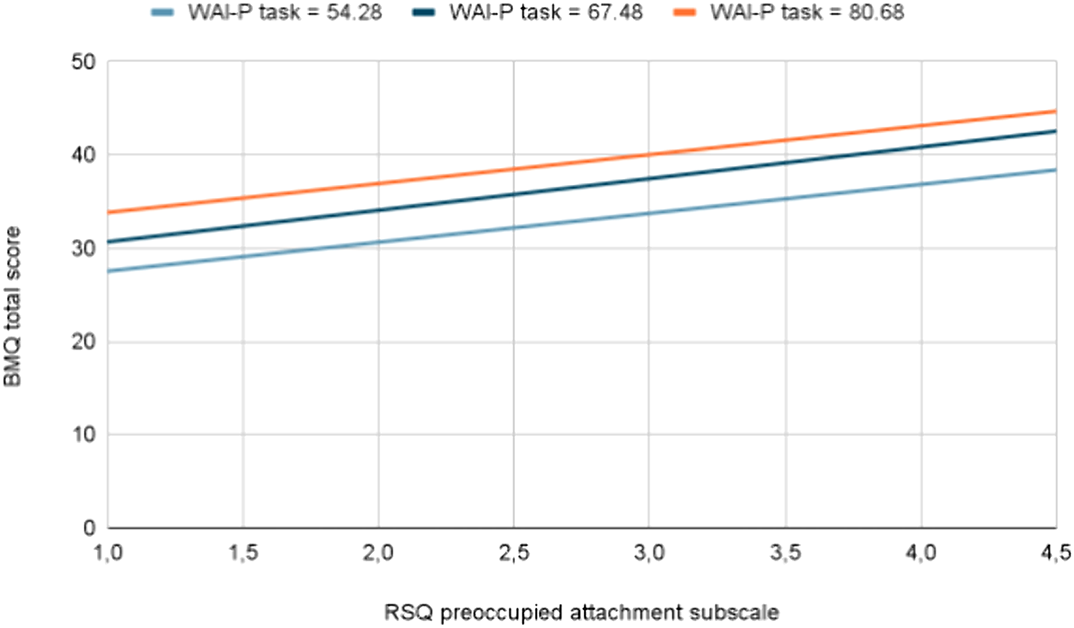
27 patients admitted in the Psychiatric Unit of Careggi with diagnosis of MDD were enrolled. Working Alliance Inventory - patient version (WAI-P), Relationship Style Questionnaire (RSQ) and Beliefs about Medicines Questionnaire (BMQ) were administered. An ANCOVA model having BMQ total score as dependent variable and age, sex, RSQ preoccupied attachment subscale and WAI-P task subscale as predictors was considered. WAI-P task was intended to assess the role of agreement on therapeutic choices.
Results
The overall model was significant (F(4,22)=9,571, P<0.001) and explained 66.8% of BMQ total score variance (R2=0.668). Both RSQ preoccupied attachment subscale (B=3.331, t(22)=3.907, p=0.001) and WAI-P task subscale (B=0.238, t(22)=4.565, p<0.001) showed a positive correlation with BMQ total scores. RSQ preoccupied attachment subscale explained 44.6% of variance of BMQ total scores (partial η2=0.446), WAI-P task explained 52.3% of variance of BMQ total scores (partial η2= 0.523). Age (B=0.059, t(22)=1.588, p=0.129) and sex (F(1,22)=0.035, p=0.854) had no significant effect.
Conclusions
These preliminary data suggest a possible influence of preoccupied attachment style on beliefs about medicines in patients with MDD.
Mood disorders (MDs) are associated with somatic diseases and tend to aggregate in families. But there are limited studies on the risk of somatic diseases for relatives of patients with MDs.
Objectives
To assess whether a patient’s mood disorder diagnosis is associated with a family history of somatic disorders.
Methods
This cross-sectional family study included 36 patients with MDs (66.7% women; age - 32 [11.2] years) and 68 of their relatives, and 23 healthy individuals (56,5% women; age - 30.5 [6.9] years) and 53 of their relatives. A Pearson’s χ2 test was used to compare the frequencies of family history of somatic disease. Logistic regression models were used to determine the independent association of MDs, after adjusting for the effects of sex, age, with binary characteristics.
Results
Individuals with and without MDs had different frequencies of family history of cardiovascular (66,7% vs. 43,4%; p=0,03) and endocrinological diseases (47,2% vs. 39,1%; p=0,04). There were no statistically significant differences in the frequency of family history of gastrointestinal, pulmonary, urogenital and musculoskeletal diseases (p>0,05). Logistic regression revealed that MDs diagnosis in patients was a risk factor for cardiovascular (p=0.03, OR=3.5) and endocrinological disease (p=0.04, OR=3.7) in their relatives.
Conclusions
MDs are associated with the aggregation of somatic diseases in families. Future research is needed to clarify the biological reasons for this association.
Inhibitory control is the executive function component which underlies one’s ability to maintain goal-directed behavior by inhibiting prepotent responses or ignoring irrelevant information. Recent models suggest that impaired inhibition of negative information may contribute to depressive symptoms, and that this association is mediated by rumination. However, the exact nature of this association, particularly in non-clinical samples, is unclear.
Objectives
The goal of the current study was to assess the relationship between inhibitory control over emotional vs. non-emotional information, rumination and depressive symptoms.
Methods
A non-clinical sample of 119 participants (mean age: 36.44 ± 11.74) with various levels of depressive symptoms completed three variations of a Go/No-Go task online; two of the task variations required either explicit or implicit processing of emotional expressions, and a third variation contained no emotional expressions (i.e., neutral condition).
Results
We found that for participants who reported elevated depressive symptoms, their inhibitory control ability was reduced for all three task variations, relative to less depressed participants. However, for the task variation that required implicit emotion processing (rather than explicit), depressive symptoms were associated with inhibitory deficits for sad and neutral, but not for happy facial expressions. An exploratory analysis showed that the relationship between inhibition and depressive symptoms occurs in part through trait rumination for all three tasks, regardless of emotional content.
Conclusions
Collectively, these results indicate that elevated depressive symptoms are associated with both a general inhibitory control deficit, as well as affective interference from negative emotions, with implications for the assessment and treatment of mood disorders.
Patients with major depressive disorder (MDD) with acute suicidal ideation or behavior (MDSI) require immediate intervention. Though oral antidepressants can be effective at reducing depressive symptoms, they can take 4–6 weeks to reach full effect.
Objectives
This study aimed to identify unmet needs in the treatment of patients with MDSI, specifically exploring the potential clinical benefits of rapid reduction of depressive symptoms.
Methods
A Delphi panel consisting of practicing psychiatrists (n=12) from the US, Canada and EU was conducted between December 2020–June 2021. Panelists were screened to ensure they had sufficient experience with managing patients with MDD and MDSI. Panelists completed two survey rounds, and a virtual consensus meeting.
Results
This research confirmed current unmet needs in the treatment of patients with MDSI.
Hopelessness, functional impairment, worsening of MDD symptoms, recurrent hospitalization and higher risk of suicide attempt were considered as key consequences of the slow onset of action of oral antidepressants.
Treatment with rapid acting antidepressant was anticipated by panelists to provide short-term benefit such as rapid reduction of core MDD symptoms which may contribute to shorter hospital stays and improved patient engagement/compliance, allowing for earlier interventions and improved patient outcomes. For long-term benefits, panelists agreed that improved daily functioning and increased trust/confidence in treatment options, constitute key benefits of rapid-acting treatments
Conclusions
There is need for rapid-acting treatments which may help address key unmet needs and provide clinically meaningful benefits driven by the rapid relief of depressive symptoms particularly in patients with MDSI.
Disclosure
SB, ED, KJ, MO’H, QZ, MM, MH, SR, JA and DZ are employees of Janssen and hold stock in Johnson & Johnson Inc. AN is currently employed by Neurocrine Biosciences Inc. RP is an employee of Adelphi Values PROVE hired by Janssen.
Immigrants encounter difficulties in adapting to social life due to cultural and socioeconomic differences which consequently causes psychological and physical problems. Previous studies demonstrated that diabetes, high blood pressure, dyslipidemia and obesity are associated with psychological disorders.
Objectives
This study aimed to investigate the frequency of depression and anxiety and to observe associated sociodemographic among endocrine patients treated at NPZR.
Methods
190 Turkish psychiatric patients with at least one endocrine disorder (45.3% were male (n=86) and 54.7% were female (n=104) between the ages of 30-65, who participated in group therapy session at the NPZR, were recruited. Demographics, prevalence of depression and anxiety as well as current psychological conditions of participants were analyzed through Beck Depression Inventory, Hamilton Anxiety Scale, SCL-90-R and Personal Information Form.
Results
The findings of our study demonstrated that prevalence of depression, anxiety and sleep disorders among Turkish immigrant patients with endocrine diseases is high. The mean scores of depression and anxiety were 31.39 and 32.61 respectively. The most common endocrine diseases were hypertension (51.6 %) and obesity (49.6%). Analysis of our research showed that there was no significant gender differences in the anxiety and depression scores. However, there was a significant relationship between income of participants and prevalence of anxiety, depression (p<0.05).
Conclusions
The results of this research suggest that anxiety and depression disorders are highly prevalent among Turkish psychiatric patients with endocrine diseases Using the data of this study, the frequency of endocrine diseases among immigrant psychiatric patients can be analyzed.
Despite the growing number of studies focusing on the relationship between appearance evaluation and personality dimension, few is known regarding the role of depressive personality and malignant self-regard regarding this topic. Moreover, there is a lack of studies investigating the potential role of both clarity of self-concept and interpersonal exclusion feelings in this relationship.
Objectives
To extend the knowledge regarding the relationships between malignant self-regard, depressive personality and appearance evaluation.
Methods
We administered to a very large sample of adults a battery of self-report questionnaires including the subscale Appearance evaluation of the Multidimensional Body-Self Relations Questionnaire, the Self Concept Clarity Scale, the Malignant self-regard questionnaire, the Depressive Personality Inventory and the Core Exclusion Schema Questionnaire.
Results
We found that depressive personality negatively predicted positive appearance evaluation whereas the inverse pattern of results was obtained in relation to malignant self-regard. Moreover, we found that both poor self-concept clarity and feelings of exclusion mediate the relationship between malignant self-regard and positive appearance evaluation.
Conclusions
Depressive personality and Malignant self-regard appear to be promising construct to investigate in the field of eating disorders.
TRD is a highly disabling condition, often responsible for chronic clinical course, high number of relapses and elevated suicide risk. Intranasal esketamine is currently the only available pharmacological therapy specifically indicated for TRD, as add-on therapy to antidepressant treatment with SSRI or SNRI.
Objectives
The purpose of the study was to evaluate the safety and efficacy of intranasal esketamine associated with CBT in a complex clinical case of TRD, over a six-month follow-up.
Methods
A 67-year-old patient with TRD was selected for treatment with intranasal esketamine+CBT as add-on to antidepressant therapy. Before each treatment session the HAM-D rating scale was administered. The patient underwent weekly CBT sessions throughout the 6 months follow-up. The effect on physical well-being and social functioning was evaluated by means of Short-Form-Health-Survey-36.
Results
After the first two administrations of intranasal esketamine the total score on HAM-D decreased by 10 units (from 26 to 16). After 6 weeks of treatment decreased from 26 to 12 with the disappearance of suicidal ideation present at T0. After 6 months the total HAM-D score decreased from 26 to 8. Treatment was well tolerated, with mild adverse effects, confined to the first two hours post-administration. In particular, mild sedation, dizziness, slight transient blood pressure rise were reported, never required medical intervention and resolved spontaneously during the observation period.
Conclusions
Intranasal esketamine add-on therapy + CBT was an effective and safe treatment allowing to achieve and maintain symptomatic remission in a complex case of TRD, improving quality of life, social functioning, and reducing suicidal ideation over a six-month follow-up.
In Denmark, about 14% of patients with depression develops treatment resistant depression (TRD) in the following year after the first hospital contact. Possible explanations for TRD include lack of adequate clinical effect of pharmacological treatment and reluctance to treatment due to unacceptable side effects. Cold water swimming (CWS), also known as winter swimming, describes swimming outdoors - mainly during the winter season in cold to ice-cold water on a regular basis. Many winter swimmers believe that exposure to cold water is beneficial for their health. However, evidence of health effects have been anecdotal or based on results from small sample-size studies. The availably studies report that winter swimming abolishes general tiredness, boosts self-esteem and improves mood and/or general well-being.
Objectives
To test if it is possible for patients with depression to participate in two weekly sessions of CWS and to measure the effects of CWS on general well-being and depression among the participating patients.
Methods
All psychiatric in- and outpatients from the department of psychiatry at Little Belt Hospital, Vejle with a diagnose of depression are eligible for inclusion. CWS-sessions will include a dip in an inlet - and if desired a short swim for a few minutes – depending on individual preferences. The CWS sessions will take place at the local inlet at a recreational area with sauna and changing facilities available.
Results
The study starts in October 2021 and we expect to have results by April 2022.
The study of attitudes towards death in patients of different nosological groups is an urgent task for modern science. It becomes especially relevant when working with adolescents with severe depressive disorder: for many of them, thoughts about death in various forms become the main reason for contacting specialists and the most subjectively painful symptom.
Objectives
Revealing the characteristics of attitudes towards death in adolescents with severe depressive disorder.
Methods
The study involved 135 adolescents (12-17 years old) with depressive disorder, hospitalized in a psychiatric hospital. Participants completed the following methods: Hamilton Rating Scale for Depression, Columbia Suicide Severity Rating Scale, Death Attitude Profile-Revised, Fear of Personal Death Scale, Death Anxiety Scale.
Results
The severity of depressive symptoms is significantly associated with the “death-as-flight” scale (r = 0.639, p = 0.000). The values on the “fear of death” scale are positively associated with the indicators on the scales “death anxiety” (r = 0.432 p = 0.025), “consequences of death for the individual” (r = 0.658, p = 0.000), “transcendental consequences of death” (r = 0.711, p = 0.000), “the consequences of my death for loved ones” (r = 0.496, p = 0.008). Indicators on the “active death search” scale are negatively associated with indicators on the “neutral acceptance of death” scale (r = -0.503, p = 0.007) and positively with the “fear of oblivion” scale (r = 0.432, p = 0.024).
Conclusions
The attitude towards death in adolescents with depressive disorder has a pronounced specificity, which can become one of the targets of psychotherapeutic work.
Cardiovascular events (CVE) are infrequent adverse effects in patients receiving electroconvulsive therapy (ECT). Nonetheless, it constitutes a threat for patient’s life and may compromise continuing ECT.
Objectives
To describe a case of acute-onset atrial fibrillation under combined therapy with ECT and venlafaxine.
Methods
We present a 76-year-old man diagnosed of delusional disorder and without any previous CVE, who was hospitalized in our acute psychiatric unit by major depressive episode with psychotic symptoms resistant to pharmacological treatment (valproic-acid 100mg/d, haloperidol 6mg/d, venlafaxine 300mg/d). ECT was initiated presenting atrial fibrillation after first session of ECT, requiring amiodarone and anticoagulant treatment for stabilization. Second session of ECT was delayed for three-weeks, worsening the psychiatric symptoms. Haloperidol was discontinued initiating lurasidone with better cardiovascular profile.
Results
CVE occur in 2% of the patients receiving ECT, being acute arrhythmia the most frequent one. Among them, few cases of atrial fibrillation (AF) under ECT have been reported. It has been hypothesised that initial vagal response followed by catecholamine surge secondary to ECT could facilitate the development of AF. In addition venlafaxine, an antidepressant drug, may also predispose to arrhythmia in high-risk individuals. High doses of venlafaxine (>300mg/d) combined with ECT have been related with an increment of CVE.
Conclusions
Although clinically effective for the treatment of major depression disorder, combined therapy of ECT and venlafaxine could precipitate the start of a CVE in genetically susceptible individuals. Therefore, identify and clarify potential risk factors other than previous history of CVE is critical to reduce morbidity and mortality in these patients.