We partner with a secure submission system to handle manuscript submissions.
Please note:
You will need an account for the submission system, which is separate to your Cambridge Core account. For login and submission support, please visit the
submission and support pages.
Please review this journal's author instructions, particularly the
preparing your materials
page, before submitting your manuscript.
Click Proceed to submission system to continue to our partner's website.
To save this undefined to your undefined account, please select one or more formats and confirm that you agree to abide by our usage policies. If this is the first time you used this feature, you will be asked to authorise Cambridge Core to connect with your undefined account.
Find out more about saving content to .
To send this article to your Kindle, first ensure no-reply@cambridge.org is added to your Approved Personal Document E-mail List under your Personal Document Settings on the Manage Your Content and Devices page of your Amazon account. Then enter the ‘name’ part of your Kindle email address below. Find out more about sending to your Kindle.
Find out more about saving to your Kindle.
Note you can select to save to either the @free.kindle.com or @kindle.com variations. ‘@free.kindle.com’ emails are free but can only be saved to your device when it is connected to wi-fi. ‘@kindle.com’ emails can be delivered even when you are not connected to wi-fi, but note that service fees apply.
Academic procrastination is a specific sub-type of procrastination, assessing the tendency to delay academic tasks in connection with the preparation of courses or exams.
Objectives
To determine the impact of academic procrastination on studies and academic performances and identify associated factors.
Methods
We conducted a cross-sectional descriptive study in students from three different universities: a medical school, a law school and an engineering school. Socio-demographic, clinical and academic data were collected. Procrastination was assessed using the Academic Procrastination Scale. We further administered the Short Version of the impulsive behaviour scale, the Satisfaction with Life Scale, the Perfectionism scale, and the one item Self-esteem Scale.
Results
Our sample consisted of 1019 students. The mean age was 22 ± 2.25 years, and 62% were females. About one third of study participants used tobacco or alcohol, and 10% used drugs (cannabis or others). We found a significant positive correlation between procrastination and academic failure (r=0.22 p= 0.00) and a negative correlation with academic success (r= -0.27 p=0.00). Multivariate regression analysis showed the following risk factors for academic procrastination: alcohol consumption (ORa= 1.74 [1.14; 2.67]), study field (with reference to medicine: law ORa= 1.50 [1.02; 2.19], engineering studies ORa= 2.01 [1.34; 3.02]), and impulsivity (ORa= 2.11 [1.55; 2.86]).
Conclusions
Academic procrastination has a negative impact on academic achievement and performance. This impact appears to differ depending on the field of study. It also seems closely related to impulsiveness and alcohol use. Our findings might contribute to find new ways of helping students to improve academic performance.
Procrastination is a common phenomenon among students, defined by the tendency to delay tasks. Procrastination can have a negative impact not only on academic achievement but also on other areas of life.
Objectives
To assess students’ level of procrastination and associated psychological factors
Methods
We conducted a cross-sectional descriptive study in students from three different universities: a medical school, a law school and an engineering school. Socio-demographic, clinical and academic data were collected. Procrastination was assessed using the Pure Procrastination Scale. We further administered the Short Version of the impulsive behaviour scale, the Satisfaction with Life Scale, the Perfectionism scale, and the one item Self-esteem Scale.
Results
Our sample consisted of 1019 students. The mean age was 22 ± 2.25 years, 62% were females and almost 70% were single. The mean level of procrastination was 35 ± 10.42. Procrastination was positively correlated with impulsivity (r= 0.37 p=0.00) and perfectionism (r= 1.32 p= 0.00) and negatively correlated with life satisfaction (r= -0.22 p = 0.00) and self-esteem (r= - 0.12 p= 0.00).
Conclusions
The level of procrastination was relatively high in our study population. As described in the literature, impulsiveness and perfectionism were closely and positively related to procrastination, whereas higher procrastination scores were linked to lower quality of life and self-esteem. Our findings underline the need for counselling services with a focus on procrastination for university students.
Mental health challenges are common among medical students. Data shows that that they are less likely to use mental health services, regardless of experiencing frequent mental health issues.
Objectives
The aim of our study was to evaluate first year medical students’ mental health state and attitude to seeking help.
Methods
The target group was the first year medical students in Vilnius University. Anonymous questionnaire created by authors was used to evaluate socio-demographic data, self-perceived emotional state level, attitudes and accessibility to mental health services. The study involved 152 first year medical students: 97 of them were local and 55 international students.
Results
The majority of students (71.7%) reported that their studies negatively impacted their emotional condition. 14.5% of all students thought that they needed a consultation by mental health specialist, but decided not to seek help. 11.2% of students reported having used psychotropic drugs which had not been officially prescribed by a psychiatrist. 18.4% of all students thought that seeing a mental health specialist could negatively affect their future career as a doctor. 30.9% of students reported that they had used alcohol to improve their emotional state, 11.2% of students had used cannabis, 4.6% of students had used other drugs (e.g. LSD, amphetamine, cocaine) for this purpose.
Conclusions
1. Majority first year medical students think that the begining of studies have negative impact on their emotional well-being. 2. A large number of medical students unwilling to see mental health specialist. 3. Significant number of students use psychoactive substances to improve their emotional state.
Emotional Intelligence (EI) involves a set of emotional skills (attention, clarity, and emotional regulation) for the effective use of emotional information (Mayer & Salovey, 1997). The lack of emotional skills has been associated with multiple disruptive emotional phenomena, such as hopelessness. It has been observed that EI can be a predictor of hopelessness in older adults, in such a way that we can consider that the development of EI could be a relevant resource for promoting mental health in older adults.
Objectives
Implement an EI intervention to reduce levels of hopelessness.
Methods
The sample consisted of 123 healthy older adults from Valencia (Spain), randomly distributed into two groups: treatment group (N = 57) and control group (N = 68), aged between 60 and 84 years, with a mean age of 67.62 years (SD = 6.43). Of these, 54.4% were women and the remaining 45.6% were men. The Trait Meta-Mood Sclae 24 (TMMS 24) was applied to assess EI and the Beck Hopelessness Scale (BHS) to assess hopelessness.
Results
Significant differences are observed in the treatment group after the intervention (F1, 123 = 19.86; p < 0.001, h2 = 0.142), with a decrease in scores (T1= 4.72; T2=2.88). For the control group, the effects were not significant (F1, 123 = 1.06; p = 0.305, h2 = 0,009).
Conclusions
The efficacy of the intervention in EI to manage emotional states is evidenced, reducing levels of hopelessness thanks to training in adaptive emotional processing and emotional management skills.
Polycystic ovary syndrome (PCOS) is one of the most common endocrine disorders in women, which in addition to medical aspects also affects the dimensions of women’s mental health such as stress.
Objectives
The present study was conducted to determine The effect of online motivational interviewing on stress management in infertile women with PCOS
Methods
This randomized controlled clinical trial enrolled 60 Infertile Women with PCOS from the city of Sari-Iran in 2020. Participants were assigned to MI and control groups using block randomization. The intervention group received 5 weekly of MI online via WhatsApp. While the control group received only routine care. Stress management scores in these individuals were measured using health-promoting lifestyle profile II questionnaire (HPLP II) before and after the intervention. Then, the data were entered into the SPSS software, version 25 and were analyzed using descriptive statistics, chi-square test, t-test, and repeated measures analysis of variance.
Results
No significant difference was observed between the two groups before the intervention mean The Stress management scores (p>0.05). After the intervention, mean (SD) of The Psychological Domains score was 22.5 (3.8) in the intervention group and 17.9 (4.1) in the control. The Stress management score was significantly upper in the intervention group compared to the control. (p<0.000). The effect size (1.1) was calculated. NNT (1.6) was calculated.
Conclusions
According to the results and the effect of motivational interviewing is one of the effective methods to manage stress in infertile women with PCOS.
Music has been said to be emotion’s language. Research confirms a link between music structure and triggered emotions.
Objectives
To assess the relationship between selected music excerpts and the emotions trigged, in order that the former will be used in future research.
Methods
An anonymous study was performed in April 2019 on 65 subjects of both sexes, aged 19- 33 (mean=21,09; SD=3,05).Subjects listened 4 excerpts of music, believed to be related either to excitement or to calmness, and answered to a questionary on emotion’s triggered by each exposure.
Results
Regarding to the music excerpts that were believed to induce excitement 80% of the subjects mentioned exciting emotions, 78% enjoyed the music while 78% didn’t knew them. For the ones that were believed to induce calmness 69% of the subjects mentioned calm emotions, 84% enjoyed the music and 62% didn’t knew the music. In an excerpt of music related to calmness, we observed association between knowing the music and the emotion trigged (p=0,027). The triggered emotion responses were independent of liking the music (P>0,05).
Conclusions
In our study, independent of liking the music, the participants reported to have perceived the expected emotions triggered by musical excerpts, showing this to be a phenomenon related to music structure. Calmness perception may be also influenced by previous knowledge of the music and related experiences. The role of individual perceptions will be looked for in following studies.
The relevance of inflammation to psychiatric disorders is well established. While inflammation was broadly investigated in mood disorders, obsessive-compulsive disorder (OCD) received little attention. C-reactive protein (CRP) is an inflammatory marker commonly assessed in clinical practice. Studies comparing CRP levels across mood disorders and OCD are lacking.
Objectives
We compared the prevalence of CRP-based low-grade inflammation (LGI) across major depressive disorder (MDD), bipolar disorder (BD) and OCD, taking into account multiple individual variables that may affect CRP levels.
Methods
Retrospective, observational cross-sectional study in a naturalistic sample of hospitalized patients with MDD or BD or OCD. Information was collected from electronic medical records. Based on serum CRP levels at admission, the following were defined: CRP: >3 mg/L and ≤10 mg/l, “yes” LGI; ≤3 mg/L, “no” LGI. Logistic regression models were applied.
Results
We included 156 patients with MDD, 135 with BD, and 97 with OCD. We found prevalence rates of CRP-LGI of 29.9%, 36.5%, and 47.4% in patients with OCD, MDD, and BD, respectively, without significant differences between groups. The entire set of individual variables considered (e.g., sex, body mass index, medication) explained only one-third of the observed variations in CRP-LGI.
Conclusions
CRP-LGI may be a transdiagnostic feature of a substantial portion of patients with MDD or BD or OCD, rather than being exclusive to a specific psychiatric disorder. The presence of LGI was not fully explained by individual confounding factors. Given the relevance of inflammation to psychiatric and medical outcome, routine measurements of CRP in psychiatric settings may be valuable.
Clinical studies had shown a correlation between mindfulness and changes in the immune response. Other studies had observed an interaction between sensory neurons and neuropeptide-mediated immune response.
Objectives
This research aims to provide theoretical support to carry out a clinical study based on psychoneuroimmunology.
Methods
For this, An epistemological analysis of the concepts of autopoiesis and evocative body was carried out to explain the self-conformation of the organism.
Results
The result of this analysis indicates that the autopoietic process of the organism can be experienced from the three levels proposed by the concept of the evocative body (preontological, ontological and logical). It is posible to generate a nexus between the preontological and the logical in the autopoietic process through the ontological level. Mindfulness is the tool through which it is possible to access the ontological and thus express the preontological in the logical, thereby generating the theoretical possibility of being able to influence our therapeutic process.
Conclusions
This analysis supports the concept of the self-management in health as a measurable therapeutic tool in a clinical study.
Some studies in literature highlight the correlation between immune-mediated inflammatory processes and psychiatric pathologies. However, there are few studies about the efficacy of IV immunoglobulins in psychiatric features (1). (1) ZUNSZAIN, Patricia A.; HEPGUL, Nilay; PARIANTE, Carmine M. Inflammation and depression. In: Behavioral neurobiology of depression and its treatment. Springer, Berlin, Heidelberg, 2012. p. 135-151.
Objectives
Case report: a 39 year patient diagnosed with borderline personality disorder and myasthenia was hospitalized for self-injury ideation, acting out and depressive episode treated with acid valproic, aripiprazole, gabapentin; flare-up of myasthenia that needed treatment.
Methods
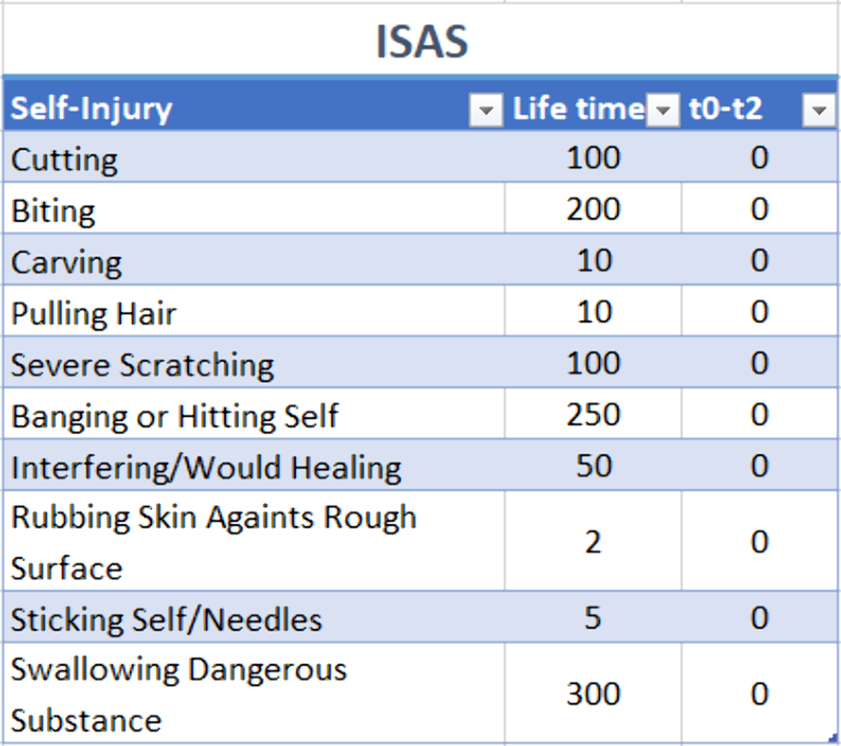
Clinical and test evaluation was performed in three stages: before (t0), immediately after (t1) and 3 weeks after (t2) the administration of the IgEV without other treatment modifications. We have used: - Inventory of Statements About Self-Injury (ISAS) - Barrat Impulsiveness Scale, Version 11 (BIS-11) - Hamilton Anxiety Rating Scale (HAM-A) - Montgomery-Asberg Depression Rating Scale (MADRS) - Alexian Brothers Urge to Selfe-Injure Scale (ABUSI)
Results
The patient has a score of 79 at BIS-11. She used to have a huge number of acting aout as we see on ISAS (Fig.1).Figure 1Figure 2
Conclusions
We observed a reduction in non-suicidal self-injurious ideation, the suspension of acting-out, a complete remission of depressive symptoms with mild persistence of anxious symptoms immediately after the administration of immunoglobulins, and the remission continue until one month after the administration (Fig.2).
Cell technologies actively used in the treatment of many diseases. These technologies are based on manipulating the patient’s cells outside the body, as a result of which cells acquire a higher therapeutic potential.
Objectives
No doubt the essential role of immune cells and their biologically active products in the pathogenesis of depression, which allows to view the modulated immune cells as model objects for developing new approaches to immunotherapy for depression.
Methods
(CBAxC57Bl/6) F1 depressive-like male mice, developed under the long-term social stress, were undergoing the transplantation of syngeneic immune cells with in vitro caffeine-modulated functional activity. Recipient’s behavior, immune and nervous systems functional activity were studied.
Results
It was found that immune cells isolated from depressive-like mice and treated in vitro with caffeine change their properties and after intravenous administration to syngeneic depressive-like recipients have a significant positive psycho- and neuroimmunomodulatory effects, affecting the main depression pathogenetic mechanisms: behavioral editing (reduction of anhedonia, stimulation of exploratory behavior and activity in the forced swimming test); hippocampal neurogenesis stimulation against the background of increased BDNF; modulation of cytokine production by brain cells, indicating a decrease in neuroinflammation; modulation of the immune system functional activity (stimulation of the immune response, splenocytes proliferation, reducing systemic inflammation, decrease spleen tryptophan catabolism).
Conclusions
The results serve as an experimental substantiation of a fundamentally new approach to immunotherapy of depression based on the introduction of immune cells with functional activity modulated outside the body and open up the possibility of developing new methods of immunotherapy of depressive states in humans.
In the scientific world widely discussed phenomenon of “cytokine-induced depression”. Macrophages have high plasticity and are able to control the inflammatory response; in particular, anti-inflammatory type-2 macrophages have a pronounced potential due to complex soluble factors production.
Objectives
We have developed an original method for the type-2 macrophages generation; the resulting macrophages are characterized by the high level of a whole range of neurotrophic, neuroprotective, proangiogenic and anti-inflammatory factors production. The aim of the study was to investigate effects of human type-2 macrophages soluble products on behavioral phenotype and brain cytokines synthesis in depressive-like animals.
Methods
Type-2 macrophages were generated by culturing an adherent fraction of mononuclear cells with 50 ng/ml recombinant human GM-CSF in serum deprivation conditions for 7 days. (CBA x C57Bl/6)F1 depressive-like male mice, developed under the long-term social stress, were undergoing the human type-2 macrophages conditioned medium intranasal administration (60 ml twice daily for one animal) for 6 days. Mice behavioral phenotyping was carried out using an automatic registration system (Noldus Information Technology). Cytokines were determined by ELISA.
Results
Depressive-like mice behavioral phenotyping after type-2 macrophages conditioned medium administration revealed anhedonia decrease, motor activity stimulation in the open field and forced swimming tests, anxiety reduction in elevated plus maze. Behavioral changes were recorded against the pro-inflammatory cytokines (TNF-α, IL-1β, IL- 6, INFγ) decrease in striatum and hippocampus, as well as anti-inflammatory IL- 10 increase in hippocampus and hypothalamus.
Conclusions
Results demonstrated the effectiveness of human type-2 macrophages biologically active soluble products in relation to the stress-induced depressive-like behavior editing
Inflammation is now known to be a key factor in the development of schizophrenia. In this regard, the study of the pathogenic role of inflammation in the early stages of schizophrenic process is of particular importance, making it possible to assess its activity and to predict the development of the disease.
Objectives
To compare the dynamics of inflammatory markers in blood of first-episode psychosis (FEP) patients and people at risk signs for schizophrenia in the course of the treatment. Juvenile depression (JD) with attenuated symptoms of schizophrenic spectrum (ASSS) was investigated as a risk group.
Methods
The patients aged 17-25 years (20 people, of which 10 FEP patients (F20) and 10 JD with ASSS ones (F32.1-2, F32.38, F32.8)) were examined at admission to the hospital and at discharge. The controls consisted of 10 healthy volunteers. Symptom severity was collected using PANSS, SOPS, SANS, HDRS. The inflammation markers (TNF-α, IL-6, IL-10, leukocyte elastase (LE), CRP, α1-proteinase inhibitor (α1-PI), anti-S100-beta antibodies) were determined in blood.
Results
An increase of inflammatory markers in both groups compared to controls was found (p<0,05). The highest values of IL-6, LE, CRP, α1-PI and anti-S100-beta antibodies in FEP patients were revealed (p=0,03). After the treatment, the positive trend of inflammatory markers in FEP patients (p<0,05), but not in JD with ASSS patients was detected (except LE activity, p<0,05).
Conclusions
The results confirm the pathogenic role of inflammation in the development of endogenous mental disorders. The inflammatory markers studied reflect the activity of the pathological process in the early stages of schizophrenia.
The study of effects of long-term antipsychotic therapy in patients with schizophrenia is relevant.
Objectives
To study effects of long-term antipsychotic therapy on parameters of immunity and cytokine levels in patients with schizophrenia.
Methods
We examined 20 schizophrenic patients, who received quetiapine (group 1) and 17 - olanzapine (group 2) for more than 6 months before admission in the hospital as the main anti-recurrence therapy. Persons aged 20-63 years with length of the follow-up of the disease ≥1 year were included. The investigations included: phenotyping of immunocompetent cells into CD differentiation clusters by flow cytometry; mitogen-induced, spontaneous production of cytokines (IL2, IFN-γ, IL-4, TNF-α) were identified with use of kits for enzyme-linked immunosorbent assay (ELISA).
Results
It was shown that patients of group 1 in comparison with group 2 were characterized by lower values of СD3- lymphocytes (p=0.049), higher values of the spontaneous production of IFN-γ (p=0.01), mitogen-induced production of IL-2 (p=0.043) and IL-4 (p=0.059). In all examined low level of mitogen-induced of IFN-γ (p=0.0001) and TNFα (p=0.002; p=0.0001), high level of spontaneous production of TNFα (p=0.001) were revealed in relation to control.
Conclusions
It was found that the acute period of schizophrenia after prolonged treatment with atypical antipsychotics is accompanied by immunological imbalance and dysregulation of the cytokine system. More severe immune disorders when hospitalized during the exacerbation period were revealed in patients who had been receiving antipsychotic therapy with the atypical antipsychotic quetiapine for a long time. This can be associated with the features of the mechanism of action of atypical antipsychotics.
Immune system abnormalities exist across a range of psychiatric disorders. Autoimmunity, characterized by the production of antibodies against the body’s own antigens, is a feature of immune system dysfunction and could play a role in mental disorder pathophysiology. Better understanding of the associations of auto-immunoglobulin G (IgG) repertoires with clinical features of mental illness could yield novel models of psychosis pathophysiology and markers for biological patient stratification.
Objectives
To undertake global screening for auto-IgG expression in a large cohort of people with psychotic disorders; to determine whether associations exist between autoantibody expression and clinical features.
Methods
Cross-sectional quantification of auto-IgGs in blood plasma of 461 people with established psychotic disorder diagnoses. For global screening, pooled samples of phenotypically representative patient groups were exposed to planar protein microarrays containing 42,000 human antigens. For targeted profiling, expression levels of 380 autoantibodies were quantified by suspension bead array (SBA) in each patient’s plasma.
Results
We identified highly individual autoantibody profiles with no evidence for co-expression patterns. We found 6 autoantibodies robustly associated with specific psychopathology: anti-AP3B2, detected in 5% of the cohort of whom 100% had persecutory delusions; anti-TDO2 (5% of the cohort, 100% hallucinations); anti-CRYGN (4%, 86% initial insomnia); anti-APMAP (3%, 86% poor appetite); anti-OLFM1 (2.5%, 100% above median cognitive function); and anti-WHAMMP3 (2%, 90% anhedonia and dysphoria). Examination of the auto-IgG binding site on the TDO2 protein revealed a putative pathophysiological mechanism involving the kynurenine pathway.
Conclusions
We identified 6 frequently occurring autoantibodies that were associated with specific clinical features in people with psychotic disorders.
Trait-like anomalies of subjective experience have been empirically identified as schizophrenia-specific markers of vulnerability in several clinical and genetic high-risk populations. Recently, Parnas and colleagues have identified and preliminarily explored a composite score (i.e. Self-Disorder Scale, SDO) within the Minnesota Multiphasic Personality Inventory (MMPI) that approximates such construct). SDO differs from the MMPI psychoticism scale, and includes presents items very similar to Self Disorder investigated by EASE (Examination of Anomalous Self-experience).
Objectives
This study is a confirmatory analysis of the correspondence of Self-Disorder Scale (SDO) of the MMPI with some items of EASE, in a population of adolescents. These items are present in psychotic and in at risk mental state subjects.
Methods
We administered MMPI and EASE to 34 help seeker adolescent patients and correlate all dimensions of MMPI with EASE total score and its domains.
Results
MMPI SDO scores significantly correlated with schizophrenia-spectrum diagnosis and high-risk mental states.
Conclusions
SDO is an MMPI analogous of Self Disorders and can be used as a useful screener to detect patients at potential risk for schizophrenia spectrum disorders, that could be further explored with the EASE.
The diagnosis of psychotic depression has its origin in the millennial term of Melancholia.
Objectives
A case of psychotic depression is presented to highlight its psychopathological characteristics and to make a historical overview of its origins.
Methods
We present the case of a 40-year-old male patient with a history of dysthymic mood who developed a major depressive mood, loss of self-care, decreased apetite, insomnia and repetitive speech with ideas of guilt and ruin of psychotic characteristics.
Results
Melancholy is a term used since the time of Hippocrates, who spoke of it as the state that appears after the prolongation of an intense period of sadness. It was extolled and self-attributed by authors such as Montaigne and branded as selfish by authors such as Cicero in the days when reason and madness formed a whole and distinguishing their limits was a complex task. Esquirol changed his name to Lypemania to get rid of its poetic nuances and framed it within partial insanity. Both he and the rest of the psychopathologists of the XIX century and early XX considered the melancholic as the great tormented, the one who despises himself and blames all ills, who suffers from apathy and above all presents a strong pain of the soul.
Conclusions
Later it was Falret and Baillarger who unified melancholy with mania in what they nominate as circular and dual-form insanity. This gave way to the Krapelinian entity of manic-depressive insanity, the direct predecessor of the current Bipolar Disorder, which includes the diagnosis of our clinical case.
Holiender and Hirsch defined hysterical psychosis in 1964 and, while hysteria has a contemporary equivalent in somatoform/dissociation disorder, hysterical psychosis remains set adrift in the nosological understanding of psychiatric disorders.
Objectives
To present a case report of a hysterical psychosis and to review this nosological construct.
Methods
Clinical interview, consultation of clinical records and review of literature using the Pubmed platform.
Results
The authors present a case of a 38 year-old woman, admitted in a psychiatric emergency department for bizarre behavior, restlessness, auditory (pseudo)hallucinations and emotional lability, starting 1 week after a personal development retreat. This is the second episode of this nature, the first being a 15-day hospitalization 7 years ago, with rapid stabilization, extensive examination and restitium ad integrum. The patient initiated Olanzapine and was referred to an outpatient clinic, with rapid stabilization and restitium ad integrum throughout follow-up. Given the episode and patient characteristics, a hysterical psychosis diagnosis may be accurate, taking into account the acute onset and course, the pleomorphic nature of symptoms and the presence of a disturbing life event. The authors propose reviewing the concept of hysterical psychosis regarding its clinical implications and debating its therapeutic and prognostic utility.
Conclusions
Hysterical psychosis may not be a mere historic footnote and encompasses an entity with distinctive diagnostic, prognostic and therapeutic characteristics. While its etiology may not be understood, its clinical implications ensure the need for future research.
Pronoia is a neologism originally coined in 1982 to describe a state of mind that is, in essence, the positive counterpart of paranoia. It is characterized by feeling that the world is conspiring on behalf of the person experiencing pronoia.
Objectives
Brief literature review.
Methods
The authors review the available literature on pronoia and present a broad overview of its description and defining characteristics. An initial search utilizing key health journal databases revealed a scarcity in available documents, therefore a generalized search utilizing the search engine Google Scholar was performed with the term “pronoia”. Relevant articles obtained from the respective bibliographic references were also consulted.
Results
The primary outcome of this work is a summary of the available literature in order to build a more comprehensive understanding on pronoia. All relevant information was collated to form a cohesive description of the condition and its characteristics. We address a gap in the literature by offering a description of the lesser prevalent concept of pronoia.
Conclusions
Our results demonstrate a scarcity in the available literature describing the pronoia phenomenon when compared to its well-documented counterpart, paranoia. Further exploration into this topic is merited so as to close the gap on paranoia’s lesser-known positive counterpart. By signalling the existence of this concept, we strive to contribute to an increased identification of a concept that is many times underdiagnosed due to a lack of attention to its existence.
A delusion of pregnancy in men has been rarely reported in psychiatric disorders. The literature on this delusion in male schizophrenia is limited. It was reported especially in medical conditions. In psychiatric disorders, it has been explained for a long time by psychodynamic theories.
Objectives
To present a case of a pregnancy delusion in man associated temporally to neuroleptic-induced hyperprolactinemia and a review of literature of medical and psychological etiologies of this symptom
Methods
We presented a case of a pregnancy delusion in man associated temporally to neuroleptic-induced hyperprolactinemia and we elucidated through a review of literature of medical and psychological etiologies of this symptom.
Results
Case report A 46-year-old man, unmarried, who had a mild intellectual disability and a 22-year history of schizophrenia. He was admitted to our hospital for psychotic relapse due to the interruption of his medication. This patient had been treated for years with long action injection medication. On admission he was disorganized, verbalizing a poorly-systematized fuzzy delirium. And he believed he was pregnant. Serum prolactin levels was 38 ng/ml (3-25ng/ml). He was put on Haldol decanoate 150mg/month, chlorpromazine 150mg/day, and diazepam 15mg/day.
Conclusions
The presentation of a delusion of pregnancy in man is rather infrequent. The delusion may have many social, psychological, and biological determinants to its genesis. This case highlights the importance of medical investigations notably the assay of prolactin in the assessment of patients who present with delusions of pregnancy.
Charles Bonnet syndrome (CBS) is characterized by the presence of visual hallucinations without other sensory-perceptual disturbances or evidence of organic mental disorder nor functional psychosis.
Objectives
Review differential diagnosis of BCS, searching articles in Pubmed.
Methods
62-year-old woman, undergoing treatment with Sertraline and psychotherapy for three months because of anxious-depressive synthoms. Pathological myopia and retinal detachment in 2012, blind left eye, retaining 33% vision in the right eye. She comes to the emergency room feeling really anxious, she says that for a year now she has had the feeling that her husband is cheating on her with another woman, and she claims with certainty that she sees a woman in her bed at night, as well as flashes of light evidencing her presence. She has also begun to hear voices through the telephone wires. She and her family deny memory loss or other cognitive impairments. We performed a Nuclear Magnetic Resonance with normal results. Family claims good conygal relation until these synthoms began and no signs of cognitive impairment.
Results
The patient lives as real these hallucinations which haven´t appeared during admission. We started treatment with an antipsychotic and a benzodiazepine, with great improvement of anxiety and development of some insight. Executive impairment was observed.
Conclusions
The results obtained, make us think that, although our patient has an important visual loss, it is more a psychiatric pathology. Here lies the importance of a multidisciplinary approach among ophthalmologists, neurologists and psychiatrists in order to avoid misdiagnosis and that the patient can benefit from proper treatment.