We partner with a secure submission system to handle manuscript submissions.
Please note:
You will need an account for the submission system, which is separate to your Cambridge Core account. For login and submission support, please visit the
submission and support pages.
Please review this journal's author instructions, particularly the
preparing your materials
page, before submitting your manuscript.
Click Proceed to submission system to continue to our partner's website.
To save this undefined to your undefined account, please select one or more formats and confirm that you agree to abide by our usage policies. If this is the first time you used this feature, you will be asked to authorise Cambridge Core to connect with your undefined account.
Find out more about saving content to .
To send this article to your Kindle, first ensure no-reply@cambridge.org is added to your Approved Personal Document E-mail List under your Personal Document Settings on the Manage Your Content and Devices page of your Amazon account. Then enter the ‘name’ part of your Kindle email address below. Find out more about sending to your Kindle.
Find out more about saving to your Kindle.
Note you can select to save to either the @free.kindle.com or @kindle.com variations. ‘@free.kindle.com’ emails are free but can only be saved to your device when it is connected to wi-fi. ‘@kindle.com’ emails can be delivered even when you are not connected to wi-fi, but note that service fees apply.
Couple therapy continues to gain in stature as a vital component of mental health services. The linkage of relationship distress to disruption of individual emotional and physical well-being emphasizes the importance of improving and extending empirically based strategies for treating couple distress
Objectives
To evaluate the efficacy of dialectical behavior therapy “DBT” in outpatients couples with emotional dysregulation
Methods
Twenty couples presented with marital distress and at least one of them suffers from emotional dysregulation assigned at their convenience or according to immediate availability of treatment slot to a couple DBT group. Arabic version of DERS was used for assessment of emotional dysregulation before and after intervention. Dyadic Adjustment Scale was used for assessment of marital adjustment
Results
Both male and female partners showed significant improvement in marital adjustment and emotional regulation. Female partner showed significant higher change amplitude in both scales. Female partners showed significant improvement in all DERS subscales except for (GOALS) subscale (significant decrease), while male partners showed significant improvement in (IMPULSE), (AWARNESS), (STRATEGIES) and (CLARITY) subscales
Conclusions
Dialectical behavioral therapy for couples is an effective approach to couples with emotional dysregulation in one or both partners
Early grief is a concept about which there is little literature. This generates difficulties in order to perform a differential diagnosis, as it poses complications to determine if the symptoms that the patient suffers are relative to the mourning or if they appear as part of a comorbid disorder.
Objectives
To assess the difficulty in discriminating when accompaniment is necessary and when the patient can benefit from pharmacological, psychotherapeutic or combined treatment.
Methods
Patients’ data is obtained from their medical history as well as psychological interviews carried out during the process.
Results
32-year-old woman, with a previous history of depression. The patient was living abroad when her father was diagnosed with a terminal illness, so she decided to return home, making a radical change in her life. She is currently facing the functional deterioration of her father, who is rapidly getting worse. The patient shows symptoms of anxiety, tendency to cry and apathy. 34-year-old woman, with no history in Mental Health. As a result of her father’s illness, the patient develops a clinical manifestation of anxiety and low spirits. After one year, the clinic is maintained according to the variations in the health of her father. She also reports problems concentrating, fatigue, ruminative thoughts and structured autolithic ideas. Finally, she is referred to begin a psychotherapeutic follow-up.
Conclusions
Bearing in mind that we are facing an increase in diagnoses of terminal illnesses, I consider it is necessary to reflect on this concept in order to provide a better response to patients.
Phenomenolgical theory has contributed to a renewed understanding of schizophrenia, as a supplemental perspective to contemporary operationalistic theories. Phenomenological research with patients suffering from schizophrenia emphasizes the nature of subjectivity and suggests that a basic disturbance of the self can be understood as a core phenotypic marker of shizophrenia.
Objectives
To briefly present and discuss the phenomenological theory of self-disturbance, illustrated through a case.
Methods
In this case study we briefly present the phenomenological theory for self-disturbance. We illustrate the theory by presenting elements from a case involving a patient that suffers from schizophrenia. Our focus in on how the self-disturbance is experienced by the patient and how the therapist can address this experience. The challenges in psychotherapy related to the phenomenon of self-disturbance and the implications for examination and treatment are discussed.
Results
The patient gives a detailed description of how he experiences a diminished basic sense of self. Central elements in his experience are a loss of a common-sense ability, hyperreflexivity, and a loss of a first-person perspective. He describes how this disorder creates difficulties in communication, relationships, treatment, and in coping with life. He also describes which elements of his treatment that he has experienced as the most helpful. The case underlines the importance of considering the concept of self-disturbance in psychotherapy.
Conclusions
In this case study, we draw on phenomenological theory to gain insight into a patient’s experiences relating to the concept of self-disturbance.
This lecture will present a therapeutic group that took place at a closed-unit in a psychiatric hospital. The members of this group were patients suffering from psychotic disorders
Objectives
Patients suffering from psychotic disorders.
Methods
The patients had difficulty in organizing their thoughts as well as with the expression of their internal-world and emotions. Moreover, they were suspected of the units’ staff members. These circumstances led us to create a theme group that combines a verbal-affective metaphoric instrument - literature. Art, such as literature, represents the mind of its creator and when incorporated into the therapeutic process, can serve as a third-voice - a symbolic language that conveys an idea indirectly and arouses the patient’s personal associations and emotions. The use of literature, while relating to content that aroused from a poem or a short story, led to a connection or an identification with the emotion expressed in the writing stimuli or in opposition to it, and from there to a projection of the internal world of the patient.
Results
Through the possibility of alternating between proximity and distance, regard the metaphoric instrument, patients could organize their associations and emotions and express them in a more beneficent way – “normalization” of the cognitive and expressive process.
Conclusions
The analysis of the different group’s sessions, points to the potential of using literature in a therapeutic group with patients in their acute state, at the closed-unit. Examples of verbal reports from different group settings, in which literature was used, will be presented.
A study, examined creativity and aggression in individuals suffering from mental disorders, will present.
Objectives
Five groups: individuals suffering from mental disorders – with or without a history of aggression; creative individuals; aggressive individuals; and a control group
Methods
Different personality questionnaires: anxiety, absorption, schizotypy and humor and the microgenetic method – a projection technique, using visual stimulation by means of a computerized experiment. The stimuli that were presented in this study were two artworks. They were presented in a blurry manner that became clearer and the exposure time became longer.
Results
An emotional process aroused, when exposed to the stimuli. The stimuli had an influence on the subject’s internal world, which was reflected back in the verbal reports, especially the aspects of creativity and aggression. Secondly, the pathological groups were the lowest in the expression of creativity. However, they expressed more aggressive expression than expected while exposed to the stimuli. Moreover, these groups were ranked high, in traits related to creativity, such as schizotypy, absorption and the P dimension.
Conclusions
The Microgenetic-method gave a better perspective of the participant’s personality and can be used as a diagnostic-tool. In addition, the research demonstrates that creativity and aggression are multi-dimensional traits and are noticeably present in the pathological groups. Therefore, a person coping with psychopathology should get assistance with controlling the expression of his urges. They should be directed towards a creative expression of their inner-world, allowing a full range of expression of his strengths and pains. This will sublimate the feelings of aggression.
Analytical-cathartic therapy (ACTA), a modern model of psychotherapy, the theoretical basis of which is the psychology of relations of V.N. Myasishchev. ACTA is intended for the treatment of emotional disorders; the study of the dynamics of clinical and pathopsychological characteristics has not been previously conducted.
Objectives
To assess the dynamics of the clinical and pathological characteristics of patients with neurotic disorders, in whose clinical picture anxiety syndrome predominated, in the process of an individual ACTA.
Methods
A specially designed semi-structured interview, HARS, and the CGI (CGI-S - disease severity, CGI-I - improvement dynamics). The study group (N = 90) included patients with neurotic disorders, whose clinical picture was dominated by anxiety syndrome
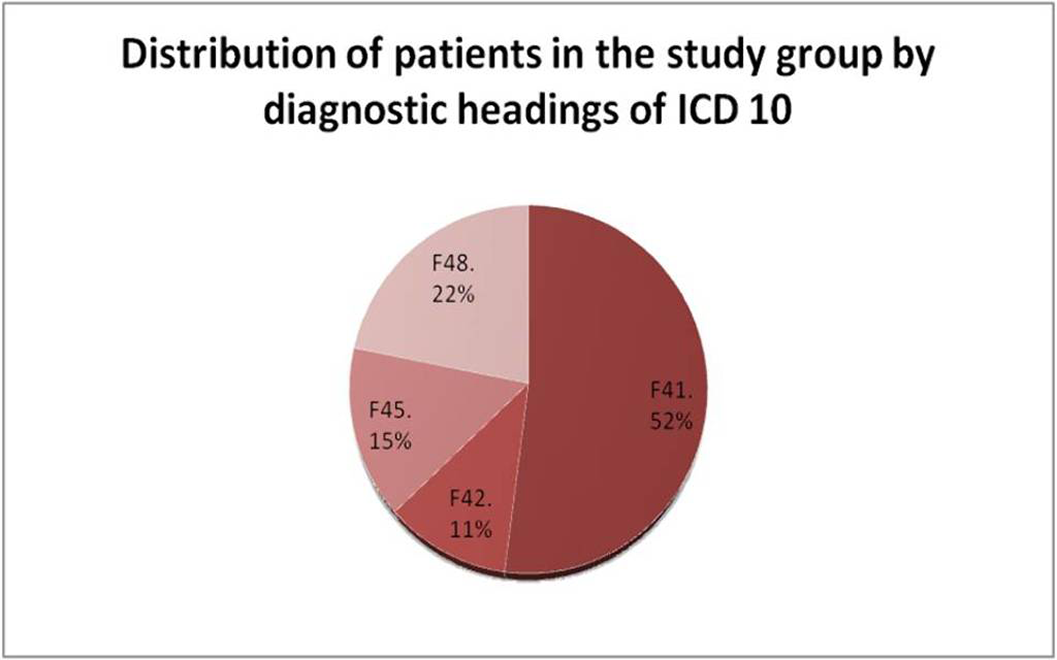
AKTA course 12 sessions 3 times a week for 60 minutes. Psychopharmacotherapy during the period of psychotherapeutic treatment in patients was not carried out.
Results
The study of ACTA was carried out before, after treatment and in the follow-up.
The overall decrease in the HARS score was 73.8% - the high success of the therapy in relation to the reduction of anxiety.
On the CGI-I scale - improvement from minimal to significant. On the CGI-S scale, no more than mild disease severity (p <0.01). The change in the CGI scale also indicates the success of the therapy.
Conclusions
As a result of the study, clinical indicators were determined, on the basis of changes in which in dynamics the success of the treatment can be assessed. ACTA allows to clearly reduce anxiety and improve the general condition of patients with neurotic disorders.
Mindfulness-based interventions have received growing attention over the last years for the treatment of various mental disorders, including schizophrenia spectrum disorders (SSD), demonstrating their transdiagnostic validity. However, no study has examined the relationship of probable mechanisms underlying the therapeutic effects of mindfulness in SSD.
Objectives
The current study examines the relationship between mindfulness, depression, anxiety, and quality of life in individuals with SSD through quantitative measures.
Methods
A total of 83 participants with SSD were recruited at the in- and outpatient facility of the Charité – Universitätsmedizin Berlin in Germany. Participants completed the Southampton Mindfulness Questionnaire, Comprehensive Inventory for Mindful Experiences, and Freiburger Mindfulness Inventory, the Depression, Anxiety, Stress Scale, and the World Health Organization Quality of Life Questionnaire. PROCESS analysis examined the relationship between mindfulness and quality of life and the mediating role of depression and anxiety.
Results
Indicated a significant positive association between mindfulness and physical health, psychological and environmental quality of life. Depression and anxiety were found to mediate this relationship, with higher depression and anxiety scores being related to lower mindfulness and quality of life. In this relationship, however, depression was found to be the stronger predictor.
Conclusions
The findings of this study provide insight into the mechanisms of mindfulness. Initial evidence for the transdiagnostic and process-based clinical relevance of MBIs for SSD has been found and future studies can further explore the role of mindfulness for central therapeutic processes of change by employing longitudinal designs.
Research is needed to explore whether cognitive flexibility may account for potential gender differences after mindfulness-based interventions.
Objectives
To compare the effectiveness of Acceptance and Commitment Therapy (ACT) versus a Mindfulness-based Emotional Regulation (MER) intervention on cognitive flexibility according to gender.
Methods
This study was carried out in a Mental Health Unit in Spain (Colmenar Viejo, Madrid). Firstly, 80 adult patients with anxiety disorders were randomized according to the score on the Acceptance and Action Questionnaire-II (blocking factor), of whom, 64 patients decided to participate (mean age = 40.66, S.D. = 11.43; 40 females). Each intervention was weekly, during 8 weeks, guided by two Clinical Psychology residents. A 2x2x2 mixed ANOVA (pre-post change x intervention type x gender) was conducted, with Sidak-correction post hoc tests. The dependent variable was the score on TMT-B.
Results
A natural logarithmic transformation was conducted to correct violation of normality and homoscedasticity assumptions. No statistically significant differences were observed on age or gender between interventions. No statistically significant interaction effect was observed between pre-post change x intervention x gender [F(1, 52) = .014, p = .907]. An interaction effect was observed between pre-post change x intervention [F(1, 52) = 4.180, p = .046; statistical power observed = 52%]: while TMT-B improved after ACT (p = .001; Cohen’s d = 0.607), there were no changes after MER (p = .367; Cohen’s d = 0.097).
Conclusions
These medium effect-size results confirm previous findings of our research team indicating cognitive flexibility improves after ACT but not after MER.
Results about the effects of mindfulness training on the executive function of inhibition are mixed. Research about interventions in anxiety disorders is needed to exam the differential efficacy among men and women, and the factors involved in those potential gender differences.
Objectives
To compare the effectiveness of Acceptance and Commitment Therapy (ACT) versus a Mindfulness-based Emotional Regulation (MER) intervention on inhibitory control according to gender.
Methods
This study was carried out in a Mental Health Unit in Spain (Colmenar Viejo, Madrid). Firstly, 80 adult patients with anxiety disorders were randomized according to the score on the Acceptance and Action Questionnaire-II (blocking factor), of whom, 64 patients decided to participate (mean age = 40.66, S.D. = 11.43; 40 females). Each intervention was weekly, during 8 weeks, guided by two Clinical Psychology residents. A 2x2x2 mixed ANOVA (pre-post change x intervention type x gender) was conducted, with Sidak-correction post-hoc tests. The dependent variable was the Interference score of the Stroop test.
Results
Normality and homoscedasticity assumptions were met. No statistically significant differences were observed on age or gender between interventions. A statistically significant interaction effect was observed between pre-post change x intervention x gender on Interference [F(1, 52) = 5.004, p = .030; statistical power observed = 59.3%]. Improvement in interference was larger for women after ACT (p = .000) and for men after MER (p = .002).
Conclusions
These preliminary results show improvements in inhibition after the two interventions examined. However, each treatment maximizes improvement in different ways according to gender. Further research is required.
The relationship between attentional functioning and mindfulness is an intensive field of study, mainly in face-to-face interventions. However, no neuropsychological study addressed the effect of online mindfulness-based interventions on this cognitive function.
Objectives
To assess changes on attentional functioning after two online mindfulness-based group interventions in adult patients with anxiety disorders.
Methods
This study was carried out in a Mental Health Unit in Spain (Colmenar Viejo, Madrid). Thirteen adult patients (age mean = 51.69 years, ranging from 33 to 69 years, S.D. = 11.56) with anxiety disorders completed the interventions. The group treatments were Acceptance and Commitment Therapy and a Mindfulness-based Emotional Regulation intervention, during 8 weeks, guided by two Clinical Psychology residents. Both interventions were carried out online. The dependent variables were the scores on the TMT-A (seconds), Digit span forward and Longest digit span forward (WAIS-IV). A comparison of paired-means was conducted. Statistical significance was set at p < .05.
Results
The normality assumption was met except for Longest digit span forward. The paired t-test showed statistically significant change between pre-treatment and post-treatment on TMT-A [t(12)= 3.81; p = 0.002; Cohen’s d = 1.056; statistical power observed = 94.0%], but not on Digit span forward (p = .45). Wilcoxon signed ranks test showed no statistically significant change on Longest digit span forward (p = .56).
Conclusions
These results show a large improvement on visual attention and speed of visuomotor tracking, but not on auditive attention, after both online mindfulness-based group interventions.
There are no studies which address the relationship between mindfulness and cognitive flexibility in interventions carried out online. This is the first study to examine the effect of two online mindfulness-based interventions on this cognitive function.
Objectives
To assess changes on cognitive flexibility after two online mindfulness-based group interventions in adult patients with anxiety disorders.
Methods
This study was carried out in a Mental Health Unit in Spain (Colmenar Viejo, Madrid). Thirteen adult patients (age mean = 51.69 years, ranging from 33 to 69 years, S.D. = 11.56) with anxiety disorders completed the interventions. The group treatments were Acceptance and Commitment Therapy and a Mindfulness-based Emotional Regulation intervention, during 8 weeks, guided by two Clinical Psychology residents. Both interventions were carried out online. The dependent variable was the score on the TMT-B (seconds). A comparison of paired-means was conducted. Statistical significance was set at p < .05.
Results
The normality assumption was met. Statistical power observed = 70.0%. The paired t-test showed statistically significant change between pre-treatment and post-treatment (p = 0.019; Cohen’s d = 0.75), indicating improvement on cognitive flexibility.
Conclusions
These results show a statistically significant and medium/large effect-size change in cognitive flexibility after the two online interventions based on mindfulness. A larger sample size is required to confirm these results. Moreover, other studies need to examine the reliable change on this neuropsychological outcome.
There is paucity of empirical studies which compare various mindfulness-based interventions on speed of visuomotor tracking and also analyse the differential effect of gender.
Objectives
To compare the effectiveness of Acceptance and Commitment Therapy (ACT) versus a Mindfulness-based Emotional Regulation (MER) intervention on speed of visuomotor tracking according to gender.
Methods
This study was carried out in a Mental Health Unit in Spain (Colmenar Viejo, Madrid). Firstly, 80 adult patients with anxiety disorders were randomized according to the score on the Acceptance and Action Questionnaire-II (blocking factor), of whom, 64 patients decided to participate (mean age = 40.66, S.D. = 11.43; 40 females). Each intervention was weekly, during 8 weeks, guided by two Clinical Psychology residents. A 2x2x2 mixed ANOVA (pre-post change x intervention type x gender) was conducted, with Sidak-correction post-hoc tests. The dependent variable was the score on TMT-A.
Results
Normality and homoscedasticity assumptions were met. No statistically significant differences were observed on age or gender between interventions. No statistically significant interaction effect was observed between pre-post change x intervention x gender on TMT-A [F(1, 52) = 2.867, p = .096, statistical power observed = 38.3%]. However, simple effects were statistically significant: while males improved on TMT-A after MER (p = .000; Cohen’s d = 1.092), females did so after ACT (p = .000; Cohen’s d = 1.506).
Conclusions
These results show that gender moderates the improvement of the two mindfulness-based interventions examined on the speed of visuomotor tracking. More research is needed to confirm these findings.
The Covid-19 pandemic has limited the classic psychotherapy treatment. EAP provided temporary recommendations for online psychotherapy in March of 2020 which brought new possibilities and limitations and contains rules, ethics and techniques. From the perspective of a psychodynamic therapist, the specificity of online group psychotherapy in the context of strong stressors is described.
Objectives
During the “lockdown” period and the earthquakes that occurred simultaneously in Zagreb in March of 2020, the secure Internet platform enabled the continuity of the group’s work in a video link modality.
Methods
Online group had regular weekly meetings which lasted 1.5 hours. The classic rules of group analytical therapy were adapted to the new setting in virtual space. A risk assessment was also performed.
Results
The six group members and therapist have connected online through more freedom, developed new levels of sensitivity, flexibility and creativity. They have also accepted limitations. The online group is able to provide holding, but deeper connections require a physical presence to exchange emotions that technology interferes with as well as the process of empathizing. Previous live sessions crucial to maintaining emotional connections have served as reservoirs for a period in which communication over the Internet was insufficient.
Conclusions
Internet technology can temporarily enable the continuity of a group psychotherapy. Technical and institutional support is recommended. The advantages of technology can be used if the technique is adapted, realistic goals set, and clinical limitations accepted. Many questions about the possibilities of “online psychotherapy” are open and unexplored.
Polycystic ovary syndrome(Pcos) disease significantly decreased quality of life for women. Mental health is one of the components affecting the quality of life of these patients that attention to it is necessary to improve their quality of life.
Objectives
The present study was conducted to determine The effect of Motivational Interview Based on WhatsApp on the Psychological Domains of Quality of Life in Infertile Women with PCOS.
Methods
This randomized controlled clinical trial enrolled 60 Infertile Women with PCOS from the city of Sari-Iran in 2020. Participants were assigned to MI and control groups using block randomization. The intervention group received 5 weekly of MI online via WhatsApp. While the control group received only routine care. The psychological Domains score of quality of life in these individuals was measured using the quality of life questionnaire of polycystic ovary syndrome(MPCOSQ) before and after the intervention. Then, the data were entered into the SPSS software, version 25 and were analyzed using descriptive statistics, chi-square test, t-test, and repeated measures analysis of variance.
Results
No significant difference was observed between the two groups before the intervention mean The Psychological Domains scores (p>0.05). After the intervention, mean (SD) of The Psychological Domains score was 34.8 (11.8) in the intervention group and 30.7 (11.6) in the control.No significant Increasing in the mean between the two groups. The effect size(0.35) was calculated.
Conclusions
The results of the study showed that motivational interviewing is effective in improving the quality of life of women with pcos.
Discharge summaries are the mainstay of intra and inter-departmental communication, ensuring continuity of care. Local instructions fail to provide clear guidance to foundation doctors to ensure standardised discharge summaries.
Objectives
The audit aimed to assess the inclusion of information within discharge summaries at Mount Carmel Hospital, Malta. A secondary objective was to update the current online discharge summary framework.
Methods
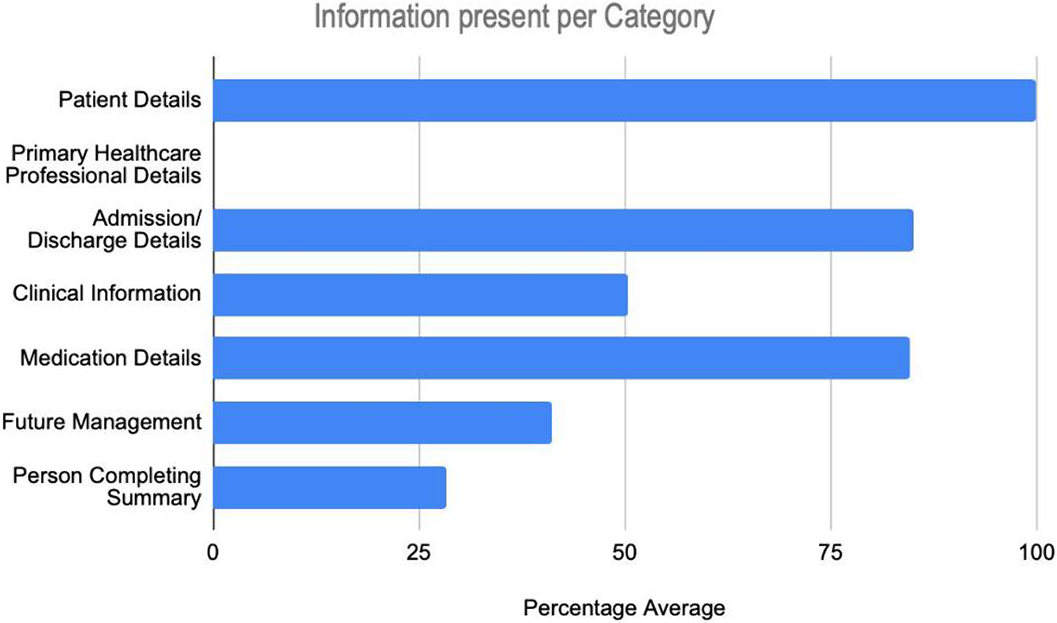
Stratified random sampling was used to select 120 discharge summaries, issued between October 2018 and September 2019. These were chosen out of a total of 956 discharge summaries issued during the period. The inclusion of information was analysed against the National Standard for Patient Discharge Summary Information issued by the Health Information and Quality Authority, Ireland. Data was collected and grouped into seven categories each containing multiple data points.
Results
Patient details were present in all discharge summaries while no details relating to the primary care healthcare professional were documented. The average information inclusion rate regarding admission, discharge and medications was 85%. Average clinical information was documented in 50% while that of future management and person completing discharge summary was found in 41% and 28% respectively (as per Table 1). Encouragingly, discharge summaries contained mandatory information more frequently than conditional or optional information.
Conclusions
This audit has identified deficiencies in current discharge summary practices and gives recommendations for the development of local guidelines.
The need to implement a program of autonomy in the handling of oral medication has been observed at the time of discharge from the hospital.
Objectives
- That the patient is able to know his medication, differentiating between active ingredient and commercial brand. - That the patient is able to interpret the guideline in the electronic prescription. - That the patient is able to prepare his weekly medication autonomously.
Methods
- The doctor in charge indicates the Program in those patients susceptible to benefit of the same and after consensus with the multidisciplinary team. He validates and prints the electronic prescription well in advance. Preferably the patient himself (alone or accompanied by family members or Educators) get their medication and a weekly “polydosis” at a pharmacy office bringing him with him to the Unit. - Occupational Therapy helps the patient interpret the electronic prescription guideline and place the weekly medication in the “polydosis” and works with the patient in forecasting execution tasks of medication needs for outpatient follow-up.
Results
The program is well accepted by patients. None of the patients included so far have had an early relapse.
Conclusions
The program has helped patients interpret the medical indications given mnesical and executive difficulties of patients with severe mental disorder.
Several ADHD teenagers had difficult behavioral problems during countries closing down due to Covid-19 pandemic. One of these negative outcomes that parents cannot control children’s behavior toward desired unhealthy food and the impulsive consequences. It was a great opportunity to convention a teletherapy program as a tool of intervention seeking for help to reduce uncontrolled self- management and nutrition, which may affect all sorts of childhood growth, development, health and behavior. Furthermore, it can affects daily life and academic success.
Objectives
We tried through our study to enhance the teletherapy as a therapeutic tool, during the first and second phase of Covid-19 pandemic, trying to help parents and patient to overcome the impulsive behavior by using a specific therapy technique based on nutrition and behavioral therapy
Methods
Our case study is a young girl aged 12:4 Yrs. In middle bilingual Arabic/ American School. The therapeutic program designed via teletherapy program using multi-media and thru multi phases sessions, to increase focus attention, emotional control and reduce impulsivity.
Results
The outcomes of the enhancing nutrition and behavior teletherapy program, showed significant improvement for the specific goal. Sensible change in the girl’s impulsive behavior, more focusing, emotional control and more accepting about health nutrition habits.
Conclusions
The important finding that intensive, focused nutation and self-management techniques provided via teletherapy as solitary program brought benefits to individual’s, family and reduced impulsivity outcomes. In addition, family education to become an expert at learning simple techniques in daily life can brining a sense of pleasure for long life wellbeing.
The Italian law 81/2014 has given a strong push to the design of therapeutic-rehabilitative paths for psychiatric patients who are offenders. This innovation requires a constant organizational effort on the part of mental health services to enforce the law. The rehabilitation team is represented by different professionals like psychiatrists, psychologists, nurses, psychiatric rehabilitation technicians, educators, social workers and others. They must be able to work in an integrated way among them and with private social sector.
Objectives
It is in our interest to reach an agreement between different professionals working in the rehabilitation-forensic field about good practices.
Methods
We have prepared a survey to identify good practices in the field of psychosocial rehabilitation of the offender psychiatric patient, involving different professionals who have expertise.
Results
This audit revealed, in everybody’s opinion, that these offending citizens have received a security measure capable of having greater control over their actions in a therapeutic-rehabilitative perspective but it is fundamental to educate them also to exercise their own safety for a social shared culture. Ensuring the safety of the offender during the therapeutic-rehabilitative path is as important as responding to a society’s need for social security.
Conclusions
Satisfying a society’s need for security, established by the Judge and the Law, all this cannot separated from the active exercise of security of the offending psychiatric patient towards himself, through psychoeducation. The safety towards others and towards oneself can constitute a good practice in the field of psychosocial rehabilitation.
There is a high degree of comorbidity between serious mental illness (SMI) and substance use disorders (SUD) and cardiovascular disorders. Other life-style related disorders are also common in patients with SMI and SUD. Consequently, comorbidity with somatic diseases contributes to a dramatic reduction in life-expectancy for these patient groups. Physical training has been shown to have positive effects also for mental health, but there has been little systematic use of physical training as part of the treatment for patients suffering from SMI and SUD in Norwegian health care.
Objectives
To present a new project on physical training for patients suffering from SMI and SUD.
Methods
We briefly describe a project in a major Norwegian hospital, where physical exercise will be offered as part of the treatment for patients suffering from SMI and SUD.
Results
The Division for Substance Use and Mental Health now offers an exercise room for inpatients at the main clinic in Tromsø, Norway. The exercise room contains various equipment including treadmills and equipment for strength training. This facility has recently been made available and is currently being used by a selection of patients. A study of user experiences is forthcoming and a systematic study of effects of physical exercise for patients suffering from SMI and SUD is being planned.
Conclusions
Physical exercise has been shown to have positive effects also on mental health. In one major Norwegian hospital, facilities are now offered for inpatients suffering from SMI or SUD. The effects of physical exercise on patients with SMI and SUD will be examined.
Within the hub and spoke organizational model provided by the Emilia Romagna Region for assistance to people with autism spectrum disorder (ASD), Cesena ward of psychiatry represents the hospital Hub. Here, a dedicated team (doctors, psychologist, case manager) creates individualized pathways to ensure second-level specialist diagnostics and the management of comorbidities affecting subjects diagnosed with Autism Spectrum Disorder and Intellectual Disability (ID).
Objectives
We report the case of a 23-year-old man, who from the age of 6 was opposed to any instrumental diagnostic investigation.
Methods
In order to guarantee the patient’s full collaboration in carrying out essential diagnostic activities, short behavioural paths were created including video modelling. The Vi.Co app was used and a new app was created to target behaviors that could not be included in Vi.Co
Results
It was thus possible to make the patient compliant with the execution of blood samples, ECG, MRI of the brain in sedation and CT dental scan.
Conclusions
In our case, communication support systems and behavioral strategies have proved to be excellent allies in significantly improving the quality of care for our young patient. Considering the worst prognosis of pathologies and the reduced life expectancy of subjects suffering from ASD and ID, known in the literature, in our opinion, the first essential step becomes facilitating access to care for these patients.