We partner with a secure submission system to handle manuscript submissions.
Please note:
You will need an account for the submission system, which is separate to your Cambridge Core account. For login and submission support, please visit the
submission and support pages.
Please review this journal's author instructions, particularly the
preparing your materials
page, before submitting your manuscript.
Click Proceed to submission system to continue to our partner's website.
To save this undefined to your undefined account, please select one or more formats and confirm that you agree to abide by our usage policies. If this is the first time you used this feature, you will be asked to authorise Cambridge Core to connect with your undefined account.
Find out more about saving content to .
To send this article to your Kindle, first ensure no-reply@cambridge.org is added to your Approved Personal Document E-mail List under your Personal Document Settings on the Manage Your Content and Devices page of your Amazon account. Then enter the ‘name’ part of your Kindle email address below. Find out more about sending to your Kindle.
Find out more about saving to your Kindle.
Note you can select to save to either the @free.kindle.com or @kindle.com variations. ‘@free.kindle.com’ emails are free but can only be saved to your device when it is connected to wi-fi. ‘@kindle.com’ emails can be delivered even when you are not connected to wi-fi, but note that service fees apply.
Electronic cigarettes (e-cigarettes) are battery-powered devices developed with the goal of mimicking the action of smoking. Their use has increased over the past years.
Objectives
The aim of this study was to evaluate the prevalence of the use of e-cigarettes among teenagers in high school and to examine the predictor factors.
Methods
A survey was conducted with a sample of 234 students in Mohamed Ali high school in Sfax, a town in the south of Tunisia, in February 2020. We estimated e-cigarette prevalence among adolescents and the predictor factors of vaping.
Results
Among high school students aged 15 to 20, 58,8% have ever used e-cigarette, 38,3% had done so within the previous 30 days and 20,5 % were regular users of vapes. The mean age of e-cigarette users was 16,59 +/- 0,908 years old, 83,3% of e-cigarettes users were males. Male gender, high socio-economic level, practicing leisure activities, smoking cigarettes and drinking alcohol were associated with regular use of e-cigarettes. Overall, 51, 6% of never smoking students reported ever use of e-cigarettes. The main reason for initiating e-cigarettes use was curiosity (65%).
Conclusions
Our findings showed the significant use of e-cigarettes among high school students thus it would be interesting to provide adolescents with information about the use of e-cigarettes and other tobacco products.
E-cigarette use has increased over the last years. Many studies have examined teenagers’ attitudes towards smoking, but did not examine adolescents’ attitudes towards e-cigarettes.
Objectives
The aim of this study was to examine high school students’ attitudes regarding e-cigarette safety, addictive properties and social norms and to compare e-cigarettes perceptions among e-cigarette users and non-users in Tunisia.
Methods
A survey was conducted with a sample of 234 students in Mohamed Ali high school in Sfax, a town in South of Tunisia, in February 2020. Socio-demographic data and questions about vaping and attitudes towards e-cigarettes were used to evaluate students’ perceptions towards e-cigarettes.
Results
Among high school students aged 15 to 20, 58,8% have ever used e-cigarette, 38,3% had done so within the previous 30 days and 20,5 % were regular users of vapes. 53.8% of students believed that e-cigarettes are harmful. 78.4% of them thought they were less harmful than regular cigarettes and 50.5% thought they could be addictive, 45.4% of students believed e-cigarette smoking decreased anxiety and a third thought it made them sociable (33.3%) and confident (30.6%).Adolescents who used e-cigarettes had significantly more favorable e-cigarette attitudes than non-users: they believed they were less harmful than tobacco (p=0,019), they were not addictive (p=0,005), they decreased anxiety (p=0,001) and they made the user sociable (p<0,001) and confident (p=0,01).
Conclusions
Our results suggest the need to provide teenagers with the correct information about e-cigarettes risks, and the balance risk-benefit of their use.
Attrition rates in smoking cessation treatments are high, particularly in persons with substance use disorders. It is estimated that about 55%% disengage prematurely at treatment, meaning that a large portion will not benefit from smoking abstinence. So far, no previous studies have examined predictors of dropouts in a smoking cessation treatment with persons with SUD.
Objectives
The study was two-fold: 1) to analyze the percentage of early-, late-dropouts and completers, and 2) to examine sociodemographic, psychological, and substance-related predictors of dropouts.
Methods
A total of 86 participants (69.8% males; Mage=43.84, SD=9.917) were randomly assigned to two psychological smoking cessation treatment: cognitive-behavioral treatment (CBT) (n=51) or CBT + contingency management (CM) (n=35). Interventions were delivered during eight consecutive weeks
Results
Of the 86 participants who completed the baseline assessment, 21 did not start treatment, 17 dropped out of treatment during treatment, and the remaining 48 completed the treatment. Predictors of early-dropout were younger age (B=-.234; p=.024; OR=.792) and lower number of days in SUD treatment (B= -.005; p=.026; OR=.995). Patients’ primary substance of use was associated with reduced early-dropouts; compared to cocaine users, alcohol (B=-1.827; p=.043; OR=.161) and opioids (B=-3.408; p=.018; OR=.033) related to improved attrition. Late dropout was directly related to higher number of tobacco use cessation attempts (B=.407; p=.039; OR=1.502).
Conclusions
Incorporating strategies to improve attendance and completion rates in SUD populations should be a priority. Mobile reminders, offering online therapies, or CM to reinforce attendance to therapy may be considered.
Buprenorphine/Naloxone (BP/NLX) is an effective drug combination used in long-term maintenance therapy in opiate use disorder (OUD). In some studies, abstinence over 180 days was defined as long-term remission (1).
Objectives
The aim of this study is to determine the sociodemographic and clinical characteristics of patients in long-term remission with BP/NLX.
Methods
In this study, 30 patients who were followed up with OUD at Akdeniz University Addiction Center and were in remission with BP/NLX for at least 180 days were evaluated retrospectively.
Results
Sociodemographic and clinical characteristics are summarized in table 1.
Conclusions
OUD is associated with lower quality of life and employment rate (2). In our study, the rate of working in a regular job is high. It can be concluded that prolonged remission improves functionality in patients. Although patients are in remission for a long time in terms of opiate use, 20% of patients continue to use cannabis and 10% continue to use cocaine. In a study, there was no difference in productivity and quality of life between BP users with and without current cannabis use. Continued use of cannabis by patients may be related to this condition. However, cannabis use increases many mental illnesses, especially psychosis (4). In patients in remission with BP/NLX, studies should also be carried out to avoid other substances than opiates. In our study, in accordance with the literature (5), no negative effects on kidney and liver functions were observed with long-term BP/NLX treatment. BP/NLX appears to be safe in prolonged use.
Smoking rates are quite high among overweight and obese individuals. Many smokers with excess weight are at increased risk for health complications and report that concern about post-cessation weight gain is a barrier to quitting. It is necessary to perform studies to assess the efficacy of interventions for smoking cessation among individuals with excess weight.
Objectives
To describe in-treatment behaviors, in terms of smoking and weight, in an integrated intervention for smoking cessation and weight gain management.
Methods
A total of 16 smokers (37.5% females, Mage=52.31, SD=9.58) were randomly assigned to one of the two following 8-week smoking cessation conditions: 1) Cognitive-Behavioral Treatment (CBT) for gradual smoking cessation + a Weight Gain Prevention (WGP) module for weight stability (n=7); 2) the same treatment alongside Contingency Management (CM) for smoking abstinence (n=9). Smoking behavior (cigarettes per day, carbon monoxide (CO) in expired air and urine cotinine) and weight were tracked at every visit from baseline through the end of treatment.
Results
Cigarettes per day significantly decreased in both conditions (p≤.028), as well as CO (p≤.018) and cotinine (p≤.043). Regarding body weight gain, participants maintained their body weight (Kg) from baseline to the end of treatment (CBT+WGP: Δkg= .671, CBT+WGP+CM: Δkg= .667, p≥.058) and their BMI (CBT+WGP: 30.56 vs. 30.85, CBT+WGP+CM: 29.74 vs. 29.85, p≥.139).
Conclusions
Preliminary data indicated that a multicomponent intervention to promote gradual smoking cessation and prevent weight gain facilitates in-treatment tobacco reduction and weight stability. CM procedures improved in-treatment smoking behaviors.
Gaming is a source of addiction for adolescents. It is recognized as a behavioral and mental health condition, both by the American Psychiatric Association and by the World Health Organization.
Objectives
To determine the prevalence of gaming addiction among secondary school students.
Methods
This cross-sectional study was conducted between September and October of 2020 among students enrolled in secondary school. The participants had filled the Game addiction scale and a data file regarding the socio-demographic information, physical and information about the internet access and use.
Results
The initial sample was composed of 180 secondary school students. Among them 28 were excluded because they did not play video games. Final sample consisted of 152 students (90 males, 62 females) with a mean age of 13.14 ± 1.2 years. The average duration of connection among participants was 5.3 hours per day. Nearly one quarter of the participants (24,3%) played videogames more than 20 h per week. The prevalence of gaming addiction was 21,7%. The participants with gaming addiction were, on average, younger than those who were not addicted to gaming Game-addicted individuals were more likely to be male than female (13,8% vs 7,9%; p=0,036). There was, also, a significant relation between IA and having academic difficulties (p=0.042).
Conclusions
Based on our study findings, that gaming addiction is a challenging problem among Tunisian adolescents. We recommend authorities consider gaming addiction a serious problem for the young population and make this growing phenomenon an adolescent health priority.
People who use drugs (PWUD) are now at the intersection of two public health emergencies – the Covid-19 pandemic and the overdose crisis. They may be at heightened risk of overdose due to increased isolation, worsened mental health, and changes to the illicit drug supply. The province of British Columbia (BC) in Canada is anticipated to experience a record-breaking year of overdose deaths as over 1,500 people (32.9 deaths per 100,000) have died from overdose in 2020. In response, BC released new clinical guidelines in March to allow the prescribing of pharmaceutical alternatives aiming to reduce PWUD’s risk of overdose and contracting Covid-19.
Objectives
We examined the risk and protective factors for overdose during these dual crises. We explored how the Covid-19 pandemic has impacted the mental health and substance use of PWUD and their access to treatment and harm reduction services.
Methods
We are conducting a survey among patients with opioid use disorder at a major hospital in Vancouver, BC. It includes the following domains: sociodemographic characteristics; mental and physical health; substance use patterns; opioid overdose history; access to treatment, harm reduction services; impacts of Covid-19.
Results
We anticipate collecting data from 200 participants. Descriptive statistics and regression analysis will be conducted to describe the sample and determine the risk, protective factors for overdose.
Conclusions
We will gain a better understanding of overdose risk in PWUD who are now navigating the complex challenges created by the dual crises. This will in turn inform the establishment of evidence-based strategies to reduce their overdose risk.
Cannabis use in pregnancy is related to developmental and mental disorders. The acknowledgement of prenatal exposure frequently depends on the mother’s report, which can often be omitted. There exists little bibliography of the different methods to detect the use of cannabis during pregnancy, with no standardized screening available.
Objectives
The objective of this study is to review the available bibliography about screening of cannabis use during pregnancy and neonates and to analyze the different methods of prenatal screening being used in clinical practice.
Methods
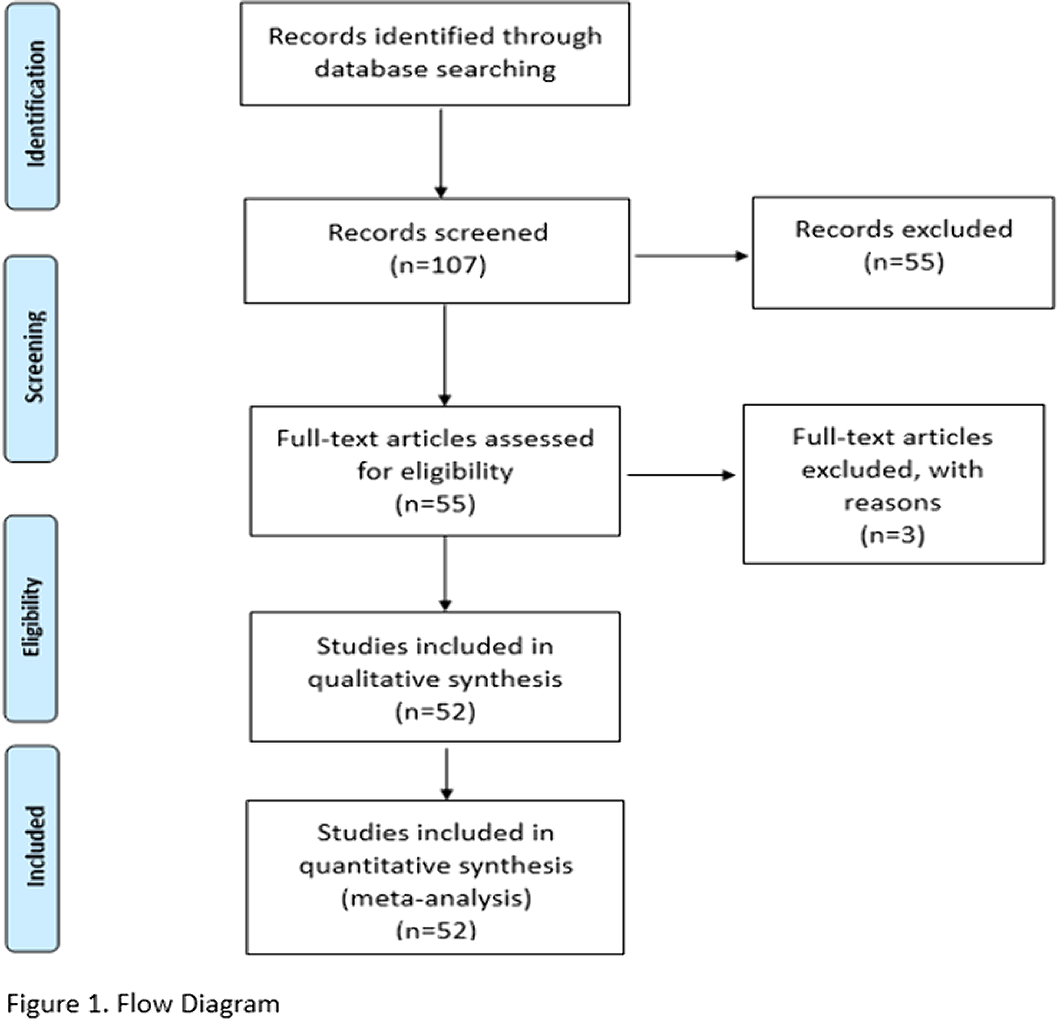
A systematic review of the methods of screening of cannabis use during pregnancy and neonates was carried out in PubMed (July 2020) in English, French and Spanish(10 years) with the keywords: screening, test, detection, analysis, urine, blood, hair, meconium.107 studies were analyzed: 52 included and 55 excluded (Figure 1.).
Results
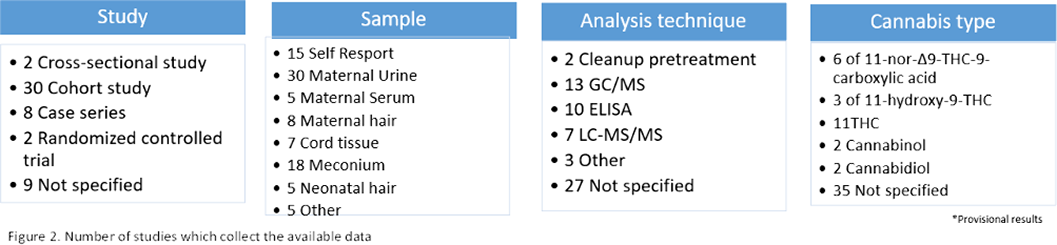
The studies analyzed stand out for its large heterogeneity. Self-report of pregnant women, meconium and maternal urine analysis are used the most. The type of analysis technique is not reported or chromatography mass spectrometry (GC/MS) and enzyme-linked inmunoabsorbent assay (ELISA) is used(Figure 2.). Urine seems to be the most accurate method for maternal testing. Neonatal meconium and umbilical cord tissue indicates fetal exposure during second and third trimester, neonatal hair third trimester exposure and maternal serum and hair can also be used (Figure 3.).
Conclusions
Nowadays, the available bibliography is heterogeneous and lacks information. Consequentially, further investigation needs to be carried out in order as to establish standardized prenatal screening of cannabis during pregnancy to draw more comparable and precise conclusions.
The concept of food addiction emerged recently due to the similarities between food overconsumption patterns and addictive drugs. This concept is not yet included into ICD or DSM as it still needs to be further investigated. Relationship between obesity and food consumption as well as the psychological indicators of food addiction are of particular interest.
Objectives
To examine the prevalence of food addiction and its relationship to obesity, quality of life and multiple indicators of impulsivity.
Methods
Cross-sectional in-person assessment of 1432 community adults (age 38.93+/-13.7; 58% female). Measurements: Yale Food Addiction Scale 2.0, anthropometrics, body composition, World Health Organization Quality of Life scale, and impulsivity measures including impulsive personality traits, delay discounting, and behavioral inhibition.
Results
The prevalence of food addiction was 9.3% and substantially below that of obesity (32.7%). Food addiction was more prevalent among obese individuals and also was associated with higher BMI among non-obese participants. It was associated with significantly lower quality of life in all domains, and significantly higher impulsive personality traits, particularly negative and positive urgency.
Conclusions
In this general community sample, food addiction was present in slightly fewer than 1 in 10 individuals, approximately one-third the prevalence of obesity, but notably the food addiction has been mostly represented within the subsample of obese individuals. Food addiction was robustly associated with substantively lower quality of life and elevations in impulsivity, particularly in deficits in emotional regulation. These data suggest food addiction may be thought of as a subtype of obesity and, in non-obese individuals, possibly a prodrome.
The Assertive Community Treatment (ACT) was developed by Leonard Stein and Mary Ann. The objective is the treatment of serious Mental Disorders in an integral way and in the community.
Objectives
The Assertive Community Treatment (ACT) was developed by Leonard Stein and Mary Ann. The objective is the treatment of serious Mental Disorders in an integral way and in the community.
Methods
This is a retrospective study with a total of 69 patients whose main diagnosis is Schizophrenia undergoing CT follow-up in 2018-2019. The data obtained have been analyzed by the SPSS statistical program.
Results
Our sample is mainly composed of men (60.9%) with an average age of 48 years (+ - 11.56). The main diagnosis is schizophrenia (62.3%) and the most commonly used long-term injectable treatment is paliperidone palmitate with a dose range of 150mg. Of the total number of patients, 29% of the cases did not maintain active use of any toxic, and the most commonly used toxic is tobacco (49.3% of cases).
Conclusions
The inclusion of patients in a ACT program requires a diagnosis of severe Mental Disorder and poor therapeutic adherence. After analyzing our data, we observed that most of them also have active toxic consumption and high doses of psychotropic drugs.
Substance use disorders in adolescents are a growing problem worldwide. These disorders are often unrecognised, unvalued by families, society and clinicians and as a result underdiagnosed, with serious future consequences if improperly addressed.
Objectives
Updated review of the recent literature on this topic.
Methods
Unsystematic review of the most recent and relevant literature.
Results
Review of neurobiology, risk factors, co-morbidity, differential diagnosis, diagnostic criteria, evaluation and treatment of substance use disorders in adolescence.
Conclusions
Substance use disorder in adolescence includes a variety of behaviours related to the use of alcohol and/or drugs, for instance, inability to control substance use, impairment of function at school, home or work, interpersonal problems and hazardous use of substance. Further knowledge in identifying, early diagnosing and adequate intervention in adolescents’ substance use disorder may have paramount prognostic features.
Harm reduction (HR) approaches substance use disorders (SUDs) from a standpoint of humanism and tolerance, understanding the difficulty of terminating consumption in some cases, and instead promoting practices aimed at reducing risks inherent to substance use while granting accessibility to comunity based healthcare and contact with differentiated care, when needed, to patients who otherwise wouldn’t have access to it. The COVID-19 pandemic brought about an economic crises, impacting mainly people from lower classes, associated with an increased prevalence of heroine and crack cocaine use and exacerbating previous SUDs.
Objectives
Describe changes in a HR population treated in HR context in Gaia, Portugal.
Methods
Data was retrieved from clinical files of patients undergoing treatment in a Harm Reduction setting on the HR team “GiruGaia” from Porto. Analysed data included number of patients admitted to treatment in the period between march the 1st and december the 30th 2020, their sociodemographic data, psychiatric and substance use history, psychiatric treatment and opioid agonist treatment when required. Gathered data was compared to the same time period in previous years.
Results
The number of patients admitted to treatment drastically increased. Patients presented with poorer socioeconomic conditions, more psychiatric comorbidity and in need of more extensive treatment interventions.
Conclusions
Our findings suggest that the pandemic and it’s socioeconomic impact affected drug users in need of HR interventions worsening underlying psychiatric disorders, poverty and inacessibility to healthcare. Drug users are often a forgotten population, and our results indicate that more attention should be devoted to them.
Body attitudes may serve as both vulnerability and protective factors for various forms of emotional and behavioral disorders, including suicidal and self-harm behaviors in adolescent and youth populations. Body Investment Scale (BIS, Orbach & Mikulincer, 1998) is an instrument specially designed to account for body attitudes in suicide assessment.
Objectives
The study was aimed to provide a preliminary evidence for using the BIS translation in the assessment of suicide risk factors in Russian-speaking student population in Azerbaijan.
Methods
The common recommendations for test translation were used. The factor structure, inter-item consistency of scales, and retest reliability were assessed. The participants were 100 students (18-23 years, 40 females, 60 males), 50 of them completed the retest.
Results
The exploratory factor analysis with fixed number of factors reveals a homologous structure to the original BIS scales, explaining 48.2% of variance (in comparison to 55% of original measure). Inter-item reliability coefficients were lower: .989 for Body attitude, .696 for comfort with touch, .65 for Care and .61 for Protection scales. Pearson’s r for retest reliability (in a month) were above 0.9. Three items that could be excluded for enhancing the consistency of scales address physical contact and self-harm issues and might be culturally inappropriate.
Conclusions
BIS is a promising instrument due to its grounded factor structure, but refinement of some items of the Russian translation is desired, as well as further study of applicability for adolescent population. BIS could fill the gap in scarcity of instruments for suicide assessment for Russian speaking population.
Suicide attempts are common in individuals with schizophrenia. These actions are marked by a greater lethality, due to the use of more violent means in particular the intentional ingestion of rodenticides.
Objectives
To describe the gravity of the heamatological disorders revealing suicide attempts by a rodenticides in patient with schizophrénia.
Methods
We repport the case of a patient who present a haematological disorders after an rodenticide intoxication.
Results
A 41-year-old man with schizophrénia since 2011 was brought to the department of psychiatry in july 2020 for behavioral disorders. On arrival, the patient was oriented but reticent and refuse to tell his full story. On examination, his vital signs were normals, and he did not show any externalized bleeding. Bilogical tests revealed the prothrombin time (PT) was <10% with an isolated and unexplained fall in vitamin K-factors. The etiological investigation was negative. Later,the patient admitted attempted suicide by taken 4 rodenticide packages orally three days prior admission to hospital. The initial treatment with intravenous vitamin K almost daily is effective. An improvement in PT (35%) and vitamin K-dependent factors was observed after one week of treatment. A Normalization of hemostasis disorders was obtained after two weeks of treatment.
Conclusions
It is imperative to suspect rodenticide intoxication in patient with scizophrenia with an isolated and an explained deficiency of vitamin K dependent factors. The particularity of this intoxication lies in the dangerous and prolonged side effects making the curative treatment difficult and long.
Alendronate is a nitrogen-containing biphosphonate that inhibits osteoclastic bone resorption. Lethal dose (LD50) was aproximately 626mg/kg in male rats, and 552mg/kg in female. Signs and Symptoms of overdose clammy skin, CNS depression, dysphagia, hiccups, miosis, respiratory depression, seizures and wheezing. Supportive therapy and monitor of urine flow, calcium and phsophorous level is essential for the management of voluntary overdose.
Objectives
To present the case of a 76-year-old woman who made a suicide attempt by ingestion of 8 tablets of 70 mg of alendronate.To describe the treatment of alendronate poisoning and the follow-up parameters for the control of complications.
Methods
Clinical case presentation through retrospective review of clinical notes and non-systematic literature review.
Results
A 76-year-old woman was taken to the emergency department after voluntarily ingesting 8 alendronate tablets (70 mg per tablet) 1 hour ago reporting “suicidal thoughts”. After clinical evaluation, gastric lavage, administration of activated charcoal, and IV ranitidine were used. After 24-hour observation and after psychiatric evaluation, the patient was discharged.
Conclusions
Hypocalcaemia, hypophosphataemia and upper gastrointestinal adverse reactions, such as upset stomach, heartburn, oesophagitis, gastritis, or ulcer, may result from oral overdose. In case of overdose with alendronate, milk or antacids should be given to bind alendronate. Giving milk or antacids, to bind the bisphosphonate and minimize absorption, has been suggested for oral overdose. Due to the risk of esophageal irritation, vomiting should not be induced and the patient should remain fully upright. For decontamination is recomended activated charcoal and gastric lavage.
During the last 15 years, an ideation-to-action framework has been proposed that has prompted the development of several models that account for the transition from ideator to attempter. Previous research on one such model, the Integrated Motivational Volitional Model of Suicide (IMV), suggests it accurately distinguishes between suicide ideators and attempters. However, no study has examined the utility of the model with a psychiatric sample of depressed suicide ideators and attempters.
Objectives
To address this gap in previous research, this study examines the ability of the IMV to distinguish between depressed adult suicide ideators with and without a history of suicide attempt presenting to the emergency department.
Methods
After providing informed consent and with the approval of the appropriate institutional review board, 68 adults presenting to the Emergency Department were recruited to participate in the study. Ideators and attempers were compared on sociodemographics, severity of depression/hopelessness/current suicide ideation, and volitional factors including, access, planning, exposure to family suicide, impulsivity, pain tolerance, fearlessness about death, and mental imagery of death. Group differences were evaluated using chi-square and t-tests. Multivariate group analyses were performed using logistic regression.
Results
Of the regression analysis indicate that fearfulness about death significantly predicts suicide attempt history (OR=10.560, p=.05). Ethnicity was also found to significantly predict suicide attempt history (OR=0.67, p=.006). No other sociodemographic variables or volitional moderators were significant.
Conclusions
Results of this study contribute to improving accuracy in this area and suggest that fearlessness about death should be routinely included in comprehensive suicide risk assessments.
Intracortical interactions reflected in EEG coherence (Coh) play an important role in the control of behavior in both norm and mental disorders. EEG Coh in depression is less than in the norm. Non-suicidal self-injuries (NSSI) are widespread in adolescents and represent a significant risk factor for consequent suicidal attempts (SA).
Objectives
The aim of the study was to identify the differences in EEG coherence between depressive female adolescents who have NSSI or NSSI and SA in their history compared with healthy controls.
Methods
75 depressive female adolescents (16–25 years old) were enrolled in the study and divided into two subgroups: NSSI (n=38) and NSSI+SA (n=37). The control group included 20 healthy subjects (HC) matched by age and gender. Baseline EEG was recorded, and EEG coherence was analyzed in 8 narrow frequency sub-bands.
Results
In the NSSI subgroup, the number of “high coherent connections” (pairs of EEG leads with Coh>0.80) was the lowest in comparison with the NSSI+SA subgroup (intermediate values) and HC (the highest values) in theta-1 (4-6 Hz), theta-2 (6-8 Hz), alpha-1 (8-9 Hz) and alpha-2 (9-11 Hz) EEG frequency sub-bands, especially in frontal-central-parietal regions.
Conclusions
The lowest EEG coherence in the NSSI subgroup suggests that this subgroup is “more depressive” than the NSSI+SA subgroup, while the NSSI+SA subgroup is “more normal” but has increased suicidal risk. The results obtained suggested the use of EEG Coh data to clarify the degree of suicidal risk in depressive adolescents with different types of auto-aggressive behavior. The study supported by RBRF grant No.20-013-00129а.
The course of dementia is accompanied by aggression, wandering, agitation, sexual and eating disorders, suicidal behavior (SB).
Objectives
Develop and approbate a program of medical and psychological rehabilitation (MPRP) SB in patients with dementia.
Methods
It were treated 199 patients with SB in dementia of which 107 get cured according to the developed programs and 92 people received traditional treatment.
Results
The program of MPRP combines pharmacotherapy, psychotherapy psychoeducation, psychological training and developed taking into account the mechanisms and predictors of SB. The program included phases: diagnostic phase, phase of active intervention, psychoprophylactic phase. Pathogenetic treatment of dementia was performed with acetylcholinesterase inhibitors and / or NMDA-receptor blockers for 4-6 months. Patients with dementia with a depressive mechanism of SB were additionally prescribed antidepressants from the class of SSRIS for 3-4 months; with the psychotic mechanism of SB – atypical neuroleptics (risperidone, quetiapine) for 2-3 months. The system of psychotherapeutic and psychosocial intervention included rational and family psychotherapy, cognitive training, self-care training and psychoeducation for patients with the cognitive mechanism of SB – art therapy and family psychotherapy, communicative trainings and psychoeducation for patients with the depressive mechanism of SB; crisis psychotherapy and art therapy, social skills training and psychoeducational classes for patients with a psychotic mechanism. Improvement of mental state and reduction of symptoms of SP were diagnosed in 72.9% of patients, and after the use of traditional forms of prevention – only in 40.2% (DC=2.58; MI=0.43, p>0.001).
Conclusions
The results of approbation MPRP program in SB testify to its effectiveness.
At pathomorphological research of suicides reveal neurogenerative changes, which determines the relevance of the search for neuroimaging predictors (suicidal behavior) SB in dementia.
Objectives
To study predictors of SB (in dementia, due to Alzheimer’s disease (AD), vascular (VD), mixed (MD) based on neuroimaging research.
Methods
We examined 213 patients with dementia in АD, VD, MD on a CT, which were divided by the factor of the presence of SB into the main and control groups.
Results
At patients with SB at AD expansion of basal cistern is revealed of the brain (59%), but signs of chronic ischemia in the form of a decrease in the density of brain matter in the projection of the basal ganglia and white matter (67%), dilation of the ventricular system of the brain (51%), more typical for patients without SB. At VD with SB periventricular leukoareosis (67%), expansion of subarachnoid spaces (82%) and deepening of cracks of a brain (67%) are found. Patients without SB were characterized by a decrease in the density of brain matter in the projection of the white matter (73%). At MD with SB expansion of subarachnoid spaces (100%), basal cistern of a brain (87%), periventricular leukoareosis (87%), decrease in density of substance in the brain were registered in the projection of the basal ganglia (100%). Patients without SB with MD had deepening of the brain slits (40%).
Conclusions
Neuroimaging signs in the form of chronic ischemia and pronounced atrophic changes in the brain are factors in the anti-risk of SB in dementia.
Depressive disorders are common for cardiac patients; however, a surgical intervention enhances their distress. How typical is suicidal ideation for cardiac surgery patients and with what clinical and psychological signs does it correlate?
Objectives
To estimate the frequency of suicidal ideation and correlations between suicidal ideation, clinical and psychological manifestations in cardiac surgery patients.
Methods
We examined 60 cardiac surgery patients, aged 25 – 65, prior to their operation. The Pierson correlation between manifestation of suicidal ideation, clinical and psychological signs was calculated with p<0.05.
Results
We revealed suicidal ideation in 3.33% of cardiac surgery patients. Its intensity credibly correlated with the frequency of taking alcohol (r=.32), as well as with manifestation of dysorexia (r=.59), dissatisfaction with life (r=.53), general level of depression (r=.49), sleeping disorders (r=.44), sense of guilt (r=.43), asthenia (r=.31), self-abhorrence (r=.29), and irritability(r=.29). A higher level of suicidal ideation correlated with a lower index of Positive-Past in their personal time perspective (r=-.27), which revealed itself in a patient having lack of positive impressions and recollections of their past life, which reduced a person’s adaptability in the present.
Conclusions
The frequency of suicidal ideation in preoperative cardiac surgery patients is not high. Nevertheless, we should bear in mind that high suicidal risk is characteristic for patients with not only depression, but also alcohol problems, as well as for those who have manifestations of negative attitude to their past.