We partner with a secure submission system to handle manuscript submissions.
Please note:
You will need an account for the submission system, which is separate to your Cambridge Core account. For login and submission support, please visit the
submission and support pages.
Please review this journal's author instructions, particularly the
preparing your materials
page, before submitting your manuscript.
Click Proceed to submission system to continue to our partner's website.
To save this undefined to your undefined account, please select one or more formats and confirm that you agree to abide by our usage policies. If this is the first time you used this feature, you will be asked to authorise Cambridge Core to connect with your undefined account.
Find out more about saving content to .
To send this article to your Kindle, first ensure no-reply@cambridge.org is added to your Approved Personal Document E-mail List under your Personal Document Settings on the Manage Your Content and Devices page of your Amazon account. Then enter the ‘name’ part of your Kindle email address below. Find out more about sending to your Kindle.
Find out more about saving to your Kindle.
Note you can select to save to either the @free.kindle.com or @kindle.com variations. ‘@free.kindle.com’ emails are free but can only be saved to your device when it is connected to wi-fi. ‘@kindle.com’ emails can be delivered even when you are not connected to wi-fi, but note that service fees apply.
The bioelectrical activity of the brain of suicidals has specific features.
Objectives
Investigate neurophysiological features associated with high suicidal risk (SR) in dementias.
Methods
An electroencephalographic study of brain was performed in 66 patients with dementia, of which 33 (with high SR) were included in the main group, the other 33 (with low SR) – in the control group.
Results
SR correlates include an increase in the spectral density and amplitude (in μV) of the α-rhythm in the right central (C4) (109.4) – in the main group, compared with (64.5) – in the control; in the temporal areas (T4) (132.2) - in the main group, (70.0) – in the control group (p<0.001). The predominance of the spectral density of the slow θ-rhythm over the entire surface of the brain (p<0.001) and δ-rhythm in the projection of Fp2 (82.3) – in the main and (116.1) – in the control groups (p<0.001), F3 (54.80) and (68.1), respectively, (p<0.05), F4 (52.4) and (67.3), respectively, (p<0.01), C4 (52.0) and (62.0), respectively (p<0.05), P3 (44.4) and (58.9), respectively, (p<0.01), O1 (67.6) and (89.41), (p<0.001), O2 (68.5) and (85.8), respectively (p<0.001) are a predictor of low SR in dementias.
Conclusions
With the progression of changes in the brain in dementias SR decreases. In the initial phases of the dementing process with a relatively preserved functional capacity of the brain SR is high.
Alagoas is one of the poorest states of Brazil and its HDI is the country’s worst.
Objectives
Present the epidemiological profile of suicides that occurred in the State of Alagoas from 2008 to 2018.
Methods
This research is epidemiological, descriptive and transversal. In this sense, data from the Universal Health System Informatics Department (DATASUS) were used to analyze the age range, marital status, race, sex, education and cause of death of the suicide victims.
Results
1245 people committed suicide in Alagoas in the period of 10 years, they were 951 men (76%) and 294 women (24%). The main cause of death was self-harm caused by hanging, strangulation and suffocation (ICD X-70), occurring in approximately 67% of cases (836 people), followed by self-poisoning by drugs and medication (ICD X-64) 140 people, and pesticides (CID X-68) 92 people. The auto injuries caused by firearms (ICD X-72 to X-74) totalled 45 victims, while the self-inflicted injuries intentionally caused by precipitation from a high place (ICD X-80) totalled 38 victims. Most of those who took their lives were single (57%), brown (88%), had between 15 and 39 years old (55%) and did not have their education level informed (75%).
Conclusions
Thus, the present study demonstrated that there is a compromise of important statistical data on education level and there is the inexistence of data on family income and sexual orientation, which may help to understand the phenomenon of suicide in Alagoas. Despite all this, it was possible to identify a group of risk for suicide in the State: brown, single and young men.
Suicide is a phenomenon that is increasing in prevalence. Exposure to suicide by a loved one can be experienced as a traumatic event, capable of precipitating or aggravating preexisting psychiatric conditions. As much as we are clinically aware of gravity situation experienced by suicide survivors, there is a marked lack of studies on psychotherapeutic interventions in this population group.
Objectives
The present work aims to review the literature on the psychodynamic treatment of suicide survivors, considering their theoretical and technical aspects.
Methods
Narrative review of psychiatric and psychoanalytic literature.
Results
The initial reaction described on becoming aware of the suicide of someone close to you is of disbelief, shock and helplessness. This is followed by ambivalent feelings of hate and guilt, shame and hopelessness. Sometimes, a chronic depressive state expressed by the survivor’s guilt can emerge. The mourning work will initially encounter resistance to face the loss of the object, through mechanisms such as denial, repression and psychotic fantasies. The lost suicide has a traumatic impact, modifying relational patterns and it is commonly associated with important isolation. The survivor will be able to transfer via fear the death of the therapist and even fantasize that he will also kill himself.
Conclusions
Psychodynamic psychotherapy with suicide survivors finds theoretical and practical foundations in the literature, mainly through discussions of reports clinical and theoretical reviews on the topic. Through transfer and therapeutic alliance, new patterns of object relation can be sketched, in a context of mourning so often complicated by shutdown pressures and loneliness.
During their career and sometimes during their training psychiatrists have to deal with the suicide of patients and have also to help other colleagues and families to cope with the situation. Suicide postvention should be integrated in psychiatric training and better implemented in both psychiatric and community contexts.
Objectives
To discuss the concept of suicide postvention in Psychiatry. To discuss the importance of addressing suicide postvention in psychiatric settings including during specialized training of Psychiatry residents.
Methods
MEDLINE and PubMed databases searches for peer-reviewed studies, published in the last ten years, using combinations of the key-words suicide postvention and psychiatry. Selection of the relevant studies according to the study aims.
Results
The literature search retrieved a total of 44 papers. All the articles that didn´t refer to the studied topic were excluded. Relevant articles discussing suicide postvention were selected, comprising a total of 22 articles. The reviewed papers discuss different contexts and strategies of suicide postvention that will be explored and critically discussed.
Conclusions
Addressing the topic of suicide postvention and implementing support programs and training in this field is crucial to psychiatry trainees, psychiatrists and other mental health professionals that integrate multidisciplinary teams, patients and their families and also to the community as a whole. Future research in this field can help to improve suicide postvention across different settings.
The COVID-19 pandemic has highlighted a need for engaging online resources to enrich psychiatry training for undergraduate medical students. Podcasting is a well-established digital communication platform utilised daily in a myriad of capacities, including education. A group of medical students were tasked with creating their own educational podcasts covering specific aspects of psychiatry.
Objectives
Each pair was set a sub-topic of psychiatry and utilised software to produce educational resources. The objective of this project was to reflect upon production as well as explore the efficacy of podcasting as a tool within undergraduate training.
Methods
The medical students conducted research and contacted experts within the field to contribute to their podcasts. The majority of the students then conducted reviews of the literature surrounding podcasting within medical education, which informed the production of their own podcasts. From this, it was discussed how this project could impact future practice, and indicated that podcasts may become crucial asynchronous learning tools in medical education.
Results
Literature review and first-hand experience of podcast production enabled the students to appreciate the advantages of podcasting and the potential for its widespread future applications. Their wider reading revealed that podcast-using study participants outperformed or matched their peers in assessments, and overwhelmingly enjoyed using podcasts over traditional teaching methods.
Conclusions
The use of podcasting can complement traditional psychiatry training and appeal to a generation of digital natives that prefer this learning style. Podcast production is also an excellent revision method, highlighting the advantages of peer-to-peer education in both learning and increasing engagement with psychiatry.
The aging of the population implies a greater risk of psychopathological events; at the same time multimorbidity constitutes the rule rather than the exception in the manifestations of the health problems of the elderly. Multimorbidity involves many diagnostic-therapeutic interventions, from general practitioners to neurology, geriatrics, psychiatry but these interventions do not appear integrated with each other.
Objectives
Evaluate the availability of psychogeriatrics training programs to increase the interest and skills of the medical profession on the multimorbidity of the elderly.
Methods
We have conducted a review of the scientific literature on integrated training programs in the field of psychogeriatrics over the past decade on pubmed, comparing the different training models proposed.
Results
A still limited amount of articles on integrated psychogeriatric training have been published although the demand for psychogeriatric care continues to increse. The frail elderly seems to have a connotation in terms of costs rather in terms of care; moreover, everything concerning the elderly is reduced to the organic dimension alone, neglecting psychopathology.
Conclusions
The feasibility of integrated training programs between primary care and specialists such as neurologists, geriatricians, psychiatrists is a priority in the field of psychogeriatrics in consideration of the relevant multimorbidity. It is appropriate both to update knowledge and to review the organizational models of care so that the frailty of the elderly with multimorbidity does not quickly translate into disabilities with high social welfare needs. It is also necessary for generalist psychiatry to return to the value of psychopathology of the elderly.
The National Mental Health Survey of India 2015-16 (Gururaj et al., 2016) indicated a large treatment gap of 70-92% for mental disorders and a paucity of mental health specialists in the country. In order to address this treatment gap and develop human resources, the National Institute of Mental Health and Neuro Sciences (NIMHANS), Bengaluru, India, with impetus from the Ministry of Health and Family Welfare, Govt. of India, launched the online course of Diploma in Community Mental Health for Psychologists.
Objectives
The course was designed with the objective of training individuals with a Master’s Degree in Psychology, in providing first-level psychological care in the community.
Methods
The course is a 3-month online programme comprising of approximately 25 hours of self-paced e-learning and 11 hours of live real-time interactive discussion via video conference. The course comprises of 6 modules, with an assessment at the completion of each module. Pre- and Post-Assessment is conducted to evaluate competencies achieved.
Results
On successful completion of the course, trainees are expected to have achieved competencies to: Screen for and identify mental health problems in adults and children, and understand factors influencing them; Understand management options; Conduct interview-based functional developmental assessment for intellectual deficits; Conduct first-level brief psychosocial interventions; Make appropriate referrals to Mental Health Professionals and other health professionals.
Conclusions
This digitally-driven online course is a viable option for development of human resources on a large scale, in a resource-scarce (i.e. of mental health specialists) country such as India.
The outbreak of the SARS-CoV-2 epidemic forced a change in the functioning of health care systems across the globe, requiring rapid adaptation to new conditions for the safe provision of services within all medical fields. General disruption has also affected the traditional program of a postgraduate training, which has been so far fixed with temporary solutions, but not given a proper evaluation in the times of big expectations and pressures from both patients and healthcare workers.
Objectives
Outbreak of the COVID-19 put psychiatry trainees and Early Career Psychiatrists in an unprecedented position of responsibility for treatment of a variety of comorbidities they had no prior experience with due to closure of specialized hospital departments and limited access to regular diagnostic tools. In addition to changes in clinical practice and deployment to unfamiliar ground, rescheduling of different components of regular training, transferring most of the educational activities to distance learning, limiting professional growth by canceling most courses and conferences only strengthened the feeling of uncertainty caused by constant adjustments of the final examinations’ conditions.
Methods
The Speciality Training Section of the Polish Psychiatric Association decided to review changes forced by the COVID-19 outbreak in a traditional postgraduate training program in psychiatry.
Results
Identified shortcomings pose questions about the necessity of a solid revision of the training in order to cope with more demanding working conditions.
Conclusions
Presented recommendations may be the starting point for a discussion on the programs’ evaluation across the entire region.
Rates of cannabis use among pregnant women have been increasing. Psychiatrists may be required to provide counselling regarding marijuana use in pregnancy for their patients.
Objectives
To produce an up-to-date review of cannabis effects on pregnancy and the offspring.
Methods
We performed a non-systematic review of the literature apropos a clinical case.
Results
A 31-years-old, 22-weeks pregnant woman presented with severe anxiety, panic attacks and insomnia which she managed solely with cannabis. She had been previously treated with antidepressants and benzodiazepines with symptom remission but had suspended before her pregnancy without medical advice. She believed medication was more harmful to the baby than her cannabis use. There is little perception of risk concerning cannabis use in pregnant woman. Information on cannabis use is less likely to be obtained from healthcare providers than from anecdotal experiences, Internet searching and advice from friends and family. Prenatal use of cannabis has been associated with anaemia in the mother, whereas in the offspring it is associated with reduction in birth weight and greater likelihood of placement in intensive care units. There is insufficient evidence to support an association between marijuana use and any specific congenital abnormality, but also to demonstrate its safety.
Conclusions
It is essential for psychiatrists to have up-to-date knowledge of the effects of cannabis on the pregnancy and the offspring to properly counsel their patients. However, the effects of cannabis on maternal and foetal outcomes remain generally unknown. With rising numbers of female users, there is urgent need for further research.
Perinatal death includes losses such as ectopic pregnancies, miscarriages, stillbirths and neonatal deaths. Perinatal loss has well documented negative effects on the health of the bereaved parents. Early pregnancy loss (EPL) is the spontaneous death of a fetus within the first 20 weeks of gestation.
Objectives
To describe a clinical case of disenfranchised grief following EPL and to review the literature.
Methods
We reviewed the clinical file of a patient presenting to the psychiatry outpatient clinic with disenfranchised grief. We conducted a non-systematic review on PubMed and Google Scholar.
Results
A 29-years-old female patient presents to the outpatient clinic with depressive symptoms and thoughts of death. The symptoms had begun 4 months earlier, following the loss of pregnancy at 14 weeks. She felt her grief was not accepted by her family and social network. Progressively, her relationships deteriorated, and she felt more and more isolated. She experienced marked difficulty in caring for her older child. Compared to other types of mourning, the loss of a child is associated with grief experience that is particularly severe and complicated. Despite the high prevalence of EPL, many women suffer in silence due to the common belief these losses are insignificant and may develop complicated grief.
Conclusions
Perinatal loss of an infant has the potential to have a large impact on the mental health of the bereaved parents. Literature on the efficacy of different interventions is still scarce. Further studies are necessary on prevention strategies and interventions for parents already suffering from complicated grief or depressive disorders.
Suicide is a public health problem which has biopsychosocial aspects. These three compartments function differently for women and men in terms of biology and gender inequality.
Objectives
This study aims to investigate completed suicide rates in Turkey for women and men seperately considering age ranges for each, and their relationship with gender equality.
Methods
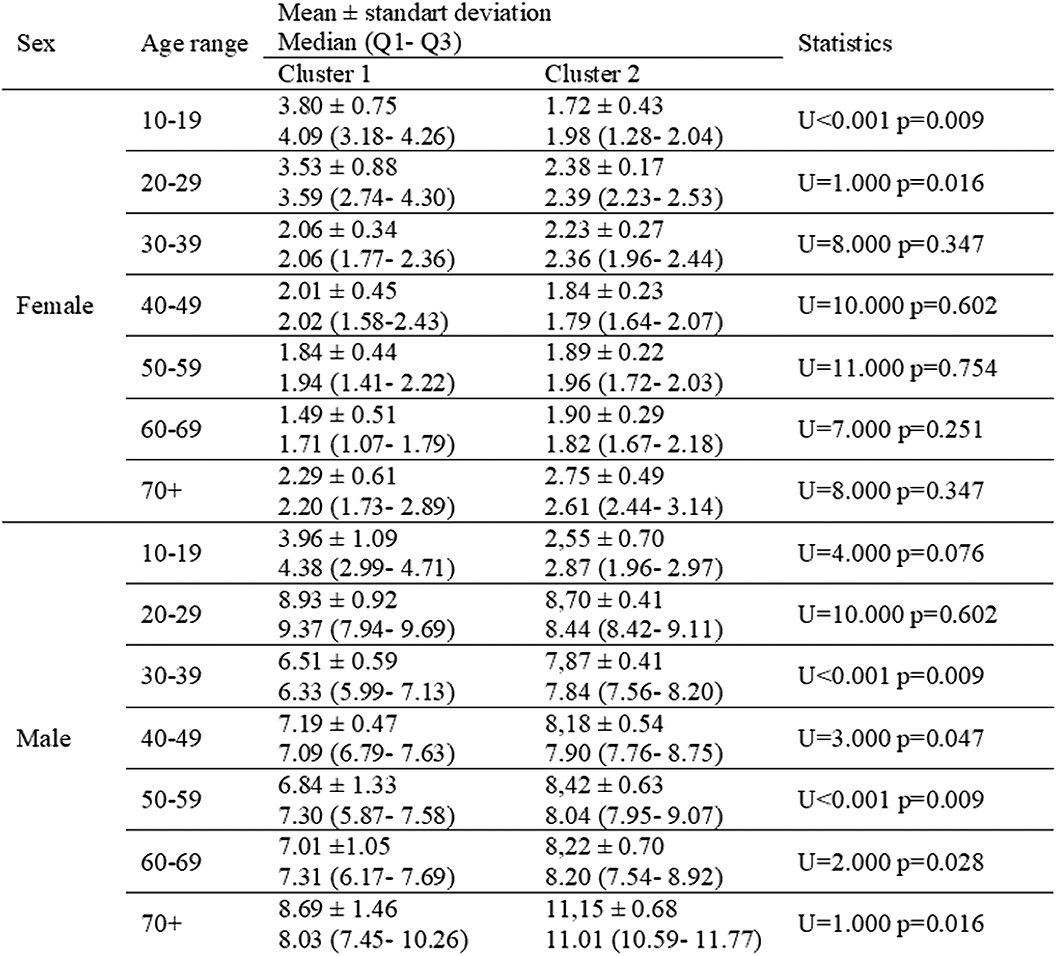
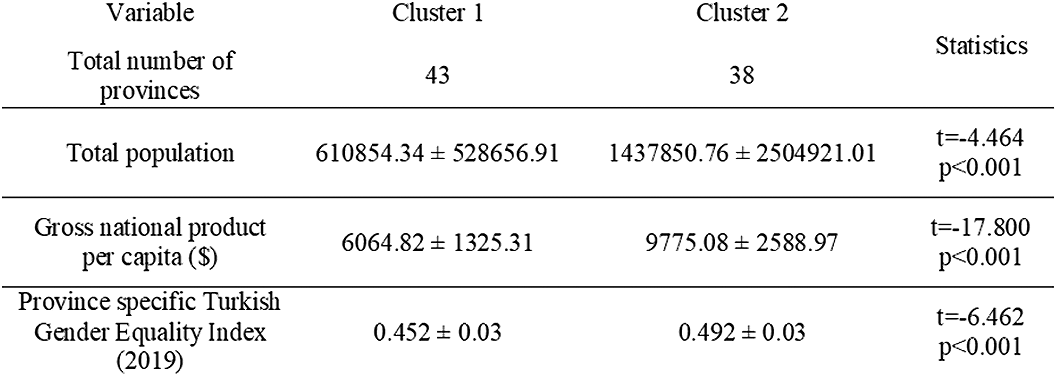
Sex and age specific data between 2015-2019 was derived from Turkish Statistical Institute. Utilizing Bağdatlı Kalkan’s study (2018) and Turkey’s Gender Equality Ratings (2019), 81 cities were seperated into two clusters (Table 1). Mann Whitney U and Independent Samples T Test were applied.
Results
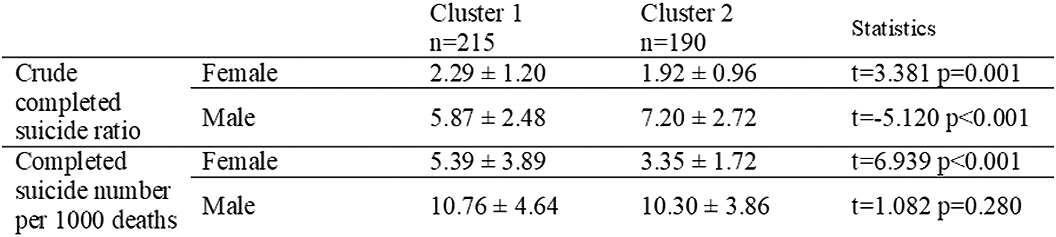
Young women’s (<30 years old) crude completed suicide rates were higher, when crude completed suicide rates for men over the age of 30 were fewer in the cities which equality index is low (Table 2). Regardless of age ranges, in better gender equality cluster, female suicide rates were fewer, male suicide rates were higher. The number of deaths by suicide in 1000 deaths didn’t differ for men, while the rate decreases for women in better gender equality cluster (Table 3).
Conclusions
Gender inequality may negatively effect young women’s mental health in more patriarchal cities in Turkey from the point of completed suicide.
Long-acting injectable (LAI) antipsychotics are related to proven compliance to treatment and more constant medication levels (hence the apparent lower side-effect burden).
Objectives
To highlight the experience with LAI antipsychotic treatment during pregnancy.
Methods
Literature review.
Results
Seven cases are reported. A 35year old with schizophrenia received zuclopenthixole LAI (mostly 200mg/monthly) during both her pregnancies (of healthy girls born at weeks 39 and 40). A 35year old with schizophrenia was under risperidone LAI (25mg/2 weeks) and gave birth to a healthy girl at week 37. Another 35year old (probably with schizophrenia) was on olanzapine LAI (300mg/month during the last quarter of her pregnancy) that led to the birth of a healthy girl at week 40. A 37year old with schizophrenia received paliperidone LAI (100mg/monthly, last injection at week 28) and gave birth to a healthy boy at week 39. Paliperidone LAI (50mg/monthly) was the treatment of another 34year old with schizoaffective disorder that gave birth to a healthy boy at week 40, as well as of a 26year old (263mg/3-monthly), mother of a healthy boy as well (born at an unspecified week of pregnancy). Finally, a 43year old with bipolar disorder was on aripiprazole LAI (300mg/monthly) during her pregnancy that led to the birth of a healthy girl at week 40.
Conclusions
All pregnant women on LAI antipsychotic treatment gave birth to (apparently) healthy babies. LAI doses were mostly low. Long-term follow-up could clarify eventual delayed aftereffects. Based on the literature, LAI antipsychotic treatment could be considered as an option for selected pregnant patients.
The coronavirus disease 2019 (COVID-19) pandemic created a situation of general distress. Although the focus has been initially more on the physical health during the pandemic, mental health concerns linked to the lockdown have quickly risen.
Objectives
The aim of this study was to evaluate the impact of the first wave of COVID-19 pandemic on Tunisian women’s mental health.
Methods
An online survey was conducted during the first wave of COVID-19 pandemic using the Depression Anxiety and Stress Scales (DASS-21). We also collected sociodemographic information and mental health status.
Results
A total of 751 women completed the questionnaire. More than half of the participants (57.3%) reported extremely severe distress symptoms, and 53.1% had extremely severe stress symptoms as per the DASS-21. Those who had a history of mental illness were found to have more severe symptoms of depression, anxiety and stress.
Conclusions
As this study was the first one to evaluate the acute impact of COVID-19 on mental health in Tunisia, Arab world and in Africa, it may be a sound basis for developing an effective psychological intervention aimed at women in these regions.
Violence against women is a public health problem worldwide. During humanitarian crises such as wars, violence expands mainly to the detriment of the most vulnerable groups.
Objectives
This study aims to assess the effect of the COVID-19-related lockdown on gender-based violence.
Methods
This study was conducted using an online survey, between April 25 and May 6, 2020. Women were asked about sociodemographic information, lockdown conditions, history involving exposure to violence before and during the COVID-19 lockdown and its types.
Results
The number of included participants was 751. The age ranged from 18 to 69 years. Violence against women increased significantly during the lockdown (from 4.4 to 14.8%; p < 0.001). Psychological abuse was the most frequent type of violence (96%). Almost 90% (n = 98) of those who experienced violence during the lockdown did not seek assistance. Women who had experienced abuse before the lockdown were at an increased risk of violence during lockdown (p < 0.001; OR = 19.34 [8.71–43.00]).
Conclusions
Strengthening strategies to protect women during periods of crisis is urgent. However, a change in mentalities would take more time to set up. Violence against women necessitates a fundamental long-term struggle and practical intervention strategies.
Due to COVID-19 pandemic, the Tunisian government officially announced a lockdown on March 2020. This decision caused a significant change in the everyday life of Tunisians such as movement restriction revealing the psychosocial aspect of this crisis.
Objectives
This study aims to assess the impact of the COVID-19 pandemic on the mental health of Tunisian women and its association with social media addiction.
Methods
This study was conducted using an online survey, between April 25 and May 6, 2020. Women were asked about sociodemographic information, lockdown conditions. The Facebook Bergen Addiction Scale (FBAS) was used to evaluate addiction to Facebook and social media. The Depression Anxiety and Stress Scales (DASS-21) was used to evaluate depression, anxiety and stress.
Results
We included 751 participants. Scores of the FBAS ranged from 6 to 30 and the mean score was 16.49 (± 5.4). Forty percent (n = 300) of respondents might have facebook addiction, as per the scale. A significant positive correlation was found between Facebook addiction score and DASS scores of depression (p = 0.001, r = 0.43), anxiety (p = 0.001, r = 0.39) and stress (p = 0.001, r = 0.41).
Conclusions
Women who have higher rates of distress are more likely to have a problematic Facebook use during the COVID-19 pandemic which suggests that smartphone and internet use may be part of coping strategies implemented for the emotional distress secondary to this pandemic.
The impact of intimate partner violence (IPV) can be devastating on women’s psychology. Moreover, IPV may destroy women’s self-esteem and self-identity.
Objectives
To identify sociodemographic characteristics associated with IPV and to assess self-esteem among women victims of IPV.
Methods
It was a descriptive and analytical study over a period of 03 months from June 1st to August 31st, 2018 including all cases IPV female victims in forensic department at Habib BOURGUIBA University Hospital, Sfax. In addition to epidemiological data, Rosenberg scale were used to assess the victim’s self-esteem.
Results
Among 142 female IPV victims, only 60 (22.3%) agreed to answer our questionnaire. Their median age was 33.5 years (27-41 years). Victims did not pass high school in 61.7% of cases and they were unemployed in 53.3% of cases. Most women got married at 23 years-old (20-26). The average length of marriage was 7 years (3-14 years). Bruises and abrasions were the most frequent lesions (58.3% and 56.7% of cases). Rosenberg Scale score’s mean was 28.3 ± 4.3. Self-esteem was low or very low among 70% of victims.
Conclusions
Female victims of IPV do not have a specific profile and low self-esteem is quite common among them. Additional research is needed to better understand the extent of the problem and to develop more effective reporting methods.
Emotional regulation, understood as the emotional ability to repair emotional states, is a skill closely linked to adaptation during aging. People who are capable to manage their emotions have greater control over moods, applying adaptive regulation strategies that allow them to maintain positive moods and modify or regulate negative ones. It has been observed that gender can be a relevant variable related to emotional regulation. In this sense, it is considered that women may be more skillful than men to emotional regulation strategies, benefiting from more successful emotional management strategies.
Objectives
Verify if there are differences in the ability of emotional regulation between older men and women.
Methods
The sample consisted of 851 healthy older adults, of whom 299 were men and 554 women. The participants were recruited from elderly leisure centers in the city of Valencia (Spain). To assess emotional regulation, the regulation dimension of the Trait Meta-Mood Scale 24 (TMMS-24) was used.
Results
Significant differences were obtained in the emotional regulation dimension based on gender (F1, 851 = 0.075, p = 0.010), finding higher levels in women than in men (3.64 vs. 3.49).
Conclusions
There is an apparent advantage of women in relation to emotional regulation, showing more skill than men in the management of emotional states. This is an important finding considering the impact of emotional regulation on adaptation during aging. This adaptative advantage has a greate importance in generation pleasant emotional states that contribute to healthy aging.
This review study examines the cases of improving the therapeutic skills of therapists and areas of counseling and the important cases that midwives have to provide services and manage conditions if Diagnosis of an abnormal fetus requires attention.
Objectives
We aim to find the best ways of counseling for helping parents with diagnosed abnormal fetuses
Methods
A search conducted by using the keywords congenital anomalies, psychological counseling, prenatal counseling in PubMed, science direct, clinical key and Google scholar search engine. after screening, the complete data of 20 articles were included in this review article.
Results
The results showed that pregnancy counseling with abnormal fetuses includes medical and psychological counseling. In medical counseling, knowledge of the types of tests and their interpretation is important, and prenatal screening training programs for health care providers should be revised based on their educational needs. In psychological counseling, to meet the needs of a changing population of clients Midwives in the context of the wider healthcare system need accurate knowledge of religious beliefs and cultural contexts of their clients in order to take the best approach to relevant care. The occurrence of a diagnosis of congenital anomaly during transmission to parents adds to the accumulation of stress-related events that may increase the risk of developing psychological symptoms in the early stages after diagnosis.
Conclusions
Considering the different cultures of different countries of the world, midwifery counseling skills play an important part in the diagnostic and therapeutic process. Therefore, creating extraordinary educational programs on university education is needed for midwives.
The psychological effects of using any method of contraception are not hidden from anyone but in different methods, they have different effects.
Objectives
We aim to investigate the different psychological effects of common contraceptive methods in women.
Methods
A search conducted by keywords “contraception”, “psychological effects” and “women” in PubMed, Science Direct, Scopus and Clinical Key and Google Scholar search engine. Finally, data from 12 articles were used for this review study.
Results
The positive and negative psychological effects were slightly different in consumers. The effect of OC and IUD and sterilization on sex life compared to condoms was reported to be positive and in menstrual experiences, OC consumers reported higher satisfaction than other methods, in particular, IUD. The regret in using sterilization was higher than in other methods. Psychopathological disorders and psychological disorders developed while using these methods should be differentiated. Negative psychological effects of women using contraceptive methods are often due to their mental background to a mother’s role and fertility and the conflict that exists in these methods with their mental image. Also, cooperation and understanding of spouses on the acceptance of these methods and their positive or negative impact has been reported to be very effective.
Conclusions
Before providing any method of contraception, it is recommended to provide comprehensive counseling on each method and follow up with women while consuming to reduce these symptoms and improving their effectiveness.
Bupropion is a NDRI antidepressant with action on both serotonin and nicotinic receptors. Endocrine and sexual adverse effects are very rare and hence very unlikely to cause hyperprolactinemia. We report a case of a patient who developed galactorrhoea following Bupropion augmentation of Escitalopram. A 24 yr old unmarried nulliparous female was brought with complaints of low mood, loss of interest, decreased concentration in studies from 20 days. She was also reported to be smoking cigarettes since 2 years with occasional alcohol use. There was no menstrual abnormalities nor any use of regular medication. On MSE there was depressed affect with negative cognition and occasional death wishes with normal perception. HAM-D Score was 17-19. She was started on Escitalopram 10 mg/day and Clonazepam 0.5 mg/day. Depressive symptoms improved and 2 weeks later Bupropion 150 mg/day was added as anti-craving and for augmentation owing to residual depressive symptoms.
Objectives
Bupropion induced Galactorrhoea
Methods
Cross-sectional
Results
Within 2 weeks of starting Bupropion, she reported with complaint of galactorrhoea. Prolactin level came out to be 28.67 ug/L. Brain imaging was also reported to be normal. Escitalopram was stopped and substituted with Mirtazapine 7.5 mg/day, continued for a week. There was no improvement, hence Mirtazapine and Bupropion were discontinued and started on Sertraline 25 mg/day. Galactorrhoea started reducing within next 4-5 days and completely subsided within a week of stopping Bupropion.
Conclusions
Bupropion has action on serotonin receptors which might be hypothesized as cause. Also, it is a potent CYP2D6 inhibitor, causing increase levels of Escitalopram.