We partner with a secure submission system to handle manuscript submissions.
Please note:
You will need an account for the submission system, which is separate to your Cambridge Core account. For login and submission support, please visit the
submission and support pages.
Please review this journal's author instructions, particularly the
preparing your materials
page, before submitting your manuscript.
Click Proceed to submission system to continue to our partner's website.
To save this undefined to your undefined account, please select one or more formats and confirm that you agree to abide by our usage policies. If this is the first time you used this feature, you will be asked to authorise Cambridge Core to connect with your undefined account.
Find out more about saving content to .
To send this article to your Kindle, first ensure no-reply@cambridge.org is added to your Approved Personal Document E-mail List under your Personal Document Settings on the Manage Your Content and Devices page of your Amazon account. Then enter the ‘name’ part of your Kindle email address below. Find out more about sending to your Kindle.
Find out more about saving to your Kindle.
Note you can select to save to either the @free.kindle.com or @kindle.com variations. ‘@free.kindle.com’ emails are free but can only be saved to your device when it is connected to wi-fi. ‘@kindle.com’ emails can be delivered even when you are not connected to wi-fi, but note that service fees apply.
Quarantine for suspected patients of being infected by the COVID-19 can lead to negative consequences for mental health and the appearance of depressive symptoms.
Objectives
To assess the prevalence of depression in quarantined patients, and to analyze the associated factors.
Methods
This was a descriptive and analytical survey, carried out from April 4 to May 30, 2020, with 149 patients consulting the COVID-19 sorting box at the Hedi Chaker CHU in Sfax. Suspected COVID-19 patients were contacted by phone during their quarantine and invited to participate in our study. The Patient Health Questionnaire (PHQ-9) scale was used to assess the severity of depression. Cutoffs of 5, 10, 15, and 20 represent minimal, mild, moderate, moderately severe, and severe levels of depression based on PHQ-9 scores. A cutoff score of 10 determines major depression.
Results
The results showed a prevalence of major depression of 10.7%. Of all patients, 89.3% had minimal to mild depression; 10% had moderate to moderately severe depression and 0.7% had severe depression. The PHQ-9 score was statistically correlated with travel to a suspect area during the 14 days preceding the consultation (p = 0.008), contact with a subject confirmed COVID-19 (p = 0.01), previous follow-up in psychiatry (p = 0.047), the change of residence during quarantine (p = 0.045), the fear of transmitting the disease to relatives (p = 0.00) and the positive result of the nasopharyngeal swab (p = 0.00).
Conclusions
Psychological distress was felt in our patients. We recommend that necessary measures should be taken to combat depression.
Pandemic is accompanied by “infodemic” that is related to higher anxiety (Moghanibashi-Mansourieh, 2020; Roy et al., 2020; Huang, Zhao, 2020). We suggest that indefinite and stressful situation of pandemic provoke magical thinking leading to lower adherence with recommendations for self-isolation.
Objectives
The aim was to reveal the structure of beliefs about reasons, manifestation and consequences of coronavirus and their relationship with magical thinking, anxiety and COVID-19-related behaviour.
Methods
In April 2020 (2-3 weeks of self-isolation regimen) 402 adults aged 18-64 years old filled checklist including beliefs about pandemic (based on the model of Leventhal et al., 2003), Magical Ideation Scale Eckblad, Chapman, 1983) as well as scales measuring anxiety and protective behaviour in pandemic and monitoring of information about coronavirus (Tkhostov, Rasskazova, 2020).
Results
Factor analysis revealed three groups of radical beliefs about coronavirus (48.6% of variance, Cronbach’s alphas .62-.75). Belief about the particular meaning of coronavirus was associated with the magical thinking (r=.21), less anxiety about infection (r=-.19) and poorer adherence to self-isolation (r=-.26). Belief in the negligence as a cause of coronavirus was more typical for those with better adherence (r=.18) while catastrophic beliefs about the consequences of pandemic were related to frequent monitoring of the information about the pandemic (r=.24), and anxiety regarding future negative consequences of the pandemic (r=.46).
Conclusions
Dysfunctional beliefs about coronavirus could be a factor of poorer adherence related to magical thinking and could be addressed in psychological interventions. Research is supported by the Russian Foundation for Basic Research, project No. 20-04-60072.
The medical novelty of COVID-19 requires a comprehensive study of its impact on various areas of human health, including mental health.
Objectives
To study the spectrum and severity of psychopathological disorders in previously healthy patients of different age groups who have had moderate and severe COVID-19 pneumonia.
Methods
Immediately after stabilization of the physical condition, patients completed the Symptom Checklist-90-R, designed to assess 11 parameters: somatization (SOM), obsessive-compulsive (OS), interpersonal sensitivity (INT), depression (DEP), anxiety (ANX), hostility (HOS), phobic anxiety (PHOB), paranoid ideas (PAR), psychoticism (PSY). Patients with cognitive impairment were excluded.
Results
The study involved 148 patients aged from 26 to 84 years. In the general sample, psychopathological symptoms were detected mainly on the SOM, DEP, ANX, HOS scales. To a lesser extent - on the INT and PAR scales; were practically not determined on the PSY and PHOB scales. Most of the symptoms are significantly more intense in patients over 46 years old (n = 129) compared with the younger population (<46 years old, n = 19). Older patients according to SOM revealed 1.23 points (IQR 0.5) versus 0.85 (IQR 0.7) among young people, DEP - 0.88 (IQR 0.44) vs. 0.47 (IQR 0.44), ANX - 0.66 (IQR 0.44) vs. 0.43 (IQR 0.29), OS - 0.55 (IQR 0.5) vs. 0.31 (IQR 0.25) and HOS - 0.46 (IQR 0.34) vs. 0.29 (IQR 0.09).
Conclusions
Patients recovering from severe COVID-19 pneumonia require psychiatric evaluation and subsequent differentiated psychotherapeutic rehabilitation, especially for the age group over 46.
The coronavirus pandemic has challenged the world with an unprecedented situation. Social distancing, self or quarantine isolation, personal hand hygiene, self-protection, and the fear of becoming infected with the virus, come with a psychological fallout. The COVID-19 pandemic has affected students around the world, in terms of their education and lifestyle.
Objectives
To investigate the impact of COVID-19 pandemic on the students’ mental health and well-being at the University of Patras, in Western Greece.
Methods
An online questionnaire was prepared to collect responses from students during April 2020. Socio-demographic data, academic status, opinions about distance learning, changes in daily routine during the lockdown and anxiety and depression scores, according to the Greek version of the Hospital Anxiety and Depression Scale (HADS), were gathered.
Results
The total number of responders was 2009, of which 67.3% women. During lockdown, the 68% of the students returned to their family home. Anxiety and depression scores were higher in students with a low income, poor self-rated health, not informed about COVID-19, not satisfied with distance learning and being annoyed at staying home. Prevalence of anxiety and depression was found to be 35.8% and 51.2%, ranging from 26.7% to 48.2% for anxiety and from 36.3% to 60.5% for depression in Health Sciences and Humanities and Social Sciences, respectively.
Conclusions
Depression rates among university students in Greece were alarmingly high, denoting the impact of lockdown and changes in students’ life, due to the COVID-19 pandemic.
Following Italy and many other European countries Russia entered a nationwide lockdown in March 2020. Since quarantine had impact on mental health (Gualano et al., 2020, Stanton et al., 2020), this study aimed to study the psychological predictors of low mental health and anger in Russian university students. Previous studies have shown that young people are most vulnerable part of population during Covid-19 pandemic (Pervichko et al., 2020).
Objectives
The purpose of this research was to assess the effects of externality and hopelessness on anger and irritation during COVID-19 lockdown.
Methods
The sample comprised 120 university students (86% women, M=18.84, SD=1.58) from Moscow. Online survey has been conducted in April 2020. Measures included Russian externality-internality scale based on Rotter’s scale and three new scales specific for COVID-19 pandemic developed for this study to assess feeling of hopelessness (α = 0.72), anger (α = 0.70) and positive reformulation (α = 0.84).
Results
Anger shows significant correlations with hopelessness (r=0.43; p<0.001), externality (r=0.29; p<0.01) and positive reformulation (r=–0.41; p<0.001). Structural equation modeling confirms theoretical model according to which the effect of externality on anger is mediated by hopelessness and positive reformulation (negatively) (indirect effects sig. at p<0.01, χ2 = 1.32; df = 1; p = 0.251; CFI = 0.995; TLI = 0.969; RMSEA = 0.052.
Conclusions
Conclusions. Anger and irritation regarding the necessity to stay at home during COVID-19 lockdown may be caused by external locus of control which effect on anger is mediated by hopelessness and limited capacities for positive reframing.
Lockdown due to the management of infectious diseases such as corona virus disease affect mental health. We would think that with the end of the lockdown due to the corona virus pandemic, the feeling of regaining freedom and movement would be good for our morale.
Objectives
Through this servery, we examine the prevalence of anxiety symptoms in the Tunisian population face to the end of lockdown.
Methods
The survey was conducted using the online anonymous questionnaires and distributed through social networks from 24 April to 23 May 2020(which was considered the end of the lockdown in Tunisia). It included socio-demographic questions and participants’ experience of SARS-CoV-2related stressful events (A member of your family was suspected of having Corona virus /someone you know had Corona virus‘s symptoms /You were quarantined). Anxiety symptoms were evaluated with the Hospital anxiety and depression scale-anxiety (HADS-A)
Results
Our study included 80 participants: 71.3% female and 42.5% married. The mean age of the participants was 29.30 years (SD = 8.72). The mean HADS-A score was 8.03 (SD=2.938) (maximum=16 minimum=1). Two-thirds of the participants exhibited anxiety symptoms (66.3%) with 1.3 % reported moderate severe anxiety symptoms. Anxiety was correlated with age and gender (p=0.013, p=0.027).
Conclusions
Our results suggest that in this early phase of the COVID-19 lockdown resolution we can already observe its fundamental impact on anxiety.
Individuals’ beliefs about COVID-19 pandemic may affect their health-related behavior including self-isolation. “Positive” beliefs may be realistic (constructive belief that efforts help to prevent infection and spread of the virus) or rose-colored glasses (defensive belief that coronavirus problem is exaggerated aimed to cope with anxiety) with different consequences for behavior and mental health.
Objectives
Objectives: The aim was to develop the scales of defensive and constructive optimism towards COVID-19 pandemic (DCO-Covid) and analyze their psychometric properties, factor structure using CFA, internal consistency and validity.
Methods
The sample comprised 1403 university students (68% women, M=20.59, SD=3.66) from large cities of Russia. Online survey conducted from 10/4/2020 till 25/4/2020. Test battery included the scales of constructive and defensive optimism (each of 3 items) and measure of dispositional optimism (LOT-R, Scheier et al., 1994). Part of the sample (N=306) completed anxiety in a pandemic questionnaire (Tkhostov, Rasskazova, 2020).
Results
CFA indicated a good fit for the two-factor model (χ2=27.11, df=8, p<.001, CFI =.985, TLI=.971, RMSEA = .041, p[RMSEA≤.05] = .78) with negative correlations between factors (–.28). Cronbach’s alpha for defensive optimism and constructive optimism were α=.75 and α=.70 respectively. As expected constructive and defensive optimism correlated with dispositional optimism (r=.24; p < .001 and r=–.06; p<.05 respectively) and anxiety (fear of infection, r=.08; n.s and r= –.23; p < .001).
Conclusions
The results show that DCO-C is a reliable measure of defensive and constructive optimism towards COVID-19 pandemic. The construct validity of these scales is confirmed by CFA and obtained correlations.
Coronavirus disease 2019, is now a global pandemic that has spread rapidly causing many deaths. Most countries have opted for compulsory confinement which had repercussions on mental health and well-being.
Objectives
The purpose of this study is to assess mental health consequences during the confinement period.
Methods
This is a cross-sectional descriptive study of 360 Tunisians in April and May 2020. We used an anonymous E-questionnaire that included a socio-demographic fact sheet, The HAD questionnaire, and a Q-EDD questionnaire to explore eating disorders.
Results
The subjects of our sample were mostly males with a mean age of 31. The body mass index was 25.5 (range 16.10 -46.24), 15% suffered from obesity. Half of the subjects were single and 6.7% spent the confinement time alone. 11.1% were smokers while 4.4% were alcohol users. The HAD-A and the HAD-D scores had an average of 9.1 and 8.48 respectively.A pathological threshold of anxiety and depression was found in 20% and 30% of the sample respectively.15% had an eating disorder: 76% had binge eating, 20% had bulimia and 17% had anorexia. In our study, we found an association between eating disorder and obesity, single marital status (p=0.007), living alone (p=0.001), history of depression (p=0.046), anxiety (p=0.049) and depression (p=0.038).
Conclusions
Reduced social interactions, decreased physical activity and increased stress are potentially harmful causes for our brain. Confining the population for several weeks has a negative impact on our physical and mental health. A crisis unit has been formed in Tunisia to help subjects overcome these psychological difficulties.
Religion belongs among well-documented coping strategies, through which one can understand and deal with stressors.
Objectives
The aim of this study was to examine religious coping responses face to the outbreak of COVID-19 pandemic among Tunisian people.
Methods
The survey was conducted using the online anonymous questionnaires and distributed through social networks from 24 April to 23 May 2020. It included sociodemographic questions, participants’ experience of SARS-CoV-2related stressful events and the frequency of religious practice during the COVID-19 pandemic. The Brief RCOPE was used to assess religious coping.
Results
Our study included 80 participants: 71.3%female and 42.5%married. The mean age of the participants was 29.30 years (SD = 8.72). The religion of all participants was Islam, and 72.5% of them had religious practices. Participants reported much lower levels of negative religious coping than positive religious coping (5% versus 37.5%). There were no significant differences in religious coping activities as a function of gender (p=0.180, p= 0.192). Significant relationships were found only for demographic variables: level of education with Higher-educated reported more PRC (p=0.002). Having a family member with a suspected or confirmed infection was correlated with PRC (p=0.016).Concern with becoming infected or having a friend with a suspected or confirmed infection did not correlate with any coping strategy (p=0.112; p=0.489). No correlation was found between religious commitment and religious coping (p=0.897; p=0.504) however increasing religious activity during this pandemic was correlated with PRC (p=0.013).
Conclusions
Our findings suggest that lockdown experience is associated with higher use of NRC strategies.
Coronavirus disease (COVID-19) is a contagious disease. Its potential psychological impact could involve fear of being contaminated by germs and dirt, which may lead to washing hands repeatedly until harm the skin.
Objectives
To explore the incidence of Obsessive-Compulsive Disorder (OCD) symptoms during COVID-19 pandemic among the Saudi general population, and to explore its correlation with stress and the associated factors.
Methods
A cross-sectional survey of a sample consisting of 2909 participants was conducted during COVID-19 outbreak consists of socio-demographic characteristics, Perceived Stress Scale (PSS) and The Brief Obsessive–Compulsive Scale (BOCS).
Results
Most participants were female (73.9%) with university level or above (81%) and were disciplined with quarantine (75.6%). New onset symptoms of obsessive thoughts (worries about germs, dirt and viruses), and compulsive behavior (excessive hand washing) were reported by 57.8% and 45.9% of the participant. Participants who developed these symptoms only during CODIV-19 pandemic were significantly higher than asymptomatic participants or those who developed symptoms before the pandemic (p-value< 0.000). New onset symptoms were significantly more among participants with high stress (57.5% and 51.4%; p-value <0.000). Some sociodemographic characteristics were significantly associated with new onset OCD symptoms such as age group (40-49 years), employee in non-medical field, housewives, students, being disciplined and spending more days in quarantine (p- value<0.000, p-value<0.047, p-value<0.012, p-value<0.015).
Conclusions
This study revealed a significantly higher prevalence of high perceived stress in respondents with new onset OCD symptoms. This implies that bio disaster is associated with a high psychological morbidity which needs interventional programs.
Hardiness is a set of attitudes, providing courage and motivation to cope with stress (Maddi, 2006). The COVID-19 outbreak and the response to it caused exceptional stress and drastically changed the everyday routine, endangering many people`s psychological well-being and mobilizing coping resources.
Objectives
The study aimed to determine whether hardiness provided coping resources to deal with COVID-19 outbreak-related stressors.
Methods
949 participants from Russia (ages 18-66) voluntarily completed online questionnaires: BAI; BDI; SCL-90-R; Personal Views Survey III during the early COVID-19 restrictions (24 March - 15 May). Subsamples from four time periods were compared using ANOVA. The first dataset was collected before the official restrictions’ introduction (n=88). The second subsample was gathered during the “days off” week (n=262). The third period started with the “days off” extension and ended with the strict self-isolation announcement (n=296). The fourth dataset was gathered during self-isolation (n=303). General linear models (GLM) were used to determine the effect of variables on anxiety, depression, and general symptomatic index (GSI).
Results
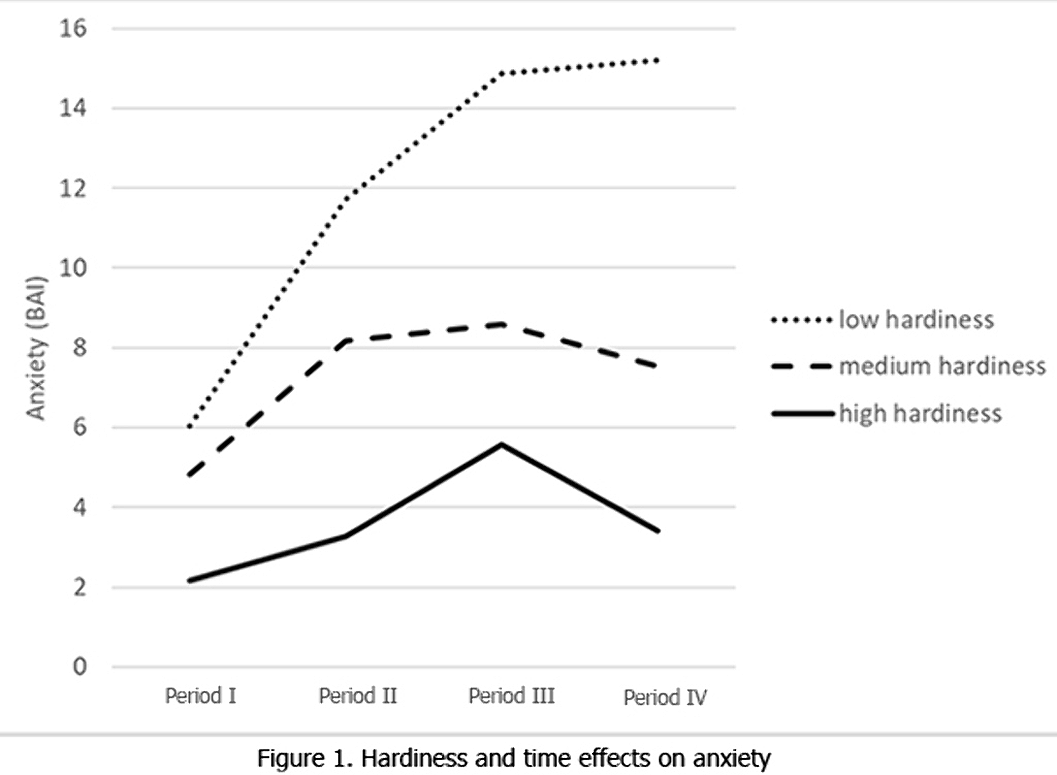
Hardiness, anxiety, depression, and GSI differed significantly between the time-periods (F=4.899, p<0.01; F=3.173, p<0.05; F=8.096, p<0.01; F=3.244, p<0.022 ; F=4.899, p<0.01 respectively). GLMs showed gender, chronic diseases, self-assessed fears, and hardiness contribution to anxiety, depression, and GSI. Hardiness had the biggest effect on all models. Anxiety was additionally influenced by the time factor, which also interacted with hardiness (see Figure 1). With lower hardiness, higher anxiety arose over time.
Conclusions
Hardiness notably contributes to personal adaptation during the COVID-19 outbreak-related restrictions.
Coronavirus disease 2019 (COVID-19) pandemic has had a negative impact for mental health. ULS-Guarda in cooperation with Portugal National Health Service, provided the population of the district of Guarda with a mental health helpline (MHHL).
Objectives
Provide a descriptive data analysis of the MHHL calls received between April 1st and September 20th of 2020.
Methods
The data was obtained through the filling out of questionnaires. It included fields for gender, age, the type of service provided, relation to COVID-19, symptoms displayed and the number calls made per patient. For the statistical analysis, Microsoft Excel TM was utilized.
Results
MHHL received 191 calls. The largest volume was received during April, which saw 116 instances of patients seeking the MHHL. The number of calls then tapered progressively throughout the following months. The services provided were split between psychiatric assistance, psychologic assistance, and the renovation of medical prescriptions, in 44%, 31% and 19% of the cases, respectively. The 101 patients who resorted to the MHHL were unevenly distributed in gender, being 74 female and 27 male individuals. Their ages were mostly between 50 and 69 years old. The most common symptoms were anxiety, depressed humor and insomnia, in 35%, 16% and 11% of the cases, respectively.
Conclusions
The largest influx of calls coincides with the home confinement period, and decreased alongside the relaxation of the confinement measures held. The MHHL had enough adherence to warrant consideration of it being an alternative means of healthcare access, especially in situations where physical access to healthcare is restricted.
The COVID19 outbreak has disrupted the mental health of resident doctors who had to care for patients. Eating disorders were among these reported mental health problems.
Objectives
To screen binge eating disorder among young Tunisian doctors and its associated factors.
Methods
We conducted a cross-sectional, descriptive and analytical online-based survey, from April 19, 2020, to May 5, 2020 on 180 medical residents in training. We sent the survey via a google form link. We used a self-administered anonymous questionnaire containing sociodemographic and clinical data of young doctors. The Diagnostic and Statistical Manual of Mental Disorders (DSM-5) criteria were used to assess Binge-Eating Disorder.
Results
Among 180 young doctors who enrolled the survey, 70,2% were female, 16% were married. The mean age was 29 years. 51,1% were frontline caregivers, working directly in diagnosing, treating or caring for patients with coronavirus disease. Among our participants, 5% presented anxiety disorder, another 5 % presented depression disorder and 1,7% had eating disorder. Binge eating disorder were present among 8,9 % of participants and it was associated to personal history of eating disorder (7,7% vs 1,1%, p<10-3), past history of depression disorder (7,2% vs 3,3%, p=0.008), exposure to media or news about coronavirus outbreak (0.5% vs 8,3%, p=0.04).
Conclusions
Our study indicated the evolving proportion of binge eating disorder among young doctors. Screening eating disorder is important in order to prevent related physical health problems.
COVID-19 pandemic affected not only physical health of individuals, and communities but also their mental health worldwide. Young physicians, who were providing care for patients during the outbreak in a global atmosphere of stress, anxiety and depression, were not spared.
Objectives
To assess anxiety and depression among young medical resident exposed to COVID-19 in Tunisia and its associated factors
Methods
It was a cross-sectional, descriptive and analytical online-based survey, from April 19, 2020, to May 5, 2020 on 180 medical residents in training, via a Google-Form link. We used a self-administered anonymous questionnaire containing sociodemographic and clinical data. Hospital Anxiety and Depression Scale (HAD) validated in the Tunisian dialectal version was used to assess anxiety and depression.
Results
Among 180 young doctors included, 70.2% were female, 16% were married, 81.8% worked in a university Hospital and 51.1% were frontline caregivers involved in primary screening. Our study revealed that 66.1% of young medical residents were suffering from anxiety (severe anxiety: 28.9 %) and 61.7% of them from depression (severe depression: 29.1%). Anxiety disorder was correlated to female gender (p=0.008), being married (0.001), worse quality of sleep (p<10-3) and increased consumption of tea and coffee (p=0.012). Depression was associated to worse quality of sleep (p<10-3), lack of physical activity (p<10-3), shortage of personal protective equipment (p=0,027) and anxiety disorder (p<10-3).
Conclusions
Our study indicated a high proportion of anxiety and depression among young doctors in training, needing systematic screening in order to prevent them.
Italy has been one of the most affected countries by Covid-19 pandemic. Our University General Hospital, Policlinico of “Tor Vergata” (PTV) in Rome, has become a Covid Hub in order to manage the spread of the epidemic. Thus, our Psychiatric Emergency Service (PES)’s access has been partially limited. Direct indicators of PES activity, as admission rates, can be useful for evaluating the psychological impact of Covid epidemic.
Objectives
To assess psychiatric admittance rates to PES of PTV before and during Covid-19 global pandemic.
Methods
Data from our PES register have been obtained and analyzed. We compared all the psychiatric access during the trimester March – May 2019 and 2020. All patients have been characterized according to clinical features.
Results
A marked reduction of the number of patients presenting to PES has been observed (76 patients) in the 57-day period (March 11–May 04, 2020) of lockdown compared to the same period in 2019 (266 patients). The cutback was visible for all diagnostic groups, except for “Borderline Personality Disorder” diagnosis which have slightly increased. On the other hand, hospitalization rates in our psychiatric inpatients unit remained steady.
Conclusions
Although larger study are needed to understand the mental consequences of the lockdown experience, people’s fear of potential infection might explain our results. Interestingly, personality disorder patients represent an exception to it, suggesting the importance of the clinical characteristics of fearless, engagement in dangerous behavior and detachment from reality. These findings might be helpful to improve psychosocial crisis interventions during the pandemic.
The emergence of SARS-CoV-2 has enormously impacted healthcare systems around the world. Both patients and health care professionals have been subjected to a novel stressor which affects their everyday life and functioning. This issue is especially important to patients suffering from chronic diseases which had already been exposed to a psychological strain related to their primary diagnosis. As chronically ill patients are depending on the availability of a specific treatment i.e. in need of specific healthcare facilities and have more reasons to worry about their future and hence be more prone to suffer adverse psychological consequences than the general population.
Objectives
In this study we aimed to examine whether the psychological results of the pandemic affect chronically ill and whether the specific illness and other demographic factors account for any changes in perceived stress levels.
Methods
An online questionnaire has been distributed to 4 groups (n=369): 92 psoriasis patients, 73 dialysis patients, 100 patients after kidney transplantation and 104 multiple sclerosis patients. The study was conducted during the pandemic in Poland (June-July 2020). Perceived stress levels were measured by the Perceived Stress Scale (PSS).
Results
The preliminary results suggest elevated perceived stress levels among the studied groups. As the data are currently under statistical evaluation specific statistical conclusions are to be expected in November 2020.
Conclusions
As the described study was conducted during the SARS-CoV-2 pandemic in Poland, it stands to reason that the epidemiological situation affected the levels of perceived stress among chronically ill patients.
Raising a child with neurodevelopmental disorder is very challenging. Furthermore COVID-19 pandemic can increase stress levels especially among people that suffer from mental health disorders. On of the high risks group are children with neurodevelopmental disorders. Studies show that these difficult, challenging times have had a negative impact on most families, which have a child with neurodevelopmental disorders.
Objectives
Evaluation of depression symptoms among caregivers of children that take therapy in the National Center for Children Rehabilitation and Treatment (NCCRT) during COVID-19 pandemic
Methods
The study was conducted during a two-month period March-April 2020. The sample involved 110 individuals, relatives, of children that were taking educative and rehabilitation therapy in NCCRT during last year, ambulatory or inpatients. Data were collected by clinical records and phone interviews with children’s caregiver. Instrument we used were: Demographic inventory and Hamilton Anxiety Rating Scale for anxiety symptom evaluation. All data were statistically analyzed through excel.
Results
Most of individual interviewed, whom are responsible for children wellbeing were their parents, 69% of them. 56% of individuals were among 31-45 years old and 92% of them were women. Depression symptoms were slightly present. We noticed that depressive symptomatology was a bit worse in caregivers in urban areas compared with ones in rural areas.
Conclusions
It is necessary supporting with special attention caregivers whom have depressive symptoms. Yet has to be evaluated the connection, if it’s present, between parents with depressive symptoms and children progress, for ones that are being supported with development therapy.
Documenting Tunisian’ stress responses to an unprecedented pandemic is essential for mental health interventions and policy-making.
Objectives
To describe the perceived stress generated by the Covid-19 epidemic and confinement among the Tunisian people.
Methods
Participants had to fill out a questionnaire including epidemiological data and the Perceived Stress Scale 10 (PSS10), which is the most widely used psychological instrument for measuring the stress perception. Individual scores can range from 0 to 40 with higher scores indicating higher perceived stress.
Results
Our study included 121 subjects, of which 70.6% were women.They had an average age of 36.52 years and a history of psychiatric disorders in 13.1% of cases, such as anxiety disorders (10.4%), depressive disorders (5.9%) and obsessive compulsive disorders (2.3%). More than one in two participants (61.4%) reported the presence of sleep disorders. Regarding medical history, participants declared having asthma (5%), diabetes (1.8%), high blood pressure (3.6%), and a chronic disease with corticosteroid treatment (5%). The mean PSS score was 16.96. This last was correlated to age (p<0.001), female gender (p<0.001), primary or secondary school level (p=0.03), a history of anxiety (p<0.001) and depressive disorders (p<0.001), and to sleep disorders (p<0.001).
Conclusions
The stress level among the Tunisian people during the Covid-19 pandemic was very close to that observed in other countries, deserving special attention especially among vulnerable populations.
Covid19 pandemic in Tunisia has disturbed the health system. Health care workers, who were in the frontline to face this disease, had experienced reactions of anxiety, depression and distress.
Objectives
To assess the level of anxiety and depression among health care workers of regional hospital of Gabes (south of Tunisia) and its associated factors.
Methods
We conducted a cross-sectional study, from April 19, 2020, to May 5, 2020 on healthcare workers in Gabes regional Hospital. All hospital departments and units were included. We used a self-administered anonymous questionnaire containing sociodemographic and clinical data. Hospital Anxiety and Depression Scale (HAD) validated in the Tunisian dialectal version was used to assess anxiety and depression.
Results
Among the 289 responding participants, 100 (34.6%) were frontline health care workers directly engaged in managing patients with coronavirus disease. Our study revealed that 43.6% of health care workers were suffering from anxiety and 44.3 % from depression. There was a significant association between anxiety and female gender (p<0.001), being married (p=0.006), mental health conditions (p<0.001) especially anxiety disorders (p<0.001) and depressive disorders (p=0.03), personal medical history of dysthyroidism (p=0.013) and smoking (p=0.005). Nurses experienced more likely anxiety symptoms than other occupation (p=0.021). There was significant relationship between depression and female gender (p<0.001), married status (p=0.02), age under 50 (p=0.032) and mental health conditions (p<0.001) such as anxiety disorders (p=0.001) and depressive disorders (p=0.013).
Conclusions
It is crucial to provide care for health care workers with mental health problems during their struggle with covid19.
In public mental health there are widespread concerns about the effects of the Covid-19 pandemic on psychiatric patients. Anxiety and sleep disorders are the focal point in admissions for psychiatric care in individuals that are impacted by these changes.
Objectives
The purpose of this study was to investigate the impact of the COVID-19 pandemic on the prevalence of anxiety and sleep disorders among the patients admitted to our hospital. The state of pandemia was declared on the 11th of March but it had already become a main stream media subject in our country at the beginning of the month.
Methods
A retrospective study was performed at the Psychiatric Hospital ‘Elisabeta Doamna’ Galati, using the exact same period, between 01.03 and 30.09, in both 2019 and 2020. ICD-10 criteria were used and pacients with either F41.x or F51.x as discharge diagnosis were included.
Results
In total, 7638 cases were admitted during the period in 2019, of which 621 (8,13%) had anxiety disorders and 225 (2,94%) sleep disorders. In comparison in 2020 out of 4050 admitted patients, the number had risen to 1003 (24,76%) anxiety disorders and 388 (9,58%) sleep disorders.
Conclusions
Analysis of the data shows a three times increase in the percentage of both classes of disorders among our patients. Even considering the lower admition rates, there is a clear shift in the general profile of our average pacient and this has to be taken into consideration in the long and short term treatment of any psychiatric patient.