We partner with a secure submission system to handle manuscript submissions.
Please note:
You will need an account for the submission system, which is separate to your Cambridge Core account. For login and submission support, please visit the
submission and support pages.
Please review this journal's author instructions, particularly the
preparing your materials
page, before submitting your manuscript.
Click Proceed to submission system to continue to our partner's website.
To save this undefined to your undefined account, please select one or more formats and confirm that you agree to abide by our usage policies. If this is the first time you used this feature, you will be asked to authorise Cambridge Core to connect with your undefined account.
Find out more about saving content to .
To send this article to your Kindle, first ensure no-reply@cambridge.org is added to your Approved Personal Document E-mail List under your Personal Document Settings on the Manage Your Content and Devices page of your Amazon account. Then enter the ‘name’ part of your Kindle email address below. Find out more about sending to your Kindle.
Find out more about saving to your Kindle.
Note you can select to save to either the @free.kindle.com or @kindle.com variations. ‘@free.kindle.com’ emails are free but can only be saved to your device when it is connected to wi-fi. ‘@kindle.com’ emails can be delivered even when you are not connected to wi-fi, but note that service fees apply.
Psychiatric Patients Admissions in Mental health Service of Treviso (Italy) were compared from 2013 to 2017. Trends of Admissions take onto consideration, the presence of Menthal Health Service for Outpatients Care.
Objectives
To point out the distribution of Diagnosis made in Different Years for different patients ages.
Methods
For every patient has been considered the following date : Sex, Age, Marital State, Profession, Psychiatric Diagnosis, Days of Admission, Geografic Origin and KInd of Admission (Voluntary / Involuntay).
Results
It is noticeable the different percentage of Psychiatric Diagnosis in 2013 rather than in 2017. In 2017 it happened a more amount of Psychiatric Admission of Subjects with Substance Addiction Related Disturbs (Alcool included) and Atypical Depression Sindrome and Borderline and Cluster B Perrsonalòity Disorders. Lower amount instead was verified for Diagnosis of Schizofernia, Neurosis and Oligofrenia. Beside it was noticed, an earlier onset of Psychotic Sindrome in Young people often related with Substance Abuse. In the 2017 besides was lower the amount of Involuntary Admission (T.S.O. in Italy) compared with 2013.
Conclusions
Different distribution of Diagnosis is explained by the Evolution Diagnosis Orientation (from D.S.M. IV to I.C.D. 10) About the increased Diagnosis of Substance Addiction Disturbs and Younger age of same subjescts seems caused by a different treatment’s Strategy with brief selective Admissions. Furthermore lesser Involonary Admission seems due to best knowledge of every patients. The most of Theese were indeed already known by Ambulatory Outpatient Mental Health Service.
In recent years, the use of antipsychotics (AP) has been widely debated for reasons concerning their efficacy and safety in the elderly.
Objectives
We aimed to assess the prescription of AP in the elderly subjects.
Methods
We led a retrospective and descriptive study. We extracted all patients aged 65 years or older who consulted the psychiatric outpatient unit at the Hedi Chaker hospital in Sfax –Tunisia between January 1 and December 31 2019 and who were treated with AP. General, clinical and therapeutic data were collected from medical records.
Results
The mean age of patients was 71,7 years. Medical conditions were observed in 53,1% of them. The reasons for consultation were behavioral disturbances (34,4%), insomnia (18,8%) and memory impairment (15,6%). The main retained diagnoses were dementia (40,6%), mood disorders (28,1%), delusional disorder (15,6%). The indications for prescribing antipsychotics were disruptive behavior (59,4%) and delirium/hallucinations (34,4%). Laboratory examinations and electrocardiogram were performed respectively in 46,8% and 15,6% of cases. AP treatment was prescribed in 90,6% of cases right from the first consultation. Atypical AP were prescribed in 56,2% of cases. Adverse effects were noted in 18,7% of patients. The average time to get a response was 7.3 weeks
Conclusions
The use of AP in the elderly requires an individual assessment, case by case; particular caution is recommended.
In recent years, it has been possible to corroborate that people’s social environment is a key aspect in the study of suicide risk.
Objectives
The aim of this study is to assess the relation between suicidal ideation and social factors (loneliness, social support, trust, participation and cohabiting) in a representative sample of the Spanish adult population, comparing the effect according to sex different age groups (18-49, 50-64, ≥65 years).
Methods
Cross-sectional study of a representative sample of the Spanish population (n = 4,217) conducted between 2011 and 2012. Loneliness was assessed using the UCLA Loneliness Scale. Social support was assessed using the OSLO-3 Social Support Scale, and participation scale and trust. Data were analyzed using logistic regression models adjusting for sex, sociodemographic and health variables (lifestyles, depression, and multimorbidity).
Results
Prevalence rates of suicidal ideation were higher in young and middle-aged adults. In the middle-aged groups, loneliness is significantly associated with suicidal ideation in both women and man. Among man, cohabiting and trust were identified as a protective factors of suicidal ideation. Among women, only social support was identified as a protective factor. In the older adult’s group, trust acted as a protective factor of suicide ideation among women. For man was the social support. Among younger adults, cohabiting was identified as a protective factor in man.
Conclusions
Due to the different results involving social factors and suicidal ideation according to age and sex, we highlight the importance of studying social factors for the detection of specific needs among the Spanish adult population.
Adolescent online behavior is an urgent public health problem in different countries of the world due to the possibility of developing Internet addiction.
Objectives
To study the prevalence of different types of online behavior and Internet addiction in Siberian adolescents, depending on gender and age.
Methods
During the period from January to May 2019, 2950 adolescents aged 11-18 years living in the urban area of Central Siberia (Krasnoyarsk) were examined, of them 1348 boys and 1602 girls. The Chen Internet Addiction Scale (CIAS) with a cut-off level of 65 points was used. Internet users are divided into three groups: Adaptive Internet Users (AIU) (27–42 points); maladaptive Internet users (MIU) (43–64 points); pathological Internet users (PIU) (score ≥ 65).
Results
The AIU group comprised 50.3% (55.9% boys and 45.6% girls, p <0.001). The share of adolescents aged 11-14 is 52.0%, the share of adolescents aged 15-18 is 48.4% (p = 0.04). The MIU group constituted 42.9% (46.3% were girls and 38.9% boys, p <0.001). The share of adolescents aged 11-14 is 42.1%, and those aged 15-18 is 43.8%, p > 0.05. The PIU group constituted 6.8% (5.1% boys and 8.2% girls, p <0.001). The share of adolescents aged 11-14 is 5.9% and those aged 15-18 is 7.8% (p = 0.04).
Conclusions
Among adolescents in Central Siberia the prevalence of AIU consist 50.3%, MIU 42.9%, PIU 6.8%. The prevalence of PIU is more common in girls. The increase in PIU was marked in the older age group. The study was funded by RFBR project № 18-29-2203218.
Conflict of interest
The reported study was funded by RFBR project № 18-29-22032\18.
In the continuous work to reduce the use of coercion in the psychiatric care, attention in Denmark has especially been directed towards mechanical restraint, i.e. the use of belts to fixate patients to a bed. While the use of mechanical restraint is currently decreasing, increases in other types of coercive acts are observed (e.g., forced medication and hourly episodes of manual restraint). The use of manual restraint refers to mental health workers immobilizing a patient to avoid harm to self or others. Manual restraint is generally considered less intrusive to a patient’s autonomy than the use of mechanical restraint. However, no study has yet explored if it is actually experienced as such by the patients.
Objectives
This study explores patients’ perspectives on manual and mechanical restraint, respectively.
Methods
We are currently performing a qualitative interview study of 10 patients, who have been exposed to both types of coercion. The interviews will be transcribed verbatim and analysed for thematic content.
Results
We expect to discover more nuanced perspectives of the intrusiveness of the different forms of coercion—perspectives that may challenge the assumption that one type of coercion is by default better than another. The study’s results will be presented.
Conclusions
In this study, we only look at two types of coercion. More investigation into the differentiation of patients and ideal type of coercive measure is paramount to the ambitions of a better and more humanistic psychiatric care.
Practicing medicine cannot disregard cultural conditions. Philosophy and religion are elements of culture. For several years in Poland, various circles have discussed the extensive LGBT issues. A document of Polish Bishops on this subject appeared on 28.08.2020. In 2018, 91.8% of people over 16 years old in Poland declared affiliation to the Roman Catholic Church (Statistics Poland 2020).
Objectives
The aim of the study is to present different perspectives of effects of that publication, including ethical evaluation and references to clinical practice.
Methods
Statements of protagonists and antagonists of this document in Polish were analyzed. Collected arguments were divided into types: philosophical – by philosophy branches (e.g. ethics, philosophical anthropology), theological and clinical.
Results
As of 29.09.2020 – 85,200 results in the Google Search after typing (in Polish) “Polish Episcopal Conference LGBT”. The use of philosophical arguments by both parties results from the adaptation of different systems, e.g. regarding philosophical anthropology, some assume the immutability of human nature, others – its variability and susceptibility to shaping, e.g. human sexuality. Some emphasize the importance of non-discrimination, while others indicate the need to consider human essence in determining directions of actions.
Conclusions
Professionals should help everyone, regardless of conditions, in accordance with conscience and contemporary medical knowledge [Polish Code of Medical Ethics]. They should try to understand patients and the context of symptoms. Familiarizing oneself with arguments of both sides helps in this. But polemical language makes dialogue difficult. What for one is a “venerable tradition”, for another is a “stereotype” or “discrimination”.
The idea that personality can influence our perception of ‘otherness’ is widely accepted within the literature of social sciences. Undoubtedly, the principle of dehumanization played an important role in genocides during the 20th and 21st centuries. In totalitarian or post-totalitarian regimes ‘otherness’ may present a challenge to the absolute power. Recent studies showed that negative attitudes toward ‘otherness’ – also known as xenophobia – are on a rise in the Czech Republic.A deeper analysis of the personality in relation with perception of otherness is still missing.
Objectives
The presentation analyse the personality variables associated with the perception of otherness and compare the differences between various age groups, genders, individuals with different levels of education, and above all, the differences between various groups. Several contrast groups are compared - general population, high neuroticism sample, personality disorder sample, xenophobic and xenophilic sample.
Methods
Bogardus Scale of Social Distance as a measure of perception of otherness is compared with in-depth analysis of personality functioning (Semi-Structured Interview for Personality Functioning DSM–5, STiP-5.1).
Results
We analyze the results of five samples with respect to demographic variables, variables of personality functioning and try to point out the relationship between more attitudes and underlying personality functioning. The importance of some demographic variables (as age) and connections between personality functioning (Self and Interpersonal) and social distance is emphasized and discussed.
Conclusions
The project help us to understand perception of otherness in light of demographic and relative power of personality factors.
Thanks to advances in medicine, more diseases are being cured, but this benefit can become a problem when it causes a worsening of quality of life.
Objectives
The objective of this paper is to analyze, regarding the following case, the convenience of treating or to limit the therapeutic effort (LTE) in psychiatric patients who are in situations at the end of life.
Methods
62-year-old woman begins with depressive symptoms from financial problems. In 4 months ago she makes four suicide attempts (drug overdose, cuts, self-stabbing, and precipitation), being hospitalized in ICU after latter because of multiple trauma and shock. During that time, she had a bad evolution with several complications that made LTE be evaluated. A bibliographic search was performed from different database (Pubmed, TripDatabase) about LTE and ethical implications.
Results
Trying to prolong life by disproportionate means in a patient with a poor prognosis or poor quality of life is bad practice. We must assess the severity, quality of life, capacity and preferences of the patient to decide to treat or not, thus guaranteeing the principle of beneficence. It is also important to respect the principle of autonomy, accepting patients can refuse treatment. All this is equally applicable to psychiatric patients, whom we should not stigmatize but rather evaluate their ability to decide, as in any person.
Conclusions
In conclusion, in situations of high suffering and near death, it is necessary a complete evaluation of the patient (psychiatric or not) is carried out in order to act in the most ethical way.
In their professional work, mental health professionals are continually working with individuals in distress, who may express a wish to end their lives.
Objectives
To understand the perspectives of mental health professionals towards a person’s right to die.
Methods
A mixed-method technique was used: Stage 1 involved a validated online questionnaire sent to all professionals working within the public mental health services in Malta. Stage 2 consisted of a multidisciplinary discussion between six professionals asked to hypothetically manage a terminally ill patient requesting physician-assisted suicide. Thematic analysis was subsequently applied.
Results
The majority of mental health professionals disagreed with allowing a person to commit suicide, even in situations of crippling debt, overwhelming despair and family dishonour. Terminal illness elicited a varied response (Figure 1)
Older professionals and spiritual beliefs negatively impacted acceptability of suicide (Figure 2).
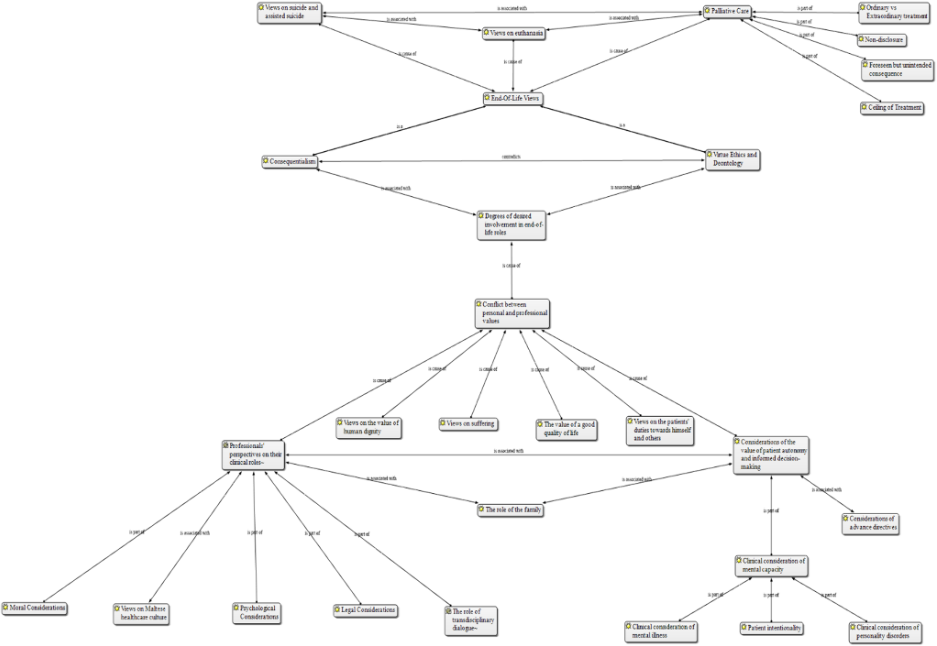
The discussion revealed that professionals would assess individuals requesting to end their lives, with the aim of treating any mental illness and determining mental capacity. Figure 3 highlights factors explored during the assessment. Greatest emphasis is ultimately placed on individual autonomy.
Conclusions
Mental health professionals consider autonomy and self-determination as imperative in evaluating a person’s right to die. Professionals agreed that, after a comprehensive psychiatric assessment and within a regulatory legal framework, they would not impede a person with terminal illness to request physician-assisted suicide, provided that one is acting autonomously. The majority would however conscientiously object to actively assisting the terminal patient in ending one’s life, since this is deemed contradictory to their professional vow of non-maleficence.
Secure forensic mental health services have a dual role, to treat mental illness and reduce violent recidivism. Those admitted to secure forensic services have a significant history of violence and treatment needs in multiple domains including psychiatric illness, violence and other areas such as substance misuse and physical health.
Objectives
The aim of this study was to ascertain if the units in a medium secure forensic hospital are stratified according to individual risks and needs. We also aimed to clarify if there were differences in the symptom level, risks and needs of those with and without community leave and to clarify the risks and needs of the female patients and ID patients.
Methods
This is a cross sectional study a cohort of patients (n=138) in a secure forensic hospital.
Results
There was a total of 138 patients, the majority of whom were male (n=123, 89.1%). The most common diagnosis was schizophrenia (n=99, 71.7%). Placements in the care pathway of the medium secure forensic hospital were associated with level of symptomatology (PANSS positive), dynamic violence risk (F=26.880,P<0.001), DUNDRUM-3 therapeutic programme completion (F=44.067,P<0.001), and DUNDRUM 4 recovery (F=59.629,P<0.001). Patients with community leave had better scores than those without leave on violence risk (F=77.099, P<0.001), therapeutic programme completion (F=116.072, P<0.001) and recovery (F=172.211, P<0.001).
Conclusions
Stratifying secure forensic psychiatric hospitals according to individual risks and needs provides in-patient care in the least restrictive setting appropriate for individuals, however niche groups such as female forensic patients and ID patients may need special consideration.
The majority of homicides in society are not associated with mental illness, however there is an established association between homicide and schizophrenia. Homicide perpetrated by mentally disordered offenders is a leading reason for admission to secure forensic psychiatric hospitals.
Objectives
To investigate the clinical characteristics of those with a history of completed homicide in the CMH Dundrum.
Methods
This study was a cross sectional study of a cohort of patients in the Central Mental Hospital who had completed homicide (n=63).
Results
A total of 136 patients were included, 46.3% (n=63) of whom had committed homicide. Mean age of homicide perpetrators at admission was 34.6 years old (median 33.4, s.d. = 9.72). The most common diagnosis was schizophrenia (n=40, 63.5%). 73.0% (n=46) had a history of substance misuse. 36.5% (n=23) had a diagnosis of a personality disorder, including traits only. The most common victim type was a family member (n=32, 50.8%). Patients with a history of homicide had better scores on dynamic risk of violence (F=8.553, p=0.004), programme completion (F=8.258, p=0.005) and recovery (F=3.666, p=0.058) compared to non-homicide offenders, however they also had significantly longer mean length of stay, 12.7 years v 7.5 years (F=9.634,p=0.002).
Conclusions
Homicide perpetrators with a mental illness constitute a significant portion of the forensic mental health population and a high number of these offences were against family members. A history of homicide among forensic in-patients is associated with a longer length of stay which has implications for service development into the future.
Secure forensic mental health services treat patient with high rates of treatment resistant psychoses, typically schizophrenia. These groups have high rates of obesity and medical co-morbidities. Population based studies have identified high risk groups in the event of SARS-CoV-2 infection, including those with long term medical conditions.
Objectives
The aim of this study was to compare the vulnerability to serious adverse outcome in the event of COVID-19 infection in a forensic psychiatric patient population.
Methods
All patients of a complete National Forensic Mental Health Service (n=141) were rated for risk of adverse outcome in the event of SARS-CoV-2 infection, using two structured tools, the COVID-AGE tool and the COVID-Risk tool.
Results
Eighty-two patients (58.2%) met criteria for obesity, 32 had type II diabetes and 28 were hypertensive. Mean chronological age was 45.5 years (SD 11.4, median 44.1), while mean COVID-AGE was 59.1 years (SD 19.4, median 58.0), mean difference 13.6 years (SD 15.6) paired t=10.9, df=140, p=0.000. Three patients (2.1%) were chronologically over 70 years compared to 40 (28.4%) with a COVID-AGE over 70 (X2=6.99, df=1, p=0.008, Fishers exact test p=0.027).
Conclusions
These risk assessments may identify the extent of increased risk among a uniquely medically vulnerable patient group. Patients in secure forensic psychiatric services represent a high-risk group for adverse outcomes in the event of SARS-COV-2 infection. Population based cocooning and self-isolating guidance based on chronological age may not be sufficient. There is an urgent need for better physical health research and treatment in this group.
The evaluation of the crime of impetus poses problems in seeking clinical elements that configure the total or partial defect of mind. Even in the presence of acute psychotic syndromes it is difficult to identify a psychopathological picture that almost overlaps with the times and methods of the crime itself.
Objectives
From a longitudinal perspective, this contribution intends to propose a method of integrating data derived from psychopathological, criminological and forensic psychiatric analyzes, in order to identify the link between them and the criminal act that qualifies or excludes the mental defect.
Methods
In the analysis of a criminal event generated during an acute psychotic episode, it’s described the logic and methodology of integrating criminological, psychopathological and psychiatric forensic data for which it was possible to identify the pathological nature of the event.
Results
The psychopathological analysis allowed the identification of psychotic manifestations before and after the crime. The criminological analysis included the decision to commit the crime, within a framework of alteration of the reality examination and recognized the delusional purpose in the same methods of carrying out the crime. So, the forensic psychiatric analysis clarified the continuity of the psychopathological manifestations in the time frame in which the crime was planned, organized and committed and to codify such manifestations as an acute psychotic episode.
Conclusions
Although it’s not sufficient to circumscribe the criminal act between two pathologically relevant moments, this contribution shows how integrating different methods of analysis makes it possible to identify the quality of the behavior intended as a crime.
From 2014 on, the rate of persons with a migration background in Germany rose steadily, in forensic psychiatric hospitals even disproportionally. Although daily work is aggravated through language barriers and cultural differences, general therapy processes have not been appropriately adapted yet and extensive research is lacking.
Objectives
Therefore the aim was to get a picture of the current situation of patients with a migration background in 11 Bavarian forensic psychiatry.
Methods
237 Patients with a migration background (first or second generation) were asked about their sociocultural background, their acculturation tendency (by rating the Frankfurter Acculturation Scale), their German language ability and their estimation of the ward climate (by the Essen Climate Evaluation Schema).
Results
51.8% of the participants were able speak German on an A- level, 13.1% on a B- level and 35.1% on a C- level. Patients of our sample oriented themselves more towards Germany and less towards their country of origin, compared to the control sample. Further, they experienced safety significantly lower and patient cohesion and mutual support higher than the forensic reference sample.
Conclusions
One possible explanation for the patients’ orientation is the lack of possibilities to act out their cultural traditions. Because of the patients’ limited German knowledge and cultural misunderstandings, they could feel less safe. To conclude, the group of patients with a migration background is important not solely due to its size. But its heterogeneity makes universally applicable statements not easy. Migration backgrounds have to be considered within the psychiatric setting and individual therapy plans have to be made.
Greenland and the Canadian territory of Nunavut appear to have a different prevalence of forensic psychiatric patients, despite their comparable population and landmass sizes. Both are mainly inhabited by Inuit with a similar cultural and social background. Both have a universal health care system. They differ, however, concerning the supply of mental health services and legislation concerning forensic psychiatric patients.
Objectives
To compare the prevalence and clinical characteristics of forensic psychiatric patients in Greenland and Nunavut.
Methods
Data is obtained from health records, forensic psychiatric evaluations and court acts from all forensic psychiatric patients 18 years or older living in Greenland or admitted to the University Hospital Aarhus (N≈100). Data extracted from Nunavut Review Board hospital reports will be used to describe the patient population from Nunavut (N≈15). Patient characteristics include gender, age, marital status, education, diagnosis of mental illness, medical treatment, family history of mental illness and serious adverse childhood experiences. Public documents concerning health systems and legislation will be identified through literature search.
Results
Patient characteristics from the two patient populations, as well as visualizations of the differences and similarities between the respective health care and legislative systems will be presented at the conference.
Conclusions
This study provides a comprehensive clinical, socio-demographic and forensic comparison of the forensic psychiatric populations in Greenland and Nunavut, Canada. To our knowledge, it will be the first to describe and compare forensic psychiatric populations in the Arctic.
Quality of life should be an important issue to everyone. In the general population and in various medical disciplines, this topic has been studied extensively. In forensic psychiatry, this topic has received little attention so far.
Objectives
Within this project a questionnaire that measures the quality of life in forensic hospitals was developed.
Methods
As a basis the questionnaire measuring the quality of prison life (MQPL) by Liebling et al. (2011), which was designed only for using in prisons, was used. First, this questionnaire was translated, then adapted to the living conditions in forensic hospitals and supplemented by questions regarding therapeutic support. For the psychometric evaluation of the instrument, a one-time survey was conducted at 13 forensic hospitals in Bavaria. A total of 255 patients took part, 25 of whom were female. In summary, the reliability of the MQPL can be rated as very good.
Results
The factor structure was checked with a confirmatory factor analysis and was confirmed. There are significant differences between the 13 Bavarian forensic hospitals in the subscales admission to a forensic hospital, equal treatment, quality of accommodation and therapeutic services.
Conclusions
The great importance of the quality of life in the penal system is shown by the fact that a good quality of life contributes to reduced psychological distress of inpatients.
Psychiatric intensive care units (or PICU’s) emerged to manage high acuity patients outside the justice system. Studies have sought to better understand characteristics of those admitted to forensic or civilian PICU’s. Few, in contrast, have explored the frequency and contributors to readmission. The following study was conducted on Apsley unit, a Forensic PICU based in Melbourne, Australia, and seeks to understand the differences which would allow early identification of patients likely to require readmission and the provision of targeted interventions.
Objectives
Examine rates of and contributors to forensic PICU readmission over a 6-month period.
Methods
A retrospective audit was conducted to collect clinical, problem behaviour (and strategies to manage), forensic history and demographic information for consecutively admitted patients to an 8-bed forensic PICU between March-September 2019.
Results
Data analysis is ongoing. Interim analysis found that 96 patients were admitted during the 6-month study period: 74 (77.1%) had a single admission; 22 (22.9%) required readmission. Almost all were admitted from prison (96.9%), most had a psychosis diagnosis (80.2%) and substance abuse history (96.9%), and many had a personality disorder (24.0%) and history of adolescent antisocial behaviour (46.5%). Patients requiring readmission were significantly more likely to have been previously under compulsory mental health treatment (95.5% vs 75.3%, p=.039) and have a Positive Behaviour Support Plan developed during admission (85.7% vs 54.8%, p=.010).
Conclusions
Interim analysis highlighted the multicomplexity for forensic PICU patients alongside the occurrence of problem behaviour during admission and history of compulsory treatment as indicators of increased risk for re-admission.
When the Criminal Court Judge applies probation, the offender is entrusted to social assistants for the necessary observation, treatment and support. This case study examines the probation of a young man with high-functioning autistic traits, personality disorder and legal/illegal substance abuse. This young man, who arrived only in adulthood to a diagnosis of autistic traits, is aware only that is non-neurotypical. He does not recognize that he needs treatment for personality disorder, alcohol, substance and drug abuse. He faces a sentence of more than three years in prison but the Judge suspends the criminal trial.
Objectives
Clarify the relationship between high functioning autistic traits, comorbidity with personality disorder and drugs/substance abuse, and crimes committed; also describe the orientation of the Judge and what difficulties arise during the probation.
Methods
Examination of the criminal file and medical documents of the offender, known by social and health services.
Results
The offender correlates the crimes and its frailty with autism and not with antisocial behaviours to gain economic benefits from drug dealing.
Conclusions
The deficit in the social communication and lack of empathy for child victimes, for example, limits the effectiveness of probation. The probation, for a young with high-functioning autistic traits and comorbidity, does not seem to give satisfactory results in terms of rehabilitation and social integration, nor does it produce the extinction of crime.
Recovery orientated care emphasizes equality in relations. Forensic psychiatric professionals need to engage in care-relationships with patients in ways where power is symmetrically distributed among them. However, professionals also need to focus on security at the ward. This promotes patient-professional power-relations that are asymmetrically skewed towards professionals. New practical ways of balancing between the power-relations defined by a care and custody dichotomy in forensic care need to be developed and studied to guide clinical practice.
Objectives
To study how power-relations are articulated between patient-professional within a social gaming activity (E – sport) in a Danish medium secure forensic psychiatric ward.
Methods
Three months of observational data, collected via anthropological fieldwork Interviews with 3 professionals and 6 patients Data was analyzed using sociologist Pierre Bourdieu’s notions of field, capital and power
Results
The E-sport intervention consists of two fields “in-game” and “over-game” In-game concerns the practice of gaming Over-game concerns the interventions organization Power in each field is driven by specific values and access to certain competencies Power in-game was equally open to patients and professionals leading to symmetric power relations Power over-game was open to professionals only leading to asymmetrical power relations Professionals may allow power distribution to patients during gameplay, while still retaining the overall power over the intervention
Conclusions
It is possible to balance between care-and-custody in forensic psychiatry. This study provides important insights to guide further practice.
Dangerousness is a state in which a person is likely to commit violent acts.
Objectives
Describe the socio-demographic and clinical characteristics of psychiatric inpatients hospitalized in the locked unit and suffering from schizophrenia or other psychotic disorders and to assess their dangerousness.
Methods
This is a cross-sectional study carried out in the locked unit of psychiatric department of the University Hospital of Mahdia during one year. We have collected data of patients diagnosed with schizophrenia or other psychotic disorders according to DSM 5. Psychometric assessment was done using the BPRS, the PANSS, the VRAG and the HCR-20 scales.
Results
We have included 173 patients. The average age was 36 years with a sex ratio of 9. The majority of our patients were unmarried and of a low economic level. Alcohol and cannabis consumption was found in 7.6% and in 5.7% of cases respectively. A history of incarceration was found in 79% of cases. Homicide was the infraction the most committed in 8% of cases. 71.2% of patients had an anterior hospitalization in the locked unit. Aggressiveness and instability were the main indication for hospitalization. The diagnosis was schizophrenia in 84% of cases. Patients were treated with classic antipsychotic drugs in 55.8% of cases. Non-adherence to treatment was reported in 33% of cases. The average score of psychometric scales were BPRS = 21.4; VRAG = - 4.87 and HCR-20 = 17± 0.87.
Conclusions
Our study showed comparable assessments for dangerousness with the literature. Evaluating dangerousness should represent the first step of the therapeutic process.