We partner with a secure submission system to handle manuscript submissions.
Please note:
You will need an account for the submission system, which is separate to your Cambridge Core account. For login and submission support, please visit the
submission and support pages.
Please review this journal's author instructions, particularly the
preparing your materials
page, before submitting your manuscript.
Click Proceed to submission system to continue to our partner's website.
To save this undefined to your undefined account, please select one or more formats and confirm that you agree to abide by our usage policies. If this is the first time you used this feature, you will be asked to authorise Cambridge Core to connect with your undefined account.
Find out more about saving content to .
To send this article to your Kindle, first ensure no-reply@cambridge.org is added to your Approved Personal Document E-mail List under your Personal Document Settings on the Manage Your Content and Devices page of your Amazon account. Then enter the ‘name’ part of your Kindle email address below. Find out more about sending to your Kindle.
Find out more about saving to your Kindle.
Note you can select to save to either the @free.kindle.com or @kindle.com variations. ‘@free.kindle.com’ emails are free but can only be saved to your device when it is connected to wi-fi. ‘@kindle.com’ emails can be delivered even when you are not connected to wi-fi, but note that service fees apply.
The coming out of depressive disorders seems to be associated with severity of schizophrenia’s disease and with poor quality of life (QoL).
Objectives
The aim of our study was to assess the relationship between depression and QoL in patients with schizophrenia.
Methods
This is a cross-sectional and analytical study including stabilized patients with schizophrenia or schizoaffective disorder followed up in the outpatient psychiatry department at Hedi Chaker hospital university of Sfax (Tunisia), between August and October 2019. We used the Calgary Depression Scale (CDS) to evaluate depression and the Quality of Life Enjoyment and Satisfaction Questionnaire (Q-LES-Q-SF) to assess QoL.
Results
We recruited 37 patients with a mean age of 49.14 years and a sex ratio of 4.66. Seventy-three (73%) of patients were followed for schizophrenia and 27% for schizoaffective disorder. They were married in 43.2% and 35.1% of patients had a regular work. According to CDS, 18.9% of patients had depression with a mean score of 2.27 (SD 2). QLESQSF mean score was 65.51. Depression was negatively correlated with Quality of Life Enjoyment and Satisfaction (r=-0.59, p<0.001). We did not find a significant difference in depression according to the socio-demographic characteristics of the respondents or the clinical features of the disease.
Conclusions
It is clear that depression in patients with schizophrenia is associated with significant functional disability. Strategies to overcome the burden of depression may instil hope for functional recovery.
People with a schizophrenia experience higher levels of stigma.
Objectives
Our aim was to explore the relationship between internalized stigma, depression and quality of life (QoL) in these patients.
Methods
This is a cross-sectional and analytical study including 37 stabilized patients with schizophrenia or schizoaffective disorder followed up in the outpatient psychiatry department at Hedi Chaker hospital university of Sfax, between August and October 2019. The Internalized Stigma of Mental Illness scale (ISMI-29) was used to assess internalized stigma and its five dimensions. We used the Quality of Life Enjoyment and Satisfaction Questionnaire (Q-LES-Q-SF) to assess QoL and the Calgary Depression Scale (CDS) to evaluate depression.
Results
73% of these patients were followed for schizophrenia and 27% for schizoaffective disorder. The global mean score of ISMI was 71.95. The mean scores of alienation, stereotype endorsement, perceived discrimination, social withdrawal and stigma resistance were 15.16, 16.54, 12.95, 15.65 and 11.38, respectively. The Q-LES-Q-SF mean score was 65.51. According to CDS, 18.9% of patients had depression with a mean score of 2.27. Internalized stigma scores (global and the five dimensions scores) were significantly and negatively associated with QoL enjoyment satisfaction score (respective p: p<0.001;p<0.001; p=0.004; p<0.001; p<0.001; p<0,001; p<0.001). Global ISMI score and the four first dimensions scores were positively associated with depressive patients (respective p: p=0.002, p<0.001, p=0.025, p=0.001 and p=0.003) while stigma resistance was negatively correlated with depression (p<0.001).
Conclusions
Our results confirmed that internalized stigma is associated with impaired QoL and depression in stabilized patients with schizophrenia-spectrum diagnosis.
Schizophrenia is a chronic disease that deteriorates the functionality of patients, especially when forming a family and taking care of children. We are interested in analyzing the characteristics of mothers with schizophrenia and their degree of global activity when going from oral treatments to injectable treatments.
Objectives
1 To assess the quality of life and functional level of mothers with schizophrenia receiving paliperidone treatment. 2. Compare quality of life and functional level when going from oral treatment to long-term injectables.
Methods
Sample: Mothers, 37-45 years old, diagnosed with schizophrenia in monotherapy with oral paliperidone who started treatment with Paliperidone Palmitate LD IM (200 - 300 mg / month). Retrospective data collection. QLS quality of life scale.
Results
5 patients were included, caregivers of 1 child (80%), 2 children (20%) who met the inclusion criteria and completed the questionnaires. After its application and correction through non-parametric tests (N <30). During oral treatment, scores were observed in the QLS questionnaire of: mean intrapsychic functions 34.2, mean interpersonal relationships 19, mean instrumental role 8, mean daily activities 8. After 12 weeks of treatment with Paliperidone Palmitate IM, scores were obtained: functions Medium intrapsychic 36, medium interpersonal relationships 23, medium instrumental role 15, medium daily activities 11. A better functioning of the patients was observed in the instrumental and daily activities categories.
Conclusions
In our experience, injectable long-acting Paliperidone Palmitate is associated with the perception of better quality of life in mothers with schizophrenia and increases the ease of administration as well as planning in their daily life.
Problems in sexual function associated with psychotropic drugs in adolescents with psychotic disorders are common in clinical practice. However, they are usually not taken into account in follow-up and are rarely reported by patients.
Objectives
1. To analyze if there is sexual dysfunction in adolencents with antipsychotic treatment. 2. To assess the degree of sexual dysfunction.
Methods
Descriptive study in psychiatric outpatient clinics involving 14 men (aged 16 to 19) with antipsychotic treatment. Record prospectively through interviews between 2 and 4 months from the start of treatment. Sexual function was evaluated with the questionnaire SALSEX Informed consent.
Results
Initially, no sexual dysfunction scores are obtained. At 4 months, records of sexual dysfunction were observed in 67% of the patients with less impact in those with aripiprazole as antipsychotic treatment, with a moderate intensity (mean score 8.2; SD 4.7). 33% of cases report the problem spontaneously. Breaking down the reasons for sexual dysfunction: 50% decrease in libido, 20% delay in ejaculation and 7% impotence. The global tolerance to sexual dysfunction was poor, 45% with ideas to abandon treatment.
Conclusions
In our experience, sexual dysfunction is one of the main causes that make young patients abandon treatment and even follow-up. For what we consider, it is very relevant to systematically evaluate and be able to quantify this vital aspect of our patients, which on many occasions is not addressed in the consultation. Likewise, it will be necessary in future studies to describe in detail the psychotropic drugs associated with sexual dysfunction for better management and dose adjustment.
Nowadays, ‘Acute and transient psychotic disorders’ in ICD-10 and ‘Brief psychotic disorders’ in DSM-5 are both classifications of the same clinical entity. Over the years, several concepts have been formulated to define the same syndrome.
Objectives
To explore the historical evolution of brief psychotic disorders and relate them to current nosologies.
Methods
Literature review, using the most relevant papers, with the keywords “brief psychosis”, “bouffée délirante”, “cycloid psychosis”, “psychogenic psychosis”, “atypical psychosis” and “holodysphrenia”.
Results
Initially, in 1896, Kahlbaum coined the term ‘dysphrenia’, a group of severe form of psychosis that remitted without showing the typical sequence of disease states and without leaving a lasting alteration. Later, Kraepelin included this kind of disorder in manic depressive illness, which he first named as ‘periodic delirium’ and then as ‘delirious mania’. Magnan, in the pre-Kraepelinian era, created the term ‘bouffée délirante’, a sudden onset of delusional ideas with rapid evolution and intense symptomatology with complete remission usually followed after a short time. Later on, Henry Ey grabbed this entity and renewed it, contrasting it to the defined concept of schizophrenia. Other psychiatric schools have proposed numerous designations: ‘cycloid psychosis’ by Kleist from the German school, ‘psychogenic psychosis’ by Wimmer of the Scandinavian school and ‘holodysphrenias’ by Barahona-Fernandes from the Portuguese school. Cultural variants are also observed, as ‘amok’ seen in Malaysia or ‘shinbyung’ in Korea.
Conclusions
The intensity and polymorphism of brief psychosis present a clinical challenge. The historical evolution may be helpful on recognizing this entity in current clinical practice.
Epilepsy has long been considered a risk factor for psychosis, and studies estimate that up to 80% of patients with epilepsy will experience a psychotic episode at some point in the course of their disease. However, data on the treatment of psychotic disorders in epilepsy is limited and the management of these problems is still founded on individual clinical experience.
Objectives
To assess evidence pertaining psychosis related to epilepsy, especially its risks factors and treatment approaches available.
Methods
Bibliographic research was made through the PubMed/NCBI database. No time limit was specified on the search. Pertinent manuscripts were individually reviewed for additional relevant citations.
Results
Recent literature shows a prevalence in psychotic disorders of 5.6%, and up to 7% in patients with epilepsy. So far, mechanisms of psychosis in epileptic patients remain unknown. Risk factors are earlier age of epilepsy onset, more frequent seizures, longer duration of epilepsy, high number of relatives with epilepsy and long-term antiepileptic drugs therapy. Psychiatric manifestations may include both positive and negative symptoms, including auditory hallucinations, paranoid delusions, and disorganized thought and/or behaviour. Poor adherence to treatment with oral antipsychotics occurs in more than 40% of patients; long-acting injectable medication should be considered, bearing in mind interactions with anti-epileptic medication and possibility of increased side effects.
Conclusions
Our findings emphasize the importance of early recognition and management of psychosis in epileptic patients. Unfortunately, there is lack of evidence for the use of antipsychotic medication in epileptic patients, since available studies pertain to populations with primary psychiatric disorders.
The continuum of social threat ranges from anxiety to paranoia. Examining the factors that predict and mediate the relationship between social anxiety and persecutory paranoia will help with the development of interventionist-causal theories that can guide the development of new treatments.
Objectives
To investigate mediators between social anxiety and persecutory paranoia in a prospective cross-cultural analogue sample.
Methods
A 3-month follow-up online survey included participants aged ≥18-years-old in Thailand and the UK. Recruitment was via advertisements on websites and social media. Participants completed questionnaires at baseline (T1) and 3-month follow-up (T2) measuring social anxiety, paranoia, depression. Mediators were: stigma; internal and external shame; social rank; self-esteem; and safety behaviours. We used linear regression to examine predictors of paranoia and mediation analysis to test indirect effects. Estimating the indirect effects was calculated by 10,000 bootstrapping bias-corrected 95% confidence intervals.
Results
At follow-up, 186 (70.4%female; mean age 34.9±9.1) Thai and 236 (81.4%female; 35.7±12.7) UK respondents completed the survey. Regarding change scores (T2-T1), higher paranoia was significantly predicted by higher social anxiety and external shame controlling for age, gender, depression. A simple mediation model controlling for depression showed significant indirect effects for external shame (ab=0.06, 95%CI=0.018 to 0.105) and safety behaviours (ab=0.06, 95%CI=0.002 to 0.127). A multiple mediation model found external shame was a significant mediator (ab=0.06, 95%CI=0.020 to 0.110).
Conclusions
These cross-cultural data suggest that external shame may mediate the prospective relationship between social anxiety and paranoia. These data suggest the potential for treatment of persecutory fears and social anxiety in psychosis by targeting shame-related cognitions.
Investigating family member’s attitudesabout schizophrenia is an important step in its management. They likely influence the family’s help-seeking decisions and affect both adherence with biomedical interventionsand social integration of the patients.
Objectives
Describe families’ beliefs about the symptoms and the treatments of schizophrenia.
Methods
We led a transversal study including 32 relatives of patients with schizophrenia (DSM 5). We collected data for both patients andrelatives. We asked relatives to respond by “yes/no/I am not certain” to the questionnaireincluding items dealing with symptoms and optimal cures forschizophrenia.
Results
The mean age of the relatives was 60.8 years; 71.9% were parents; 37.5% were illiterate; 46.9% reported having another family member with a mental disorder (MD) and 15.5% of relatives were able to label the term “schizophrenia”. Nine participants (28%) believed that the patient makes shame to the family’s member and 72% of them was convinced that patient is dangerous.The majority of participants (90.6%) provedthe need for drugs and 65.6% attested the utility of psychotherapies.However, they believed innon-medical practices such as reading Holy Koran verses (87.5%), charity and exorcism (62.5%). Family history of MD was correlated to traditional practices (p=0.038). The belief that patient is dangerous and that he makes shame were associated with advanced age of relatives (p=0.000 and 0.037 respectively). Significant correlationwas found betweennon medical practices and erratic follow-up (p=0.043).
Conclusions
This study points outthe need to improve the psychoeducation of family members of persons with schizophrenia.
Investigating family members’ causal beliefs regarding schizophrenia is an important step in the management of the illness; it may affect adherence to treatment of patients with schizophrenia.
Objectives
To investigate the beliefs about the causes of schizophrenia among families of patients with schizophrenia.
Methods
We led a cross sectional descriptive study involving 32family members of patients suffering from schizophrenia who were followed in the psychiatry department of Hedi Chaker University Hospital in Sfax (Tunisia), between May to September 2019. Data was collected from the medical records and the questionnaire designed to the study.
Results
The mean age of the relatives was 60.8 years, with a sex-ratio of 1.6. The relatives included 20 fathers (62.5%), six wives (18.8%), three mothers (9.4%), and three sisters (9.4%). Among them, 37.5 % were illiterate; 37.5% lived in rural area. Fourteen participants (43.8%) had cited at least two possible causes of schizophrenia. The most frequently cited causes were emotional shock (81%) and god’s will or fate (72%) followed by witchcraft (37.7%). The belief of God’s will and fate was associated with poor compliance to treatment (p=0.06). The belief of supernatural cause was correlated to rural origin (p=0.000) and advanced age of participants (p=0.000).Significant correlation was also found between family history of mental disorders and beliefs on hereditary causes (p=0.000).
Conclusions
These results suggest that family members of patients suffering from schizophrenia need to be better informed about its main causes to improve both compliance to treatment and social integration of this patients.
Several neuroimaging studies on psychosis spectrum have been published in the last decades, most of them based on schizophrenia. In the context of neuroanatomical dysfunctions, clinical and prognosis implications have been reported. Nevertheless, only a few studies have been focused on delusional disorder (DD).
Objectives
To present the case of a patient diagnosed with DD who suffered from two cerebrovascular events after the onset of the psychiatric disease. Our aim is to elucidate potential implications of those lesions on the course of DD. We also reviewed the literature to assess evidence for specific changes in DD on brain structures and functions.
Methods
Case report and non-systematic narrative review in PubMed (2000-2020).
Results
Case report: A 66-year-old female with DD presenting, during the course of the disease, general atrophy and consecutive ischemic lesions on parietal, occipital and cerebellar areas. Clinical stabilization was achieved 12-16 months after risperidone 1.5mg/day treatment. Review: 19 studies were included: Structural brain data (n=15), Functional data (n=13). Most of the structural neuroimaging studies reported white and gray matter abnormalities, particularly in temporal, parietal and frontal lobes, and in limbic structures. Functional neuroimaging studies pointed to temporal and parietal lobes, as well as basal ganglia and limbic related structures.
Conclusions
Temporal, parietal, frontal, basal ganglia and limbic-related structures, as well as dysfunctions in other specific brain regions, may be implicated in the core symptoms of DD. These findings might be further investigated as potential neuroimaging markers of prognosis, such as partial or delayed response to antipsychotic treatment, as presented in our case.
The combination of antipsychotics can be seen in up to 70% due to the presence of resistance to treatment, aggression, sleep disorders, and self destructive behavior in psychosis spectrum disorders in clinical practice. More side effects were observed in patients using antipsychotic combinations.
Objectives
The aim of this study is retrospectively investigate the sociodemographic and clinical characteristics differences between antipsychotic combination and monotherapy groups
Methods
The files of 754 cases admitted to the hospital from the first day of January 2013 to the last day of December 2016 were reached. Patients diagnosed as according to DSM-5 “Schizophrenia Spectrum and Other Psychotic Disorders” were included. From the files of these cases, sociodemographic characteristics, disease characteristics and antipsychotic properties (clozapine use, combined antipsychotic and depot antipsychotic use) were used. Pearson chi-square test and student t test were used in data analysis
Results
Age was significantly lower in patients treated with combined antipsychotics than patients receiving monotherapy (t = 2,264, p = 0.026). Age of onset of psychosis was significantly lower in patients treated with combined antipsychotics (t = 2,771, p = 0.007). Education level was also found to be lower in this group (t = 2,333, p = 0.02) The duration of hospitalization was longer in patients treated with combined antipsychotics (t = 3,069, p = 0.002).
Conclusions
There were statistically significant differences between the patients treated with combined antipsychotics compared to the group treated with monotherapy. These are the differences in the age of onset of psychosis, education level and duration of hospitalization.
A delusion of parasitosis is defined as the fixed, false belief of infestation by invisible organisms or fibrous material of unknown origin. The differential diagnosis is true infection, substance use disorder, dementia or other neuropsychiatric disease.
Objectives
Our goal was to characterize delusions of parasitosis, classically named Ekbom syndrome, among individuals attending our emergency department (ED).
Methods
Over a four-year period (2017-2020), we carried out a retrospective case-register study of patients with DSM-5 Ekbom syndrome attending an ED that provides mental health services to an area of nearly 450.000 inhabitants in Sabadell (Barcelona, Spain).
Results
There were 13 eligible patients: 7 were diagnosed for the first time and 6 had multiple episodes. Female-to-male ratio was 1.6:1; average age was 56.9. The most common diagnosis was delusional disorder (n=5;8.5%), followed by schizophrenia (n=3;23.1%) and organic disorders (n=2;15.4%). Origin: Africa (n=5;38.5%), South-America (n=4;30.8%) and Spain (n=4;30.8%). Fifty percent showed poor treatment compliance. Antipsychotics used: risperidone (n=8;61.54%), olanzapine (n=4;30.8%). Five patients received antidepressants. Most patients had previously been seen by other medical specialties (internal medicine, dermatology and hematology). ‘’Match box sign’’: 7 patients (53.8%). Cerebral atrophy was present on brain scan in 4 patients. After discharge: acute psychiatric unit (n=7), outpatient appointments (n=4), day hospital (n=1) and 1 to a psychogeriatric unit.
Conclusions
Delusions of parasitosis are rare in our emergency department. The typical patient is a postmenopausal woman, a visitor or immigrant to Spain. Effective treatment requires a focus on cultural, gender, and age aspects, with close cooperation between psychiatry and other relevant specialties.
Paraphrenia is a psychotic disorder characterized by an insidious development of a vivid and exuberant delusional system, accompanied by hallucinations and confabulations, without a personality deterioration. It is considered to be an intermediate entity between the disorganization of schizophrenia and the systematization of a delusional disorder.
Objectives
Develop knowledge about paraphrenia as an individualized diagnostic entity and its historical path through the classical authors’ texts.
Methods
Extensive research on the historical path of the paraphrenia diagnostic entity was carried out, as well as the current situation of the term.
Results
In the German psychiatry it was Karl Kahlbaum who first introduced the term of paraphrenia. Later many authors of the German psychiatry delved into this diagnostic entity. Emil Kraepelin described four different subtypes of paraphrenia: paraphrenia systematica, expansiva, confabulans and phantastica. However, other authors such as Kleist or Bleuler, considered paraphrenia should not be judge as an individualized diagnostic entity as it should be considered inside schizophrenia, so the term disappeared in the German psychiatry. In the French psychiatry, unlike the German, the independence of chronic psychosis from schizophrenias was recognized, so the term had a longer path. Henry Ey recognized four important clinical features in this disorder: paralogical thought dominance, megalomania, confabulation and integrity of relation with reality.
Conclusions
Currently the term paraphrenia is no longer considered an individualized diagnostic entity. In fact, in today’s textbooks of psychiatry paraphrenia is considered a psychotic disorder that has nothing in common with the one described by the classical authors, and it is part of the late-onset psychosis.
Even when sharing etiologic factors, the incidence of DM-1 is low in patients with schizophrenia. Both diseases can lead to cognitive impairment, but its difficult to define its origin. 33 years old male, with DM-1 and schizophrenia referred to Therapeutic Community for psychotic symptomatology control, cannabis consumption withdrawal, improvement of self-care and hipoglycemia control reach
Objectives
Nowadays toxic abstinent and adequate consciousness of disorder. Remarkable persistence of hallucinations both auditive and visual, mostly shown as delirium, pharmacologic treatment-refractary. During last months, he shows excessive absent-mindedness, recent memory failure and verbal declarative memory and psychomotor slowdown Analysis: unbalance glycosylated hemoglobin. MR: cortical-subcortical atrophy, very shocking his age. Endocrinology follow up it was decided to stablish an insulin pump, so metrics were regulated.
Methods
Neurological profile of the patient (deficit and slowdown attention capability) aggravation of symptoms according to glycaemia and disturbances in image test could lead to vascular origin. Attention deficit and excessive focus are symptoms of schizophrenia, but they are shown in the beginning, they tend to stabilize during years. Verbal declarative memory disruptions can be produced in both disorders
Results
Better glycemic control and changed to Lurasidone 37mg and Cariprazine 3mg objecting higher reactivity and less absent-mindednes
Conclusions
Cognitive impairment in DM is frequent in adults with severe and long evolving hypoglycemic episodes Regardless of its origin, the cognitive impairment in schizophrenia leads to serious impact in functional and pragmatic areas Further investigation will allow us to quantify the magnitude of cognitive effect in metabolic control so according strategies could be developed
Although clozapine is the gold standard for treating patients with resistant schizophrenia, clinical symptoms persist in approximately 40-70% of the cases even after a year of treatment with clozapine. Electroconvulsive therapy (ECT) has been tried as augmentation therapy in the management of ultra-resistant schizophrenia.
Objectives
To review recent studies concerning the effectiveness of ECT associated with clozapine in the management of ultra-resistant schizophrenia.
Methods
This is a review of the literature via Medline and Sciences direct. The database was searched using the keyword combination “clozapine” with “ECT”, “resistant schizophrenia” with “ECT and clozapine” and “clozapine resistant schizophrenia” with “ECT” from 2010 to 2020.
Results
We found 4 reviews and meta-analyzes and 6 studies. According to the majority of recent reviews and meta-analyses studied, patients who were resistant to clozapine responded to the combination of clozapine and ECT in 54% of the cases. ECT by increasing the permeability of the blood-brain barrier facilitates the brain transmission of large molecules such as clozapine, thus promoting better efficacy of clozapine. The combination of ECT with clozapine was generally well tolerated in the majority of patients. The most frequently reported adverse reactions in the literature were memory impairment and headache. These effects did not appear to be chronic or persistent, but rather transient and mild. Other rare cases such as prolonged seizures, tachycardia, and confusion have been reported.
Conclusions
ECT associated with clozapine is an effective, relatively safe and tolerable treatment in the majority of cases.
Psychopathological symptoms and cognitive impairment are core features of patients with psychotic disorders. Executive dysfunctions are within the most commonly observed deficits and the Wisconsin Card Sorting Test (WCST) is the test most extensively used for their assessment. Yet, the structure of executive deficits remains unclear, as there may be different underlying processes.
Objectives
The study’s aims were to explore and compare the network structure of the WCST measures in psychosis and their unaffected siblings.
Methods
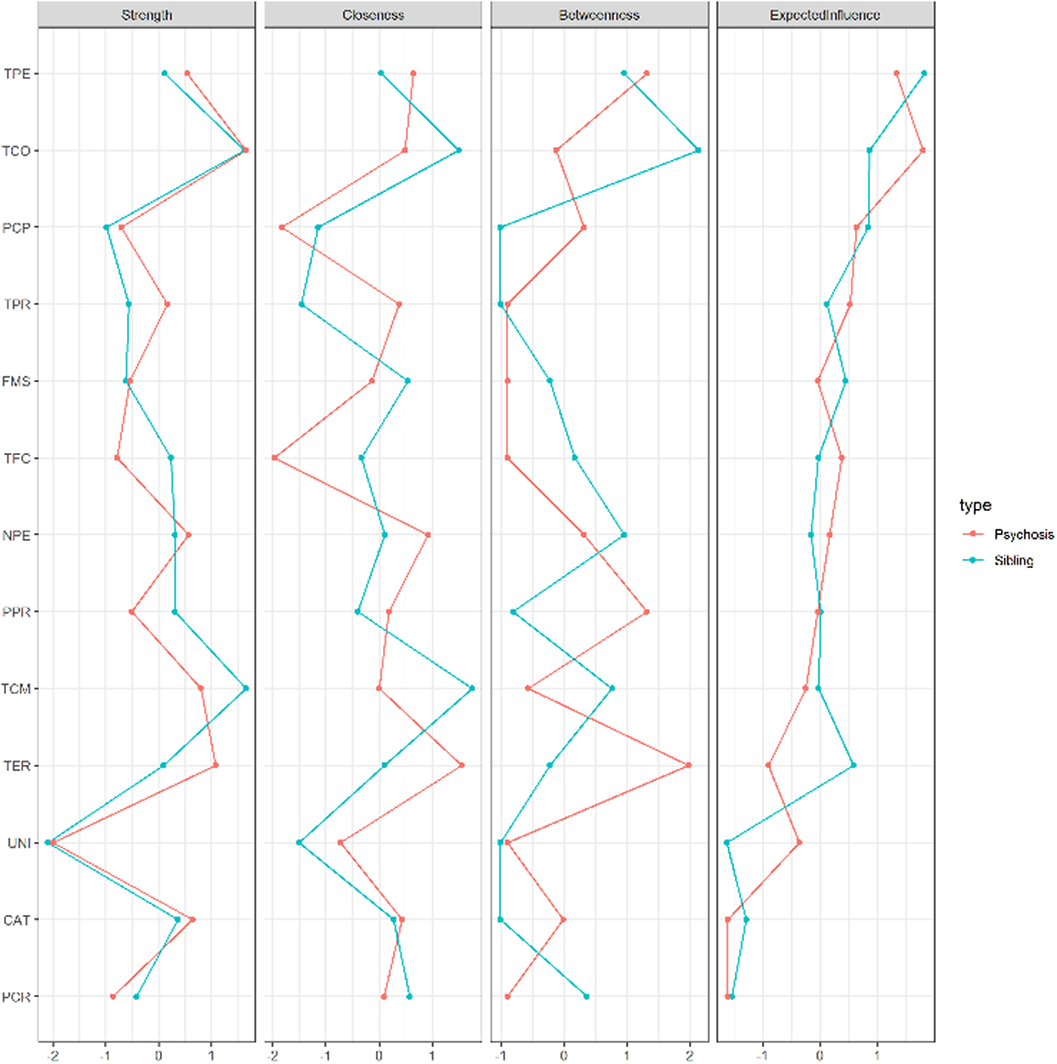
Subjects were 298 patients with a DSM 5 diagnosis of psychotic disorder and 89 of their healthy siblings. The dimensionality and network structure of the 13 WCST measures were examined by means of the Exploratory Graph Analysis (EGA) and centrality parameters.
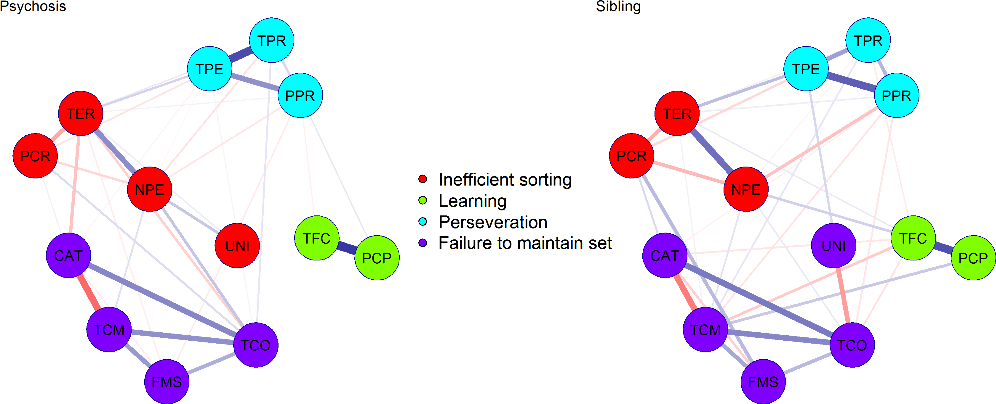
Results
The WCST network structure comprised 4 dimensions: Perseveration (PER), Inefficient sorting (IS), Failure to maintain set (FMS) and Learning (LNG). Patient and sibling groups showed a similar network structure and in both cases the network structure was reliably estimated.
Conclusions
Perseveration measures reflect the inability to switch sorting rules when necessary. Scores for the IS dimension can occur when the subject ineffectively tries to test different sorting hypotheses, changing at random the response. FMS reflects the subject’s strategy when he/she is able to find out the sorting rule, but is unable to keep applying that rule long enough. LNG comprised conceptual ability and learning items. The lack of significant difference between network structures is in keeping with results from exploratory and confirmatory studies demonstrating an invariant cognitive factor structure between schizophrenia patients and their unaffected siblings.
Cognitive impairment is a core feature of schizophrenia and other psychotic disorders and executive deficits are within the most impaired cognitive functions The Wisconsin Card Sorting test (WCST) has been extensively used in literature on schizophrenia and psychosis. The underlying structure of executive impairment may have important implications for our understanding of the complex connections between executive dysfunction and the psychopathology and neurofunctional basis of psychosis.
Objectives
The objective was to empirically validate the dimensions of the WCST network structure of patients regarding antecedent, concurrent and outcome variables.
Methods
Subjects were 298 patients with a DSM 5 diagnosis of psychotic disorder. To assess the empirical validation of network structure of the WCST antecedent, concurrent and outcome variables were selected from the CASH interview and other scales of patients.
Results
Pearson coefficient correlations between the 4 network loadings (NL) of WCST, namely perseveration, inefficient sorting, failure to maintain the set and learning, and antecedent, concurrent and outcome validators are shown in the table. PER and IS showed common and strong associations with antecedent, concurrent and outcome validators. LNG dimension was also moderately associated and FMS did not show significant associations.
Conclusions
‘Perseveration’ and ‘Inefficient sorting’ dimensions achieve and share common antecedent, concurrent and outcome validators. While ‘Learning’ dimension achieves partial validation in terms of antecedent and outcome validators and ‘Failure to maintain the set’ dimension was not associated with external validators. These four underlying dysfunctions might help to disentangle the neurofunctional basis of executive deficits in psychosis.
Even though cognitive impairment is considered a hallmark of schizophrenia, it has not been included as a criterion into major diagnostic systems.
Objectives
To test whether a set of clinical-defined cognitive impairment criteria can have utility in the assessment of psychosis patients in clinical practice.
Methods
We assessed 98 patients with a psychotic disorder, diagnosed using DSM 5 criteria. We developed a set of cognitive impairment associated with psychosis (CIAPs) criteria following the format of current DSM criteria and based on previous literature. The CIAPs criteria include: A) criterion for evidence of cognitive impairment after the beginning of illness; B) cognitive impairment clinically evidenced, affecting functioning in everyday activities in at least two out of six cognitive domains; C) and D) exclusion criterion for either delirium or other neurocognitive disorders, respectively, as causal agents of the cognitive impairment. The psychosis patients dichotomized by the CIAPs criteria were tested regarding the neuropsychological performance in attention, speed of processing, verbal memory, visual memory, working memory, executive function and social cognition tasks. Also a Global Cognitive Index was calculated.
Results
Forty-three patients with psychosis fulfilled the CIAPs criteria (43.9%). MANOVA profile analyses revealed a pattern of statistically significant deficits in all the cognitive dimensions except for social cognition in CIAPs+ patients regarding CIAPS-, with prominent deficits in processing speed and memory functions.
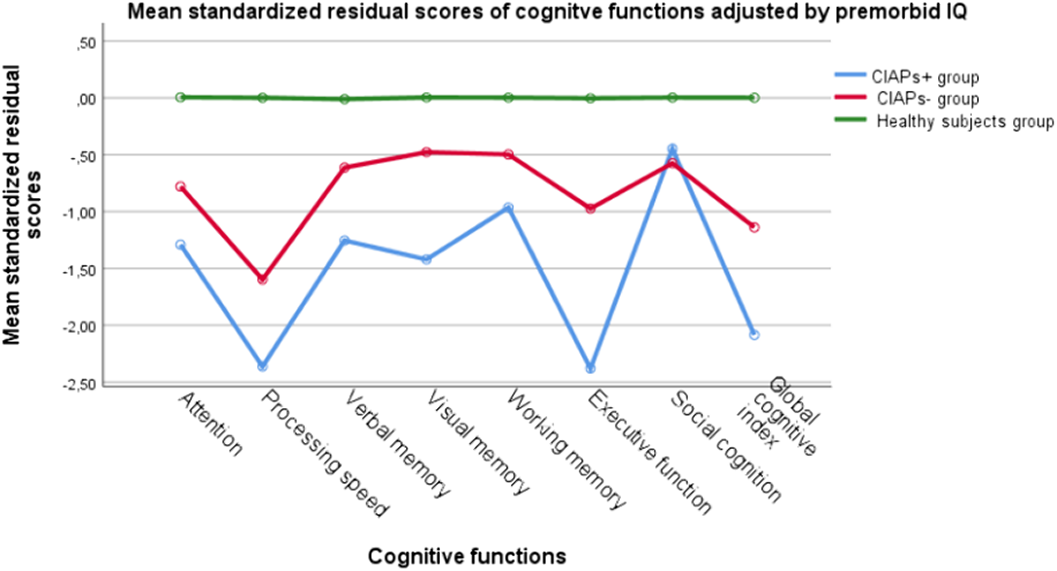
Conclusions
The CIAPs criteria could be an auxiliary method for clinicians to assess cognitive impairment. It may also permit clinical estimation of the influence of cognitive deficits on the ecological functioning of patients.
Conflict of interest
This work was supported by the Government of Navarra (grants 17/31, 18/41, 87/2014) and the Carlos III Health Institute (FEDER Funds) from the Spanish Ministry of Economy and Competitivity (14/01621 and 16/02148). Both had no further role in the study des
In spite of the long history of antipsychotic treatment there are still no clear criteria, which can be robust support for drug decision-making.
Objectives
To determine the important hallmarks of patient’s current state, life span and history of illness defining the doctor’s decision about the type of antipsychotic to be chosen.
Methods
The data from the case charts of 275 patients with episodic schizophrenia and rather benign course of the disease were analyzed.
Results
The group included: male 62%, mean age 33 (SD 11), education 10 years 23%, 13 years 27%, 16 years 29%, disability - 51%, number of hospitalizations due to psychotic episodes in the past 7 (SD 6). The symptoms of the current episode varied from patient to patient: delusions and hallucinations, symptoms of disorganization, negative symptoms of different severity were registered Atypical antipsychotics were more often than typical prescribed to the patients with developmental problems: traumatic obstetric complications (p=0,009), poor somatic health in the childhood (p= 0,02), cognitive dysfunction during school years (p=0,04), and quality of first remission – presence of residual symptoms in the first remission (p=0.005). Good compliance in the past was one more important factor for choosing a atypical antipsychotic for a patient (p=0.05). It appeared that the most important for the decision-making was the specific features of the patient’s development and early period of the disease, but not the specific signs of current psychotic state.
Conclusions
Doctor’s decision upon the type of antipsychotics in this category of patients is most probably based on other than current clinical symptoms signs.
Acute and Transient Psychotic Disorder (ATPD) is a group of rare psychotic disorders characterized by acute onset, symptom fluctuation and short duration typically followed by complete recovery. Throughout the time, there have been different attempts to classify these disorders (Bouffée Délirante, Cycloid Psychosis, etc.); nevertheless, in the current date, ATPD encompasses a broad spectrum of heterogenous clinical presentations with low diagnostic stability over time.
Objectives
To describe a case of ATPD, highlighting the variability of its’ psychopathological phenomena and establishing a comparison with historical descriptions of this nosological entity.
Methods
Clinical case report and brief review of literature.
Results
V, 20-year old male without psychiatric history, presents in the emergency room exhibiting fluctuant psychopathology over the preceding two weeks – initially with depressive mood, anhedonia, apathy, bizarre behaviors and soliloquies; afterwards, showing paranoid delusional ideation; total insomnia in the previous 2-3 days; finally, showing grandiose delusional ideation; and throughout the episode, revealing pseudohallucinatory verbal activity assuming multiple identities. Several stress factors were identified in close time-relation with the onset of these symptoms. V. started risperidone 2mg 2id and quetiapine 100mg id and was discharged 2 weeks later, fully recovering from these psychopathological phenomena. V. remains asymptomatic at 6 months of follow-up.
Conclusions
Historically, some classifications of this disorder focus on etiological factors, others on clinical evolution and course, and yet another group on separation from the Kraepelinian duality (schizophrenia and bipolar disorder). ATPD is a diagnosis with high clinical heterogeneity and low stability over time, which can have implications in follow-up and long-term outcome.