We partner with a secure submission system to handle manuscript submissions.
Please note:
You will need an account for the submission system, which is separate to your Cambridge Core account. For login and submission support, please visit the
submission and support pages.
Please review this journal's author instructions, particularly the
preparing your materials
page, before submitting your manuscript.
Click Proceed to submission system to continue to our partner's website.
To save this undefined to your undefined account, please select one or more formats and confirm that you agree to abide by our usage policies. If this is the first time you used this feature, you will be asked to authorise Cambridge Core to connect with your undefined account.
Find out more about saving content to .
To send this article to your Kindle, first ensure no-reply@cambridge.org is added to your Approved Personal Document E-mail List under your Personal Document Settings on the Manage Your Content and Devices page of your Amazon account. Then enter the ‘name’ part of your Kindle email address below. Find out more about sending to your Kindle.
Find out more about saving to your Kindle.
Note you can select to save to either the @free.kindle.com or @kindle.com variations. ‘@free.kindle.com’ emails are free but can only be saved to your device when it is connected to wi-fi. ‘@kindle.com’ emails can be delivered even when you are not connected to wi-fi, but note that service fees apply.
Schizophrenia (SKZ) is a chronic, disabling and incapacitating psychiatric disorder. In addition to the traditional symptomes of schizophrenia, the suffering of this patients can be expressed through a set of cognitive complaints
Objectives
To determe the factors associated with subjective cognitive complaints in schizophrenia
Methods
We conducted a cross-sectional descriptive and analytical study among a sample of of 72 patients followed in psychiatric outpatient of Hefi chaker university hospital in sfax. We used the SSTIC scale to determine subjectif complains ans the PANSS to evalue positif and negatif symptomes
Results
The mean age of our popularion was 46.83± 11.6 years. The patients had a low socio-economic level in 70.1%. They were unemployed in 46.9%, consumed alcohol in 23.6% and consumed tobacco in 58,6% of the cases. the total score on the PANSS scale was 46, distributed as follows: 9 for positive symptoms, 17 for negative symptoms and 22 for total psychopathological assessment. They had an average score of 25 on the total SSTICS score Factors significantly correlated with subjective cognitive complaints were: low socio-economic level (p=0.04), lack of occupation (p=0.001), alcoholism (p=0.001), smoking (p=0.01) and presence of negative symptoms (p=0.00).
Conclusions
This study demonstrates that socio-demographic characteristics and the predominance of negative signs may increase the subjectif cognitif complains in schizophrenia. The recognition of these associations by the psychiatrist can have an important implication in the therapeutic management.
Schizophrenia, with its high prevalence, chronic progression and social impact, is a major challenge for health professionals. For this reason it is important to assess the impact of this disease on these patients, mainly on their quality of life.
Objectives
To study the quality of life in patients with schizophrenia and determine the factors correlated with it.
Methods
A cross-sectional, descriptive and analytical study of 28 patients with schizophrenia followed up at the psychiatric consultation in Hédi Chaker University Hospital of Sfax. Data collection was performed using a sheet exploring socio-demographic and clinical data. We used the Quality of Life Scale (Q-LES-Q-SF).
Results
The average age of our patients was 40.61±6.27 years. The sex ratio (M/F) was1.15. The socioeconomic level was low in 71.4%. The average number of relapses was 3.04±1.4. Follow-up and compliance were good in 28.6% of cases. The average number of hospitalizations was 3.04±1.4. The average of quality of life in patients with schizophrenia was 21±5.74. The quality of life was affected with age (p=0.023), with the high number of relapses and with a higher number of hospitalizations in psychiatric hospital (p=0.008). Quality of life was improved with regular follow-up and good adherence to the treatment (p=0.000).
Conclusions
The quality of life in mental disorders was impaired mainly in schizophrenics, hence the need to evaluate in a codified way the quality of life of our patients in order to raise awareness among general practitioners as well as psychiatrists to improve the therapeutic and social care of patients.
Conceptualising Schneider’s first-rank symptoms (FRS) as a diagnostic test whose performance can be measured in terms of sensitivity and specificity involves some issues that require reflection. The first formal proposal was contained in a 1939 monograph Schneider wrote, but little is known of their prehistory. In recent years there has been renewed interest in their clinical value.
Objectives
This work aims to review the the diagnostic the evolution and diagnostic accuracy of FRS.
Methods
A non-systematic review was performed, searching Pubmed/MEDLINE for articles using the keywords “schizophrenia” and “first rank symptoms”.
Results
From the beginning of Western descriptive psychopathology in the early 19th century, symptoms have been observed later described as first-rank by Schneider. When FRS are conceived as simple clinical indicators at a low level of inference, the results of the meta-analytic estimate of their diagnostic accuracy can be considered as a valid appraisal of their performance and usefulness. However, when FRS are conceptualised from a psychopathological perspective as strange and incomprehensible experiences that cannot be reduced merely to their propositional content and require substantial expertise and skill to be properly evaluated, the meta-analytic estimates can hardly be seen as a valid evaluation of their diagnostic significance, considering that some FRS are extremely difficult to assess properly.
Conclusions
The descriptions of these symptoms present substantial temporal and geographical continuity, over two centuries and in many countries. There is contradictory information concerning the validity of FRS as a clinical indicator. Phenomenologically informed studies are needed to address this research gap.
According to psychoanalytic theory performing circumcision on a boy in phallic phase may aggravate this fear and cause sexual dysfunctions later in life. However this hypothesis is an unverified common-view rather than a scientifically proven conclusion.
Objectives
We hypothesized that being circumcised during phallic phase is not a risk factor for sexual dysfunction. We also took a peak at how the experience of circumcision is being perceived and its psychological effects. Our secondary hypothesis was, sexual dysfunctions are more frequent among men who had a traumatic circumcision experience.
Methods
For this cross-sectional study, a total of 2768 sexually active, circumcised and voluntary men were recruited from 20 different urology outpatient clinics around Turkey.
Results
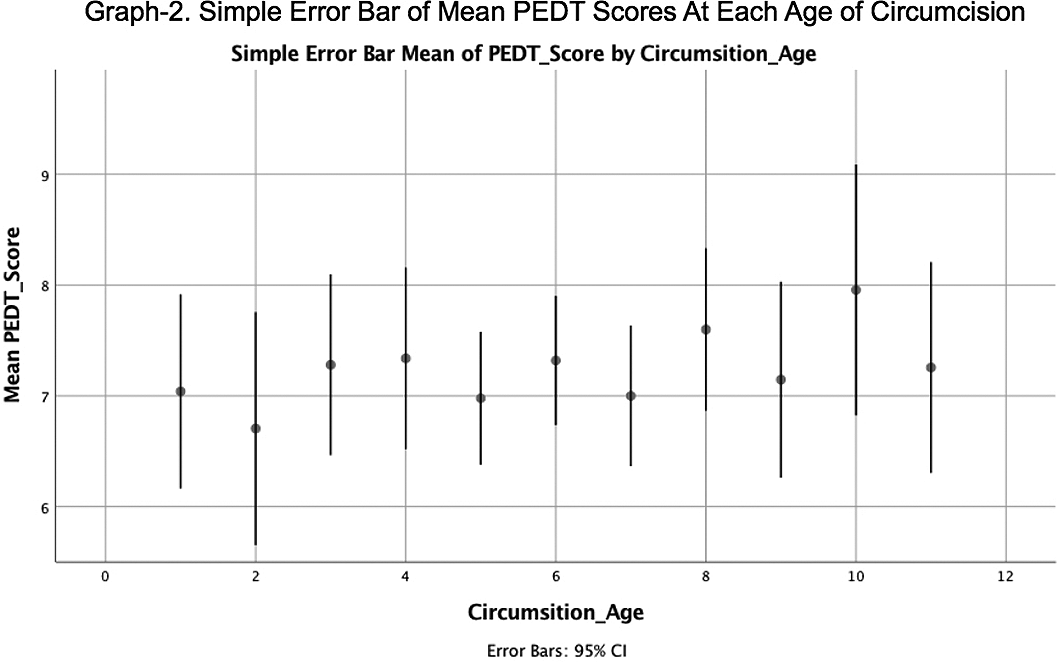
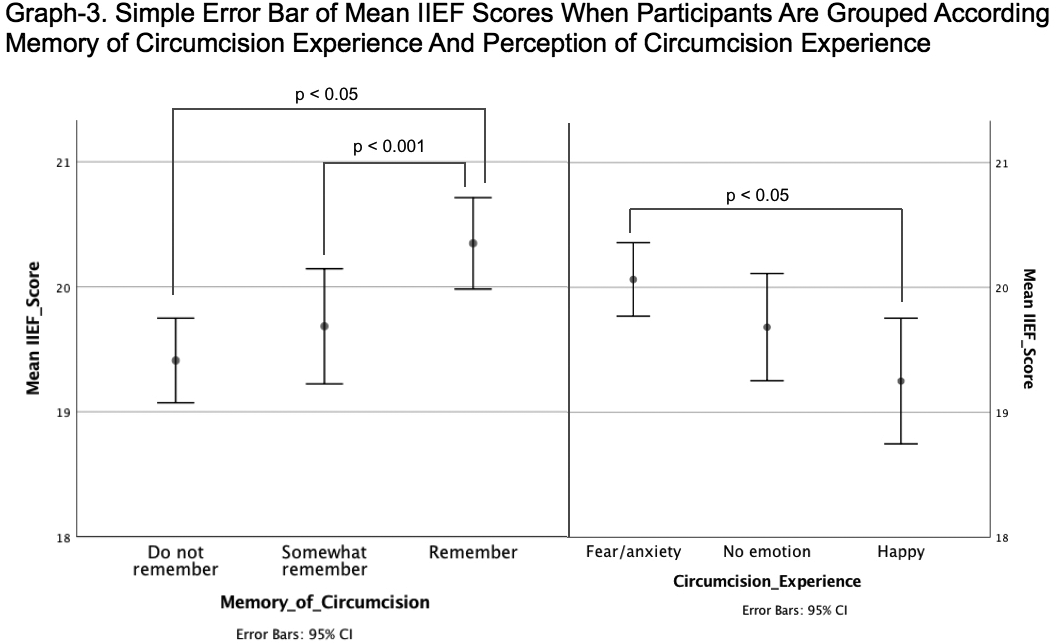
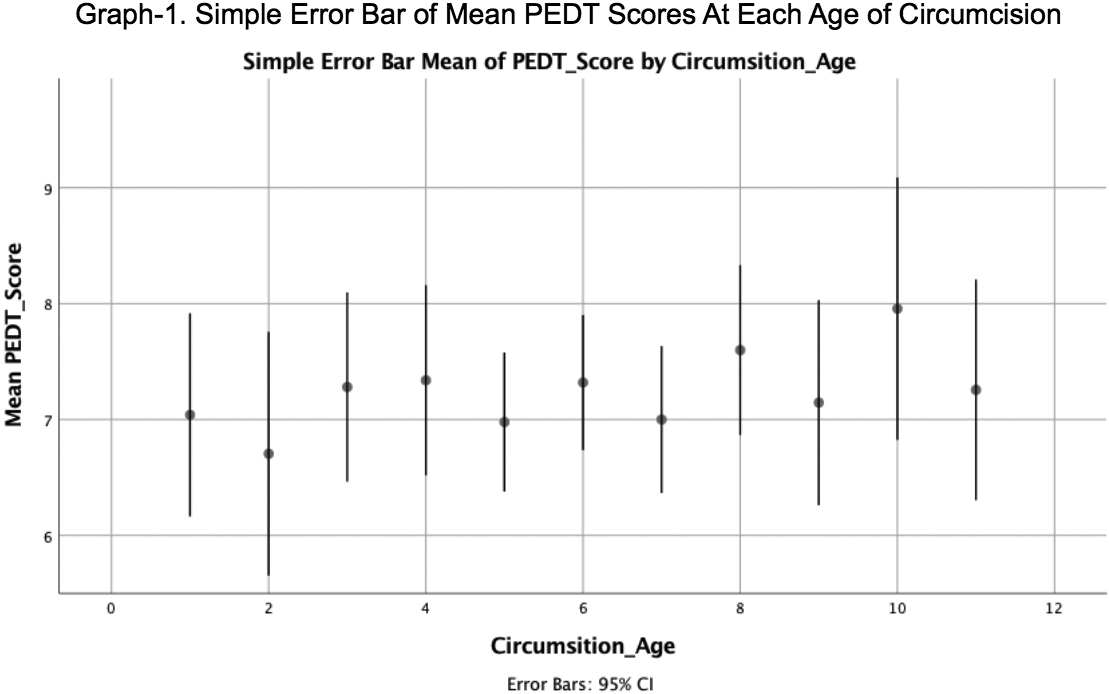
There was no significant difference for PEDT and IIEF scores between participants who were circumcised at different ages (Graph-1,2). When participants were divided into 3 groups according to their circumcision age in accordance with psychoanalytic theory (before, after and during phallic phase) mean IIEF and PEDT scores did not differ. PEDT scores did not differ either by which emotion the participant describe their experience of circumcision or how vividly he remembered it. However participants who remembered their circumcision experience more vividly and had who describe their circumcision experience with fear/anxiety had a higher IIEF score (Graph-3).
Conclusions
The age of circumcision does not affect the risk of PE. This is one of the very few studies that challenges psychoanalytic theory with a scientific method. Remembering the circumcision experience with fear or anxiety did not increase the risk of sexual dysfunctions.
The context of stigma, in which many homosexuals live, exposes them to discrimination/stigmatization and promotes the internalization of negative attitudes about sexuality. Battle feelings of rejection and isolation may lead to the development of internalized homophobia (IH).
Objectives
To elucidate the risk factors of IH and how the latter affects mental health.
Methods
Literature review (PubMed).
Results
IH has been associated with lower levels of emotional stability, rejection sensitivity, impairments in emotion regulation and a tendency to turn against the self. Studies have connected IH to depression, poor self/relationship wellbeing, sexual discrimination, addictions, shame, body dissatisfaction, suicidal ideation, binge eating/drinking, partner violence and victimization. Higher levels of attachment anxiety and avoidance, outness, religiosity and internalized stigma were correlated with higher IH levels. The key factors relating to suicide include lack of acceptance by family and/or self, negative feelings about sexuality/gender and appearance dissatisfaction. In traditional/religious societies, heterosexual orientation is a strong norm and homosexuality is considered unacceptable leading LGBT individuals to report higher depressive symptoms and increased levels of IH. Due to heterosexist ideals, IH is a predictor for heterosexual marital intention, protests against LGBT and use of masculinity as a compensatory strategy.
Conclusions
Policies in support of individuals who have recently come out should be improved to reduce the development/effects of IH and take the social and sexual environments of rural gay men into account considering ways to increase service accessibility (e.g internet). Future research is needed to further understand the association between IH and mental health, social and cognitive mechanisms.
Infertile males experience considerable psychological distress, with feelings of inadequacy, marginalization, guilt and loss ofself-esteem.
Objectives
Our study aims to investigate the impact of male infertility on men’s self-esteem and to study risk factorsfor low self-esteem.
Methods
We conducted a cross sectional, descriptive and analytical study, including 108 infertile men who presented to the laboratory of reproductive biology and the unit of assisted medical procreation of Military Hospital of Tunis between June and September 2019. For each patient, we collected sociodemographic and clinical data. We used Rosenberg scale to assess self-esteem.
Results
The average age of participants was 36.8 years. Eleven patients had a history of varicocele (10.18%) and six of them sufferedfrom associated erectile dysfunction (5.55%). Infertility was primary in most of patients (77.8%) with an average duration of 3.32 years. 25% of patients had at least one previous failed assisted reproductive attempt. Spermogram abnormalities were found in 78.7% of patients. The mean score of Rosenberg scale was 30.68±4.35. Low self-esteem was associated with older age (p=0.006), lower educational level (p=0.019) and longer duration of infertility (p=0.022). Men who had children had better self-esteem (p=0.022). No associations were found between self-esteem and erectile dysfunction or previous failed assisted reproductive technique attempt.
Conclusions
Our results show that infertility reduces men’s self-esteem, especially of patients with lower educational level and longer duration of infertility. Physician dealing with infertility should be aware of these psychosocial aspects and offer help when needed.
Genital pain is a heterogeneous chronic pain condition and the relationship between biological, psychological and social factors sets a complex clinical challenge. The importance of negative thoughts and emotions has opened up an opportunity for the role of third generation cognitive-behavioral therapies (CBT). While the majority of evidence revolves around female sexual desire and arousal problems, research on genital pain disorders is beginning to take shape.
Objectives
To review the evidence of third generation CBT on genital pain disorder.
Methods
Review of literature using the Pubmed platform.
Results
We identified 21 publications. Evidence shows that mindfulness-based CBT (MbCBT) improves reduction of fear linked to sexual activity, pain acceptance, catastrophizing and decentering. MbCBT shows significant improvements on secondary outcomes (overall sexual function, sexual satisfaction, depression and anxiety) while reduction of genital pain has yielded contradictory results. Acceptance and commitment therapy (ACT) has been studied for chronic pain disorders with improvements on pain acceptance, psychological flexibility, anxiety, depression and functioning. Compassion-focused therapy (CFT) has yielded favorable results on pain distress and intensity, self-efficacy, self-acceptance, anxiety and depression. Self-compassion may be a promising protective factor in genital pain. Both ACT and CFT have not yet been studied specifically for genital pain.
Conclusions
Third generation CBT are most commonly used for depressive, anxiety and chronic pain disorders which signals the logical role that these interventions may have in genital pain. While MbCBT has started to present favorable results in treating genital pain (as well other sexual problems), ACT and CFT require more research.
Women around the world are still victims of violence and discrimination in many areas. In Tunisia, discrimination against women remains a reality, and they are often more vulnerable to violence, especially sexual violence, compared to men.
Objectives
To describe the epidemiological characteristics of victims of sexual assault in the Mahdia region in Tunisia
Methods
This is a descriptive and retrospective study of 110 sexual assault cases examined at the legal medecin department of Mahdia University Hospital between January 2016 and August 2018.
Results
The majority of victims were female (80 %). All genders, 77% were under the age of 25 years old. The median age of the men was 11.5 years. The median age of women was 18. The urban origin was more common (55.5%). Only 8.1% were married compared to 87.4% single. Only 2.7% said they were divorced and only one woman was a widow. 41.8% of the sample said they were still in school and almost 29,1% of the cases were out of work. 3.6% reported a history of sexual assault. The sexual act was the same in all situations. The perpetrator was unique in 73.6% of cases, male (100%), known to his victim (57%) or even a member of the family circle (14%). Sexual assault by penetration was mostly reported (51%), and it was almost exclusively penile(98.2%).
Conclusions
Sexual violence remains under-reported. The statistical data do not allow to know the phenomenon of its whole, because the majority of acts remain unknown, due to the absence of complaints or medical consultations.
A person who has gender dysphoria can experience some difficulties in his/her/their life (as we can see even in language). These difficulties are mostly because of the binary gender system. Especially in countries like Turkey, homophobia is very common. Because of that, a homosexual person can think that he/she/they is a transgender.
Objectives
At this point, group psychotherapies are worthwhile, especially for differantial diagnosis. These individuals can share their experiences about the process. On this way, they can also explore themselves.
Methods
We have a monthly group psychotherapy for transgender and gender nonconforming adults in our clinic. We accept the individuals who have problems about gender identity. All trans adults who apply to us and are considered to be suitable are directed to the support group.
Results
An individual, aged 20, who defines herself as a FtM trans has joined to the group for 4-5 months. She was in hurry and had decided to go under surgery for gender transition. She was referred to surgery by another clinic which didn’t have a group psychotherapy. So she applied to our clinic. During the group psychotherapy, she realized that she was homosexual and gived up gender transition.
Conclusions
Group psychotherapy is helpful for trans individuals to reduce psychological distress and manage their process. This study shows that it is not the only benefit of group support psychotherapy. It also helps the individuals to explore themselves, like our case. Its benefit can be as major as saving themselves from an irreversible step and its consequences.
Recent research shows that exposure to trauma, such as child abuse, may result in a heightened risk of developing schizophrenia and worsening of positive symptoms in schizophrenic patient.
Objectives
The objective of this study was to examine the relation between childhood abuse and psychotic symptoms in patients with schizophrenia.
Methods
Participants were outpatients of Hedi chaker University Hospital Center in sfax, Tunisia, recruited between January and July of 2019, diagnosed with schizophrenia or schizoaffective disorder. The Childhood Trauma Questionnaire (CTQ-SF), the Positive and Negative Syndrome Scale (PANSS) were administered in this study to evaluate respectively childhood trauma and psychotic symptoms
Results
44 patients were included in this study with an average age 39,81 ±9,7. The rate of emotional abuse was 15.9%, physical abuse 31.8%, sexual abuse 15.8%, emotional neglect 6.8% and physical neglect 18.2%. PANS positive score (r=0,59 ; p< 10-3 ), PANS negative score (r=0,55 ; p< 10-3 ) and PANS psychopathology score(r =0,45, p<0,002) were higher in patients who had a history of childhood trauma in comparison with those who did not report experiencing this.
Conclusions
This study confirms that a history of Childhood trauma may have a serious impact in patients with schizophrenia.
Transsexuals are considered to be stable in their identity (White Hughto et al., 2016). Meanwhile, the stages of medical transition affect the mental state of transsexuals differently.
Objectives
The aim was to reveal relationships between salience of self-identification in transsexual people being on different stages of medical transition.
Methods
151 transsexual people: 55 pre-operated Female-to-Male (FtM I), 25 FtM on a hormonal therapy (FtM II), 25 FtM after some surgical operations (FtM III); 12 pre-operated Male-to-Female-Transsexual (MtF I), 16 MtF on a hormonal therapy (MtF II), 18 MtF after some surgical operations (MtF III). The participants filled the modificated Kuhn’s test “Who am I?” (Tkhostov et al., 2014). The modification includes a Likert scale for evaluating one’s self-identifications in terms of salience: “How often do You think or remember this answer?” (Stryker, 2007).
Results
There were differences between identity salience and stages of medical transition (F = 7,177; P < 0,001; η2 = 0,108). Transsexuals before medical transition demonstrated higher levels of identity salience (average score is 7,62 in FtM I and 7,75 in MtF I). Transsexuals on a hormonal therapy demonstrated sharply decreased level of identity salience (6,97 in FtM II and 6,19 in MtF II). Transsexuals after surgical operations reported increased level of salience (7,81 in FtM III and 7,23 in MtF III). There were no statistically significant differences between the groups by gender assigned at birth.
Conclusions
Data suggest that medical transition could change the salience of self-identification. Hormone therapy is associated with a sharp revision of the salience of self-identifications for transsexuals.
In this presentation we describe the case of a woman referred to the Sexology Department after having developed symptoms of Persistent Genital Arousal (PGAD) for the last 5 years, during treatment for Depression with Venlafaxine. PGAD is a clinical entity first described in 2001 by Leiblum and Nathan. Despite having received more attention in the last few years, its etiology remains unclear, with numerous causal factors of different natures being suggested.
Objectives
We aim to describe this clinical case of PGAD and to discuss the possible etiological factors involved as well as to make a brief revision of the literature on this topic.
Methods
We conducted a detailed interview, focused on the nature of the complaints, psychological history, medications, diet and neurologic disorders and performed a thorough clinical examination. We also searched for relevant articles in medical databases such as PubMed and Google Scholar.
Results
A 52 year-old woman previously treated for Depression with Venlafaxine complains of involuntary sensations of genital arousal, with perceived vasocongestion, tingling and pulsatlity during her journey to work in public transportations. The symptoms subsided only after getting home 8-10 hours later and reaching orgasm by masturbating. She stopped Venlafaxine in 2015, but these symptoms persisted. Some authors suggest a link between SSRIs/SNRIs and PGAD.
Conclusions
PGAD is a relatively recent addition to our diagnostic catalog with increasingly more cases being reported in the last few years. It is likely that the condition, however, has no discrete etiology and that a customized approach will be necessary to successfully treat most patients.
With the growing recognition of overweightness and obesity as significant, international public health concerns, the body of research investigating the relationship between body mass index (BMI), sexual health and sexual functioning in sexual minority men is still scarce.
Objectives
The purpose of this study is to assess sexual health determinants (sexual behavior and sexual functioning) in relation to normal weight, overweightness and obesity among gay and bisexual men.
Methods
The survey included four categories of questions/measurements, encompassing sociodemographic information, protected/unprotected sexual behaviors, sexual functioning, and BMI. The survey was conducted online, and recruitment consisted of online notifications (emails and electronic messages), and advertisements sent to LGBT community organizations, mailing lists, and social networks.
Results
The study sample was composed of 741 gay and bisexual men, ranging in age from 21 to 75 years old (Mage=43.30, SDage=11.37), 62.5% of men self-identified as gay and 37.5% as bisexual. Prevalence of normal weight was 50.3%, of overweight 33.3% and of obesity 16.4%. Hierarchical multiple regression analysis to assess the effects of BMI on sexual health showed that being younger in age, self-identifying as gay, being in a relationship, having longer penises, adopting insertive position in sex and being normal weight were significant predictors of anal receptive sex without condoms, explaining 24.2% of the total variance. Yet, BMI was not predictive of sexual functioning.
Conclusions
These findings highlight the importance of including BMI in sexual behavior models of sexual minority men to better understand BMI’s role in influencing sexual risk.
The concept of Sensory Processing Sensitivity (SPS) was initially introduced by Aron in 1997 and involves complex processing of sensorial information and internal and external sensory stimuli, that is represented as an individual innate difference, as a temperamental property that concerns not only this deep sensorial processing but also to sharper general responsiveness to the environment. Its association with sexual functioning is still to be deeply determined.
Objectives
Through this research we aim to evaluate the levels of High Sensory Processing Sensitivity (HSPS) and to what extent these are related to sexual functioning, in addition to assessing the mediating role of gender in this relationship.
Methods
A total of 1,054 subjects between the ages of 18 and 80 (M age = 29.4; SD age = 11.9) participated in this study. Participants completed a demographic questionnaire, the Portuguese version of The Highly Sensitive Person Scale, and the Portuguese version of the Massachusetts General Hospital – Sexual Functioning Scale. The recruitment of the sample was internet-based.
Results
showed that the Sensitivity Sensory Processing and Sexual Functioning variables are negatively correlated and that there are statistically significant differences in sexual functioning according to gender (t(df)=7.042; p=<.05), males scoring higher; and participants with lower levels of HSPS presented higher levels of sexual functioning (t(df)=3.599; p<.05). Finally, logistic regression showed that Gender is responsible for 6.2% of the total variance of sexual functioning.
Conclusions
When working with highly sensitive people mental health professionals should take into account problems related to their sexual functioning in clinical practice.
Interactions between infertility and sexuality are numerous and complex. Recently more attention is being paid to the impact of infertility on the marital sexuality.
Objectives
The aim of this study was to determine the effects of infertility on sexual functions.
Methods
A cross-sectional descriptive study, the obstetric gynecology department Basic demographic information was collected. Respondents were surveyed regarding sexual impact and perception of their infertility etiology.
Results
Our patients had an average age of 33.2. The average number of years of infertility was 3.9 years.. The most common cause of female infertility was an ovulat disorder (36%), that of male infertility was sperm production defect. The confrontation with a diagnosis of infertility marks a difference in the way couples organize their sexual life. In our study, sexual problems after this diagnosis were experienced by 38% of women. Sexual dysfunction was detected as a pain problem (24%), a desire problem (10%), an arousal problem (4%), and an orgasm problem in 6% and. Faced with this situation, women felt guilty (46%), angry (72%) and anxious (82%). Infertility was perceived as the worst experience of life by 78% of our patients.
Conclusions
Infertility can interfere negatively in women sexuality. The investigation of sexual difficulties in infertility consultations must be systematic.
Unplanned pregnancies are a significant risk factor in perinatal mental health. They also have the potential to result in adverse health impacts for mother, baby and children into later in life. Women from disadvantaged backgrounds are less likely to access contraception. Women are more likely to on board health advice during pregnancy and post partum period due to high level of surveillance by health professionals.
Objectives
Our aim was for 90% of patients on Coombe Wood Mother and Baby Unit (MBU) to feel supported to make an informed decision about their contraception by October 2020.
Methods
A questionnaire was completed by fifteen inpatients at the Mother and Baby Unit over a 4 month period (April- August 2020) to assess areas around their pregnancy and contraceptives of choice. Contraceptive training was provided by a Sexual Health Specialist to staff across multiple disciplinaries on Coombe Wood MBU. Sexual Health discussion groups were delivered by doctors to inpatients on a monthly basis. A post-intervention questionnaire was given to patients.
Results
•53% of patients reported unplanned pregnancies. •40% of women felt lacking confidence in choosing the right contraceptive •The most frequent question asked during the sexual health groups was regarding hormonal contraceptives impacting on mental health. •By September 100% of patients felt they were able to make an informed decision about their contraception on discharge.
Conclusions
Facilitating women to make informed decisions regarding their contraception empowers them to gain autonomy, reduces the risks of physical and mental illness, improves the quality of life for mothers and babies.
Having a mental disorder is associated with increased vulnerability to the transmission of the Human Immunodeficiency Virus (HIV) and the prevalence of HIV is higher in people with a severe mental disorder. People with psychiatric comorbidities such as bipolar affective disorder and depressive disorder, post-traumatic stress disorder (physical or sexual abuse) and/or psychoactive substance use have a higher risk of HIV infection.
Objectives
This work is intended to expose the importance of integrating mental health care with the care of HIV patients.
Methods
The authors conducted a non-systematic review of the literature, conducting research through Pubmed and Medscape using the keywords ‘Preexposure prophylaxis’, ‘HIV’, ‘Mental health problems’.
Results
Several factors may contribute to the high comorbidity between HIV and Mental Disorders, including socio-demographic factors, weak social and environmental structures, as well as internalized stigma, social and experienced discrimination. Mental health problems may interfere with the care needed for prevention, including regular HIV testing and/or adherence to Preexposure Prophylaxis (PrEP); and influence access to and adherence to antiretroviral treatment.
Conclusions
This compelling evidence makes the necessary contribution of integrating mental health into an assessment and continuous treatment of the HIV patient, on the other hand, the assessment and treatment of mental disorders should address sexual health.
Exposure to extreme traumatic events can lead to post-traumatic stress disorder (PTSD). This disorder affects emotional, social and professional functioning. Recent studies suggest that it can lead to sexual dysfunction.
Objectives
The aim of this study is to compare the level of sexual dysfunction between men with PTSD and control subjects.
Methods
A total of 30 male PTSD patients and 30 controls were included in this study. We used the Post-Traumatic Stress Disorder Check Scale (PCLS) to assess the intensity of PTSD symptoms and the International Erectile Function Index (IIEF15) to assess sexual dysfunction of both patients and controls.
Results
The mean IIEF-15 score was 51.16 ± 6.82 in patients followed for PTSD versus 77.33 ± 2.02 in healthy controls with a non-significant difference (p = 0.26). Three patients (10%) had an alteration of desire while the control reported only dysfunction but there was no significant difference between the mean scores of IIEF-SD (p = 0.22). No patient or control had erectile dysfunction and there was no significant difference between the IIEF-EF sub-scores in the 2 groups (p = 0.20). The mean sexual intercourse satisfaction (SD) score in the patients was 5.13 ± 1.10 versus 8.86 ± 0.40 with a non-significant difference (p = 0.09). Altered satisfaction with intercourse was noted in 15% (n = 5) of subjects with PTSD versus a single control.
Conclusions
It is important that practitioners address the subject of sexuality in patients followed for PTSD and refer their patients, if necessary, to a sexology consultation.
Post-traumatic stress disorder affects emotional, social and professional functioning. It can also affect physical and sexual health.
Objectives
The aim of this study is to write down the prevalence of sexual dysfunction in men with PTSD and to economize on potential predictors of sexual dysfunction.
Methods
A total of 30 male patients with PTSD were included in this study. We collected socio-demographic and clinical data and we used Post-Traumatic Stress Disorder (PCLS) and International Erectile Function Index (IIEF15) scales.
Results
The mean PTSD severity score was 65.43 ± 2.95. The mean score for revitalization, avoidance, cognitive and mood alteration, and hypervigilance were 15.80 ± 1.44, respectively; 8 ± 0; 24.07 ± 1.20 and 17.57 ± 2.95. The mean IIEF-15 score was 51.16 ± 6.82. The mean sub-scores were 3.93 ± 0.52 for sexual desire; 18.80 ± 5.68 for erectile function; 8.93 ± 8.97 for orgasmic function; 5.13 ± 1.10 for satisfaction with intercourses and 4.13 ± 1.16 for overall satisfaction. The IIEF15-EF score was negatively correlated with the presence of a personal medical history (p = 0.02) and the impairment cognitions and mood score (p = 0.023). The IIEF-OF score was significantly associated with reviviscence, hypervigilance, cognition and mood alterations (p = 0.015; 0.041; 0.045). The IIEF-15 SD score was negatively correlated with altered cognition and mood (p = 0.007).
Conclusions
Our study focused on the importance of assessing sexual function in men followed for PTSD and helps to understand the association of PTSD with different types of sexual dysfunction.
The intentional use of drugs before or during sexual intercourse (chemsex) is a phenomenon of special importance in the MSM (men who have sex with men) population due to its impact on mental, physical and sexual health. Sexual health issues related to chemsex practice have been described such as difficulties in achieving sober sex, erectile dysfunction or problems with sexual desire.
Objectives
To describe the sexual health interventions (including sexual counselling and sexual therapy) for patients with chemsex practices in the NGO Apoyo Positivo in Madrid. We describe the main sexual problems.
Methods
Descriptive analysis.
Results
The main sexual problems were dissatisfaction in sexual intercourse without substance and difficulties with sexual desire activation (70%); compulsive sexual behaviour (70%), difficulties with sexual orientation and non normative gender expression, difficulties in erection (34%), premature ejaculation (7%) and delayed ejaculation (10%).
Conclusions
Chemsex is a phenomenon that needs a multidisciplinary approach and mental and sexual health must be taken into account. “Sexo, Drogas y Tu” is a model of collaborative approach which is a pioneering intervention developed by an NGO in Spain.