We partner with a secure submission system to handle manuscript submissions.
Please note:
You will need an account for the submission system, which is separate to your Cambridge Core account. For login and submission support, please visit the
submission and support pages.
Please review this journal's author instructions, particularly the
preparing your materials
page, before submitting your manuscript.
Click Proceed to submission system to continue to our partner's website.
To save this undefined to your undefined account, please select one or more formats and confirm that you agree to abide by our usage policies. If this is the first time you used this feature, you will be asked to authorise Cambridge Core to connect with your undefined account.
Find out more about saving content to .
To send this article to your Kindle, first ensure no-reply@cambridge.org is added to your Approved Personal Document E-mail List under your Personal Document Settings on the Manage Your Content and Devices page of your Amazon account. Then enter the ‘name’ part of your Kindle email address below. Find out more about sending to your Kindle.
Find out more about saving to your Kindle.
Note you can select to save to either the @free.kindle.com or @kindle.com variations. ‘@free.kindle.com’ emails are free but can only be saved to your device when it is connected to wi-fi. ‘@kindle.com’ emails can be delivered even when you are not connected to wi-fi, but note that service fees apply.
Desperation for cure led to 19th century invention-- electrotherapeutic devices; replete with hyperbolic claims of cure-all, perceived ineffectiveness, and potential harm rendered the modality as quackery but were used in early brain stimulation, melancholia treatment, and cortex mapping. Here, antique devices are restored, and their electrophysiological qualities ascertained.
Objectives
Determine the comparative capabilities of these devices in delivering electrostimulation and compare with modern standards to understand possible electrophysiological sequelae.
Methods
Devices known as “medical batteries” were analyzed. Power delivery utilized a “voltaic battery”, simple circuit, and a conductor wrapped around an iron core. When the circuit is energized, the core is magnetized by direct current of the battery which induces an alternating current that electrifies probes used on the body. Due to their marked age, a common 9-volt battery was exchanged for the corrosive dry cell paste batteries. Electrical parameters were then measured.
Results
Table 1
Device
Frequency (Hz)
Resistance (Ohms)
Max Output (Amps)
Min Output (Amps)
Max Output (Volts)
Min Output (Volts)
Voltampa
2k – 12K
60
0.66
0.33
60V
20V
J.H. Bunnell & Co.’s No. 4 D.D.
7k-10k
50
6
0.4
300V
20V
Schall & Son (London)b
300-1200
40
10.5
2.75
420V
110V
Conclusions
Devices for electrotherapeutics ranged from anemic vibrations to dangerous tetany inducing shocks. Measuring the capabilities of these devices shows the robust yields possible if the original higher capacity batteries were utilized. The reality is, cure or not, the devices were surprisingly potent. It is interesting that, albeit unrefined, efficacious doses were available before modern electrification.
During the last 30 years, many studies have shown a high prevalence of substance use among patients diagnosed with an Eating Disorder (ED). Almost 50% of the patients with ED have a history of substance use, and 35% of the patients that seek help for an addiction disorder also meet criteria for ED. Nevertheless, both substance abuse specialists and pratictioners with expertise in ED have difficulties in treating these dually diagnosed patients.
Objectives
The aim of this study is to emphasize the importance of assessing substance use in patients with ED and disturbed eating behaviors in patients with Substance Use Disorders (SUD), as well as the need for evidence-based treatment guidelines for this comorbid condition.
Methods
A literature search of published articles on substance use patterns in ED and on the therapeutic approach for this comorbid condition was performed on PubMed database.
Results
A diagnosis of Bulimia Nervosa and the presence of binging/ purging behaviors are strongly associated with substance use. Most frequently used substances are represented by nicotine, caffeine and alcohol, followed by cannabis and amphetamines. Reasons why patients with ED use substances are emotional regulation and appetite suppression. Detailed and systematic evaluation of the substances used and for other psychiatric comorbidities is mandatory. Management plan involves simultaneously treating ED and SUD.
Conclusions
The comorbidity of Substance Use Disorders and Eating Disorders is a complex entity, but nonetheless treatable. Further studies are needed to specify the patterns of substance use in Eating Disorders and their implications for treatment.
Post-traumatic stress disorder frequently alters the quality of life.
Objectives
Assess the quality of life in midwives who have post-traumatic stress disorder.
Methods
We conducted a cross-sectional study among midwives in a single university hospital centre using a self-administered questionnaire. We screened post-traumatic stress disorder using the Impact of event scale and the quality of life using 5 items Likert scale.
Results
Our response rate was 82%. Out of 42 midwives who answered us, 18 had post-traumatic stress disorder symptoms (42.8%). They were all female. Their mean age was 45.6± 10.3 years. The traumatic event occurred mainly at work and was related to the death of a mother or a baby. Symptoms of post-traumatic stress disorder symptoms were severe in 5 midwives. The quality of life was altered in 38.8% of participants. Both post-traumatic stress disorder symptoms and alteration of the quality of life were more frequent in patients who don’t have leisure activities.
Conclusions
In conclusion, midwives are vulnerable to developing post-traumatic stress disorder. Encouraging sports and other leisure activities may protect them from having severe repercussions on their life.
Binge-eating disorder (BED), is one of the most common eating disorder. Treatment aims to reduce binge-eating frequency and disordered eating–related cognitions, improve metabolic health and weight, and regulate mood (in patients with coexisting depression or anxiety)
Objectives
The aim of this study was to examine the efficacy of lisdexamfetamine dimesylate in a simple of 50 women with a binge eating disorder diagnosis compare with selective serotonin reuptake inhibitor
Methods
Two groups were made, one with lisdexamfetamine and the other with selective serotonin reuptake inhibitor (fluoxetine). 20 women were in each group (total n=40). The doses depend of the binge symptoms and rates were from 30 to 70md/day for lisdexamfetamine and for fluoxetine the doses were from 20 to 60mg/day.
Results
Binge behaviors decreased with a 50mg/day dose of lisdexamfetamine. The 70mg/day doses present also less binge behaviors but also more adverse events. The 30mg/day doses did not decrease binge-eating behaviors.
Conclusions
Lisdexamfetamine is the first pharmacological agent to receive FDA approval for use in adults with moderate to severe binge eating disorder. This study supports further assessment of lisdexamfetamine as a treatment option for decreasing binge eating behavior and also symptoms associated such as anxiety and obsessive and compulsive features in adults.Increased efficacy with increasing dosages of lisdexamfetamine suggests a dose-response relationship until 50mg/day. Women with a dose of 50mg/day of lisdexamfetamine report less adverse event, more adherence to treatment and improve their eating behaviors.
Lateralization is a complex process that evolves during the development of the child leading to the organization of the functional dominance with a body side. However, laterality is poorly examined.
Objectives
The aim of this study was to explore the features of patients with a laterality disorder evidenced by a non-dominance affirmed of the handedness.
Methods
A retrospective review of 25 cases of patients (15 children of 8-9 years and 10 adults of 26-42 years old) presenting a laterality disorder. All patients were assessed with the standardized assessment of neuropsychomotor functions battery (NP-MOT).It enables physical assessment of muscular tone of limbs and axial tone (trunk), laterality (tonic, spontaneous gestural, psychosocial handedness, and usual with objects for hand, foot, and eye), body spatial integration (in relation to self, imitation, objects and map), auditory attention, and others motor functions.
Results
The study findings revealed poor level of the dominant laterality for all the patients (< 2DS) regarding the proximal tonic laterality (elbows) and the psychosocial subtests of mimed gestures (tending to ambidexterity). In addition, it was found a hypotonic trunk and difficulties in body spatial integration and in asymmetrical bimanual tasks with slowness and failures, similar dexterity performance right/left.Strong correlations between all these features and the personal history match the difficulties to focus a long time an attention holding posture without to move, and associated to a fatigability.
Conclusions
A deep standardized examination of the laterality and tone may explain some components of the behavior in relation with hemispheric dominance impairment.
Sexual well-being (SWB) of the older population can be significantly influenced by age (1) and sexual difficulties (2).
Objectives
Through qualitative research, this study focused on sexual themes that affect the SWB addressed by the older people in person-centered therapy.
Methods
Twenty-five older adults, aged between 65 and 82 years and residents on the community participated in this study.
Results
The results revealed eight main themes for these participants: Absence of a partner, family interference, dissatisfaction with the body, cleanliness and body care, problems in sexual function, physical violence, problems in sexual communication and fear of contracting sexually transmitted diseases. The most discussed themes were the absence of a partner, problems with sexual function and dissatisfaction with the body.
Conclusions
This study highlights the importance of exploring the sexual difficulties that the older population feels in relation to their SWB. 1.von Humboldt S et al. Sexual expression in old age: How older adults from different cultures express sexually? Sex Res Social Policy. 2020;1-15. 2.von Humboldt S et al. Are older adults satisfied with their sexuality? Outcomes from a cross-cultural study. Educ Gerontol. 2020;46:284-293.
The approach to evaluating the effectiveness of psychosocial rehabilitation (PSR) of mentally ill patients implies a multidimensional, hierarchical consideration of mental pathology with the inclusion of clinical and psychopathological, socio-environmental and personal indicators when setting goals and objectives of PSR
Objectives
Development of algorithms and models for evaluating the effectiveness of PSR taking into account: clinical, socio-demographic, psychological characteristics of the patient and the characteristics of the family environment, as well as factors of psychiatric care.
Methods
Clinical, statistical, algorithms of the analytical hierarchy process (AHP) [1].
Results
Numerical estimates of changes (before and after the PSR program) in the main areas of patient’s functioning disorders, such as motivation, cognition, compliance, coping strategies, family, skills, immediate environment, and others, are proposed as particular criteria for evaluating the effectiveness of PSR. Quantitative estimates for particular criteria are obtained on the basis of rank estimates, which are converted into numerical ones based on AHP algorithms [1]. Quantitative integral estimates of the effectiveness of PSR are obtained on the basis of partial estimates, taking into account the weight of the corresponding areas of impaired functioning of patients.
Conclusions
The developed approach opens up prospects for obtaining numerical, partial and integral estimates based on various rank scales, which are of interest from the point of view of forming criteria-indicators (markers) of the effectiveness of psychosocial, rehabilitation, psychoeducational and psychotherapeutic measures. References: 1. Mitikhin, V.G., Solokhina, T.A. S.S. Korsakov Journal of Neurology and Psychiatry. 2019; 119(2): 49-54
Catatonia is a neuropsychiatric disorder characterized by motor, behavioral and autonomic changes. It is associated with several psychiatric disorders, including dementia. Catatonia is an underdiagnosed syndrome, so it is important to draw attention to it. Here, we review a case of a patient admitted to our psychiatric department with a clinical presentation compatible with catatonia. After proper treatment, further assessment revealed dementia.
Objectives
This work aims to describe a case of catatonia in a patient with dementia.
Methods
Bibliographic research using Pubmed®. Clinical file consultation and patient interviews.
Results
Catatonia is a disorder that was already been described as part of several types of dementia. We present a 69-year-old female patient, admitted to our psychiatric department with clinical presentation compatible with catatonia. To admission, she presented some typical complications resulting from long immobility such as pressure ulcers and nutritional deficiencies. During the hospitalization, she developed a urinary infection and there was the need to tube feeding. She was treated with benzodiazepines and improved. Further assessment revealed dementia.
Conclusions
Catatonia in dementia is not uncommon, although it is an underdiagnosed syndrome, and when treated early and properly it has a good prognosis.
Reported prevalence rates of medically unexplained symptoms (MUS) in people aged ≥65 years range between 1.5 and 18%. People with MUS often describe a low quality of life and frequently suffer from co-morbid anxiety and depressive disorders. In our pilot study on older patients with MUS, the level of somatic comorbidity as well as frailty parameters were significantly higher among patients with MUS which was partially explained by a somatic origin compared to patients with MUS for which no explanation at all was found.
Objectives
The objective of this study was to examine the level of frailty and somatic comorbidity in older patients with medically unexplained symptoms (MUS) and compare this to patients with medically explained symptoms (MES).
Methods
Frailty was assessed according to Fried’s criteria (gait speed, handgrip strength, unintentional weight loss, exhaustion, and low physical activity), somatic comorbidity according to the self-report Charlson Comorbidity Index and the number of prescribed medications.
Results
Although MUS-patients had less physical comorbidity compared to MES-patients, they were prescribed the same number of medications. Moreover, MUS-patients were more often frail compared to MES-patients. Among MUS-patients, physical frailty was associated with the severity of unexplained symptoms, the level of hypochondriacal beliefs, and the level of somatisation.
Conclusions
Despite a lower prevalence of overt somatic diseases, MUS-patients are more frail compared to older MES-patients. These results suggest that at least in some patients age-related phenomena might be erroneously classified as MUS, which may affect treatment strategy.
First responders to disasters are at risk of developing post-traumatic stress disorder (PTSD). The trajectories of post-traumatic stress symptom severity differ among individuals, even if they are exposed to similar events. These trajectories have not yet been reported in non-Western first responders.
Objectives
We aimed to explore post-traumatic stress symptom severity trajectories and their risk factors in first responders to the 2011 Great East Japan Earthquake (GEJE)— a historically large earthquake that resulted in a tsunami and a nuclear disaster.
Methods
56 388 Japan Ground Self-Defense Force (JGSDF) personnel dispatched to the GEJE were enrolled in this seven-year longitudinal cohort study. PTSD symptom severity was measured using the Impact of Event Scale-Revised (IES-R). Trajectories were identified using latent growth mixture models (LGMM). Nine potential risk factors for the symptom severity trajectories were analyzed using multinomial logistic regression.
Results
Five symptom severity trajectories were identified: “resilient” (54.7%), “recovery” (24.5%), “incomplete recovery” (10.7%), “late-onset” (5.7%), and “chronic” (4.3%). The main risk factors for the four non-resilient trajectories were older age, personal disaster experiences, and working conditions. These working conditions included duties involving body recovery or radiation exposure risk, longer deployment length, later or no post-deployment leave, and longer post-deployment overtime.
Conclusions
The majority of first responders to GEJE were resilient and developed few or no PTSD symptoms. A substantial minority experienced late-onset and chronic symptom severity trajectories. The identified risk factors can inform policies for prevention, early detection, and intervention in individuals at risk of developing symptomatic trajectories.
Antidepressants and antipsychotics have a wide range of cardiac side effects. Although the absolute risk is considered low, some are potentially life-threatening.
Objectives
We aim to review the main cardiological complications of antidepressants and antipsychotics and their management. We will consider 1) QTc prolongation and arrhythmia 2) heart rate 3) blood pressure 4) myocarditis.
Methods
Review of cardiological complications of antidepressants and antipsychotics.
Results
Qtc prolongation is correlated with arrhythmia risk. QTc is obtained with Bazett’s formula, which has limitations. All inpatients and some outpatients starting antipsychotic should undergo ECG. Increased QTc can result in different approaches, depending on severity. Most antidepressants do not significantly affect QTc, except for escitalopram and tricyclics, mostly in overdose. Sinus tachycardia can occur with most antipsychotics. Tricyclics can also produce this effect. Other causes should be excluded, and management can be achieved with bisoprolol. Other antidepressants most commonly produce a slight decrease in heart rate or have a minimal to no effect. Antipsychotics can cause hypertension or hypotension depending on the degree of affinity to specific adrenergic receptors. Tricyclics can lead to postural hypotension. Antidepressants interfering with noradrenaline can cause hypertension. Myocarditis is mostly associated with clozapine. Patients should be screened for clinical signs and laboratory findings - especially in the presence of risk factors. Suspicion should prompt echocardiological examination and confirmation leads to cardiology referral.
Conclusions
Weighing the risks and benefits of these medications is a continuous process. Management of cardiological complications is possible and may involve a multidisciplinary approach.
Lack of awareness of the disease is one of the most frequent symptoms (<80%) of schizophrenia, and it is accepted to have different aspects: cognitive, related to compliance, specific symptoms, and temporary. The detection of those dimensions of insight affected, allows to select and prioritize the objectives and therapeutic strategies to improve it.
Objectives
To develop a multidimensional scale for monitoring insight in schizophrenia patients
Methods
A scale with 9 insight dimensions has been developed: appreciation of symptoms, acceptance of the cause, clinical and functional repercussions, limitations and level of competence, expected evolution and prognosis, terapeutic, and other factors. risk of decompensation. Each dimension is weighted from 0-4 points, and the result is expressed numerically and graphically. The scale was administered to 60 patients with schizophrenia on three occasions. The initial one by two psychiatrists consecutively, and the third three months after stable treatment. Other clinical and sociodemographic variables were also collected.
Results
In the analysis, reliability, internal consistency, and intra- and interobserver reliability, logical, content, criterion and construct validity were assessed, obtaining satisfactory results in Cronbach’s coefficients and Pearson’s correlation (> 0.7 and > 0.8).
Conclusions
The scale has good reproducibility, validity, sensitivity and utility characteristics, which allow its use in patients with schizophrenia.
High prevalence of dysfunctional beliefs about sleep and poor sleep hygiene in population (Perlis et al., 2011, Riemann et al., 2017) allow suggesting (Rasskazova, Tkhostov, 2012) a socially determined low value of sleep relative to other activities and demands.
Objectives
The aim was to reveal the role of the relative value of sleep and subjective quality of sleep in people without sleep disorders.
Methods
172 participants 18-62 years old without diagnosed sleep disorders answered three items about their relative sleep value, filled Insomnia Severity Index, Dysfunctional Beliefs About Sleep Scale (Morin, 1993), Behavioral Factors of Sleep Disorders Scale (Rasskazova, 2020) and Hospital Anxiety and Depression Scale (Zigmond, Snaith, 1983)
Results
56.3% -65.3% participants tend to neglect sleep for the sake of other activities in conflictual situation independent on gender and age. Sleep neglect is associated with poorer subjective sleep indirectly – through poor sleep hygiene, depressive emotions and postponement of the time to get up in the morning (β=.02-.09; 95%CI [.01-.17]). High value of healthy sleep is associated with poorer sleep quality if it leads to higher dysfunctional sleep beliefs and sleep rituals (indirect effects β=.04-.16; 95%CI [.01-.23]), but with better sleep quality if it leads to better sleep hygiene in the evening and less delay in getting up in the morning (β=-.04 - -.02; 95%CI [-.08-.00]).
Conclusions
Relative value of sleep might play a different role in the sleep regulation depending on which long-term beliefs, emotions, and behaviors it provokes. Research is supported by the Russian Foundation for Basic Research, project No. 20-013-00740.
Disclosure
Research is supported by the Russian Foundation for Basic Research, project No. 20-013-00740
Infectious diseases can disrupt the environment in which children live and have negative consequences for the well-being, development and mental health of this population.
Objectives
Our aim is to compare the number and diagnoses of patients admitted during the first COVID-19 pandemic year to patients admitted during the same period in the previous year.
Methods
Retrospective observational study of patients admitted between March 1, 2020 and February 29, 2021 and the analogous period of 2019-2020 in a child psychiatry unit. Microsoft Excel was used for descriptive statistics.
Results
In our first pandemic year, there were 47.9% less admissions to our inpatient unit (n=717), comparing to the previous year (n=1376). Regarding the outpatient-type evaluations, there were 37.7% more admissions than the previous year (n=1813). Considering the fact that the number of inpatiens was limited in 2020 due to the restrictive measures imposed, most of our patients were consulted on an outpatient basis. During the 5 weeks nationwide lockdown, 72 children were consulted, 42.8% representing psychiatry emergencies. Regarding the diagnoses made in the whole pandemic year, disorders of psychological development were the most common, with almost half of the total of admissions (44.4%). The number of autistic outpatients in the pandemic year (n=1004) was almost double than the one before (n=572).
Conclusions
Even though there was a reduction of admissions to the child psychiatry inpatient unit during the first pandemic year, we did not identify major differences regarding the discharge diagnoses comparing to the year before.
Generalized anxiety disorder (GAD) and Obsessive compulsive disorder (OCD) are common psychiatric disorders. Researchers studying the pathophysiology of these two disorders evaluated the effect of metacognition. However, there is no research examining the metacognition differences of these two psychiatric conditions.
Objectives
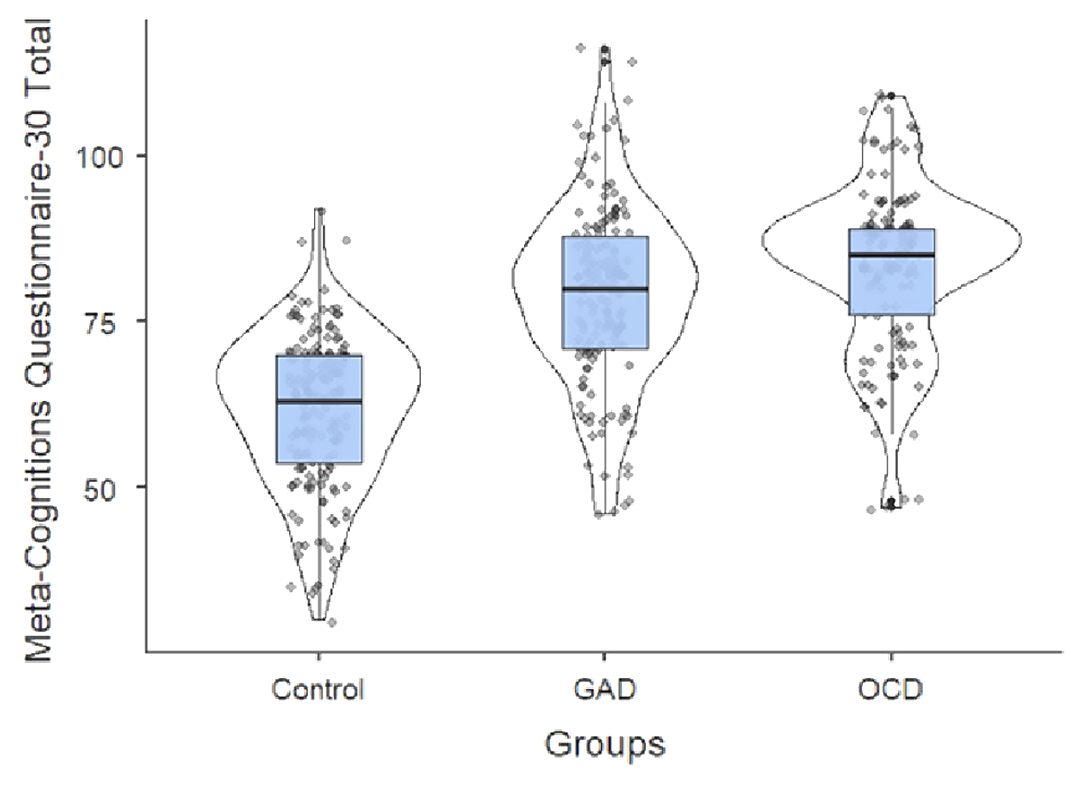
This study was performed to compare the metacognitions in OCD, GAD and healthy controls.
Methods
The sample of this study consisted of 158 GAD and 137 OCD patients aged 18-65 years who presented to outpatient psychiatry clinic and applied to the health committee 168 healthy controls without psychopathology. Sociodemographic data form, Meta-Cognitions Questionnaire-30 scale(MCQ-30), Beck Depression Inventory(BDI) and Beck Anxiety Inventory(BAI) were applied to the volunteer participants who met the criteria for participation in the study. The data obtained were evaluated statistically and subjected to statistical analysis.
Results
The mean age was 31.89 ± 10.86 years and was 60.5% (n = 208) women. There was statistical difference between marital status, occupation and income(p <0.05). In addition, there was a statistically significant difference between MCQ-30 total and subscales, BDI and BAI (p <0.001). According to the comparison of OCD and GAD patients, ’positive belief’, MCQ-30 total and BAI scores were found to be statistically different (p <0.05), ’Uncontrollability and danger’, ’Cognitive Confidence’, ’Beliefs about The Need to Control Thoughts’, ’Cognitive Self-Consciousness’, BDI there was no statistical difference between them (p> 0.05).
Conclusions
Our results are contributing to the understanding of the uncertainty of development and maintenance of OCD and GAD. Additionally, metacognitions could be important for the diagnosis and treatment of OCD and GAD.
Adolescent transitions to adulthood are a vulnerable phase for the development of mental illnesses. Additionally, there are often disruptions in psychiatric care delivery during the transition phase, potentially leading to a considerable treatment delay with a high risk of early chronification. Thus, the health care system and professionals in both child and adolescent psychiatry and adult psychiatry should give greater consideration to the transition phase.
Objectives
An online-course addressing health care professionals was developed to give in-depth knowledge of “transition psychiatry”, practical guidance and to sensitize for the special challenges and needs of young adults with mental illness. Evaluation focuses on the gain of competences, benefit for practical work and user satisfaction.
Methods
Participants´ estimations and opinions on quality of the online-course, on impact of course participation to their practical work and on their competences regarding transition psychiatry are assessed with an online-survey before starting (t1) and after finishing (t2) the online-course. T1-assessment is already completed with 1924 datasets, t2-assessmend will take place 02/2022.
Results
Analyses of t1-assessment show a high heterogeneity of participants regarding their work background and setting. Special knowledge about mental illnesses during transition and about transition psychiatry, as well as feeling confident in accompanying transition processes is on a medium level. Results of t2-assessment and comparing analyses are expected in March 2022 and will be presented.
Conclusions
There was high interest of the target group in participating in the online-course. Evaluation will show if the online-course is a helpful measure in delievering the necessary education of professionals in transition psychiatry.
Clinical studies demonstrated the efficacy of rTMS treatment in major depressive disorder. However, the results of meta-analyses are contradictory due to the heterogeneity of the included studies.
Objectives
The aim was to analyse the effectiveness of rTMS for treatment-resistant major depression.
Methods
A systematic literature review of English-language articles published in the last 10 years was performed on PubMed and Scopus databases according to PRISMA guideline principles. To assess the effects of rTMS on response and remission rates, random-effects model and inverse variance method were used.
Results
23 randomized double-blind sham-controlled studies met the inclusion criteria for quantitative analysis for response (n= 1020 patients) and 12 studies for remission (n= 846 patients). The relative risk for response and remission were 2.19 (95% CI: 1.68-2,86, p=0.000 n=912) and 2.65 (95% CI: 1.32-5,31, p=0.002, n=603), respectively using rTMS as add on treatment (in patients after two antidepressant treatment failures) compared to standard pharmacotherapy. I2analysis showed no considerable heterogeneity in the combined effect sizes neither for remission studies (I2=23.36%) nor for response studies (I2=0.00%).
Conclusions
Transcranial magnetic stimulation became an evidence-based, effective treatment for treatment-resistant major depressive disorder, either as a monotherapy or as an augmentation of pharmacotherapy. However, because of the lack of standardized protocol, a substantial methodological heterogeneity exists. According to our results, rTMS was significantly more effective than sham rTMS in both response and remission outcomes, which is consistent with previous meta-analyses, but the effect size was a bit smaller than what was reported previously.
Schizophrenia is a severe and chronic disorder causing significant disability and functional decline. Schizophrenia is a polygenic disease, with about 100 monogenic sites and 11 sites of chromosomal deletions / duplications involved in its pathogenesis identified. It is a pleiotropic disease, with causative genetic changes leading to multiple symptoms, including bipolar disorder, autism spectrum disorders, ADHD, mental retardation and epilepsy. The chromosomal microarray (CMA) technology detects submicroscopic chromosomal changes, which are involved in neurodevelopmental disorders, and are subject to prenatal diagnosis. Pathological findings in CMA are detected in 10-20% of patients with neurodevelopmental disorders and can contribute significantly to medical follow-up, prognosis assessment, influence treatment choice, and allow prenatal diagnosis. Preliminary studies in schizophrenia identified pathological CMA findings in 10–30% of patients.
Objectives
CMA testing of schizophrenia patients to detect genetic changes causing the disease.
Methods
Recruitment of schizophrenia patients from the Haifa and Western Galilee districts of Clalit, genetic counseling in Carmel Hospital, CMA testing of the consenting patients.
Results
Schizophrenia patients with and without neurodevelopmental disorders underwent CMA analysis, with the findings of significant chromosomal submicroscopic disorders (such as 22q11 microdeletion, among others) in 30% of the patients, providing the explanation for the patients’ symptoms and enabling specific medical follow-up and adjusted pharmacological treatment.
Conclusions
CMA can be used in diagnosing schizophrenia, assessing prognosis, adjusting pharmacological treatment and follow-up and providing genetic counseling including prenatal diagnosis, as in cases neurodevelopmental disorders. The findings support the application of CMA as part of a routine procedures in schizophrenia.
Though BDSM interest (bondage & discipline, dominance & submission and sadism & masochism) has proven to be quite prevalent (46.8% in recent research), there is still significant stigma surrounding it, both in general society and among mental health practitioners.
Objectives
This research explores the biological mechanisms associated with a BDSM interaction in the hope to strengthen the argument that it does not belong in the psychiatric field.
Methods
The present study collected data on peripheral hormone levels, pain thresholds and pain cognitions before and after a BDSM interaction and compared these results to a control group.
Results
show that submissives have increased cortisol and endocannabinoid levels due to the BDSM interaction and that these increases are linked. Dominants showed a significant increase in endocannabinoids associated with power play but not with pain play. BDSM practitioners have a higher pain threshold overall and a BSDM interaction will result in a temporary elevation of pain thresholds for submissives. Additionally, pain thresholds in dominants will be dependent upon their fear of pain and tendency to catastrophize pain and submissives will experience less fear of pain than the control group
Conclusions
Even though this is one of the first studies of its kind, several biological processes can be associated with BDSM interactions, strengthening the hypothesis of BDSM as a healthy form of intimacy and promoting its distinction from paraphilias as they are described in the DSM or ICD classifications.
Studies regarding environmental contributions on callous-unemotional (CU) traits in children have informed about the protective role of positive parenting. However, it has not been explored whether findings from these studies -mostly conducted in High-Income Countries- can be generalised to Low-Middle-Income Countries (LMICs). Exposure to community violence is common in LMICs and is associated with emotional and behavioural problems in children. Therefore, it may represent an environmental risk factor for CU traits.
Objectives
This prospective study explores whether positive parenting has a protective role in relation to CU traits in young Colombian children whose families have been exposed to community violence.
Methods
We assessed 235 families with children at age 3.5 years, from three contrasting regions of Colombia, using observations of mother-child interactions and maternal reports of community violence at ages 3.5 and 5.0 years.
Results
Hierarchical multiple linear regression models indicated that maternal positivity at 3.5 years was associated with lower CU traits at age 5.0 years only in children of families exposed to community violence (interaction term p= .001). In the exposed group maternal positivity explained 10% of the variance (β= -.34, p= .001) with low positivity associated with elevated CU traits and high positivity with low CU traits. Maternal praise was not associated with CU traits. However, maternal negativity during play was associated with elevated CU traits as a main effect.
Conclusions
Based on these findings, whether or not exposure to community violence is associated with elevated CU traits depends on maternal positivity, with low positivity creating vulnerability, and high positivity, resilience.