We partner with a secure submission system to handle manuscript submissions.
Please note:
You will need an account for the submission system, which is separate to your Cambridge Core account. For login and submission support, please visit the
submission and support pages.
Please review this journal's author instructions, particularly the
preparing your materials
page, before submitting your manuscript.
Click Proceed to submission system to continue to our partner's website.
To save this undefined to your undefined account, please select one or more formats and confirm that you agree to abide by our usage policies. If this is the first time you used this feature, you will be asked to authorise Cambridge Core to connect with your undefined account.
Find out more about saving content to .
To send this article to your Kindle, first ensure no-reply@cambridge.org is added to your Approved Personal Document E-mail List under your Personal Document Settings on the Manage Your Content and Devices page of your Amazon account. Then enter the ‘name’ part of your Kindle email address below. Find out more about sending to your Kindle.
Find out more about saving to your Kindle.
Note you can select to save to either the @free.kindle.com or @kindle.com variations. ‘@free.kindle.com’ emails are free but can only be saved to your device when it is connected to wi-fi. ‘@kindle.com’ emails can be delivered even when you are not connected to wi-fi, but note that service fees apply.
Anxiety disorders (ADs) are common in childhood and adolescence and global estimates suggest they affect 6.5% of individuals under 19 years of age.Yet, there has been a lack of research on time trends and socio-demographic risks for children and adolescents who receive treatment for ADs.
Objectives
We aim to fill gaps in our knowledge by examining a nationwide sample of Finnish children and adolescents diagnosed in specialized healthcare settings.
Methods
We used register data of all singleton children born in Finland from 1992-2006 and diagnosed with ADs from 1998-2012. Changes in time trends in incidence were studied by dividing the study sample into three cohorts by birth years: 1992-1996, 1997-2001 and 2002-2006. The 22,388 individuals with ADs were matched with 76,139 controls. Nested case-control design was used to study the socio-demographic risk factors.
Results
Comparing the 1992-1996 and 2002-2006 cohorts showed the cumulative incidence of treated ADs at the age of 10 increased from 0.3% to 1.2% (females) and 0.46% to 1.9% (males). Subjects had higher odds of being diagnosed with an AD if mothers had low SES (OR 1.49, 95% CI 1.42-1.58) and were single parents (OR 1.99, 95% CI 1.84-2.15) at birth. Unipolar depression was the most common psychiatric comorbidity (31.2%).
Conclusions
ADs diagnosed by specialized services increased from 1998-2012 in both genders. This could indicate real increase in overall ADs, an increase in seeking treatment or both phenomena. The findings on maternal socioeconomic status and single parenting help improve understanding of environmental risk for anxiety disorders among children and adolescents.
Ireland has been one of the worst affected countries affected by COVID-19 in Europe. Many primary studies from Ireland have documented prevalence of anxiety and depressive disorders during the pandemic and their correlates.
Objectives
To study the prevalence range of anxiety and depression in Ireland, and their correlates during the pandemic.
Methods
We systematically searched Pubmed, PsycInfo and the WHO COVID-19 global research database using key words ( January 2020 - September 2021). We removed duplicates and extracted data into an excel database and carried out a narrative synthesis of the extracted data.
Results
From a total 127 studies, we included 22 studies that met our criteria in our narrative review. Depending on the tool used and the type of population studied, the prevalence of general anxiety disorders varied between 20% and 49.5% while prevalence of depressive disorders ranged between 20.4% and 53.8%. Younger people, health care workers, those who had to give up physical activity, people who had lost income, those who lived alone, infected by COVID-19, or had a higher perceived risk of the disease had a higher prevalence of both anxiety and depression disorders during the pandemic. There was conflicting evidence on prevalence levels among men and women and on whether they had children or not.
Conclusions
COVID-19 has had a profound effect on the mental health of the Irish population. Some population groups are more affected than the others. Addressing mental health concerns of Irish population during and post pandemic should remain as one of the top public health priorities.
It is proven that high levels of disgust contribute to implementing protective behaviors. Investigators also discovered that the emotion of disgust plays a central role in determining anxiety related to the contraction of COVID-19. Few data are available about the role of the contamination disgust, a specific disgust domain, in this relationship.
Objectives
The effect of contamination disgust on COVID-19-related anxiety was investigated.
Methods
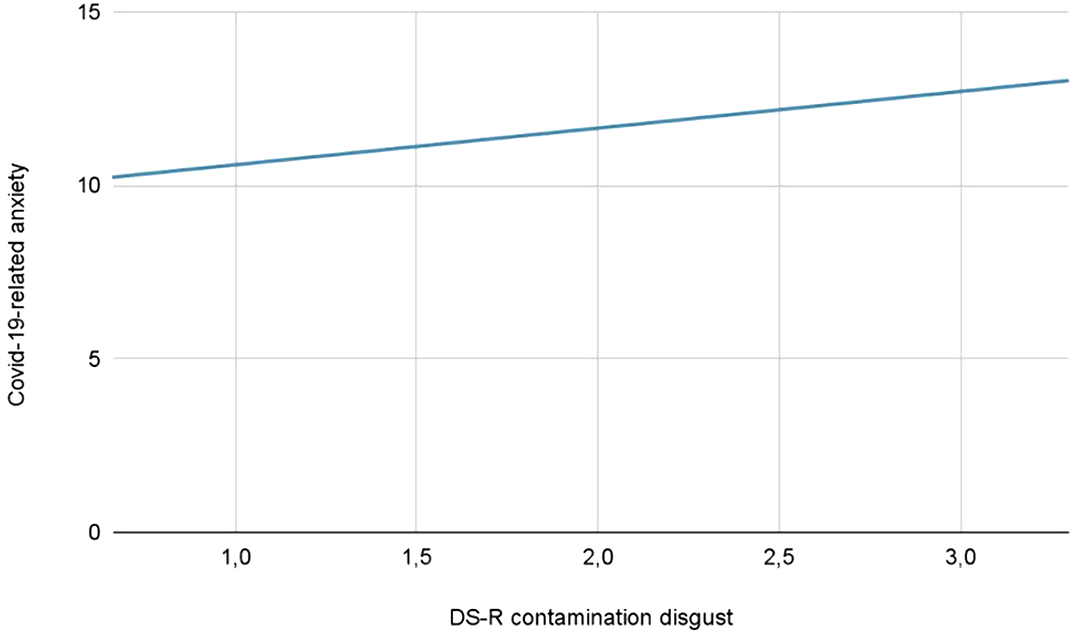
295 healthy subjects were enrolled through an online survey. They completed Disgust Scale-Revised (DS-R) and were asked to estimate their levels of Covid-19-related anxiety in 12 proposed situations. A total score was then calculated. An ANOVA model having Covid-19-related anxiety total score as dependent variable, and DS-R contamination disgust, age, and sex as predictors was estimated.
Results
The overall model was significant (F(3,291)=6.402, p<0.001) and explained 6.2% of total Covid-19 anxiety variance (R2=0.062). The effect of DS-R contamination disgust on Covid-19-related anxiety was positive, significant (B=0.974, t(291)=3.227, p=0.001) and explained 3.5% of Covid-19-related anxiety variance (partial η2=0.035). A significant effect of sex was detected (F(1,291)=4.919, p=0.027), with females having higher Covid-19-related anxiety than males, while no effect was detected for age (B=-0.024, t(291)=-0.884, p=0.377).
Conclusions
The presented data provide preliminary evidence for an effect of contamination disgust on Covid-19-related anxiety.
An established body of literature has identified that PTSD and dissociation are comorbid. Furthermore, the DSM introduced a dissociative subtype of PTSD into their most recent update; DSM-5.
Objectives
The current study aimed to examine symptom-level associations between PTSD and dissociation using network analysis among UK Armed Forces veterans resident in Northern Ireland (NI) to identify if there are certain symptoms that may act as bridges between the two constructs.
Methods
A large scale cross sectional survey was conducted examining the physical and mental wellbeing of UK Armed Forces Veterans living in NI. The total eligible sample size was 619 (89.8% male), with a mean age of 55.38 years (SD = 10.41). Two networks were estimated, (1) a network consisting of 20 DSM-5 PTSD items and (2) a network consisting of 20 PTSD items and four dissociative items. Expected influence bridge centrality was calculated to examine symptoms with the most/strongest cross-domain associations (i.e. between PTSD and dissociation). The presence of meaningful clustering among symptoms was also explored.
Results
The PTSD symptoms ‘concentration problems’, ‘flashbacks’ and ‘negative emotional state’ had the highest relative bridge expected influence centrality. Of the four dissociative items, ‘gaps in awareness’ had the highest relative bridge expected influence centrality, followed by ‘cognitive-behavioural re-experiencing’. A community structure of five clusters was detected. Four clusters reflected each subscale of the PCL-5 PTSD items and the final cluster reflected the dissociation items.
Conclusions
This study extends our understanding of PTSD and disociation comorbidity by investigating symptom level relationships; potentially informing future treatments and interventions.
The incidence and severity of posttraumatic stress disorder (PTSD) is higher in women than men because of environmental and biological factors. Specific mechanisms in the PACAP-PAC1R (pituitary adenylate cyclase-activating polypeptide and its type I receptor) system may confer PTSD risk in women. Interestingly, while the PACAP (ADCYAP1) - PAC1R (ADCYAP1R1) system is expressed highly in the hypothalamus, no relationship has been described for this pathway in the hypothalamus with fear processing or in PTSD.
Objectives
We studied whether the estrous/menstrual cycle at the moment of trauma predicts PTSD and the involvement of the PACAP neurons in the amygdala and hypothalamus during traumatic stress.
Methods
Mice: DREADDs, immunohistochemistry and behavior. Humans: fear-potentiated startle and questionnaires.
Results
Here, we show that acute stress immobilization (IMO) produces fear extinction impairments in female mice. Also, IMO elicits Adcyap1 and Adcyap1r1 mRNA upregulation in the hypothalamus, PACAP/c-Fos downregulation in the medial amygdala (MeA), and PACAP/FosB/ΔFosB upregulation in the ventromedial hypothalamus dorsomedial part (VMHdm) after fear extinction. We also found that women with the risk genotype of ADCYAP1R1 rs2267735 SNP show impaired fear extinction. In mice, DREADD-mediated inhibition of the MeA neurons projecting to the VMHdm during IMO rescues both PACAP upregulation in VMHdm and the fear extinction impairment. We ruled out contributions from inherent hormonal states showing that the menstrual or estrous cycle phase at the moment of trauma does not result in a vulnerable phenotype.
Conclusions
Our data suggest that the PACAP-PAC1R hypothalamic system may be a novel candidate to treat and prevent PTSD symptoms including fear dysregulations.
Displaced refugee children with a history of war exposure are at risk of developing complex and severe forms of post-traumatic stress disorder (PTSD).
Objectives
Search for the most relevant causal predictors of complex PTSD in a prospective cohort of Syrian refugee children living in informal settlements in Lebanon (N=1007).
Methods
A latent class unsupervised analysis was carried out to determine clusters with complex PTSD presentation at the follow-up assessment. A new exploratory causal discovering modelling approach was applied using 97 multilevel psychosocial variables as predictors (Biazoli et al., 2021). Associations between discovered candidate causal factors assessed at baseline with a presumed diagnosis of complex PTSD one year later were calculated using a multiple logistic regression model.
Results
Several putative causal factors emerged: perceived social coherence of the neighbourhood (Positive Predictive Value increase: 1.22); impulsivity (1.25), self-efficacy (1.23) and depressive symptoms (1.15) at the parental level; positive home experiences (1.16) at the family level; and child-level factors such as being forced to work (1.22), being a victim of verbal or physical bullying (1.19), loneliness (1.17) and well-being (1.18). In further confirmatory multiple logistic regression analysis and after correction for multiple comparisons, verbal or physical bullying victimization (p=.005) and caregiver depressive symptoms (p=.0004) at baseline were associated with complex PTSD presentations one year later.
Conclusions
Our results support the need for a multi-level psychosocial care model to prevent psychological distress and promote mental health in refugee children. Specifically, our results suggest that programs tackling caregiver’s mental health and children’s exposure to violence might effectively prevent complex PTSD.
The COVID-19 pandemic has threatened the mental health of individuals around the world. Ex-combatants have been repeatedly shown to be increased risk of experiencing social and psychological problems during emergencies.
Objectives
To compare the severity of overall posttraumatic stress disorder (PTSD) symptoms and PTSD clusters among help-seeking veterans before and during the COVID-19 pandemic. The second aim was to identify coping strategies used and track possible changes during the timeline.
Methods
Male war veterans receiving outpatient treatment at the Referral Center for PTSD were assessed at baseline (t1=12-18 months before the COVID-19 pandemic), during the first lockdown (March-June 2020) and 12 months after the beginning of the COVID-19 pandemic (March-June 2021). A total of 132 veterans participated in all three measurements. The Life Events Checklist for DSM-5 (LEC-5), PTSD Checklist for DSM-5 (PCL-5), and The Brief COPE were used.
Results
Exposure to COVID-19 pandemic related stressors increased over time. The great majority of participants (91.0%) followed the preventive measures. The severity of the overall PTSD symptoms significantly decreased during timeline (t1=56.9, 11.15; t2= 47.24, SD=12.87; t3= 44.1, SD=14.09). At t2, all participants still fulfilled the PTSD diagnostic criteria, and at t3, 23 participants (17.42%) did not meet all of the criteria for PTSD. The participants used adaptive coping rather than dysfunctional coping during the pandemic.
Conclusions
Despite the expectations of worsening the symptoms, help-seeking veterans with PTSD appeared to develop adaptive adjustment to the COVID-19 pandemic stressors, which is in line with the results of the recent longitudinal research and will be discussed.
Over the last decade, there has been identified that critical illness survivors have high rates of psychiatric disorders such as posttraumatic stress disorder (PTSD). The experience of admission to intensive care units (ICU) and illusory memories may cause short and long-term psychological disorders.
Objectives
To evaluate psychiatric disorders, such as PTSD, after ICU discharge, and determine the prevalence, risk factors, and prevention strategies for PTSD in these patients.
Methods
Non-systematic review through research in PubMed. Addicionally, a case report will be exposed, after the patient was diagnosed with SARS‑CoV‑2 and stayed in ICU for more than 30 days.
Results
The development of PTSD has been related to the number of adverse memories patients recall from their ICU experience. Some studies have shown that approximately 47% of patients remember real facts and 34% have illusory memories relative to their stays in the ICU. There were identified some risk factor associated to the increased risk of post-ICU PTSD, such as early post-ICU memories or psychotic experiences, pre-ICU psychopathology, benzodiazepine sedation during ICU and substantial acute stress symptoms occurring < 1 month after exposure to a traumatic stressor.
Conclusions
High levels of anxiety and the development by patients of PTSD are being recognized as significant problems occurring after a stay in an ICU. The results of this study highlight the need to recognise the risk factors and to establish a early follow-up after ICU stay. This way is possible to identify patients who are at risk of developing acute PTSD-related symptoms, and early intervention can be institued.
High BMI has been associated with psychiatric rehospitalisation.
Objectives
We aimed to replicate this finding in a large Swiss psychiatric cohort and to examine whether other metabolic disturbances are independently associated with psychiatric readmission.
Methods
Data on 16’727 hospitalizations of 7’786 patients admitted between January 1st, 2007 and December 31st, 2019 at the Department of Psychiatry of the Lausanne University Hospital, were collected. Metabolic syndrome was defined according to International Diabetes Federation definition. Generalized Linear Mixed Models were used to investigate the associations between psychiatric readmission and metabolic syndrome and/or its five components.
Results
The readmitted population (N=2’935; 37.7% patients) had higher BMI, and were more likely to have central obesity, hypertriglyceridemia, and hypertension. Multivariate analyses confirmed that having a BMI ≥ 25 kg.m-2 was associated with psychiatric readmission (25 kg.m-2≤ BMI< 30 kg.m-2: OR = 1.88; 95%CI [1.55-2.29]; BMI≥30 kg.m-2: OR = 3.5; 95%CI [2.85-4.30]) when compared to patients with 18.5≤BMI<25 kg.m-2. Interestingly, novel factors associated with readmission were identified including metabolic syndrome (OR = 1.57, 95%CI [1.05-2.33]), central obesity (OR = 1.81, 95%CI [1.33-2.46]), hypertriglyceridemia (OR = 1.59; 95%CI [1.38-1.83]), HDL hypocholesterolemia (OR = 1.22; 95%CI [1.06-1.40]) and hyperglycemia (OR = 1.58; 95%CI [1.35-1.85]).
Conclusions
Metabolic syndrome, central obesity, hypertriglyceridemia, HDL hypocholesterolemia, hyperglycemia and obesity were associated with psychiatric readmission. Possible causes will be presented and discussed (e.g. reduced adherence to treatment in patients with metabolic disorders, multiple psychotropic treatments in non-responders increasing the risk of metabolic worsening).
Several psychological and psychiatric instruments have been developed to recognize or predict different psychiatric disorders.
Objectives
We studied the predictive, and discriminant validity of different psychopathology scales and temperament traits for subsequent psychiatric diagnoses due to schizophrenia, bipolar and depressive disorders in a 23-year follow-up.
Methods
Temperament traits, perceptual aberration, physical and social anhedonia, depression and anxiety subscales of Symptom Checklist (SCL-D and SCL-A), Hypomanic Personality Scale (HPS), Schizoidia Scale, and Bipolar II Scale were completed as part of the 31-year follow-up survey of the prospective Northern Finland 1966 Birth Cohort (n = 5006). New onset psychiatric diagnoses were followed until age of 54 years using different nationwide registers.
Results
In the follow-up 28 (0.6%) individuals had diagnosis of schizophrenia, 40 (0.8%) bipolar and 405 (8.1%) depressive disorders. Several of the included scales associated statistically significantly with subsequent diagnoses. High SCL-A and SCL-D scores were strong predictors (Cohen’s d’s between 0.76 and 1.08) for schizophrenia and depressive disorders, whereas high HPS score was best predictor (d=0.67) for bipolar disorders. When comparing patient groups, schizophrenia group had low scores in reward dependence when compared with both bipolar (d=-0.80) and depressive (d=-0.66) disorders. Harm avoidance was the best trait to discriminate depressive and bipolar disorders, with higher scores in depressive disorders (d=0.48).
Conclusions
Interestingly we found that differed psychopathology scales were strong but non-specific predictors for these psychiatric disorders, whereas temperament traits were useful predictors regarding discriminating these disorders. The presented scales can be used in population samples when predicting psychiatric illnesses.
There are relatively fewer pharmacogenetic studies of antipsychotics in adolescents than in adult patients. The development of personalized pharmacotherapy is promising.
Objectives
Identify the most significant pharmacogenetic predictors of antipsychotic safety in adolescents experiencing acute psychotic episodes
Methods
The study included 101 adolescents diagnosed with acute polymorphic psychotic disorder at the time of admission (F23.0-9 according to ICD-10). All patients were taking an antipsychotic as their main treatment for 14 days. Children’s Global Assessment Scale (CGAS), Positive and Negative Symptoms Scale (PANSS), Clinical Global Impression Severity (CGI-S) and Improvement (CGI-I), UKU Side Effects Rating Scale (UKU SERS), Sympson-Angus Scale (SAS), Barnes Akathisia rating scale (BARS) were used. All study participants underwent pharmacogenetic testing of pharmacokinetic and pharmacodynamic factors.
Results
CYP2D6 “intermediate” metabolism increased the risk of developing an adverse reaction by a trend of significance (OR=2.616 (95% CI 0.950-7.203); p=0.063). Carriage of HTR2A rs6313 was associated with a lower score on the UKU SERS “Other Symptoms” subscale (Beta=(-0.289); p=0.003) and an objective score on the BARS akathisia severity scale (Beta=(-0.217); p=0.029). DRD3 rs324026 carriers had a lower BARS akathisia scale score (Beta=(-0.349); p=0.004); DRD3 rs6280 carriers had a lower SAS extrapyramidal symptom severity scale score (Beta=(-0.351); p=0.003). Carriers of ANKS1B rs7968606 were associated with a higher SAS scale score (Beta=0.237; p=0.017).
Conclusions
We proposed that genotyping of CYP2D6*4, *10, DRD3 rs324026 (C allele), DRD3 rs6280 (C allele), HTR2A rs6313 (TT genotype) and ANKS1B rs7968606 (T allele) will predict the high risk of intolerance to antipsychotics in adolescents with acute psychotic episodes.
The use of internet among children and adolescent has risen in the last decade. In addition, suicide is the second cause of death among adolescents. Previous research have indicated the relation between Problematic Internet Use (PIU) and different mental health problems. Nonetheless there is a lack of studies analyzing the relation between suicide behaviour and PIU
Objectives
The main objective of the present work was to analyze the relation between Problematic Internet Use and suicide behaviour and depression in adolescents
Methods
A total of 1036 adolescents (450 males) were randomly selected. Mean age was 15,21 (SD = 1,23). The Adolescent Behavioural Suicide Scale SENTIA, The Reynolds Adolescent Depression Scale Short Form (RADS-SF), and The Compulsive Internet Use Scale (CIUS) were used. A Manova was performed with two groups (risk and non-risk to PIU) as independent variables and suicide and depression scores as dependent variables
Results
The results revealed a statiscally signifficant association between PIU and both depression and suicide behaviour (λ = 0.245, F(2,81,000) = 15.549, P ≤ 0.001, η² = 0.116). In particular, adolescents at a higher risk for PIU obtained higher scores on suicide behaviours and depression.
Conclusions
Results found in the present study reveal that adolescents have moderate prevalence rates for PIU. Also adolescents at risk for PIU with a total of more than 3 hour sof internet use everyday were at a higher risk for suicide. Prevention strategies should be devote to intervene in internet use as it maybe a variable affecting suicide behaviour.
According to the World Health Organization (2016), adolescence is one of the most important transitional steps in the life of a human being, recognized by an accelerated rate of growth and changes in behavior. Adolescents from Colombia have reached this step, immersed in a context with a history of social, interpersonal and economic violence. In this sense, study of constructs such as empathy and aggressive behaviors are crucial to appease a healthy school coexistence and thus, contribute to a peace cultur
Objectives
Analyze the relationship between empathy and aggressive levels from adolescents.
Methods
This study was done through a cross-sectional study of correlational scope in 240 (N= 240) students. The Prosocial Behavior Questionnaire developed by Martorell and Gonzalez (1922) and the Aggressive questionnaire, developed by Buss and Perry (1992) were applied. The first one was used to measure empathy and the latter to appraise aggressiveness.
Results
There was evidenced of adequate levels of empathy and a great percentage of medium levels of verbal and physical aggressiveness. (Graph 1). In addition, there was a significant statistical correlation of negative magnitude between these variables (Table 1).
Conclusions
It was concluded that the higher the optimal levels of empathy, the lower the aggressive behavior presented by teenagers.
ADHD is known to increase the risk of substance use, and is associated with lower degrees of education, criminal behavior and neuropsychic difficulties. Previous research is limited by small samples, variable findings, and short follow-up time. Earlier research tends to be limited to substance use above the threshold for abuse or dependency.
Objectives
This study aims at looking at the effects of cannabis use both over and under threshold for abuse or dependency in relations to clinical characteristics over a 3-year follow-up period.
Methods
At follow up a total of 203 patients were diagnosed with ADHD either as primary of as secondary diagnosis, of those 57 (28,1%) had lifetime use of cannabis (LUC), mean age at inclusion was 15 and half years old and 40% were of female sex. SPSS (v.29) were used to perform independent sample t-tests to test for effects and Hierarchical block-wise regressions were done to check for confounding variables.
Results
Lifetime cannabis use was associated with lower global functioning (p=0.000), increased risk of suicidal ideation (p=0.007), more suicide attempts (p=0.049), more self-reported symptoms (p=0.001), more school drop-out (p=0.000) and with psychotic features (p=0.024). Even after testing for know confounders such as female sex and age LUC explained significant variance.
Conclusions
LUC is associated with increased functional and clinical characteristics. The findings are discussed in relationship with clinical practice and limitations of the study.
Childhood maltreatment (CM) is one of the best described environmental risk factors for developing any psychiatric disorder, while it also confers increased odds for obesity, cardiometabolic disorders and all-cause mortality. Inflammation has been suggested to mediate the widespread clinical effects of CM. Previously, Ligthart et al. (2016) identified a polyepigenetic signature of circulating CRP levels, a measure of chronic low-grade inflammation, that has been reliably associated with a wide array of complex disorders. The study of this biomarker could dilucidate the mechanistic relationship between CM and psychiatric outcomes.
Objectives
Thus, CRP-associated epigenetic modifications were explored regarding proximal exposure to CM.
Methods
Genomic DNA was extracted from peripheral blood mononuclear cells of 157 children and adolescents (7 to 17 years old). Exposure to CM was assessed following the TASSCV criteria. Genome-wide DNA methylation was assessed by means of the EPIC array. Fifty-two out of the 58 original CRP-associated CpG sites surpassed quality control and were included in the analysis. Age, sex, psychopathological status and cell type proportions were included as covariates.
Results
DNA methylation at 12 out of 52 CpG sites (23%) was significantly associated with exposure to CM (p < .05); 8 of these associations survived correction for multiple testing (q < .05).
Conclusions
This is the first study to date to explore the relationship between childhood maltreatment and an epigenetic signature of chronic low-grade inflammation. Our findings underscore the presence of immune dysregulation early after exposure to CM; further studies are needed to assess the long-term clinical implications of this signature in psychiatric patients.
There is a known association between the core psychopathological features of anorexia nervosa (AN) and sexual dysfunctions, to the point that the recovery of healthy sexuality could be considered a marker of recovery. However, no studies have evaluated the role of insecure attachment in moderating this recovery during treatment.
Objectives
To evaluate the role of insecure attachment as a possible moderator of the recovery of healthy sexuality in patients with AN treated with Enhanced Cognitive Behaviour Therapy (CBT-E).
Methods
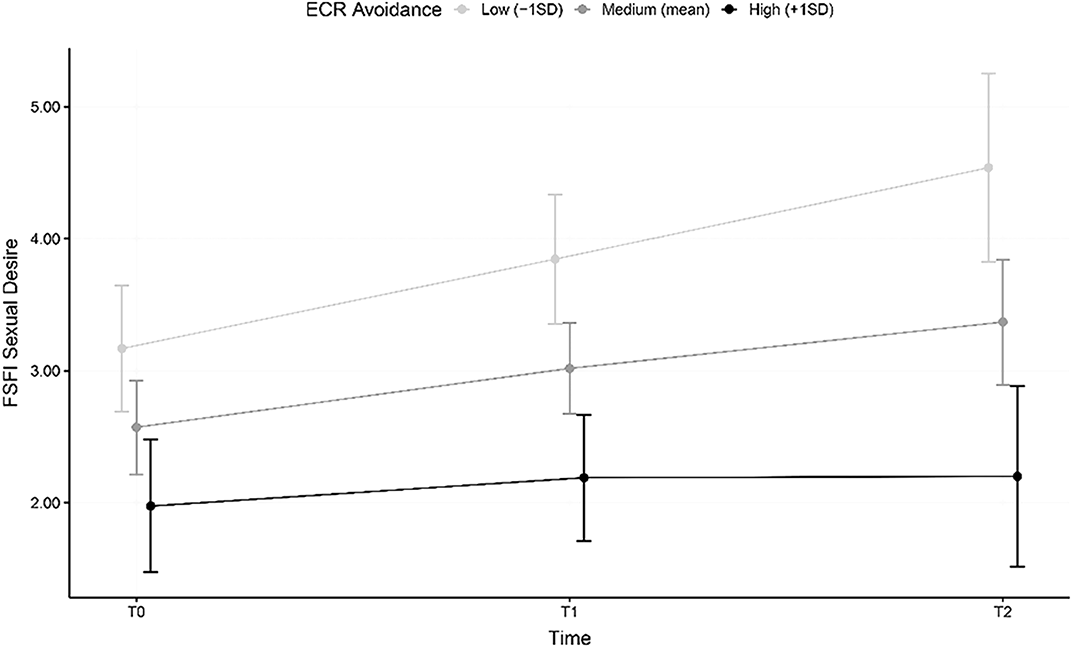
A total of 65 patients with anorexia nervosa were treated with CBT-E in a multidisciplinary environment, after filling out self-administered questionnaires for the evaluation of general (SCL-90-R) and ED-specific psychopathology (EDE-Q), female sexuality (FSFI) and adult attachment style (ECR). The assessment was repeated after one (T1) and two years (T2).
Results
At baseline, all domains of sexual dysfunction were significantly predicted by avoidant attachment. A significant amelioration of both general and eating disorder-specific psychopathology and sexual dysfunctions was observed at all follow-up evaluations with respect to baseline levels. However, only 45% of remitted patients also showed a complete recovery of healthy sexuality: this subgroup reported significantly lower avoidance scores when compared to patients who only recovered from AN. Moderation analysis indicated that sexual desire did not increase in participants with higher levels of avoidant attachment.
Conclusions
This study highlighted the crucial role of avoidant attachment in the relationship between AN and sexual dysfunctions, underlining the importance of assessing adult attachment for a better characterization and treatment. Attachment-focused interventions may be beneficial for a full recovery.
Mental health interventions for Italian (and European) prisoners with mental disorders remain a problematic issue, despite radical changes in general psychiatric care and a 2008 major government reform transferring mental health care in prison to the National Health Service. Indeed, according to the American Psychological Association, 64% of incarcerated individuals report mental health concerns.
Objectives
The aim of this study is to describe the mental health intervention model implemented since January 2020 for prisoners allocated in the Parma Penitentiary Institutes (PPI). This approach is specifically based on specialized, “person-centered” and “person-tailored” therapeutic-rehabilitation plans in line with psychiatric treatments usually provided in community mental health-care centers of the Parma Department of Mental Health.
Methods
All the processes and procedures included in the PPI intervention model were first carefully described, paying special attention to the service for newly admitted prisoners and each typology of specialized therapeutic-rehabilitation treatment potentially provided. Additionally, a preliminary descriptive process analysis of the first six months of clinical activity was also performed.
Results
Since January 2020, 178 individuals entered the PPI service for newly admitted prisoners. In total, 83 (46.7%) of them were engaged in the services of the PPI mental health-care team (35 with pathological addiction and 48 with mental disorders): 56 prisoners were offered an integrated mental health intervention and 27 exclusively an individual psychological or psychiatric treatment.
Conclusions
The results support the potential applicability of an integrated mental health intervention in prison, planning a person-tailored rehabilitation in close collaboration with the prisoners, their families and the local mental health/social services.
The only available genome-wide study (Minelli et al., 2018) indicated an association between the neglect CT and MED22, a transcriptional factor gene.
Objectives
To verify how the dysregulation of MED22 could be affected by environmental and genetic factors, we carried out an analysis on these components and a longitudinal study concerning the effect of trauma-focused psychotherapy in MDD patients that experienced CT.
Methods
On a large mRNA sequencing dataset including 368 MDD patients we computed the genetic (GReX) and the environmental (EReX) components affecting gene expression in relation to CT. Furthermore, we measured the expression of MED22 in 22 MDD patients treated with trauma-focused psychotherapy.
Results
The dissection of MED22 expression profiles revealed an association of neglect with environmental and genetic components (p=6x10⁻³ p=2.6x10⁻⁴). Furthermore, in an independent cohort of 177 controls, we also observed a significant association between cis-eSNPs of MED22 and higher neuroticism scores (best p-value: 0.00848) that are usually associated with a decreased amount of resilience to stress events. Finally, the results of psychotherapy revealed a reduction of depressive symptomatology (p<0.001) and 73% of patients resulted responders at the follow-up visit. MED22 expression during psychotherapy showed a change trend (p=0.057) with an interaction effect with response (p=0.035). Responder and non-responder patients showed MED22 expression differences at different trauma-focused psychotherapy timepoints (p=0.15; p=0.012) and at the follow-up (p=0.021).
Conclusions
Our results provide insights suggesting that some biological and clinical consequences of CT depend on genetic background and environmental factors that could induce vulnerability or resilience to stressful life events.
Psychological maltreatment such as emotional abuse or neglect is a serious risk factor for poorer mental and somatic health outcomes in life. A higher rate of psychological maltreatment experienced in childhood is a predictor of aversive emotional states such as shame, and can negatively influence factors of mentalization such as perspective-taking capacity in adulthood. However, emotional abuse or neglect are also negative predictors of self-compassion.
Objectives
The purpose of the study was to test two mediating models. We hypothesized, that reduced perspective-taking capacity, as well as higher levels of shame due to psychological maltreatment can be causally linked to lower levels of self-compassion.
Methods
We collected data from 120 healthy subjects (mean age=29.46, SD = 7.55) from Hungary We used Experience of Shame Scale, Interpersonal Reactivity Index, Childhood Trauma Scale, and the Self-Compassion Scale in our cross-sectional questionnaire study.
Results
Psychological maltreatment is a significant negative predictor of self-compassion (b=-0,712; p<0.05), and shame seems to play a mediating role in this relationship (effect size= 0.231; p<0.05). Psychological maltreatment was not a statistically significant predictor of perspective-taking.
Conclusions
Our results highlight that shame has a central role between childhood traumatization and psychological well-being. In the case of early emotional maltreatment we have to focus on shame for higher levels of self-compassion and effective healing in psychotherapy.
Cancer is a disease that can cause traumatic experiences and disrupt the balance of life in individuals. The development of resilience in individuals is important in adapting to the cancer process and the difficulties that the process may bring.
Objectives
To investigate the effectiveness of interventions for the psychological resilience of individuals with cancer.
Methods
The findings of randomized controlled trials related to interventions to effect resilience of individuals with cancer were included. Comprehensive Meta-Analysis software was used to analyze the data. Hedges’ g and 95% confidence intervals were computed to estimate the effect. Additionally, funnel plots were created to assess publication bias. The Preferred Reporting Items for Systematic Reviews and Meta‐Analysis was used.
Results
The eight studies that demonstrated the effect of the interventions on resilience of individuals with cancer were heterogeneous. The effect size was 2.649 (95% CI = 1.325 - 3.973), was statistically significant (p < 0.001). Results of the subgroup analysis showed that the effects of sample size, cancer type, lenght of treatment, duration of intervention and gender were significant. According to the lenght of treatment studies lasting >90 min and >10 weeks were less significant impact on resilience. Studies in which the sample consisted of more than 100 participants, conducted participants with mixed type of cancer and the sample consisted of participants from both genders demonstrated statistically significant effects on resilience.
Conclusions
This study showed that supportive interventions are crucial in developping psychological resilience among individuals with cancer. However, the findings also underscore the need for further research.