We partner with a secure submission system to handle manuscript submissions.
Please note:
You will need an account for the submission system, which is separate to your Cambridge Core account. For login and submission support, please visit the
submission and support pages.
Please review this journal's author instructions, particularly the
preparing your materials
page, before submitting your manuscript.
Click Proceed to submission system to continue to our partner's website.
To save this undefined to your undefined account, please select one or more formats and confirm that you agree to abide by our usage policies. If this is the first time you used this feature, you will be asked to authorise Cambridge Core to connect with your undefined account.
Find out more about saving content to .
To send this article to your Kindle, first ensure no-reply@cambridge.org is added to your Approved Personal Document E-mail List under your Personal Document Settings on the Manage Your Content and Devices page of your Amazon account. Then enter the ‘name’ part of your Kindle email address below. Find out more about sending to your Kindle.
Find out more about saving to your Kindle.
Note you can select to save to either the @free.kindle.com or @kindle.com variations. ‘@free.kindle.com’ emails are free but can only be saved to your device when it is connected to wi-fi. ‘@kindle.com’ emails can be delivered even when you are not connected to wi-fi, but note that service fees apply.
Neuroimaging findings have reported aberrant functional connectivity in brain regions involved reward system in individuals with anorexia nervosa (AN) altering hedonic processing over food. Likewise, endocannabinoids such as Anandamide (AEA) and 2-Arachidonoylglycerol (2-AG) have been involved in rewarding aspects of food intake.
Objectives
To identify nucleus accumbens (NAcc) functional connectivity with whole-brain comparing between individuals with AN and controls. Furthermore, in a sub-study, to explore the interaction between NAcc functional connectivity and peripheral AEA and 2-AG levels.
Methods
A total of 60 adult women (18 to 56 years of age) took part in the present study. Twenty-six individuals belonged to the AN group (BMI<18) and 34 to the HC group (BMI=18-24.99). All participants underwent functional magnetic resonance in resting-state, and blood samples were obtained in fasting.
Results
Negative functional connectivity was observed in the AN group compared with the control group between the NAcc and the cerebellum (pFWE<.001), between the NAcc and the insula (pFWE<.001), between the NAcc and the supramarginal gyrus (pFWE=.019), and between the NAcc and the postcentral gyrus (pFWE=.010). Analyses exploring the association between NAcc functional connectivity and peripheral endocannabinoids levels displayed altered NAcc-cerebellum functional connectivity was negatively associated with peripheral 2-AG levels in the AN group (r= -.553; p=.011).
Conclusions
Understanding the interaction between the reward system and peripheral endocannabinoids in patients with AN could contribute to better elucidate the pathophysiology of this disorder. Future studies will need to further investigate the clinical and therapeutic implications of these findings in patients with AN.
Sexual minorities have been coming out more than ever before. However, Tunisian laws and society are still not supportive of LGBT (lesbian, gay, bisexual and transgender) rights. To this day, Tunisian doctors are requisitioned to carry out anal tests as part of expert testimonies in cases of conviction for homosexuality.
Objectives
Assess Tunisian physicians’ attitudes and knowledge towards LGBT patients.
Methods
We conducted a cross-sectional study in October 2021, among 445 Tunisian physicians and medical students. Data were collected via an anonymous self-administered online questionnaire including sociodemographic data and the LGBT Development of Clinical Skills Scale (LGBT-DOCSS).
Results
The overall LGBT-DOCSS score was quite good (4.47 ±0.85). The attitudes of Tunisian doctors were better than their knowledge (p=0.01; t=2.6), which was better than their clinical preparedness (p<10-3; t=25) in treating LGBT patients. Doctors who self-identify as sexual minorities and those who interacted with LGBT people in their daily lives, were less stigmatising, more able to treat them and had better knowledge of their needs. Those who had had sexology training (5%) had better LGBT-DOCSS score (p=0.013), better knowledge (p=0.045) and preparedness (p<10-3) in treating LGBT patients but did not appear to be less stigmatising than the rest of the group (p=0.9). Religiosity was associated with a more stigmatising attitude (p<10-3), but had no impact on knowledge or preparedness.
Conclusions
This study points to gaps, identified by doctors themselves when faced with an LGBT patient. A more inclusive health system requires better matching of health services to the needs of the whole population without discrimination.
Aging raises wide-ranging issues within social, economic, welfare, and health care systems. Life satisfaction is regarded as an indicator of the quality of life which, in turn, is associated with mortality and morbidity in older adults.
Objectives
Life Satisfaction is a dimension of happiness and well-being which represents the quality of life in both literacy and every aspect of a person. The purpose of the article is to assess the level of life satisfaction and the factors associated with life satisfaction in old age.
Methods
This research was conducted in a cross-sectional study using 36 items from Satisfaction and Well-being of Elderly (Thai semi-structured in-depth interviews) tools to collect data. The population used in this study was Thai people over 60 and used multistage probability sampling, were held with 2000 elderly individuals from 13 health regions of Thailand.
Results
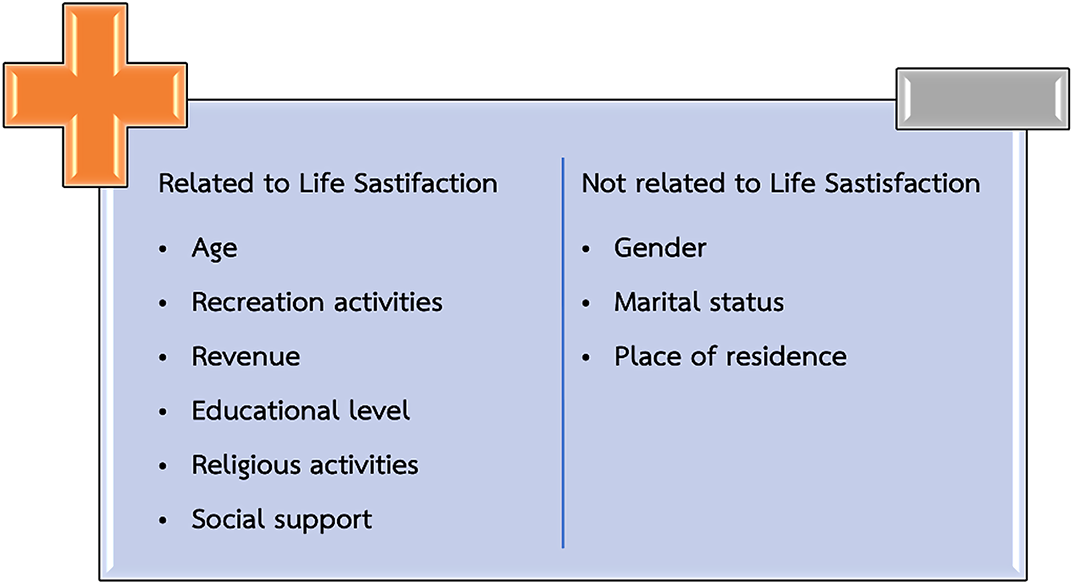
Of the 2000 samples, the overall life satisfaction was moderate (54.1%). Upon data analysis, ten categories were extracted. However, there are 7 factors that significantly influence the level of life satisfaction of the Thai elderly at p < 0.05: Age, Occupation, Recreational activities, Revenue, Education level, Religious activities, and Social Support. Moreover, when tested with Pearson Correlation found that the relationship between and Thai brief screening for depression (2Q) was low correlated (r -0.121, P=0.000).
Conclusions
Aging should be foreseen and forethought to increase life satisfaction. The following can be effective in increasing life satisfaction in the elderly: Placing greater emphasis on spiritualism in life, employment of the elderly, and promoting positive leisure in the elderly.
Dual pathology during pregnancy, described as the co-occurrence of substance use and mental health problems, is one of the leading preventable causes of maternal and perinatal mortality and morbidity; however, effective and accessible treatments are lacking.
Objectives
As part of the WOMAP(Woman Mental Health and Addictions on Pregnancy) initiative, our study aimed to evaluate the effectiveness of an e-health-based psychotherapeutic program compared to enhanced usual care.
Methods
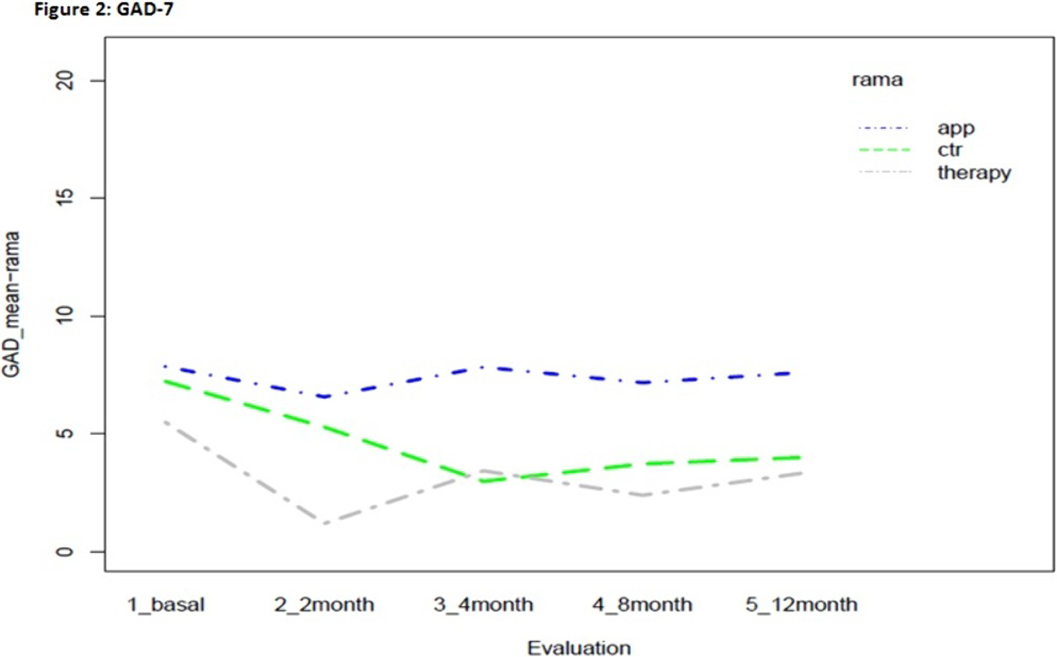
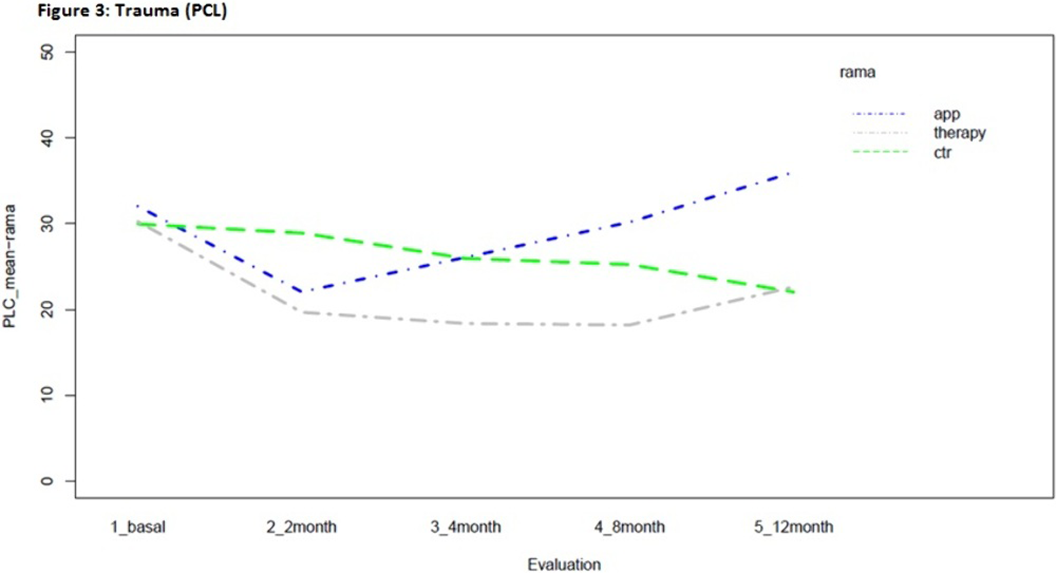
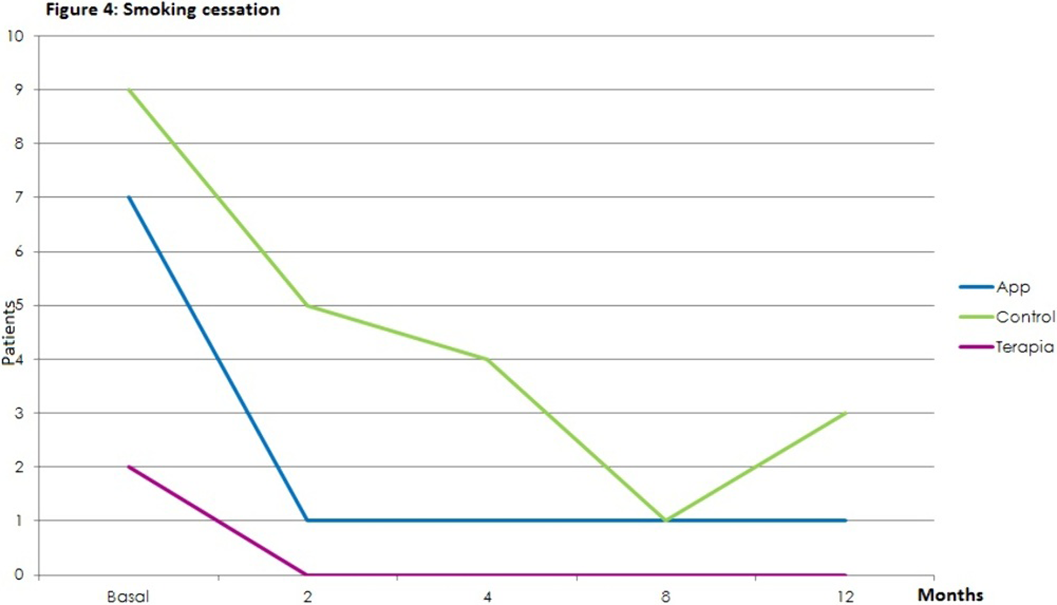
This effectiveness clinical trial was conducted between 2016-2020 in 5 hospitals in the Madrid (Spain) metropolitan area. 2014 pregnant women under 26 weeks of pregnancy were screened. Eligible participants(n=120) were those who screened positive for co-occurring symptoms (AC-OK screener) and were not receiving specialized behavioral treatment. Participants were assessed in depth at baseline, 2,4,8 and 12 months(PHQ-9;GAD-7;PCL-5;AUDIT;DAST;Fagerström) and randomized to the usual care control group(n=38) or to two groups of a 10-session pregnancy-adapted psychotherapeutic program, one delivered by App/internet(n=41) and one by telephone(n=41). Intent-to-treat analyses assessed effectiveness.
Results
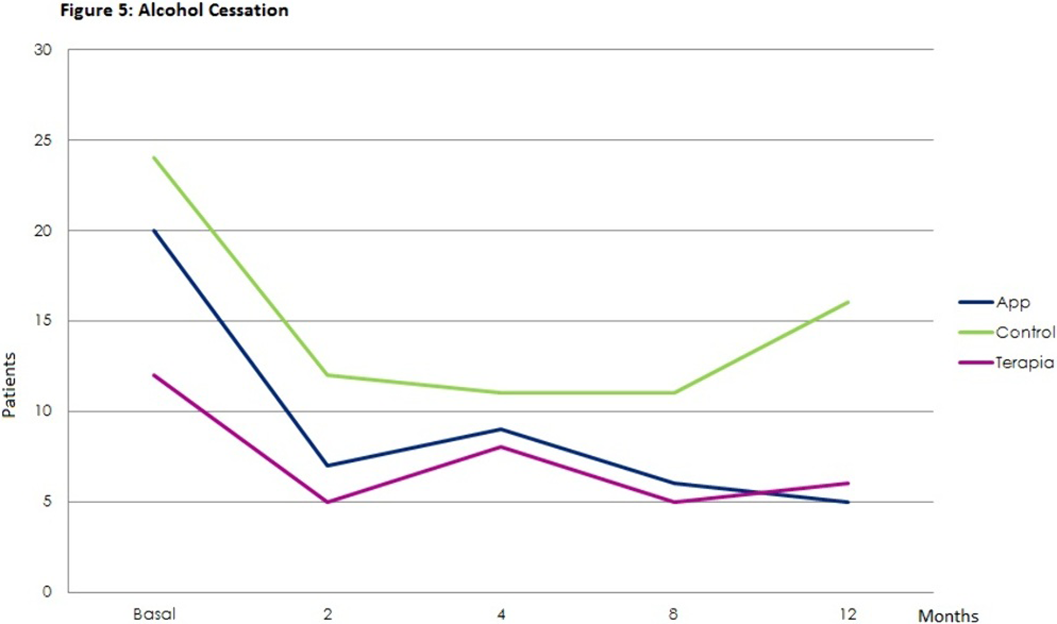
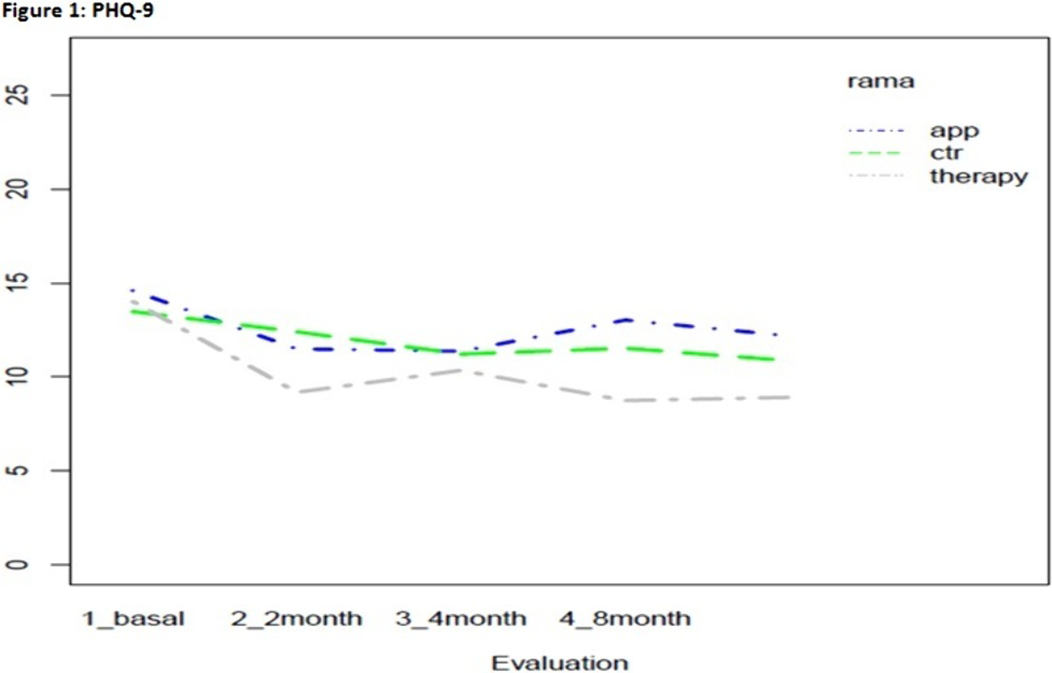
Statistically significant effects of the intervention were found for mental health symptoms in the telephone group as compared to the control and App/internet groups, with an improvement effect starting earlier (2 months) and lasting longer (figures 1-3). Regarding substance use, due to the lack of other substances consumption, only smoking and alcohol cessation rates were analyzed. Patients in the App/internet and telephone groups discontinued significantly more, earlier and for a longer period compared to the control group(figures 4-5).
Conclusions
E-health psychotherapeutic programs could benefit pregnant women with dual disorders. An App/internet implementation could only be useful if focused solely on substances.
Rumination is a transdiagnostic risk factor to psychopathology that has mostly been studied in relation to depression (Nolen-Hoeksema, 1991). However, rumination may also occur in response to positive events and emotions (Feldman et al., 2008), and may be a protective factor as it is associated with higher positive affect (Harding et al., 2017).
Objectives
We aimed to examine ruminative response to positive affect (RPA) in daily life and explore its relationship with daily positive and negative affect. We hypothesized that daily positive and negative affect would be associated with daily RPA even after controlling for trait-level RPA and depressive rumination.
Methods
We carried out a daily diary study with university students (n=178). After filling out the baseline survey assessing trait-level rumination, participants had to answer short surveys online about their daily affect and daily rumination every evening for 10 consecutive days. We analyzed our data with multilevel regression in R.
Results
In line with our expectations, daily RPA was significantly associated with daily positive (β=0.16) and negative affect (β=-0.07), while trait-level rumination scores were not significantly associated with daily positive and negative affect. The within-person relationship was stronger between RPA and positive affect (β=0.17) than the between-person relationship (β=0.09). Daily and trait-level rumination were weakly correlated (r=0.218-0.284).
Conclusions
Under ecologically valid conditions, we found that daily rumination was more important in daily affective experiences than trait-level rumination. Understanding whether one’s current affect is more strongly associated with trait-level, state-level or even contextual factors may yield better intervention strategies for affective disorders.
Some projects have described post-disaster psychosocial services and planning across Europe. However, little is known about the real psychosocial disaster responses such as low-intensity initiatives after a terrorist attack
Objectives
This study aims (1) to describe psychological support (PS) in the immediate (<48 hours), post-immediate (48 hours – 1 week) periods and more than one week after a terrorist attack among terror-exposed people, and (2) to identify factors associated with a lack of short-term PS among those who suffered from mental health disorders.
Methods
This study used data from a longitudinal survey of 189 civilians exposed to the January 2015 terrorist attacks conducted 6 months after the attacks. Factors associated with lack of PS after the attacks was identified using a Robust Poisson regression in three separate models (for the 3 periods).
Results
Among participants who suffered from PTSD (n=34), depression (n=74), or anxiety (n=59) 6-9 months after the terrorist attacks, respectively, 9%, 18% and 12% did not received psychological support. The lack of immediate PS was associated with geographical distance, type of exposure, and support in daily life. The lack of post-immediate PS was associated with geographical distance, peri-traumatic reactions and past psychological follow-up. The lack of PS after one week was associated with geographical distance and social isolation.
Conclusions
Characteristics of exposition and social support seem to play an important role in lack of PS after a terrorist attack and highlights the need to use strategies to reach out to people regardless of the type of exposure.
United Nations Convention on the Rights of Persons with Disabilities recognized that people with psychosocial disabilities have the same right to take decisions and make choices as other people. Consequently, direct or supported decision-making should be the norm and there should be no substitute decision-making. However, these principles are far from common practice in many mental health services. Joint-crisis plan (JCP) and Psychiatric advance directives (PAD) are interesting tools to translate the shared-decision making principle into clinical and practical reality. Most existing JCP or PAD involve facilitators, which improves their effectiveness, but facilitators are mostly professionals.
Objectives
In this context, DAiP study was launched to evaluate the efficacy of PAD facilitated by peer-workers.
Methods
DAiP was a multicenter randomized controlled trial conducted in 7 French mental health facilities, with a complementary qualitative approach. 394 adults with a DSM-5 diagnosis of schizophrenia (SCZ), bipolar I disorder (BP-I), or schizoaffective disorders (SCZaff), who were compulsorily hospitalized in the past 12 months were enrolled from January 2019 and followed up for 12 months. Outcomes were compulsory admission rate, therapeutic alliance (4-PAS), quality of life (S-QOL), mental health symptoms (MCSI), empowerment (ES) and recovery (RAS).
Results
In this communication, we propose to describe the practices of facilitation of peer-workers and analyze outcomes in lights of process measurements (whether or not participants completed PAD document, shared PAD and with whom, met facilitator, used PAD
Conclusions
Involving peer-workers in the redaction of PADs coherently supports the current shift of mental health care from ‘substitute decision making’ to ‘supported decision making’.
Self-report questionnaires to screen for symptoms of common mental disorders (CMDs) are commonly used as inexpensive, easy-to-administer tools in research and clinical practice. However, their validity to detect the presence of any CMD across cultures and languages is unclear. Psychometrically sound and brief case-finding instruments are vital for the identification of individuals with mental health needs. With the increasing number of Arabic-speaking refugees in Europe, we aim to evaluate the diagnostic accuracy of Arabic-language screening instruments.
Objectives
The aim of this systematic review/meta-analysis is to synthesize the diagnostic accuracy of self-report questionnaires to detect depression, anxiety and posttraumatic stress disorder (PTSD) in Arabic-speaking populations.
Methods
Five databases were searched (inception-January 2021) (PROSPERO: CRD42018070645) for studies on the diagnostic accuracy of brief questionnaires in Arabic-speaking populations, with a clinical interview as reference standard. Data on sensitivity/specificity were extracted/calculated. Multi-threshold meta-analyses were performed (R diagmeta package). Study quality was assessed using QUADAS-2.
Results
We included 32 studies (N=4042 participants) reporting on questionnaires targeting depression/anxiety (14 questionnaires), distress (2 questionnaires), and PTSD (1 questionnaire). Optimal thresholds were identified for the Edinburgh Postnatal Depression Scale (EPDS; cut-off 11, sensitivity 76.9%, specificity 85.1%), Hospital Anxiety and Depression Scale (HADS) anxiety subscale (cut-off 7, sensitivity 81.9%, specificity 87.6%), depression subscale (cut-off 6, sensitivity 73.0%, specificity 88.6%), and Self-Reporting Questionnaire (SRQ-20; cut-off 8, sensitivity 86.0%, specificity 83.9%).
Conclusions
We present optimal thresholds that can be used by clinicians and researchers for the EPDS, HADS and SRQ-20. More research on Arabic-language questionnaires, especially those targeting PTSD, is needed.
Traditional cultural healers -- their methods and their results -- are often invisible to conventional medical practitioners. When confronted with a result that does not make sense, we often ignore it.
Objectives
We wanted to understand the process that happened between people and traditional cultural healers when these people experienced substantial improvement in mental health without psychiatric treatment.
Methods
We collected 56 case stories from people who consulted traditional cultural healers instead of conventional medical practitioners for serious mental health problems. We confirmed the stories with family members and interviewed the healers as well. We used constructivist grounded theory to explore commonalities in the stories from the clients’ points of view and from the healers’ perspectives. The context is indigenous people in North America.
Results
Patients had a range of diagnoses, including psychotic disorders (12), bipolar disorder (28), and evere unipolar depression (16). Co-morbid anxiety disorders were common (22). Improvement in mental health was associated with participation in ceremonies within a community, building relationships with members of that community, engaging in prescribed daily practices endorsed by that community, with a resulting report of feeling increases in social and spiritual connectedness. The healers believed strongly that the embeddedness in community contributed to the results and that spirit beings played important roles in helping people feel better. The use of psychiatric medications was minimal.
Conclusions
Psychiatry can acknowledge that people can have substantial improvements in mental health when working with traditional cultural healers outside of conventional settings. Studying these settings and results can improve conventional practice.
In human society increased aggressiveness is one of the main social and health problems. Immune cells have a regulatory effect on the central nervous system functions, including regulation of behavior.
Objectives
The aim of the study was to investigate the effect of in vitro neuroleptic-modulated immune cells transplantation on behavioral phenotype and brain cytokines in aggressive syngeneic recipients.
Methods
(CBAxC57Bl/6) F1 aggressive male mice, developed in conditions of social confrontation, were undergoing the transplantation of syngeneic immune cells with in vitro chlorpromazine-modulated functional activity. Recipient’s behavioral phenotyping was performed using modern hardware and software complex EthoVision XT. The brain cytokines content was assessed by ELISA.
Results
It was found that repeated experience of aggression, accompanied by victories, leads to a change in male mice behavior, which manifests itself by increased motor activity, irritability, severe anxiety, and the appearance of stereotypies. Transplantation of chlorpromazine-modulated splenocytes in aggressive recipient was accompanied by decreased motor activity in the Open Field, increased open arm activity in Plus Maze, reflects anti-anxiety behavior; decreased time spent close to the partition and the total duration of attacks after removal of the partitionin in resident-intruder test, reflects decreased aggressive motivation. Behavioral changes in recipients were accompanied with cytokines brain changes: decreased IL-1β, IL-2, IL-6, INFγ in the hippocampus; increased IL-4 and decreased INFγ in the hypothalamus; decreased IL-1β in the frontal cortex.
Conclusions
Chlorpromazine - modulated immune cells have a positive aggressive behavior editing effect being involved in the central mechanisms underlying the development of aggressive reactions.
The major clinical outcomes of COVID-19 in the brain are associated with its deleterious neurological and mental health actions.
Today, there are limited findings concerning the studying of neuropsychiatric action for SARS-Cov-2 in humans after COVID-19 disease.
Objectives
The aim of the present study was to compare the efficacy of SSRIs (escitalopram, sertraline and fluoxetine) for 6 months therapy on the affective profile of man and women with the clinically confirmed Major Depressive Disorder (MDD) or Generalized Anxiety Disorder (GAD) cases following COVID-19 disease.
Methods
. For the assessment of affective profile in man and women (30-55 years) with the initial clinically confirmed MDD or GAD cases after COVID-19 disease, we used the different tests: Montgomery-Asberg Depression Rating Scale (MADRS) and anxiety scale (ShARS Scale). The hormonal and monoamines levels in the serum blood were measured by ELISA tests before and after SSRIs therapy.
Results
After 6 months of SSRIs therapy, MADRS Scale showed a incomplete disappearance of the depressive/anxiety manifestations in both men and women with the initial clinically confirmed MDD case after COVID-19 (p<0,05). We found that SSRIs were able to reduce depression/anxiety levels only on 20% in man or on 30% in women with the initial MDD case after COVID-19 before treatment.
Conclusions
SSRIs treatmet alone failed to produce the decrease of depression/anxiety in the patients of both gender with the initial MDD or GAD diagnosis after COVID-19. The further randomized clinical trials involving new pharmacological therapies for psychiatric pations after COVID-19 disease are needed.
Weight gain and obesity are important health problems associated with psychiatric disorders and/or with psychotropic drug treatments. There is a high inter-individual variability in the susceptibility to drug induced weight gain and/or other cardiometabolic disorders.
Objectives
To study the genetic and environmental risk factors for weight gain and onset of metabolic syndrome during psychotropic treatment
Methods
Analysis in PsyMetab, a large (n>3000) ongoing longitudinal prospective cohort study investigating cardiometabolic disorders in psychiatric patients.
Results
Aside from well-known clinical risk factors for metabolic worsening (e.g. young age, first episode status, rapid weight gain during the first month of treatment and/or low initial BMI), additional risk factors have been recently identified. We showed an inverse association between socio-economic status (SES) and worsening of cardiometabolic parameters, adult patients with a low SES having a three-fold higher risk of developing metabolic syndrome over one year versus patients with a high SES (n=366). In addition, a causal inverse effect of educational attainment on BMI was revealed using Mendelian randomization in the UKBiobank (n=30’069). Results from an epigenome-wide association study (EWAS) performed in 78 patients before and after one month of treatment and from a genome-wide association study (GWAS) in 1924 patients will also be presented.
Conclusions
Differences in clinical, genetic and environmental factors contribute to the differences in weight gain and metabolic disorders induced by psychotropic drugs. When starting a psychotropic drug at risk, a prospective monitoring of clinical (e.g. weight and blood pressure) and biochemical (fasting glucose, lipid levels) parameters is essential.
Disclosure
Prof. Eap received honoraria for conferences or teaching CME courses from Janssen-Cilag, Lundbeck, Otsuka, Sandoz, Servier, Sunovion, Vifor-Pharma, and Zeller in the past 3 years. The other authors report no potential conflicts of interest. This work has
This study is about the clinical uses of three antidepressants( escitalopram, desvenlafaxine, vortioxetine) in the treatment of anxioun depression.
Objectives
The purpose of this study was to compare the efficacy and safety of escitalopram, desvenlafaxine, vortioxetine, and aripiprazole augmentation with escitalopram in the acute treatment of anxious depression.
Methods
Patients (n=189) with DSM5 major depression and high levels of anxiety were evenly randomized to escitalopram, desvenlafaxine, vortioxetine, and aripiprazole augmentation with escitalopram in a six-week, randomized, rater-blinded, head to head comparative trial. Changes in overall depressive and anxiety symptoms were assessed.
Results
Patients demonstrated similar baseline-to-endpoint improvement in HAMD and HAMA total scores. Patients also demonstrated similar response rate and remission rate in HAMD and HAMA. In analysis of individual HAMD and HAMA items, desvenlafaxine had greatly reduced scores for anxiety somatic (p=0.013), hypochondriasis (p=0.014), cardiovascular symptoms (p=0.005), respiratory symptoms (p=0.013) compared to escitalopram or vortioxetine. Each treatment were well tolerated with no significant differences.
Conclusions
These results showed no significant differences in efficacy and tolerability of escitalopram, desvenlafaxine, vortioxetine, and aripiprazole augmentation with escitalopram in this subtype of patients with anxious depression during the acute phase treatment.
Antidepressants that offer a rapid onset of action without requiring chronic use are greatly needed in both major depressive disorder (MDD) and postpartum depression (PPD). Zuranolone is an investigational, oral, neuroactive steroid and GABAA receptor positive allosteric modulator in clinical development as a 2-week treatment course for MDD and PPD.
Objectives
To present the efficacy and safety of zuranolone vs placebo in Phase 2 and 3 trials.
Methods
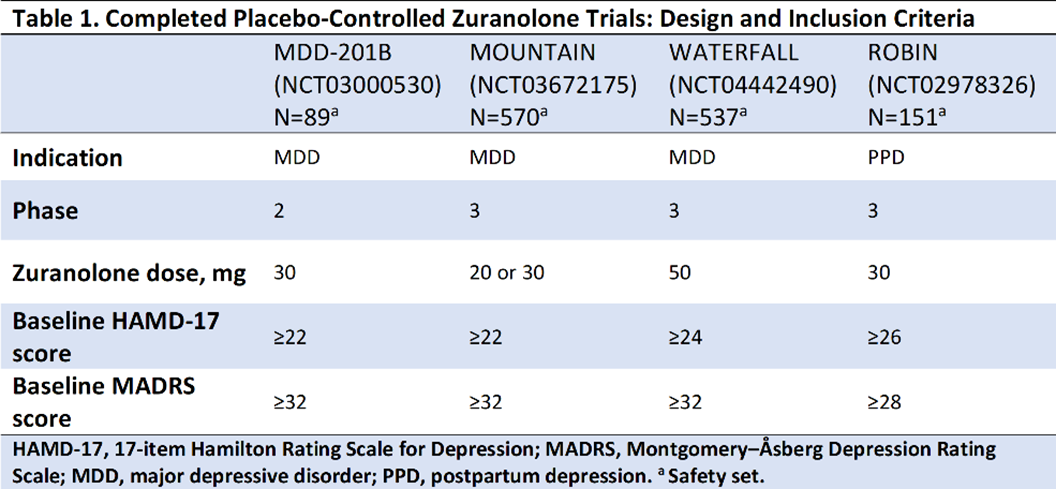
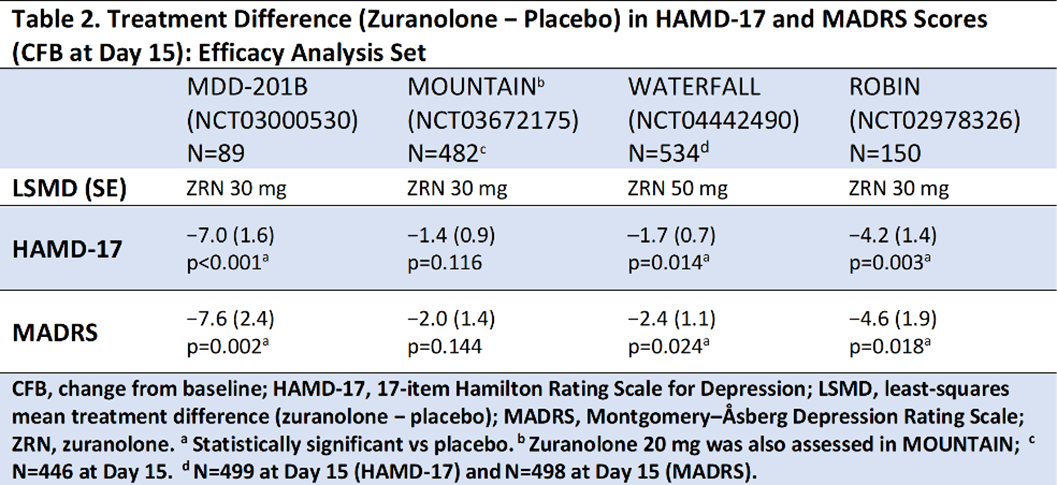
In the studies presented (Table 1), improvements in depressive symptoms were assessed by least-squares mean (LSM) using a mixed-effects model for repeated measures on the change from baseline (CFB) at Day 15 in the 17-item Hamilton Rating Scale for Depression total score (HAMD-17; primary endpoint for all trials) and the Montgomery–Åsberg Depression Rating Scale (MADRS; secondary endpoint) following a 14-day treatment course of once-daily zuranolone.
Results
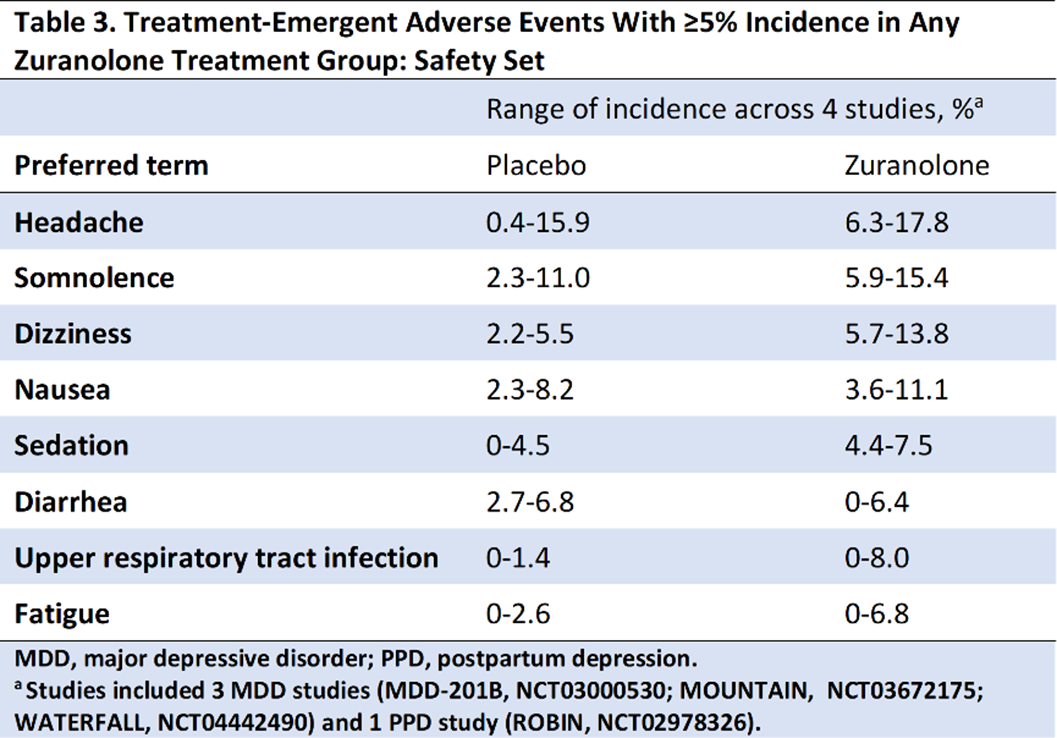
Compared with placebo, zuranolone treatment led to rapid improvements in depressive symptoms across clinical trials, with significant improvements (LSM treatment difference [SE] in CFB) in HAMD-17 and MADRS scores at Day 15 in 3 of the 4 trials (Table 2). Common treatment-emergent adverse events (≥5% in zuranolone treatment arms) were headache, somnolence, dizziness, nausea, sedation, diarrhea, upper respiratory tract infection, and fatigue (Table 3). No incidences of loss of consciousness or excessive sedation were observed.
Conclusions
Across the completed studies in the zuranolone clinical trial program, patients receiving zuranolone consistently experienced improvement in depressive symptoms following a 2-week treatment course. Treatment with zuranolone was generally well tolerated with a consistent safety and tolerability profile.
Disclosure
The MDD-201B, MOUNTAIN, and ROBIN studies were sponsored by Sage Therapeutics, Inc; the WATERFALL study was sponsored by Sage Therapeutics, Inc, and Biogen. Medical writing and editorial support were provided by MediTech Media, Ltd, and funded by Biogen.
Although antipsychotics are first-line treatments for schizophrenia, benzodiazepines (BZDs) are often used as concomitant medications in acutely exacerbated patients due to their anxiolytic and sedative effects. Cariprazine (CAR), a D3-preferring dopamine D2/D3 partial agonist antipsychotic, has been examined in many clinical studies for the treatment of acute schizophrenia, with and without benzodiazepines.
Objectives
To delineate the effects of benzodiazepine-use during cariprazine treatment in acute schizophrenia.
Methods
Pooled data of cariprazine-treated (1.5-6mg/day) and placebo-treated patients from four short-term, randomised, double-blind trials (NCT00404573, NCT01104766, NCT01104779, NCT00694707) were analysed. Baseline characteristics (age, duration of illness) and efficacy outcome parameters (Total and Hostility Factor Score of the Positive and Negative Syndrome Scale [PANSS]) were compared in patients receiving benzodiazepines (for more ≥3 consecutive days) and not receiving benzodiazepines (<3 consecutive days).
Results
Altogether, 36.7% and 40.7% of the CAR-treated and PBO-treated patients required BZDs. BZD-taking was associated with a higher age in both the CAR-treated (p=0.0002) and PBO-treated (p<0.0001) patients, and with longer illness-duration in both treatment groups (p<0.0001). PANSS Total Score at baseline was similar for BZD users and non-users (CAR: LS Mean=96.36 and 96.27; PBO: LS Mean=95.55 and 96.66). Change from baseline in the PANSS Total Score was greater for patients who did not use BZD vs those who did (CAR: LS Mean= -23.8 vs LS Mean 17.2, p<0.0001; PBO: LS Mean= -14.0 vs LS Mean 12.9, p=0.5776).
Conclusions
These findings may suggest that requiring benzodiazepines is a potential indicator of longer illness duration and poorer response in acute schizophrenia.
A high prevalence of antipsychotic polypharmacy (APP) and low utilisation of clozapine is considered as inappropriate prescribing that can lead to suboptimal treatment, increased risk of poor response or adverse effects.
Objectives
To explore the evolution of prevalence of APP and associated factors as well as clozapine prescribing patterns between hospital admission and discharge.
Methods
We collected retrospective data on adult inpatients diagnosed with schizophrenia spectrum disorders in 2020-2021 in 6 Belgian hospitals.
Results
Of the 516 patients analysed, APP prescribing significantly increased from 47.9% on hospital admission to 59.1% at discharge. Both on admission and at discharge, APP was associated with treatment with a first-generation antipsychotic, not being treated with an antidepressant nor a mood stabilizer, high antipsychotic dosage, increased number of psychoactive cotreatments and total medicines. A lower number of comorbidities (OR=0.68, CI=0.50-0.91), no treatment with benzodiazepines (OR=0.02, CI=0.01-0.09) nor with trazodone or sedative antihistamines (OR=0.06, CI=0.01-0.03) and two or more previous antipsychotic trials (OR=4.91, CI=1.30-18.57) was associated with APP on admission only. APP at discharge was more frequent in patients with antipsychotic adverse effects (OR=2.57, CI=1.10-6.00), prior clozapine use (OR=16.30, CI=3.27-81.22) and not involuntary admitted (OR=0.26 CI=0.08-0.88). Contrary to admission, treatment with benzodiazepines was associated with APP at discharge (OR=10.9, CI=3.38-5.38). Only 9.3% of admitted patients were treated with clozapine. Although 28.1% were eligible, clozapine was introduced to 10 patients leading to 11% being discharged on it.
Conclusions
Inappropriate prescribing of antipsychotics to schizophrenia patients persist after psychiatric hospitalisations and are associated with identifiable characteristics.
Metabolic side effects of psychotropic medications are a major drawback to patients’ effective treatment. Among the mechanisms underlying their development, DNA methylation may be involved.
Objectives
The aim of this study was to estimate DNA methylation changes occurring secondary to psychotropic treatment and evaluate associations between 1-month metabolic changes and baseline DNA methylation or 1-month DNA methylation changes, using an epigenome-wide approach.
Methods
Seventy-nine psychiatric patients recruited as part of PsyMetab study, who started a treatment with either an antipsychotic, a mood stabilizer or mirtazapine were selected. Epigenome-wide DNA methylation was measured using the Illumina Methylation EPIC BeadChip at baseline and after one month of treatment.
Results
A global methylation increase was observed after 1 month of treatment, which was more pronounced in patients whose weight remained stable (i.e., <2.5% weight increase). Epigenome-wide significant methylation changes were observed at 52 loci in the whole cohort and at one site, namely cg12209987, located in an intergenic region within an enhancer, specifically in patients who underwent important early weight gain (i.e., ≥5% weight increase) during the same period of treatment (p<5*10-8). Multivariable analysis confirmed an association between an increase in methylation at this locus and weight gain in the whole cohort (p=0.004). Epigenome-wide association analyses failed to identify any significant link between other metabolic changes (e.g. glucose or lipid levels) and methylation data.
Conclusions
These findings give new insight into the mechanisms of psychotropic drug-induced weight gain. With improved understanding of the metabolic side effects, the use of precision medicine with epigenetics may become possible
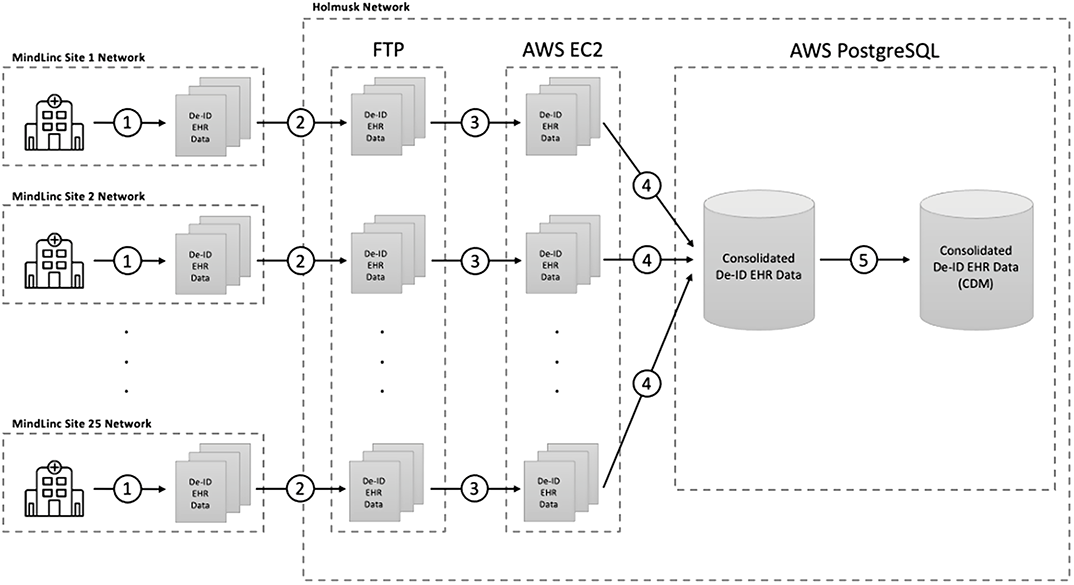
EHRs contain a rich source of real-world data that can support evidence generation to better understand mental disorders and improve treatment outcomes. However, EHR datasets are complex and include unstructured free text data that are time consuming to manually review and analyse. We present NeuroBlu, a secure, cloud-based analytic tool that includes bespoke NLP software to enable users to analyse large volumes of EHR data to generate real-world evidence in mental healthcare.
Objectives
(i) To assemble a large mental health EHR dataset in a secure, cloud-based environment.
(ii) To apply NLP software to extract data on clinical features as part of the Mental State Examination (MSE).
(iii) To analyse the distribution of NLP-derived MSE features by psychiatric diagnosis.
Methods
EHR data from 25 U.S. mental healthcare providers were de-identified and transformed into a common data model. NLP models were developed to extract 241 MSE features using a deep learning, long short-term memory (LSTM) approach. The NeuroBlu tool (https://www.neuroblu.ai/) was used to analyse the associations of MSE features in 543,849 patients.
Results
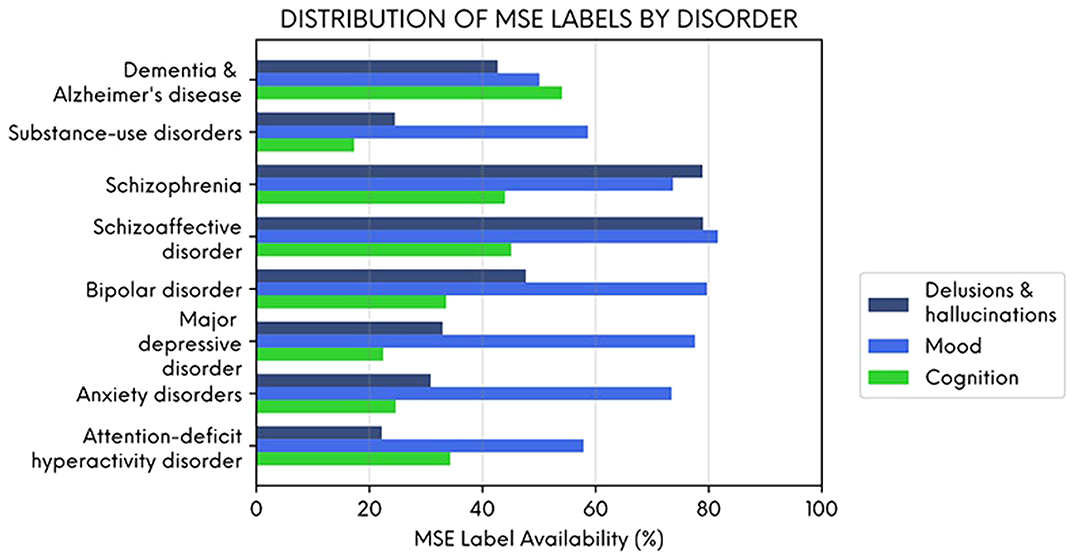
The figure below illustrates the percentage of patients in each diagnostic category with at least one recorded MSE feature.
Conclusions
Delusions and hallucinations were more likely to be recorded in people with schizophrenia and schizoaffective disorder, and cognitive features were more likely to be recorded in people with dementia. However, mood symptoms were frequently recorded across all diagnoses illustrating their importance as a transdiagnostic clinical feature. NLP-derived clinical information could enhance the potential of EHR data to generate real-world evidence in mental healthcare.
Body Integrity Dysphoria (BID) is a diagnosis, newly described in ICD-11, “characterised by an intense and persistent desire to become physically disabled in a significant way… accompanied by persistent discomfort, or intense feelings of inappropriateness concerning current non-disabled body configuration”. Patients with BID may request the amputation of healthy limbs but this raises multiple ethical challenges.
Objectives
By the end of the presentation, participants 1) will better understand the new diagnosis of Body Integrity Dysphoria; 2) will be able to have some landmarks to evaluate and manage this rare condition 3) will discern the ethical challenges raised by an elective or emergent amputation request.
Methods
We present a complex case we faced in Quebec City, Canada. A young adult admitted to the intensive care and burn unit was referred to our Consultation Liaison (CL) team. For the second time in a year, the individual deliberately burned his leg, with the intention of having an amputation. Based on the available literature and our experience, we explore the ethical aspects of this case.
Results
For this situation, the multidisciplinary team faced uncertainty and ambivalence toward the best treatment options. Deontological concerns and ethical issues emerged from the patient’s request for amputation.
Conclusions
We outline how ethical concepts helped us to gain a shared comprehension of the patient’s extraordinary request, both during treatment and afterwards.
Transitional age youth (TAY), from 16 to 24 years old, are a particularly at-risk population in mental health. They have specific needs, not currently covered between child and adolescent mental health services (CAMHS) and adult mental health services (AMHS), mainly because of existing barriers.
Objectives
This retrospective study was carried out to describe sociodemographic and clinical characteristics of 243 patients who attended a new TAY-tailored outpatient psychiatric program.
Methods
Outcomes related to trajectories of psychiatric care were analysed, such as leading symptom, consultation’s referral and requester, and final orientation.
Results
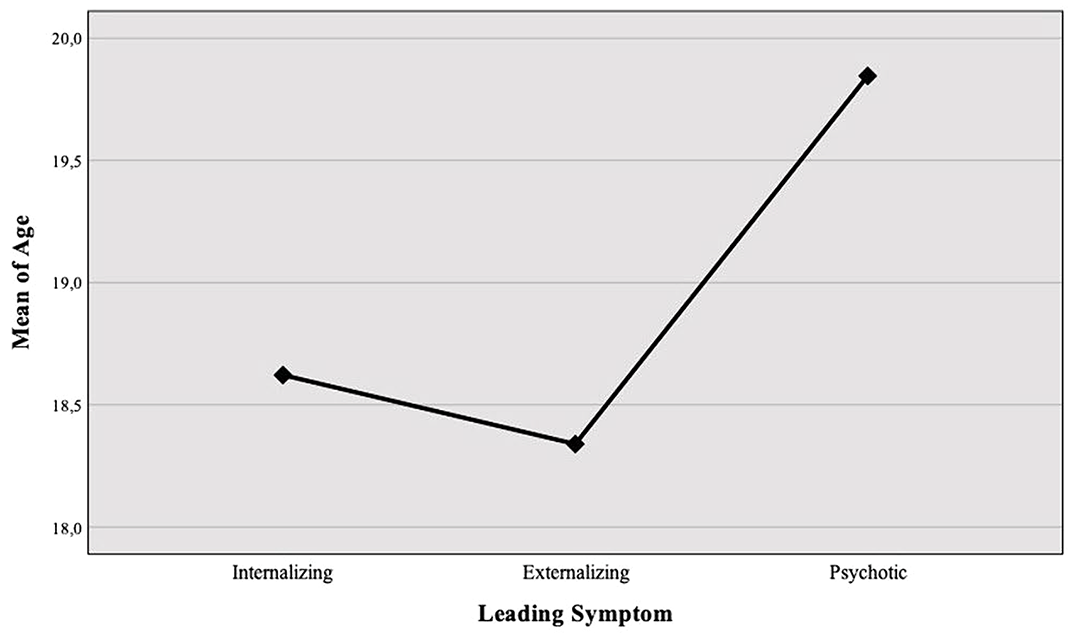
The sample was mainly composed by female; the average age was 18.7 (± 2.0) years. Leading symptoms were divided into three dimensions: internalizing (67.5%), externalizing (21.8%) and psychotic (10.7%). Leading symptom differed according to sex (p<0.001), with internalizing symptoms more frequent in women, externalizing and psychotic symptoms more frequent in men. Patients presenting psychotic symptoms were significantly older than both those with internalizing (p=0.016) and externalizing symptoms (p=0.008). After first assessment, 81.5% of youth were followed-up in our specific outpatient program, without any difference according to sex (p=0.081) or leading symptom (p=0.092). Overall and final psychiatric orientation are showed in the flowchart.
Conclusions
This TAY-tailored psychiatric outpatient program represents an innovative contribution to reinforce CAMHS-AMHS interface in French-speaking Belgium. This study enlightens the importance to enhance clinical expertise in youth mental health. Classical boundaries, determined by artificial variables such as age or type of psychopathology, do not seem to be efficient criteria to achieve a good quality psychiatric evaluation and continuity of care in TAY.
Disclosure
The authors declare no potential conflicts of interest. The study was carried out as part of the University Chair “Psychiatry in Transition in a World in Transition” (Université Libre de Bruxelles - ULB) with the support of Julie Renson Fund, the Queen Fa