We partner with a secure submission system to handle manuscript submissions.
Please note:
You will need an account for the submission system, which is separate to your Cambridge Core account. For login and submission support, please visit the
submission and support pages.
Please review this journal's author instructions, particularly the
preparing your materials
page, before submitting your manuscript.
Click Proceed to submission system to continue to our partner's website.
To save this undefined to your undefined account, please select one or more formats and confirm that you agree to abide by our usage policies. If this is the first time you used this feature, you will be asked to authorise Cambridge Core to connect with your undefined account.
Find out more about saving content to .
To send this article to your Kindle, first ensure no-reply@cambridge.org is added to your Approved Personal Document E-mail List under your Personal Document Settings on the Manage Your Content and Devices page of your Amazon account. Then enter the ‘name’ part of your Kindle email address below. Find out more about sending to your Kindle.
Find out more about saving to your Kindle.
Note you can select to save to either the @free.kindle.com or @kindle.com variations. ‘@free.kindle.com’ emails are free but can only be saved to your device when it is connected to wi-fi. ‘@kindle.com’ emails can be delivered even when you are not connected to wi-fi, but note that service fees apply.
Trichotillomania is a disorder (estimated prevalence 0.5-2.0%) with common onset in childhood, rarely seen in adulthood, characterized by the repetitive pulling out of one’s own hair leading to hair loss and functional impairment, associated with other comorbidities: major depression (39-65%), anxiety disorder (23-32%), SUDs (15-19%), OCD (13-27%).
Objectives
To present a case of late-onset trichotillomania in a 60-year-old woman.
Methods
The present study is a case report of a patient visited in outpatient psychiatry for trichotillomania. We also searched previously case reports, series and systematic reviews of clinical trichotillomania using a pubmed query.
Results
This is a 60-year-old morbidly obese woman diagnosed with dysthymia, binge eating disorder and histrionic personality disorder. She explained a worsening of anxiety associated with work problems of one year of evolution and, for six months, the beginning of the plucking of eyebrow hairs and scabs to decrease this symptom, with inability to avoid the behaviour and without eating the hairs. The mental evaluation highlighted psychic anxiety, hypothymia, low self-esteem and feelings of failure and did not suggest a delirium. We started treatment with topiramate up to 150mg/day which was not successful. After that we switched to fluoxetine up to 60mg/day associated to psychotherapy observing a slight gradual improvement.
Conclusions
The clinical presentation suggested the diagnosis of trichotillomania in the context of dysthymia. No particular medication demonstrates efficacy in the treatment of trichotillomania. Preliminary evidence suggests treatment effects of clomipramine, NAC and olanzapine based on individual trials with small sample sizes. Research findings also recommend psychotherapy based on habit reversal.
Lithium is the oldest known treatment of bipolar disorders and remains the gold standard. Nevertheless, it remains difficult to handle, largely due to its narrow therapeutic index and its long-term side effects. Thus, it requires special initiation and monitoring measures.
Objectives
This study aims to assess nurses’ knowledge and attitudes regarding lithium. A protocol on Lithium initiation and monitoring will be established.
Methods
This is a descriptive study including 20 nurses in a psychiatry department conducted from January to May 2021 based on an self-assessment questionnaire that was established to assess nurses’ knowledge about Lithium, its side effects, initiation and monitoring.
Results
None of the recruited nurses had any training regarding the use of lithium. The vast majority of subject (85%) said that lithium’s dosage must be individualized and adaptable to each patient throughout a specific blood test. 90% recognized renal failure as the most common contraindication of lithium. Complete Blood Count (CBC), and renal check-up were the only tests recognized as necessary by all the sample subjects. 90% answered that lithium is toxic and 65% answered that it is fatal. In case of toxicity by lithium all subjects (100%) agreed to call the responsible doctor of the patient, 25% of them chose it as a unique measure and 75% thought it was necessary to stop the lithium immediately as well.
Conclusions
Lithium is considered as a double-edged sword largely due to its narrow therapeutic index. Nevertheless, nurses are undertrained when it comes to its use and manipulation.
Smoking is probably the one single factor with the highest impact on reducing the life expectancies of patients with mental illness. In Denmark, 38.8% of patients with persistent mental health problem are smoking. Patients may have problem in participating in ordinary smoking cession programs offered in the community, but they are concerned about the impact of tobacco use on their health and finances and are motivated to stop smoking.Videoconferencing addressing smoking cessation might be an alternative to ordinary consultation at the clinic because the patients can access the treatment at home.
Objectives
Compare rates of smoking cessation in two interventions.
Methods
Patients diagnosed with schizophrenia, bipolar disorders or depression in 3 outpatient clinics are eligible for inclusion.Primary outcome is changes in number of cigarettes smoked pr. patients per day in at 6-month follow-up. Secondary outcome is abstinence from smoking at 6-month follow-up.This is a two-arm randomized controlled trial. 1. Daily video consultants at the start of smoking cessation and the months after. 2. Treatment as usual consistent of smoking cessation treatment in the community by weekly consultants.
Results
By September 2021, we have included 64 patients. Among patients, receiving video 26% has stopped and 15% has stopped from treatment as usual.Many patients has reduced their smoking considerably. The patients in general express that they are satisfied with both interventions.
Conclusions
Smoking cessation delivered by daily short video consultants seems to be the best and most effective way to help patients with serious mental illness to stop smoking.
The Short Form of the Self-Compassion Scale (SCS-SF; Raes et al. 2011) is composed of 12 items that evaluate the same six dimensions (Self-Kindness/SK, Self-Judgement/SJ, Common Humanity/CH, Isolation, Mindfulness/M, Over-Identification/OI) as the long scale (26 items). The Portuguese version of the SCS-SF (Castilho et al. 2015) was validated in a vast sample from clinical and general populations, the latter being composed of students, other than from medicine courses.
Objectives
To analyze the psychometric properties of the Portuguese version of the SCS-SF in a sample of Medicine/Dentistry students.
Methods
Participants were 666 Portuguese medicine (82.6%) and dentistry (17.4%) students (81.8% girls); they answered an online survey including the SCS and other validated questionnaires from the OECD Study on Social and Emotional Skills/SSES: Stress resistance, Emotional control, Optimism and Persistence.
Results
Confirmatory Factor Analysis showed that the model composed of six factors, two second order factors (positive and negative) and one third order factor (total) presented good fit indexes (χ2/df=3.013; RMSEA=.0066, p<.001; CFI=.970; TLI=.948, GFI=.947). The Cronbach’s alfas were .892, .869 and .877 respectively for the total, self-compassion and self-criticism dimension. Pearson correlations of the SCS-SF total score, self-compassion and self-criticism dimensional scores were moderate to high with the SSES measures, from .272/-.236/.247 with Persistence to .709/-.634/.615 with Optimism.
Conclusions
Although reduced to less than half than the original SCS, the SCS–SF is a valid and useful alternative to measure general self-compassion and their positive and negative components in an ongoing longitudinal research with medicine/dentistry students.
Daydreaming is a normal, very common experience in childhood and adulthood. However, a new phenomenon – termed ‘Maladaptive Daydreaming (MD)’ – which takes daydreaming to an extreme form, is currently being investigated. Maladaptive Daydreaming is not listed as an official disorder in the ICD-10 or DSM-5 presently.
Objectives
To review current literature on MD and explore whether MD could be acknowledged and classified as a real psychiatric disorder.
Methods
Data gathered via academic papers found through reliable sites, such as, Ovid, PubMed and Cochrane; through articles, videos and online forums to gather patients’ perspectives.
Results
There is enough information and literature available to create specific criteria to qualify a diagnosis of MD in patients. Possible aetiologies of Maladaptive Daydreaming have been identified. There has also been exploration into treatment options.
Conclusions
There is sufficient evidence for Maladaptive Daydreaming to be classified as an official disorder. Being included in the ICD-10 and DSM-5 would motivate research, expand identification of this disorder in patients, and advance access to help and support for patients.
Darier-White disease (DD) is a rare genodermatosis of dominant autosomic inheritance characterized by the keratinization of epidermis, nails and mucous membrane. It leads to the formation of papules and brown hyperkeratotic plaques, mainly in seborrheic areas. The disease is associated with a mutation on the ATP2A2 gene, mapped in the 12q23-24 chromosome. There is known a relationship between DD and neuropsychiatric diseases, such as bipolar disorder, depression and schizophrenia.
Objectives
To discuss the relationship between DD and neuropshychiatric disorders.
Methods
We report the case of a patient with diagnosed schizophrenia, alcohol and cannabis dependence who presented skin lesions.
Results
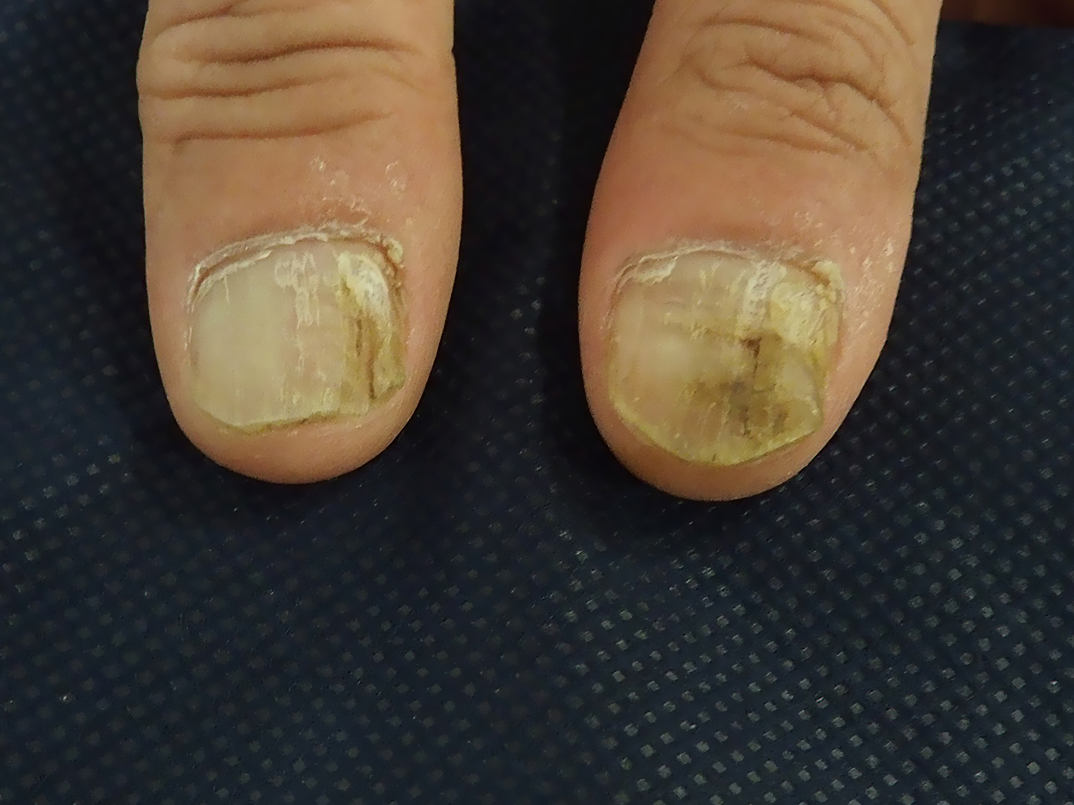
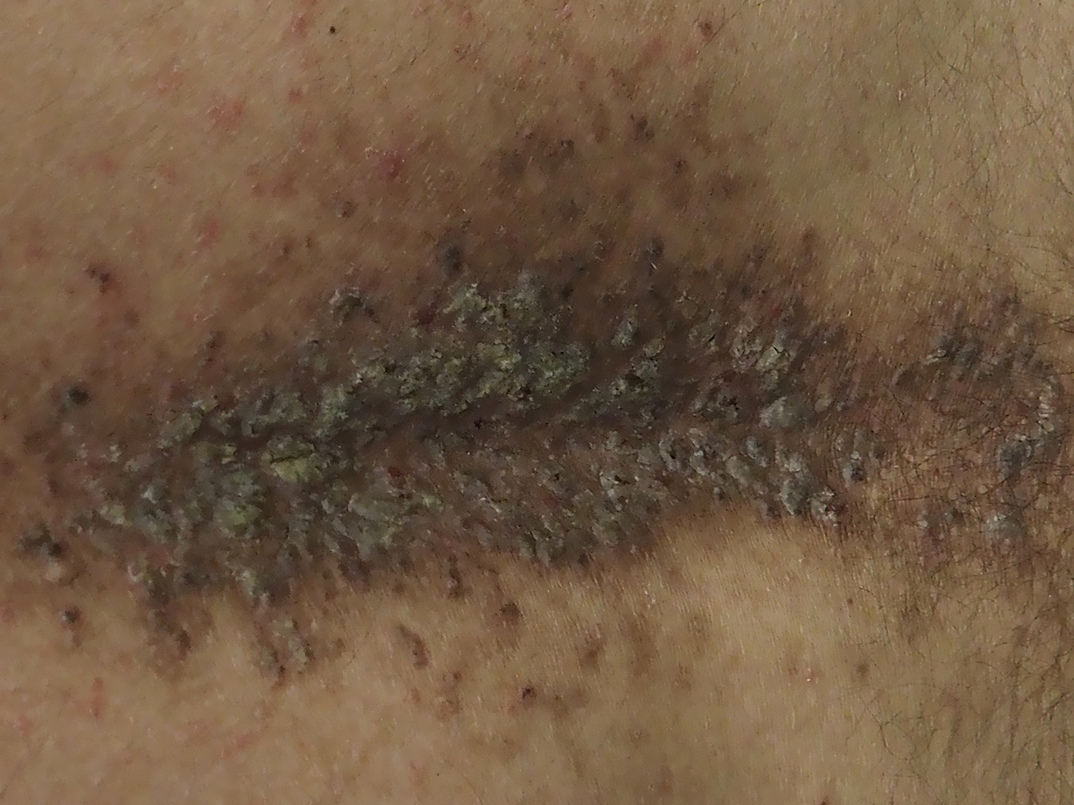
The physical exploration of our patient revealed cutaneous lesions and we pointed the diagnostic towards DD. Afterwards, a cross-consultation was done with the dermatology experts. During the physical exploration, the patient shows confluent hyperkeratotic papules, dominant on the sides and center of back and hands, together with nail injuries (see images). The diagnostic was confirmed through anatomic pathology. The patient was treated with 10 mg/day of Acitretin together with emollients twice a day, which improved the patient clinical status and signs. The patient remained stable at a psychiatric standpoint. After 3 years of treatment, the patient keeps the same medication but with a reduced dose of 5 mg/day, with a 70% decrease of the initial hyperkeratotic lesions.
Conclusions
Previous studies concludes that mutations in the ATP2A2 gene, in addition to causing DD, confer susceptibility to neuropsychiatric features.These case report highlight the need for clinicians to asses and recognize neuropsychiatric symptoms in DD.
Most people experience grief-related symptoms after losing a loved one. Approximately 9.8% of bereaved individuals’ symptoms persist over the first year post-loss, emphasizing the importance of research in prolonged grief. The role of self-conscious emotions in prolonged grief, such as self-compassion, state shame, guilt and pride has been proposed in previous studies.
Objectives
Our aim was to examine the mediating role of state shame, guilt and pride in the relationship between self-compassion and prolonged grief.
Methods
This cross-sectional study collected data via online questionnaires based on self-reports (N=177, mean age: 42.26 years [SD=12.32], 97.2% women). Demographic and loss-related variables were measured, and further instruments assessed levels of self-compassion, state shame, guilt, and pride, and prolonged grief. Correlation and mediation analyses were used.
Results
Two significant indirect effects were shown in the mediation model. First, lower levels of self-compassion predicted higher levels of state shame, which in turn predicted elevated levels of prolonged grief. Second, higher levels of self-compassion predicted higher levels of pride, which subsequently contributed to lower levels of prolonged grief. Guilt did not have a significant mediating role.
Conclusions
The results highlight the possible role of elevated levels of state shame and lower levels of self-compassion and state pride in the development of prolonged grief. It is important for researchers and clinicians to be attentive to the role of self-compassion, state shame and pride in grieving.
The influence of personality on field of study choice is comparable to that of cognitive skills. Additionally, personality traits seem linked with academic motivation, and engagement. Choosing the most suitable career is also related to students’ personal well-being and work success.
Objectives
To explore how personality traits are associated with the choice of university courses among Italian students.
Methods
A web-survey was spread on social networks between March and June 2020 through Google Forms. Eligibility criteria for inclusion were: 1) Being a university student between 18 and 35 years of age; 2) Attending a course in an Italian university; 3) Good comprehension of Italian language. On-line informed consent, socio-demographic, and career data were collected during the survey. Personality traits were assessed using the Big Five Inventory (BFI). We computed multinomial linear regressions to calculate potential associations between personality traits and university courses.
Results
Lower Conscientiousness, higher Neuroticism, and higher Openness to experience are associated with the attendance of Humanities compared with students of Health faculties. Higher Neuroticism traits are associated with the attendance of a scientific course compared with Health faculties. High Conscientiousness is significantly associated with the attendance of Law-related courses compared with Health courses. Non significant differences were detected in the other domains according to the big five personality model.
Conclusions
Our results suggest interesting associations between personality traits and educational choices. Future research may investigate this relationship in high-school students to implement appropriate strategies for better addressing students’ educational needs and career outcomes.
Four specific forms of violence have been identified in the socialization process of children, and these are: “violent discipline and exposure to domestic abuse; violence at school; violent deaths among adolescents; and sexual violence ”. (UNICEF, 2017, p2), In this regard Redondo & Inglés (2014) affirm that it is increasingly evident the need to promote prosocial behavior models based on empathy and assertiveness in educational institutions, in order to avoid the appearance of violent demonstrations.
Objectives
Analyze the levels of prosocial behavior according to sex in adolescents
Methods
A descriptive, cross-sectional study was conducted in 105 (N = 105) adolescents. A sociodemographic survey was used to investigate aspects related to the study objective and the Prosocial Behavior questionnaire by Martorell and Gonzales (1922) to measure prosocial behavior.
Results
57.7% of the adolescents evaluated presented adequate prosocial behaviors. When examining the difference between sex, the expected values were initially verified, which indicated the feasibility of performing a student’s T; As can be seen in Table 1, the mean corresponding to the female sex was 49.62%, in contrast to a mean of 49.93% for the male sex, indicating the absence of statistically significant differences.
Conclusions
It was concluded that the higher the optimal levels of empathy, the lower the aggressive behavior presented by teenagers.
Benzodiazepines and non-benzodiazepines have been linked to a variety of adverse effects including addiction. Long term use of these drugs has been associated with an increased risk of suicide.
Objectives
We assessed if individuals in treatment with non-benzodiazepine (n-BZD) and benzodiazepine (BZD) had higher rates of suicide when compared to individuals not in treatment with these drugs.
Methods
We utilized a cohort design and national longitudinal data on all individuals aged 10 or above who lived in Denmark between 1995 and 2018. Treatment with either n-BZD or BZD was identified via the Danish National Prescription Registry and suicide deaths were identified in the national cause of death registries.
Results
In a total of 6,494,206 individuals, 10,862 males and 4,214 females died by suicide. Of these, 1,220 (11.2%) males and 792 (18.8%) females had been in treatment with n-BZD, resulting in adjusted IRR for suicide of 4.2 (95% CI, 4.0 – 4.5) and 3.4 (95% CI, 3.1 – 3.7) for males and females, respectively, when compared to those not in treatment. In all, 529 (4.8%) males and 395 (9.3%) females who died by suicide had been in treatment with BZD. The IRRs for suicide were 2.4 (95% CI, 2.2 – 2.6) and 2.5 (95% CI, 2.3 – 2.8) for males and females, respectively, and compared to those not in treatment.
Conclusions
In this study we find that those in treatment experienced higher suicide rates than those not in treatment, this persisted when also adjusting for a large variety of covariates.
Clinicians in mental healthcare have few objective tools to identify and analyse their patient’s care needs. Clinical decision aids are tools that can support this process.
Objectives
This study examines whether 1) clinicians working with a clinical decision aid (TREAT) discuss more of their patient’s care needs compared to usual treatment, and 2) agree on more evidence-based treatment decisions.
Methods
Clinicians participated in consultations (n=166) with patients diagnosed with psychotic disorders from four Dutch mental healthcare institutions. Primary outcomes were measured with the modified Clinical Decision-making in Routine Care questionnaire and combined with psychiatric, physical and social wellbeing related care needs. A multilevel analysis compared discussed care needs and evidence-based treatment decisions between treatment as usual (TAU) before, TAU after and the TREAT-condition.
Results
First, a significant increase in discussed care needs for TREAT compared to both TAU conditions (b = 20.2, SE = 5.2, p = 0.00 and b = 15.8, SE = 5.4, p = 0.01) was found. Next, a significant increase in evidence-based treatments decisions for care needs was observed for TREAT compared to both TAU conditions (b = 16.7, SE = 4.8, p = 0.00 and b = 16.0, SE = 5.1, p = 0.01).
Conclusions
TREAT improved the discussion about physical health issues and social wellbeing related topics. It also increased evidence-based treatment decisions for care needs which are sometimes overlooked and difficult to treat. Our findings suggest that TREAT makes sense of ROM data and improves guideline-informed care.
Identifying the factors that mediate treatment response to rTMS in MDD patients can guide clinicians to administer more appropriate, reliable, and personalized interventions.
Objectives
The present study aimed to investigate sex differences in response to repetitive transcranial magnetic stimulation (rTMS) in Major Depressive Disorder (MDD) patients.
Methods
In this paper, we developed a novel pipeline based on convolutional LSTM-based deep learning (DL) to classify 25 female and 25 male subjects based on their rTMS treatment response.
Results
Five different classification models were generated, namely pre/post-rTMS female (model 1), pre/post-rTMS male (model 2), pre-rTMS female responder vs. pre-rTMS female non-responders (model 3), pre-rTMS male responder vs. pre-rTMS male non-responder (model 4), and pre-rTMS responder vs. non-responder of both sexes (model 5), achieving 93.3%, 98%, 95.2%, 99.2%, and 96.6% overall test accuracy, respectively.
Conclusions
These results indicate the potential of our approach to be used as a response predictor especially regarding sex-specific antidepressant effects of rTMS in MDD patients.
Timely detection of suicidal thoughts is one of the ways to prevent suicide. Use the psychiatric interview only for this purpose in adolescents is often insufficient due to poor compliance. Thus, the search for objective neurophysiological markers of suicidal ideation in adolescents seems to be actual.
Objectives
The aim of the study was to reveal the relationships between pre-treatment EEG parameters and intensity of suicidal ideation in depressive female adolescents.
Methods
72 female depressive patients (all right-handed, age 16–25, mean 18,2±2.6 years old) were enrolled in the study. Pre-treatment total HDRS-17 scores varied from 13 to 43 (mean 26,9±7.5). Multichannel eyes closed EEG was recorded, and absolute spectral power was calculated in 8 narrow frequency sub-bands. All patients answered the inventory on intensity of suicidal thoughts. Spearman’s correlations between pre-treatment EEG parameters and suicidal ideation scores were analyzed.
Results
Scores of intensity of suicidal ideation correlated positively (p<0.05÷0.01) with values of EEG alpha2 (9-11 Hz) spectral power in F7, F8, F4, C3, C4, T4, P4 and O2 EEG leads, as well as with values of EEG delta (2-4 Hz) spectral power in F7, F3 and C3 EEG leads (p<0.05).
Conclusions
The intensity of suicidal ideation in depressive female adolescents associates with wide propagation of EEG alpha2, especially over the right hemisphere, and with EEG signs of decreased functional state of anterior regions of the left hemisphere. The study supported by RBRF grant No.20-013-00129a.
Despite the widespread use of long-acting injectable (LAI) antipsychotics in schizophrenia and other disorders, there is a lack of longitudinal studies evaluating prescription trends and the usefulness of therapeutic drug monitoring (TDM) to inform dosing. Indeed, LAI prescription varies greatly among different areas of the world and over the years.
Objectives
Assess trends in LAI prescription in 2013-2020 at the Psychiatry Department of Bozen, Italy, and (2) analyze the correlation between dose of prescribed LAIs and blood levels measured via TDM.
Methods
Parametric statistics.
Results
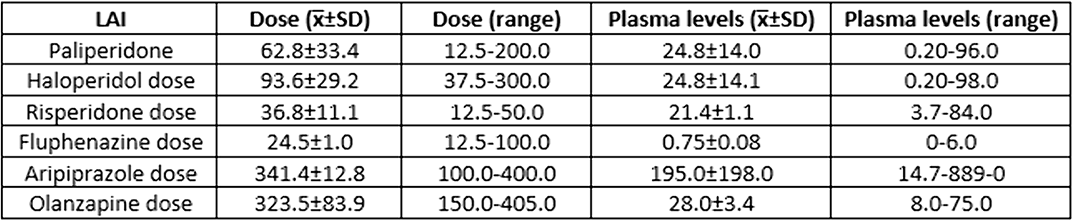
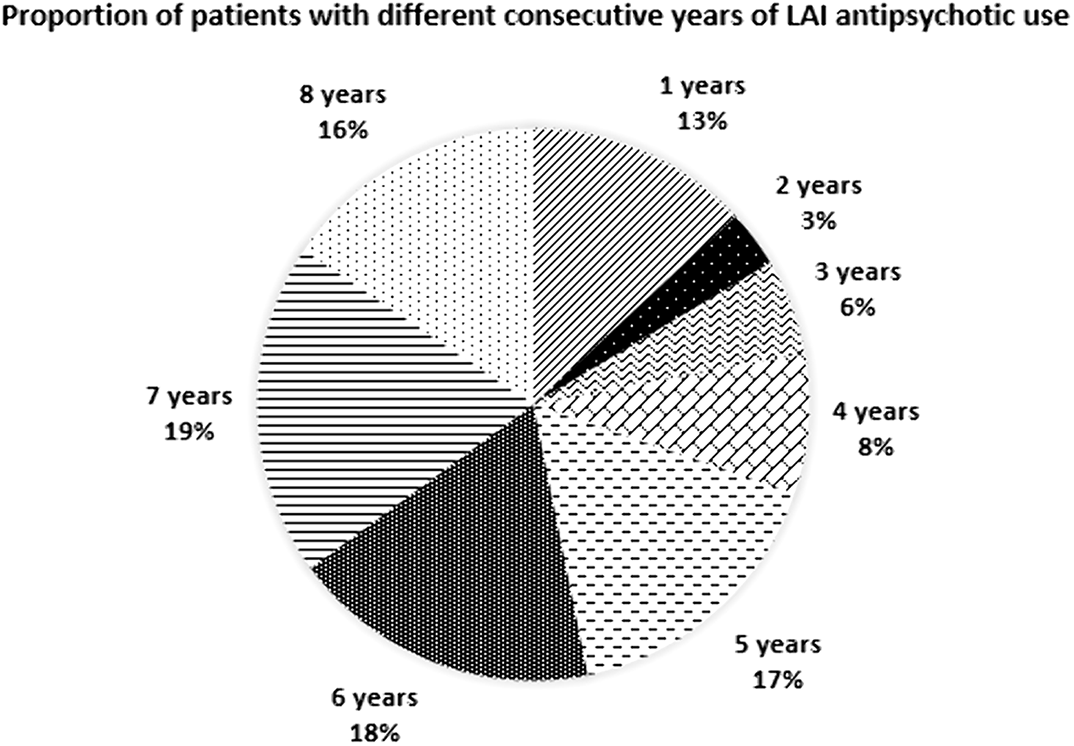
LAIs were administered to 471 patients (x̅ age±SD=47.2±16.3 years; 56.3% men). The pie chart shows LAI treatment duration, i.e., from 1 to 7 consecutive years. The most used LAIs were haloperidol in 2013-2104 (26.5-31.8%) and paliperidone in 2015-2020 (22.5-25.7%). Dose adjustments were rather frequent, whereas the switch between LAI, due to moderate-to-side effects or unsatisfactory improvement of clinical status, was infrequent (41 cases/8 years). LAI interruption for the same reasons or non-compliance was even more infrequent (10 cases), but in 8 cases it happened for opposite reasons, i.e., achievement of patients’ stabilization and good compliance. The Table shows doses and plasma levels of LAIs. Correlations between doses and plasma levels were: haloperidol: r=-0.037, p=0.620; paliperidone: r=0.290; p=0.000; risperidone: r=0.219, p=0.006; fluphenazine r=0.358, p=0.000; aripiprazole: r=-0.051, p=0.610; olanzapine: r=-0.090, p=0.634.
Conclusions
Haloperidol and paliperidone were the most used LAIs. Drug prescription trends and doses were stable over time. A significant positive correlation between dose and plasma level was found for paliperidone, fluphenazine, and aripiprazole.
Medical students have higher rates of depression, anxiety and suicidal ideation over the general population. The onset of these disorders can be a risk factor with unfavorable impact in both medical care and their lives during the years of clinical specialization
Objectives
To assess the prevalence and factors involved in depression, anxiety and suicidal behavior in medical students of the University of Valladolid (Spain). The results are compared with a previous study conducted 5 years earlier
Methods
We used an online self-administered questionnaire that included demographic variables, academic information, sanitary data, Beck Depression Inventory (BDI), Generalized Anxiety Disorder 7 (GAD7), and MINI International Neuropsychiatric Interview for suicide. Chi-Square Test was used for categorical variables, Student`s t-test for quantitative variables and Spearman’s Coefficient to evaluate correlations between variables
Results
362 students of all courses enrolled in Medicine at the University of Valladolid completed the survey. There were no differences between male and female students, both with high rates of moderate-severe depression (27% vs 30,4%), anxiety (42,9% vs 54,5%), and moderate-severe suicide risk (14,2% vs 10,7%). Previous study (n=584) also showed no differences between sexes but with lower rates of moderate-severe depression (14,3% vs 16,3%). 11% reported suicidal thoughts in the past month (11,6% previous study). There was a significant inverse correlation between medical career satisfaction and BDI scores
Conclusions
Five years later, rates of depression and suicide risk could have increased in medical students at the University of Valladolid. We urgently recommend the implementation of mental health prevention programs in this population
The psychosocial impact of infertility has been well researched and documented. However very little research has been conducted to assess the causative relationship between infertility and serious psychiatric illness such as suicide.
We conducted a cross-sectional study to investigate suicidal risk ( suicidal ideation/ suicide attempts) amongst 100 infertile women undergoing infertility treatment at an IVF Centre based in Kolkata, India. Allied parameters such as depression, anxiety, quality of life were also studied.
Objectives
The goal of the presence study was to assess the suicidal risk ( suicidal ideation / attempted suicide ) amongst infertile women undergoing infertility/ ART treatment. And to examine the possible etiological factors behind increased levels of suicidal risk amongst infertile women.
Methods
Mini International Neuropsychiatric Interview was administered to 100 female patient’s undergoing IVF treatment and 100 control patient’s , visiting an IVF Centre based in Kolkata. Chi square test, independent t test and Z test used for statistical analysis.
Results
According to the results obtained by assessment of MINI scale , the prevalence of major depressive disorder (50 % ) followed by Dysthymia (25%) was documented among infertile group while suicidality at 15% were significantly higher than other disorder (Z = 3.80, p> .001). No such cases of suicidality or Dysthymia was found among patients of control group. (fertile group).
Conclusions
Routine screening of suicidal risk and depression should be conducted for all patients undergoing IVF treatment. Infertility specialists should recognize psychiatric morbidity amongst infertile patients for subsequent referral and treatment.
Attention-deficit/hyperactivity disorder (ADHD) is a neurodevelopmental disorder characterized by symptoms including inattention, hyperactivity and/or impulsivity that commonly persists into adulthood. Suicide is a major cause of death in adult ADHD (aADHD) patients. Suicidality is higher in these patients, in possible relationship to various clinical and socio-demographic factors.
Objectives
To review the current literature concerning potential risk factors for suicide in aADHD patients.
Methods
A research was made using the Medline database through the Pubmed search engine, with the following keywords: “adhd”, “suicide”, “risk factors”.
Results
Comorbid psychiatric disorders (major depressive disorder, sleep disturbances, behavior disorders and addictive disorders) are powerful predictors of suicidal behavior in aADHD. Depression is the most frequent diagnosis among aADHD patients with previous suicide attempts. Subtype (mostly the combined type) and severity of ADHD were also associated with a higher number of prior suicide attempts. Impulsiveness, poor emotional self-regulation, recklessness, persistent hyperactivity, inability to relax, engagement in risk behavior (often found in ADHD), common personality traits in aADHD like low frustration tolerance, maladaptive coping and poor problem-solving, as well as interpersonal relationship problems, were associated with higher suicidality. Financial distress caused by unemployment is associated with higher suicidal behaviors. The suicidality is higher in females, mostly associated to self-concept, whereas in males is typically related to impulsivity.
Conclusions
Clinicians should be aware of the potential risk factors for suicide in aADHD patients because the early detection of these factors is fundamental to improve the patients’ quality of life and could contribute to the design of more effective treatments.
Both theoretical conceptualizations (M.&E. Laufers, E. Furman, J. Maltsberger, etc. ) and empirical studies (I. Orbach) suggest an important role body image plays in the dynamics of adolescent suicidal attempts.
Objectives
To study the relationships between body image vulnerability and attachment attitudes concerning early care and current relationships.
Methods
Participants were 100 adolescents with suicidal behavior (46 with suicidal ideation only, 54 with suicide attempts) compared to 100 controls (12-17 years). Body attitudes were assessed with Body Investment Scale (BIS), perceived early care was assessed by Parental Bonding Inventory (PBI), current attachments experiences were assessed with Attachment Style Questionnaire (ASQ).
Results
Adolescents with suicidal manifestations scored significantly lower on BIS Body Care (p<.001) , but higher on Comfort with Touch scales (p=.05). They did not differ significantly on Body Image and Body Protection scales. With regard to perceived early care, suicidal adolescents did score lower on all Care and Control PBI scales, in both paternal and maternal forms. For current attachments suicidal adolescents scored lower on Confidence (p<.001) and higher on Approval Need (p<0.05) ASQ scales. Correlation analysis suggests, for both groups, stronger relationships of body attitude dimensions to current relationships than to perceived parental care, the former being more marked in clinical group, with Body Image scale being related to all ASQ scales ranging from r=-.32 to r=-.63.
Conclusions
In current study only weaker tendency to care for body in suicidal adolescents was noted. However, in suicidal group the relationship between body image vulnerability and negative experiences of current attachments was stronger.
Anxiety disorders are leading contributors to the global disease burden, highly prevalent across the lifespan, and associated with substantially increased morbidity and early mortality.
Objectives
The aim of this study was to examine age-related changes across a wide range of physiological measures in middle-aged and older adults with a lifetime history of anxiety disorders compared to healthy controls.
Methods
The UK Biobank study recruited >500,000 adults, aged 37-73, between 2006-2010. We used generalised additive models to estimate non-linear associations between age and hand-grip strength, cardiovascular function, body composition, lung function and heel bone mineral density in cases vs. controls.
Results
The main dataset included 332,078 adults (mean age = 56.37 years; 52.65% females). In both sexes, individuals with anxiety disorders had lower hand-grip strength and blood pressure than healthy controls, while their pulse rate and body composition measures were higher. Case-control differences were larger when considering individuals with chronic and/or severe anxiety disorders, and differences in body composition were modulated by depression comorbidity status. Differences in age-related physiological changes between female anxiety disorder cases and healthy controls were most evident for blood pressure, pulse rate and body composition, while in males for hand-grip strength, blood pressure and body composition. Most differences in physiological measures between cases and controls tended to decrease with age increase.
Conclusions
Individuals with a lifetime history of anxiety disorders differed from healthy controls across multiple physiological measures, with some evidence of case-control differences by age. The differences observed varied by chronicity/severity and depression comorbidity.
Disclosure
JM receives studentship funding from the Biotechnology and Biological Sciences Research Council (BBSRC) and Eli Lilly and Company Limited. CML is a member of the Scientific Advisory Board of Myriad Neuroscience. CF and THH declare no relevant conflict of
Generalized anxiety disorder (GAD) and Obsessive compulsive disorder (OCD) are common psychiatric disorders. Researchers studying the pathophysiology of these two disorders evaluated the effect of metacognition. However, there is no research examining the metacognition differences of these two psychiatric conditions.
Objectives
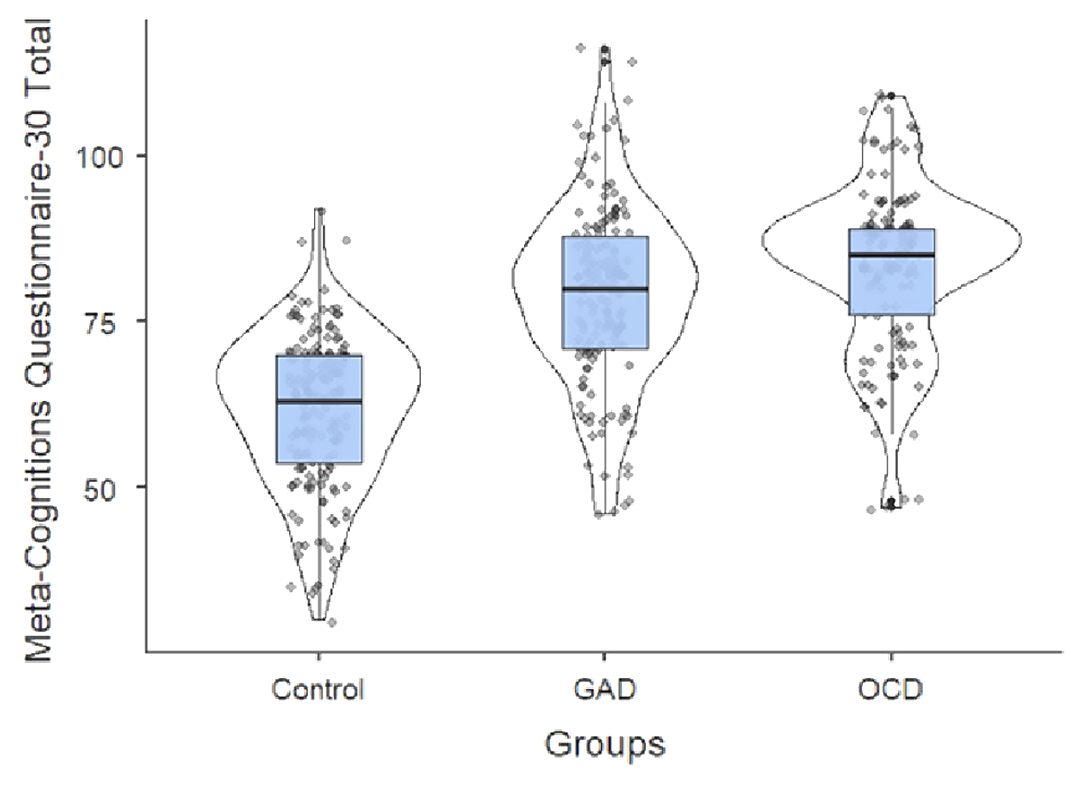
This study was performed to compare the metacognitions in OCD, GAD and healthy controls.
Methods
The sample of this study consisted of 158 GAD and 137 OCD patients aged 18-65 years who presented to outpatient psychiatry clinic and applied to the health committee 168 healthy controls without psychopathology. Sociodemographic data form, Meta-Cognitions Questionnaire-30 scale(MCQ-30), Beck Depression Inventory(BDI) and Beck Anxiety Inventory(BAI) were applied to the volunteer participants who met the criteria for participation in the study. The data obtained were evaluated statistically and subjected to statistical analysis.
Results
The mean age was 31.89 ± 10.86 years and was 60.5% (n = 208) women. There was statistical difference between marital status, occupation and income(p <0.05). In addition, there was a statistically significant difference between MCQ-30 total and subscales, BDI and BAI (p <0.001). According to the comparison of OCD and GAD patients, ’positive belief’, MCQ-30 total and BAI scores were found to be statistically different (p <0.05), ’Uncontrollability and danger’, ’Cognitive Confidence’, ’Beliefs about The Need to Control Thoughts’, ’Cognitive Self-Consciousness’, BDI there was no statistical difference between them (p> 0.05).
Conclusions
Our results are contributing to the understanding of the uncertainty of development and maintenance of OCD and GAD. Additionally, metacognitions could be important for the diagnosis and treatment of OCD and GAD.